DD
MM
YYYY

PAGES

DD
MM
YYYY

spot_img

PAGES

Home Blog Page 5390

Nigeria’s Digital Tax and the Twitter Ban

0

As part of its 2022 tax policy contained in the 2021 Finance Act, the federal government of Nigeria is moving to introduce digital tax. This means, non-resident companies (NRC) will be required to remit 6% of turnover from digital services provided to Nigerian customers.

An NRC is a company such as Twitter, Zoom and Amazon, not registered or incorporated in Nigeria but makes profits or income from Nigeria.

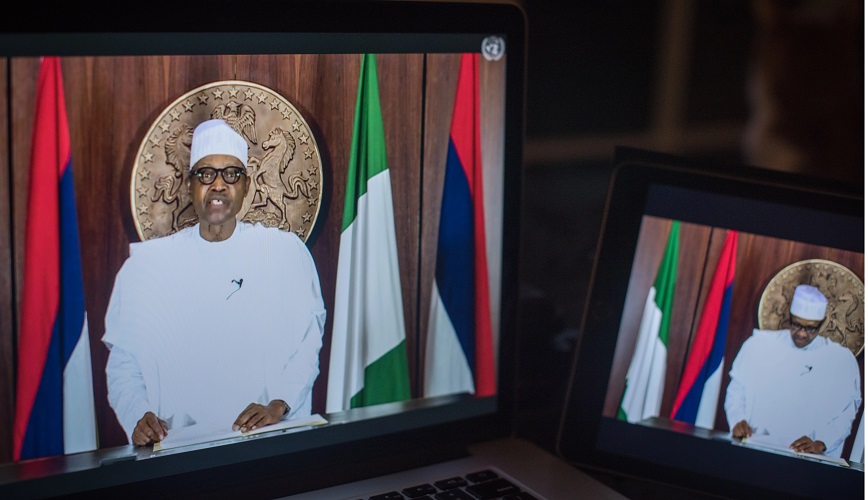
President Muhammadu Buhari’s administration has been working on a tax framework that will enable the government to tax multinational digital companies not registered in Nigeria.

Zainab Ahmed, minister of finance, budget and national planning, said on Wednesday during the public presentation of the 2022 approved budget held in Abuja, that the time for the digital tax has come.

The Finance Act, which was signed into law on December 31, 2021, empowers the FIRS to assess and charge on the turnover of the digital companies transmitting or operating in the country.

Ahmed said that section 4 of the Act made provisions for the taxation of e-commerce businesses by non-resident companies on a fair and reasonable turnover basis, set at 6% of turnover. That includes digital services provided through apps, trading platforms, online ads etc.

“This provision empowers FIRS to access non-resident firms to tax on Fair and Reasonable Turnover Tax Basis on turnover earned from digital services provided to Nigerian customers.

“Let me just note that such digital services include apps, high-frequency trading, electronic data storage, online advertising and several others. The rationale for this is to modernise the taxation of ICT and digital economy in line with current realities, and this is in conformity with the provisions of the national development plan of 2021,” she said.

The minister explained that the digital tax framework factored in the Finance Act requires digital NRCs to collect VAT from their Nigerian customers and remit to the FIRS.

“At section 30 of the Finance Act, designed to amend section 10 of VAT as well as section 31 and 14 of VAT, is in relation to VAT obligations of digital non-resident companies.

“The mechanism that will be used is to restrict VAT obligations mainly to digital non-resident companies who supply individuals in Nigeria, who cannot themselves self-account for VAT.

“If you visit Amazon, we are expecting Amazon to add a VAT charge to whatever transaction you are paying. I am using Amazon as an example. We are going to be working with Amazon to agree to be registered as a tax agent for the FIRS. So Amazon will now collect this payment and remit to FIRS, and this is in line with global best practice. We have been missing out on these revenue streams,” she said.

The new tax policy also made some exemptions. Ahmed said the Finance Act also considers reducing tax compliance orders on non-resident taxpayers who are not required to register for VAT in Nigeria.

“So they don’t really have to come and be registered companies in Nigeria. All they need is that arrangement with FIRS where they collect VAT on behalf of FIRS and remit to FIRS.

“And also, to clarify, that FIRS may appoint persons including non-resident companies for the purpose of VAT collection and to clarify again that appointed persons may collect and remit taxes to FIRS, pursuant to the relevant tax laws.

“The core rationale for this is to modernise the taxation of ICT and digital economy in line with the National Development Plan 2021-2025, to enhance administrative modalities for the taxation of non-resident taxpayers and also to reduce incompliance by non-resident payers to reduce the compliance burden,” she said.

Twitter ban

However, the digital tax presents a challenge that Nigerians are waiting to see how the government will handle it. Twitter has been banned since last year by Buhari’s administration. As part of the criteria for the app to be unbanned, the government has demanded that Twitter register its business and open an office in Nigeria in order to pay taxes.

Months have passed since the Nigerian government made the demands and there is no sign that Twitter has accepted the demand despite the government’s claim that the social media platform has agreed to its ultimatum.

Therefore, it is unclear what the digital tax policy will mean to the standoff. For the Nigerian government to enforce the digital tax on Twitter, the ban has to be lifted. Government’s determination to stand its ground on the Twitter ban will now mean losing millions of naira in taxes.


Ethics in Business and Project Management – A New Course at Tekedia Institute

0

He is a catholic priest, a cybersecurity expert and a fellow of the institute of management consultants. He has also sent many young people to Tekedia Institute programs. Rev Fr Patrick Oluwafemi has inspired us in what we do in Tekedia Institute.

Good People, I am happy to share that Rev Fr Oluwafemi is developing a course on Business Ethics for Tekedia Institute. The Parochial Administrator at Church of St. Patrick, who coordinates church programs in both Nigeria and the United States, has some case studies in this domain; my best –  Stratton Oakmont; Jordan Belfort  – the Wolf of Wall Street.

We plan to run this course across all programs because we truly care on the ethics in business.

Why you should be outsourcing

0

Whether you are a startup in your growth stage, or still trying to get your product to launch, you will find that you may need the services of experts you cannot afford to hire full-time into your team. At this point, outsourcing is the way forward.

I stumbled across a write-up that talked about how outsourcing could compromise quality and data security. However, I think these only apply when you are dealing with an individual or business that lacks integrity. Once you get the integrity question out of the way, outsourcing can really be a lifesaver. Sometimes, a task as simple as getting quality content on your social media handle or website can be sucking up precious time that you would love to channel towards more productive tasks.

Here are some reasons that entrepreneurs agree with outsourcing.

You get expert inputs at your rates

As a startup, you may not be able to hire the quality of niche experts you need to work on your project, at least not on a full-time basis. Outsourcing allows you to get their expertise when you need it, on one-off pricing and without too many financial pressures on you. Studies suggest that this has helped a lot of companies improve their performance substantially.

Focus and speed

Outsourcing will help you and your team focus on your core areas while allowing the niche experts to take care of the other areas. In this way, work often gets done faster. It may also not be a matter of expertise. Some business owners attest that outsourcing allows them to push the chores they hate and time-consuming tasks doing off their desk, allowing them to focus on the things they love. Whatever the reasons, you get speedy project completion a more productive team in the end since people are focusing on what they do best.

Risk management

There are risks in every project. By outsourcing and letting people manage their area of expertise, they can also plan and mitigate against potential risks in those areas since it is what they do best anyway.

Cost-effective

You cannot hire an expert full-time on your team if you only need that skill for about two months in a year. It is cheaper to simply outsource when the need arises. Also, recruitment processes incur some costs which you can avoid by outsourcing.

Fresh perspective or the benefit of a third eye

There are blind spots that may only be spotted by an expert, or a perspective to issues that you can only get from one who is not an integral part of your team. Outsourcing tasks to an expert brings in that breathe of fresh air that a different perspective brings to the table.

Leaner and more targeted operations

By outsourcing to niche experts, you can keep your operations lean and your team efforts more targeted and effective, allowing you to take on projects you may not have otherwise.

As a caveat, it is important that you try to research and confirm the integrity of the individual or team you are outsourcing to. You do not want a team that would default on timelines, or deliver poor quality of work to you. There should be checks in place to confirm the quality of what they hand back to you. If you have a small team, you might never have enough time to do the things that need to be done so why not take advantage of outsourcing. You can shop for talents on some of these freelancer sites, or even on LinkedIn.

Generous donations to Tekedia General Scholarship Funds – And Call For Teachers

0

Through generous donations to Tekedia General Scholarship Funds, David Onaolapo and Unyime Obot are sponsoring teachers in RURAL parts of Africa to attend Tekedia Mini-MBA which begins Feb 7. You can see the full Tekedia Mini-MBA syllabus here: https://lnkd.in/dR2C6nTZ .

YouthUp Global, a pan-African non-profit, is coordinating the selection; we have dozens of slots: “If you are a teacher in any RURAL primary and secondary school in Africa, ask your headmaster/principal for an attestation/identification letter on the school’s official letterhead, send it to info@youthupglobal.com and you are in, pending available space. It’s first come, first serve.”

Do not contact the Tekedia team or myself as we do not control the selection. YouthUp through its country coordinators makes the calls and sends the final list to the Institute.

#WeSaluteTeachers

Toyota Dethrones GM As America’s Top Selling Automaker in 2021

0

The automobile industry has continued to witness unprecedented shifts as competition intensifies amidst emerging innovations and disruptions setting the market’s pace. For some companies, it means staying ahead, while for some others, it means losing their place in the market.

In the U.S., the electric vehicle market led by Tesla has eclipsed the progress of companies running gasoline vehicles. Tesla has been watching them from a league of its own, fight for the leadership of their outdating market. The gasoline auto companies have had to contend with the global push for cleaner energy, which has been increasingly discouraging the use of combustible engine vehicles.

However, amidst the push for cleaner energy and global chip shortage, the market has been bubbling, and in the most astounding way, it has produced a new leader.

Toyota Motor has dethroned General Motors as America’s top-selling automaker in 2021, marking the first time since 1931 that the Detroit automaker wasn’t the best-selling car company in the U.S.

It also marks the first time a non-domestic automaker has taken the top spot in America. CNBC reports, explaining why Toyota got ahead this time.

Toyota was able to manage supply chain issues better, allowing it to take away GM’s throne for the first time in 90 years. An ongoing shortage of semiconductor chips caused sporadic shutdowns of plants and led to record-low vehicle inventories in 2021.

GM said Tuesday it sold 2.2 million vehicles in the U.S. in 2021, down by 12.9% compared to the year earlier. Toyota, by comparison, said it sold 2.3 million vehicles in the U.S. last year, up by 10.4% compared to 2020. The difference in sales between the two automakers was 114,034 vehicles.

Jack Hollis, Toyota North America’s senior vice president of automotive operations, downplayed the company’s No. 1 ranking.

“Yes, we did surpass General Motors in sales,” he told reporters during a call Tuesday. “But to be clear, that is not our goal, nor do we see it as sustainable.”

GM has been the largest seller of vehicles in the U.S. since 1931, when it surpassed Ford Motor, according to data from industry publication Automotive News.

GM’s stock achieved a new 52-week high Tuesday of $65.98 a share before closing at $65.74 a share, up by 7.5%. The jump followed the automaker saying the chip shortage was easing and it increased production at the end of the year.

GM said its fourth-quarter production and wholesale deliveries were up significantly from the third quarter as supplies increased. Dealer inventory, including in-transit vehicles on their way to dealers, was 199,662 at the end of the fourth quarter, up from 128,757 cars and trucks at the end of the third quarter.

Toyota was able to achieve the milestone by increasing sales of both cars and trucks last year, despite a 25% decline in sales of its full-size Tundra pickup. Sales of its smaller Tacoma pickup increased by 5.7% to 252,520 units.

It was a rough sales year for GM due to the semiconductor chip shortage. Sales of its highly important Chevrolet Silverado pickup – its best-selling vehicle – were down by 10.8% to less than 530,000 units.

Aside from Ford, which sold 1.7 million vehicles through November, most major automakers are scheduled to report their fourth-quarter and 2021 total domestic sales on Tuesday. New light-duty vehicle sales are expected to be about 15 million in 2021.

Industry analysts and forecasters are mixed on their sales forecasts for 2022 due to the volatility in the market. They range from about 15.2 million vehicles to around 16 million vehicles or better.

GM North America President Steve Carlisle said the automaker plans to increase its sales and marker share next year, potentially regaining its sales title.

“In 2022, we plan to take advantage of the strong economy and anticipated improved semiconductor supplies to grow our sales and share,” he said in a release Tuesday.