DD
MM
YYYY

PAGES

DD
MM
YYYY

spot_img

PAGES

Home Blog Page 540

Tekedia Capital Welcomes Avelis Health

0

Tekedia Capital is happy to announce our investment in California-based Avelis Health. Onuoha and Shehu create technologies and AI agents which audit medical claims and identify errors due to coding, billing, and contract violations. With voice agents, they automate the process of requesting medical records and recovering overpaid claims from providers. In America, this is a very big deal.

Their AI agents have audited millions in claims and prevented significant overpayments for self-insured employers.

Welcome Avelis Health to Tekedia Capital.

Nigeria Scraps 5% Telecom Excise Duty As Petroleum Tax Set to Take Effect

0
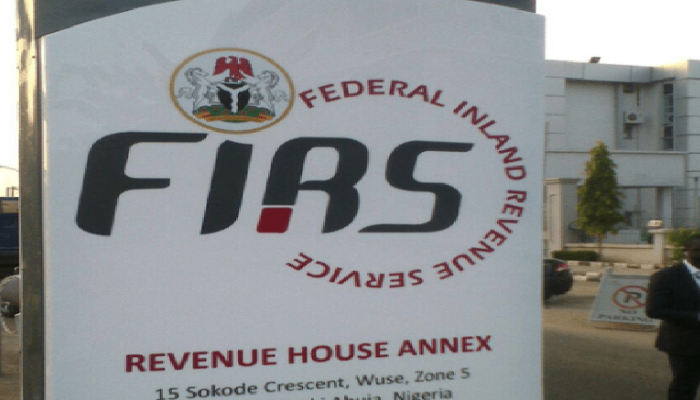
FIRS signpost

The Federal Government has abolished the 5% excise duty previously imposed on telecommunications services, a policy reversal that officials say will ease cost pressures on millions of Nigerians.

The Executive Vice Chairman of the Nigerian Communications Commission (NCC), Aminu Maida, confirmed the development, saying the directive came directly from the presidency.

“President Tinubu directed the removal of the 5% excise duty on telecommunications services,” Maida said, noting the decision was reached during discussions around the Finance Act.

The withdrawal is expected to provide immediate respite to more than 171 million active telecom subscribers, many of whom have been grappling with a 50% tariff increase approved earlier this year.

The Telecom Levy’s Troubled History

The excise duty was first introduced in 2022 under former President Muhammadu Buhari as part of a strategy to expand non-oil revenues. It applied to both voice and data services, with operators mandated to remit monthly collections. The policy was justified on grounds of Nigeria’s fiscal gap and the need to widen the tax base beyond oil.

But from the outset, it was unpopular. The Association of Licensed Telecom Operators of Nigeria (ALTON) argued that the new levy piled onto a sector already struggling under 39 separate taxes, a 7.5% VAT, and a 2% contribution of annual revenue to the NCC.

Operators also faced rising diesel costs to power base stations, given unreliable electricity supply. Unable to absorb the added tax, they passed it directly to subscribers, raising the total tax burden on telecom services to roughly 12.5%. Critics said the measure was unsustainable and harmful to consumers already battling high living costs.

The scrapping of the levy comes after the NCC approved a 50% increase in telecom tariffs effective January 2025. Operators had lobbied for as much as a 100% rise, citing inflation, foreign exchange shortages, and higher import costs for equipment, but the regulator settled on a halfway adjustment.

The new tariff regime reshaped household telecom spending.

  • MTN’s 1.8GB plan jumped from N1,000 to N1,500.
  • A 20GB plan rose from N5,500 to N7,500.
  • SMS rates increased from N4 to N6.

The average cost of 1GB of data climbed from N287 to about N431 in advertised price ranges, with some operators listing even higher. The result has been growing strain on lower-income households, many of which are scaling back data use, opting for cheaper bundles, or limiting app consumption to essential services.

Clearing the Way for Petroleum Tax

While the telecom tax rollback has been welcomed by subscribers, many believe it is part of a broader fiscal balancing act. The government is believed to be clearing space to soften resistance ahead of a more consequential tax on fuel.

Under the Tax Act 2025, Nigerians will begin paying a 5% fossil fuel tax on petrol and diesel from 2026. The levy is not entirely new, but rather a reinstatement of a provision first introduced under the Federal Roads Maintenance Agency (Amendment) Act of 2007.

The Presidential Fiscal Policy and Tax Reforms Committee has said the measure was included in the new tax framework for “harmonization and transparency.” Still, analysts warn that because fuel touches nearly every sector of the economy, the petroleum tax will have far greater knock-on effects than the now-scrapped telecom duty.

Energy costs already make up a significant share of expenses for businesses, from logistics firms to small traders, while households are still adjusting to last year’s subsidy removal. Economists note that even at 5%, the fossil fuel levy could ripple across supply chains, raising prices of transport, goods, and services more sharply than any telecom tariff adjustment.

While the scrapping of the telecom levy provides relief to subscribers, calming tensions between operators and regulators for now, it may prove a short-lived victory for consumers. The introduction of the petroleum tax in 2026 threatens to intensify financial pressures across the board, with its reach extending well beyond mobile data and voice bills.

Dangote Refinery to Begin Direct Petrol Supply at N820/Liter, Launches in 11 States September 15

0

The Dangote Refinery has announced it will commence direct supply of petrol across the country on September 15, with an ex-gantry price fixed at N820 per liter.

The move marks the company’s boldest step yet to dominate Nigeria’s downstream oil sector since its long-awaited refinery began operations.

In a post shared on its official X page Thursday, the refinery said the scheme would launch in 11 states before gradually expanding nationwide.

The initial rollout covers Lagos, Ogun, Oyo, Ondo, Osun, Ekiti, Abuja, Delta, Rivers, Edo, and Kwara States.

According to the refinery, delivery prices will vary slightly by region:

  • N841 per liter in Lagos, Ogun, Oyo, Ondo, Osun, and Ekiti.
  • N851 per liter in Abuja, Delta, Rivers, Edo, and Kwara.

“All petrol station owners nationwide are invited to register for free delivery and other benefits,” the refinery wrote.

The direct-to-station model marks a departure from Nigeria’s traditional supply chain, where petroleum products pass through middlemen before reaching retailers. Dangote is seeking tighter control over pricing and distribution by cutting out intermediaries.

The company has been scaling up logistics for months. On June 15, it announced the acquisition of 4,000 new compressed natural gas (CNG)-powered tankers to enhance nationwide fuel distribution. Weeks later, on June 29, it unveiled a petroleum distribution scheme it claims could save Nigerians over N1.7 trillion annually by reducing inefficiencies and transport costs.

Labor tensions over CNG trucks

But this logistics overhaul has been met with resistance. The plan to import 4,000 CNG-powered trucks sparked a standoff with the Nigeria Union of Petroleum and Natural Gas Workers (NUPENG), whose members dominate the country’s fuel transportation sector.

Union leaders accused Dangote of sidelining existing tanker drivers by announcing that the new trucks would be operated by freshly recruited drivers who would not be allowed to join any union.

NUPENG described the refinery’s position as an affront to workers’ rights guaranteed under Section 40 of the 1999 Constitution, which upholds freedom of association, as well as a breach of international labor conventions, including ILO Convention 87 on Freedom of Association and Protection of the Right to Organize and ILO Convention 98 on the Right to Organize and Collective Bargaining, both ratified by Nigeria.

The union has threatened to stop fuel loading nationwide if Dangote pushes ahead with the plan, raising fears of another disruption in a sector already prone to strikes and supply bottlenecks.

Analysts weigh risks and opportunities

Analysts say the new supply scheme could provide relief to motorists grappling with high pump prices, as direct supply may stabilize retail costs and reduce artificial markups.

However, the refinery’s entry into full-scale distribution could also disrupt the downstream sector. Independent marketers and existing depots may face reduced margins or be forced to rethink their business models as Dangote takes on both refining and distribution.

For labor unions, the bigger concern is whether Dangote’s model signals a deliberate attempt to weaken organized labor’s role in the sector, a move they warn could set a dangerous precedent if not addressed.

The refinery’s rollout comes at a time when the Nigerian petroleum sector is undergoing unprecedented competition. For decades, fuel importation was dominated by the Nigerian National Petroleum Company Limited (NNPCL), which acted as the sole importer of petrol under a subsidy-driven system.

With Dangote Refinery now producing and directly supplying petrol, the sector is shifting away from an NNPC-dependent trajectory. This transition is already altering the balance of power in the industry, with Dangote positioned not only as a major producer but also as a disruptive distributor.

Energy analysts have welcomed the prospect of alternative supply but remain cautious, noting that while Dangote’s entry has been hailed as a potential game-changer for energy security, pump prices could still rise if global crude prices and exchange rate pressures persist.

A Nigerian parallel to global oil majors

It is believed that Dangote’s strategy increasingly mirrors the vertically integrated model of global oil majors such as ExxonMobil, Shell, and Saudi Aramco. These companies maintain dominance not only by refining crude but also by controlling pipelines, shipping, and retail distribution networks that give them end-to-end control of the value chain.

Dangote is adopting a similar playbook by building Africa’s largest refinery and simultaneously moving into direct distribution through a massive fleet of CNG-powered trucks. This vertical integration allows him to manage margins more effectively, capture value that would otherwise go to intermediaries, and wield greater influence over pricing at the pump.

Analysts point out that while ExxonMobil and Shell built this model over decades with government backing and global reach, Dangote is attempting to replicate it within Nigeria in a matter of months. The refinery’s size and its foray into nationwide retail distribution make it the first serious domestic rival to NNPC’s historical dominance, effectively positioning Dangote as Nigeria’s first oil major in the private sector.

For consumers, this could mean more predictable supply and possibly better pricing in the long run, but for smaller marketers and unions, it signals a consolidation of power that could leave them sidelined in a sector that has long relied on fragmented participation.

OpenAI Reaffirms Nonprofit Control, Secures $100bn Equity Stake Amid Microsoft Partnership Talks

0

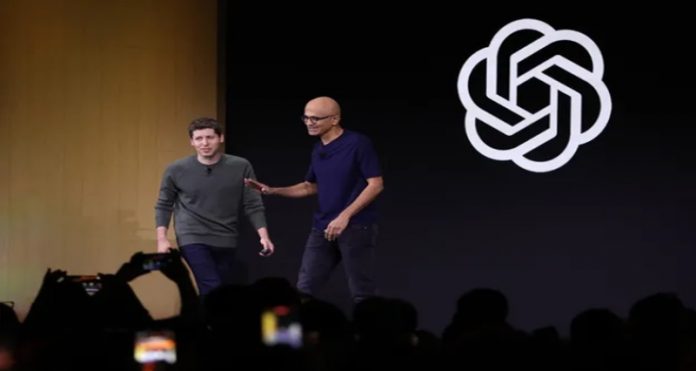
OpenAI on Thursday announced that its nonprofit parent will continue to oversee the company and hold an equity stake exceeding $100 billion, making it one of the most financially powerful philanthropic organizations in history.

The move comes as the artificial intelligence startup — recently valued at $500 billion — navigates mounting scrutiny over its governance model and its delicate balance between commercial expansion and nonprofit oversight. OpenAI said the arrangement will both secure its mission-driven foundation and provide a mechanism for raising the vast sums of capital needed to scale its technologies.

“This structure will make the nonprofit one of the most well-resourced philanthropic organizations in the world,” the company said, adding that the authority vested in the nonprofit would continue to guide its future.

Partnership with Microsoft Enters New Phase

OpenAI also revealed it has signed a non-binding memorandum of understanding with Microsoft to outline the next chapter of their collaboration. Microsoft has invested over $13 billion in the AI pioneer, beginning in 2019 — three years before the launch of its viral chatbot, ChatGPT.

“We are actively working to finalize contractual terms in a definitive agreement,” OpenAI said in a joint statement with Microsoft. “Together, we remain focused on delivering the best AI tools for everyone, grounded in our shared commitment to safety.”

Microsoft remains not only OpenAI’s largest outside investor but also its key cloud partner, integrating AI models into its productivity suite and Azure services. However, the terms of their partnership have come under serious question, with reports that the companies were likely going to have a legal showdown.

Governance Under the Spotlight

In May, OpenAI had bowed to pressure from civic leaders and former employees, pledging that its nonprofit parent would retain authority even as the organization transitioned into a public benefit corporation. Founded in 2015 as a nonprofit research lab, OpenAI has since become one of the fastest-growing commercial players in AI, sparking questions about whether its original mission to ensure AI benefits all of humanity could withstand the pressures of profit-making.

The company noted Thursday it is working closely with the Attorneys General of California and Delaware to formally establish its governance structure.

“OpenAI started as a nonprofit, remains one today, and will continue to be one – with the nonprofit holding the authority that guides our future,” OpenAI Chairman Bret Taylor said in a statement.

Tensions with Elon Musk

The governance announcement lands against the backdrop of an ongoing legal battle with Elon Musk, one of OpenAI’s co-founders. Musk has accused the company of straying from its nonprofit origins and has sought to block its path toward becoming fully for-profit. He is now competing directly in the generative AI market through his rival startup, xAI, escalating what has become one of Silicon Valley’s most closely watched rivalries.

Philanthropy and Community Outreach

In addition to shoring up its governance model, OpenAI’s nonprofit is launching the first phase of a $50 million grant initiative to support nonprofit and community organizations. The grants will target projects focused on AI literacy, economic opportunity, and community innovation, extending OpenAI’s influence into broader social impact initiatives.

However, the dual identity of OpenAI — as both a nonprofit-guided entity and a commercial powerhouse — sets the stage for divergent futures:

  • The nonprofit’s control reassures regulators and the public, enabling OpenAI to raise capital responsibly while continuing to pioneer new AI breakthroughs. Its partnership with Microsoft could deepen, giving it unparalleled distribution power across both consumer and enterprise markets. The nonprofit’s equity stake, valued at over $100 billion, could channel unprecedented resources into global philanthropic causes.
  • The governance model may face renewed skepticism if commercial ambitions outpace nonprofit safeguards. Legal pressures from Musk and potential regulatory inquiries could slow its momentum. Critics may also question whether a nonprofit sitting atop a $100 billion equity position can truly maintain independence from corporate imperatives.

OpenAI has sought to cast itself as unique among Big Tech disruptors for now: an entity attempting to fuse commercial scale with philanthropic control. However, it is not clear whether this balancing act can hold under the weight of market expectations, investor demands, and intensifying competition, which may define the company’s next chapter.

$405M Shockwave: BlockDAG Surges With 3M Users as Nexchain AI and Little Pepe Struggle to Keep Up

0

Little Pepe mixes internet culture with practical tools, bringing in more than $23 million. Its Ethereum Layer 2 structure and social campaigns pushed sales beyond 15 billion coins. Nexchain AI takes a different direction. It builds complex architecture with DAG design and AI-driven contracts, passing $9.9 million in its presale.

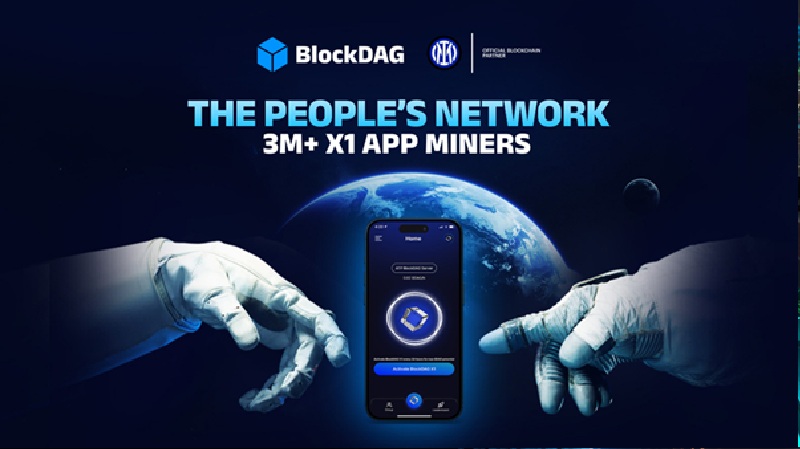
Both projects are growing fast. Yet BlockDAG (BDAG) sets itself apart by showing adoption before launch. Its X1 app already counts over 3 million daily users mining BDAG coins without waiting for swaps or bridges. With a limited $0.0013 price lock and $405 million nearly raised, BlockDAG proves traction with activity, not just words.

BlockDAG’s 3M Daily Miners: The Strongest Start in Crypto History

BlockDAG’s X1 crypto miner app has done what very few projects have ever managed. It hit more than 3 million daily users mining BDAG coins while still in presale. Most projects dream of this kind of traffic even after going live. The key difference here is not only the huge adoption but also the consistency. People keep coming back every day to mine, invite friends, and stay engaged long before launch.

This flips the usual model. Normally, users need to buy, swap, or move coins before they see any value. BlockDAG changes the rules. Mining starts at the very first tap. Every click feels like ownership. And because there is no cost to start, people can join instantly.

The results speak clearly. BlockDAG has raised nearly $405 million so far, with $40 million coming in during the last month. Over 26.2 billion BDAG coins are now sold. It has reached Batch 30, priced at $0.03. But the locked presale entry of $0.0013 still stands, giving a 2900% ROI compared to Batch 1.

Hardware growth also shows strong demand. A total of 19,800 miners have been sold to date, adding real-world strength to its ecosystem. For a presale, this level of user action and funding is unmatched.

Nexchain AI: Over $9.9M Raised with Tech-Heavy Setup

Nexchain AI has advanced into Stage 27 of its presale, raising over $9.9 million of its $11 million goal. The coin price now stands at $0.108, rising from $0.104 in the earlier stage. Within hours of Stage 27 starting, $400,000 flowed in, showing strong demand continues.

The system combines a Layer-1 chain with a DAG-based structure, AI smart contracts, sharding, and a hybrid PoS mechanism. This creates huge scalability and defense against post-quantum risks. Its CertiK audit further secures trust in its design.

At the same time, a $5 million airdrop campaign is fueling attention. Users can earn bonuses through leaderboards and invite tasks. Early developer kits and SDKs are being tested, drawing positive feedback. The project’s online base has also crossed 80,000 across Telegram and Discord. Nexchain AI is steadily building both its tech base and its following.

Little Pepe’s Meme Power: $23M Raised

Little Pepe keeps moving upward in Stage 12 of its presale. Each coin is priced at $0.0021. The sale has already raised more than $23 million, with 15 billion coins purchased. While it taps into meme appeal, it goes further with useful features.

The setup runs on an Ethereum-compatible Layer 2, offering zero tax on transactions, anti-sniper protection, staking, and its own meme launchpad. Its CertiK audit scored over 95 percent, proving its infrastructure is reliable.

Community energy is also driving growth. A $777,000 giveaway campaign is running, boosting activity across social media. Staking rewards are set to start once the top crypto presale ends. Analysts expect a launch price close to $0.003. Some long-term outlooks suggest it could reach $1 if momentum continues.

Real Use, Real Users, Real Numbers

Nexchain AI and Little Pepe are both carving their paths forward. Nexchain AI builds around complex tech layers, strong audits, and structured campaigns. Little Pepe grows through meme-driven hype, Ethereum Layer 2 utility, and active community pushes. Both show progress, yet they remain in stages where traction is still forming.

BlockDAG tells a different story. With more than 3 million daily miners on its X1 app, it proves real use before launch. The $0.0013 entry lock, $405 million almost raised, 26.2 billion coins sold, and 19,800 miners distributed underline its unmatched scale. Many projects promise future growth, but BlockDAG is already delivering it in real time. For those watching presales in 2025, this project is not just building hype, it is setting the pace for the entire market.


Presale: https://purchase.blockdag.network

Website: https://blockdag.network

Telegram: https://t.me/blockDAGnetworkOfficial

Discord: https://discord.gg/Q7BxghMVyu