DD
MM
YYYY

PAGES

DD
MM
YYYY

spot_img

PAGES

Home Blog Page 5408

Intel Sells NAND and SSD to SK hynix in A $7bln Deal

0
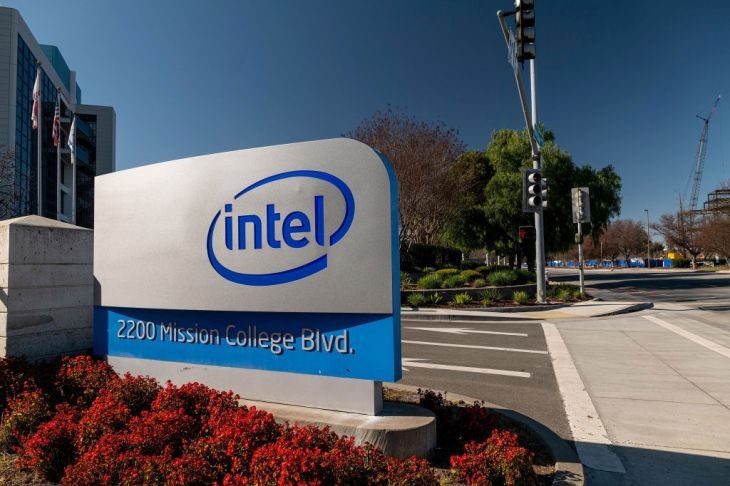
Signage at the entrance to Intel headquarters in Santa Clara, California, U.S., on Wednesday, Jan. 20, 2021. Investors want to know if the world's largest chipmaker will outsource more production when Intel Corp. reports results Thursday. Photographer: David Paul Morris/Bloomberg via Getty Images

Intel has announced the selling of its NAND and SSD business to Seoul-based SK hynix in a deal worth an initial $7 billion.

The deal will include the transfer of certain NAND SSD-associated intellectual properties (IP) and employees and the Dalian NAND memory manufacturing facility in China to SK hynix.

SK hynix Inc., is the world’s top-tier semiconductor supplier offering Dynamic Random Access Memory chips (“DRAM”), Flash memory chips (“NAND Flash”), and CMOS Image Sensors (“CIS”) for a wide range of distinguished customers globally.

As part of the deal. Intel will continue to manufacture NAND wafers at SK hynix’s Dalian memory manufacturing facility and retain certain IP related to the manufacture and design of NAND flash wafers until the final closing of the transaction.

The final closing is expected to occur in or after March 2025, when SK hynix will acquire from Intel the remaining NAND business assets, including certain IP related to the manufacture and design of NAND flash wafers, R&D employees, and the Dalian fab workforce, for US$2 billion.

The SSD business will transition to a newly formed company, Solidigm, a subsidiary of SK hynix. Solidigm, whose name reflects a new paradigm in solid-state storage, will name Robert (Rob) B. Crooke as CEO. Crooke was previously senior vice president and general manager of Intel’s Non-Volatile Memory Solutions Group. Solidigm will have its headquarters in San Jose, California.

Commenting on the deal, Park Jung-ho, vice chairman and co-CEO of SK hynix said: “My heartfelt welcome to the Solidigm team members who are joining our family. This acquisition will present a paradigm shifting moment for SK Hynix’s NAND flash business to enter the global top tier level. With this acquisition, SK Hynix will be one step further in its path towards global 1st tier technology company.”

Crooke said the deal will help in the company’s quest to lead the data and storage industry.

“Solidigm is poised to be the world’s next big semiconductor company, which presents an unprecedented opportunity to reinvent the data memory and storage industry. We are steadfast in our commitment to lead the data industry in a way that can truly fuel human advancement,” he said.

Lately, Intel has been struggling to keep up with the intensity of the chip market, losing its place to rivals such as Nvidia. Its ordeal was compounded after Apple, who has been a high-profile buyer of Intel chips, created its own.

Though the company has undergone drastic changes aimed at revamping its business, it is yet to bounce back. Intel intends to invest transaction proceeds to deliver leadership products and advance its long-term growth priorities.


My Call On International B2C Ecommerce for a Hedge Fund

0

I offer opinions to global clients. Read this summary on what some hedge funds, private equity firms, etc ask. Despite employing the most brilliant among others, they also look for commoners like us.

Client [2014] – What is your view on the long-term performance of ecommerce companies that syndicate purchases for Africans from developed markets like UK and US? We’re exploring a couple of companies in this sector for investment.

Ndubuisi Ekekwe [I wrote a 4 page document but I will summarize here] –  These companies will outperform in the short-term because of massive information asymmetry,  low penetration of mobile internet and digital payment systems. These companies are valuable because they help people buy things in UK, USA, etc but their core value proportion may not be sustainable. They have no leverageable factors which could compound over time. In short, they are de-leverageable since they will lose positioning in 7-9 years as digital markets mature.

I posit that Africa will improve on payment in 3-4 years and access to the Western digital markets will deepen. If people can buy these things directly, these intermediaries would be disintermediated. So, the biggest risk is how fast Amazon, eBay, JC, etc will begin to accept payments in leading African markets. If those are available and the shops can put logistics to ship to the customers via Fedex, DHL, etc, the aggregation services of these firms will not be necessary. 

In other words, it makes no sense to pay and wait for 3 weeks to receive the items from New York to  Cape Town when you can pay and ask for FedEx international priority to deliver in 3 days. The cost has never been the main factor since those buying can absorb those fees. More so, we have looked at the fees and when all the aggregator fees are included, the saving is marginal.

Furthermore, this market cannot grow faster than the rate the middle class grows. So, the long-time playbook would be anchored on the premise that the middle class can grow really fast in the African markets. Historically, during economic turbulence, exchange rate perturbations emerge, with ancillary inflations which could depress the category growth, as most users will focus on local substitutes.

Summary: if investing, you must look at the time horizon when to exit.

Comment on LinkedIn Feed

Comment: Your time bound view and analysis on the aggregators’ market space for investment is profound.

Customers’ switching costs from the aggregators to direct purchase from the likes of Amazon for now is high.

However, looking at the Africa’s very slow economic development and middle class growth trajectories, I like to slightly posit that your clients’ ROI can still be guaranteed for the next 10 years.

This is because the middle class growth level will always determine the level of improvement on the payment infrastructure investment by potential players in that market.

Thank you Prof. Ndubuisi Ekekwe.

My Response: “However, looking at the Africa’s very slow economic development and middle class growth trajectories, ” – I do not see this as pure Africa ecommerce. I see this as simply trading across borders and the factors are not wholly endogenous. If payment and markets improve in Africa, why do you think Amazon, JC, ebay etc will not open shops in Africa directly? If that happens, how do do see the aggregators thriving?

Register for Tekedia Startup Masterclass with Prof Ndubuisi Ekekwe

0

Tekedia Startup Masterclass: from Start-Up to Unicorn is designed to help founders, entrepreneurs, and those generally working in the startup and SME ecosystems, to master the mechanics of building category-king companies.

The program runs for 8 weeks and it includes an hour-long one-on-one private Zoom session every week, with Tekedia Institute’s Lead Faculty, Prof Ndubuisi Ekekwe. We help you solve the innovation equation and unlock leverageable factors that compound.

Pricing: $400 or N180,000 naira; click for many payment options. Go here and register.

It is on-demand which means you start immediately you pay.  As you plan the Zoom, you will go through 8 weeks of pre-recorded videos I have created. Those explain innovation, valuations, markets, co-founder agreement, being a CEO with high intensity, etc from the angle of SME/startup leaders.

It’s all about solving this equation: Innovation = Invention + Commercialization. We’ll help crack it for that mission.

Startups, what are you building? Tell us

0

Innovators and startups, it is that time of the year again. Tekedia Capital has started the process of looking at startups for the next edition of Tekedia Capital Syndicate. If you are building something amazing in any sector or industry,  anchored and powered by technology, we will like to explore with you.

Our members collectively invest $millions yearly in leading global startups.

Go here and learn how we work.

How to stay sane as an entrepreneur running a crazy startup

0

There is a lot of conversations ongoing about mental health, and somehow, I feel the need to talk about entrepreneurs and their mental health. A recent study by the National Institute of Mental Health suggests that 72% of entrepreneurs are directly or indirectly affected by mental health issues compared to just 48% of non-entrepreneurs.

Why is this?

Despite the glamourous part of entrepreneurship (which is all we mostly see on the Media), Entrepreneurs have to deal with more challenges, failures, betrayals from trusted staff, abandonment, disappointment, depressions, burnout, insomnia, and other related stuff which affect their mental health.

Even for those that will not have to deal with most of the negatives, growing a business from scratch and running it every single day can be likened to a constant attempt to keep a madhouse in order. Things get hectic. Deadlines not met. Contracts get breached. Productivity has to be kept on the high. Sometimes, there are also irate customers or clients to handle. It can get overwhelming.

Studies say entrepreneurs are twice as likely to suffer from depression, and six times more likely to suffer from Attention Deficit Hyperactivity Disorder (ADHD). Without mentioning names, some of you may (or may not) remember the story of a certain 29-year-old startup founder who jumped from a rooftop bar and died in 2015 and another who died in 2020 from a combination of drugs and mental illness. Clearly, entrepreneurs have to deal with a lot of bad days than they let on.

One way to protect your mental health is to make it a ritual to take time off work/business. I talked more about this in another post, so I should probably not say more. You need to spend a few hours out of the madness, to regain your sanity, socialize with people, renew your energy and then go back ready to smash more goals. Develop more personal and family relationships. You will need them as much as they need you.

Another tip for you as a founder or entrepreneur is to understand the difference between healthy striving and perfectionism. Often it is the drive towards perfectionism that keeps people away from happiness and contentment, and this could lead to anxiety and depression. Celebrate small victories and learn to bask in the euphoria, and give yourself a pat on the back. Don’t place unrealistic expectations of yourself and your business.

Learn to talk about bad days as much as you talk about the good days. You don’t always have to keep up a face that everything is going fine when it is not. Every entrepreneur should have that friend, partner, or confidante that you tell everything that might be going wrong. It is a good way to let out steam and bad vibes. Be honest about your struggles and share them with others. It is the need to escape the reality of bad days that may lead some people to depression or even drugs.

This last tip may not seem like one, but it is. Fix your finances. Financial problems account for some anxiety and depression cases, even among entrepreneurs. If your finances are well-sorted and your books are in order, you should have fewer worries. Have a stable financial plan for yourself and for your startup.