DD
MM
YYYY

PAGES

DD
MM
YYYY

spot_img

PAGES

Home Blog Page 541

Dangote Refinery to Begin Direct Petrol Supply at N820/Liter, Launches in 11 States September 15

0

The Dangote Refinery has announced it will commence direct supply of petrol across the country on September 15, with an ex-gantry price fixed at N820 per liter.

The move marks the company’s boldest step yet to dominate Nigeria’s downstream oil sector since its long-awaited refinery began operations.

In a post shared on its official X page Thursday, the refinery said the scheme would launch in 11 states before gradually expanding nationwide.

The initial rollout covers Lagos, Ogun, Oyo, Ondo, Osun, Ekiti, Abuja, Delta, Rivers, Edo, and Kwara States.

According to the refinery, delivery prices will vary slightly by region:

  • N841 per liter in Lagos, Ogun, Oyo, Ondo, Osun, and Ekiti.
  • N851 per liter in Abuja, Delta, Rivers, Edo, and Kwara.

“All petrol station owners nationwide are invited to register for free delivery and other benefits,” the refinery wrote.

The direct-to-station model marks a departure from Nigeria’s traditional supply chain, where petroleum products pass through middlemen before reaching retailers. Dangote is seeking tighter control over pricing and distribution by cutting out intermediaries.

The company has been scaling up logistics for months. On June 15, it announced the acquisition of 4,000 new compressed natural gas (CNG)-powered tankers to enhance nationwide fuel distribution. Weeks later, on June 29, it unveiled a petroleum distribution scheme it claims could save Nigerians over N1.7 trillion annually by reducing inefficiencies and transport costs.

Labor tensions over CNG trucks

But this logistics overhaul has been met with resistance. The plan to import 4,000 CNG-powered trucks sparked a standoff with the Nigeria Union of Petroleum and Natural Gas Workers (NUPENG), whose members dominate the country’s fuel transportation sector.

Union leaders accused Dangote of sidelining existing tanker drivers by announcing that the new trucks would be operated by freshly recruited drivers who would not be allowed to join any union.

NUPENG described the refinery’s position as an affront to workers’ rights guaranteed under Section 40 of the 1999 Constitution, which upholds freedom of association, as well as a breach of international labor conventions, including ILO Convention 87 on Freedom of Association and Protection of the Right to Organize and ILO Convention 98 on the Right to Organize and Collective Bargaining, both ratified by Nigeria.

The union has threatened to stop fuel loading nationwide if Dangote pushes ahead with the plan, raising fears of another disruption in a sector already prone to strikes and supply bottlenecks.

Analysts weigh risks and opportunities

Analysts say the new supply scheme could provide relief to motorists grappling with high pump prices, as direct supply may stabilize retail costs and reduce artificial markups.

However, the refinery’s entry into full-scale distribution could also disrupt the downstream sector. Independent marketers and existing depots may face reduced margins or be forced to rethink their business models as Dangote takes on both refining and distribution.

For labor unions, the bigger concern is whether Dangote’s model signals a deliberate attempt to weaken organized labor’s role in the sector, a move they warn could set a dangerous precedent if not addressed.

The refinery’s rollout comes at a time when the Nigerian petroleum sector is undergoing unprecedented competition. For decades, fuel importation was dominated by the Nigerian National Petroleum Company Limited (NNPCL), which acted as the sole importer of petrol under a subsidy-driven system.

With Dangote Refinery now producing and directly supplying petrol, the sector is shifting away from an NNPC-dependent trajectory. This transition is already altering the balance of power in the industry, with Dangote positioned not only as a major producer but also as a disruptive distributor.

Energy analysts have welcomed the prospect of alternative supply but remain cautious, noting that while Dangote’s entry has been hailed as a potential game-changer for energy security, pump prices could still rise if global crude prices and exchange rate pressures persist.

A Nigerian parallel to global oil majors

It is believed that Dangote’s strategy increasingly mirrors the vertically integrated model of global oil majors such as ExxonMobil, Shell, and Saudi Aramco. These companies maintain dominance not only by refining crude but also by controlling pipelines, shipping, and retail distribution networks that give them end-to-end control of the value chain.

Dangote is adopting a similar playbook by building Africa’s largest refinery and simultaneously moving into direct distribution through a massive fleet of CNG-powered trucks. This vertical integration allows him to manage margins more effectively, capture value that would otherwise go to intermediaries, and wield greater influence over pricing at the pump.

Analysts point out that while ExxonMobil and Shell built this model over decades with government backing and global reach, Dangote is attempting to replicate it within Nigeria in a matter of months. The refinery’s size and its foray into nationwide retail distribution make it the first serious domestic rival to NNPC’s historical dominance, effectively positioning Dangote as Nigeria’s first oil major in the private sector.

For consumers, this could mean more predictable supply and possibly better pricing in the long run, but for smaller marketers and unions, it signals a consolidation of power that could leave them sidelined in a sector that has long relied on fragmented participation.
OpenAI Reaffirms Nonprofit Control, Secures $100bn Equity Stake Amid Microsoft Partnership Talks

0

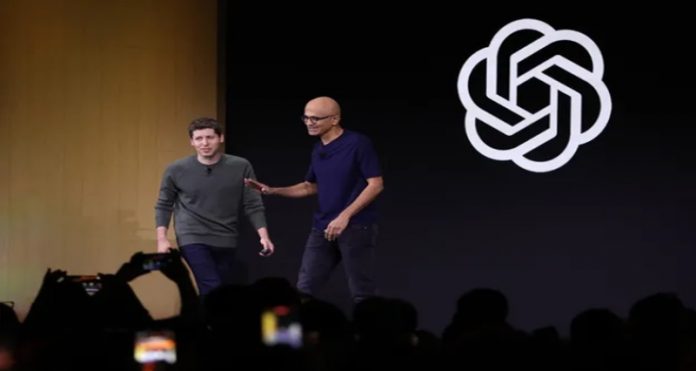
OpenAI on Thursday announced that its nonprofit parent will continue to oversee the company and hold an equity stake exceeding $100 billion, making it one of the most financially powerful philanthropic organizations in history.

The move comes as the artificial intelligence startup — recently valued at $500 billion — navigates mounting scrutiny over its governance model and its delicate balance between commercial expansion and nonprofit oversight. OpenAI said the arrangement will both secure its mission-driven foundation and provide a mechanism for raising the vast sums of capital needed to scale its technologies.

“This structure will make the nonprofit one of the most well-resourced philanthropic organizations in the world,” the company said, adding that the authority vested in the nonprofit would continue to guide its future.

Partnership with Microsoft Enters New Phase

OpenAI also revealed it has signed a non-binding memorandum of understanding with Microsoft to outline the next chapter of their collaboration. Microsoft has invested over $13 billion in the AI pioneer, beginning in 2019 — three years before the launch of its viral chatbot, ChatGPT.

“We are actively working to finalize contractual terms in a definitive agreement,” OpenAI said in a joint statement with Microsoft. “Together, we remain focused on delivering the best AI tools for everyone, grounded in our shared commitment to safety.”

Microsoft remains not only OpenAI’s largest outside investor but also its key cloud partner, integrating AI models into its productivity suite and Azure services. However, the terms of their partnership have come under serious question, with reports that the companies were likely going to have a legal showdown.

Governance Under the Spotlight

In May, OpenAI had bowed to pressure from civic leaders and former employees, pledging that its nonprofit parent would retain authority even as the organization transitioned into a public benefit corporation. Founded in 2015 as a nonprofit research lab, OpenAI has since become one of the fastest-growing commercial players in AI, sparking questions about whether its original mission to ensure AI benefits all of humanity could withstand the pressures of profit-making.

The company noted Thursday it is working closely with the Attorneys General of California and Delaware to formally establish its governance structure.

“OpenAI started as a nonprofit, remains one today, and will continue to be one – with the nonprofit holding the authority that guides our future,” OpenAI Chairman Bret Taylor said in a statement.

Tensions with Elon Musk

The governance announcement lands against the backdrop of an ongoing legal battle with Elon Musk, one of OpenAI’s co-founders. Musk has accused the company of straying from its nonprofit origins and has sought to block its path toward becoming fully for-profit. He is now competing directly in the generative AI market through his rival startup, xAI, escalating what has become one of Silicon Valley’s most closely watched rivalries.

Philanthropy and Community Outreach

In addition to shoring up its governance model, OpenAI’s nonprofit is launching the first phase of a $50 million grant initiative to support nonprofit and community organizations. The grants will target projects focused on AI literacy, economic opportunity, and community innovation, extending OpenAI’s influence into broader social impact initiatives.

However, the dual identity of OpenAI — as both a nonprofit-guided entity and a commercial powerhouse — sets the stage for divergent futures:

  • The nonprofit’s control reassures regulators and the public, enabling OpenAI to raise capital responsibly while continuing to pioneer new AI breakthroughs. Its partnership with Microsoft could deepen, giving it unparalleled distribution power across both consumer and enterprise markets. The nonprofit’s equity stake, valued at over $100 billion, could channel unprecedented resources into global philanthropic causes.
  • The governance model may face renewed skepticism if commercial ambitions outpace nonprofit safeguards. Legal pressures from Musk and potential regulatory inquiries could slow its momentum. Critics may also question whether a nonprofit sitting atop a $100 billion equity position can truly maintain independence from corporate imperatives.

OpenAI has sought to cast itself as unique among Big Tech disruptors for now: an entity attempting to fuse commercial scale with philanthropic control. However, it is not clear whether this balancing act can hold under the weight of market expectations, investor demands, and intensifying competition, which may define the company’s next chapter.

$405M Shockwave: BlockDAG Surges With 3M Users as Nexchain AI and Little Pepe Struggle to Keep Up

0

Little Pepe mixes internet culture with practical tools, bringing in more than $23 million. Its Ethereum Layer 2 structure and social campaigns pushed sales beyond 15 billion coins. Nexchain AI takes a different direction. It builds complex architecture with DAG design and AI-driven contracts, passing $9.9 million in its presale.

Both projects are growing fast. Yet BlockDAG (BDAG) sets itself apart by showing adoption before launch. Its X1 app already counts over 3 million daily users mining BDAG coins without waiting for swaps or bridges. With a limited $0.0013 price lock and $405 million nearly raised, BlockDAG proves traction with activity, not just words.

BlockDAG’s 3M Daily Miners: The Strongest Start in Crypto History

BlockDAG’s X1 crypto miner app has done what very few projects have ever managed. It hit more than 3 million daily users mining BDAG coins while still in presale. Most projects dream of this kind of traffic even after going live. The key difference here is not only the huge adoption but also the consistency. People keep coming back every day to mine, invite friends, and stay engaged long before launch.

This flips the usual model. Normally, users need to buy, swap, or move coins before they see any value. BlockDAG changes the rules. Mining starts at the very first tap. Every click feels like ownership. And because there is no cost to start, people can join instantly.

The results speak clearly. BlockDAG has raised nearly $405 million so far, with $40 million coming in during the last month. Over 26.2 billion BDAG coins are now sold. It has reached Batch 30, priced at $0.03. But the locked presale entry of $0.0013 still stands, giving a 2900% ROI compared to Batch 1.

Hardware growth also shows strong demand. A total of 19,800 miners have been sold to date, adding real-world strength to its ecosystem. For a presale, this level of user action and funding is unmatched.

Nexchain AI: Over $9.9M Raised with Tech-Heavy Setup

Nexchain AI has advanced into Stage 27 of its presale, raising over $9.9 million of its $11 million goal. The coin price now stands at $0.108, rising from $0.104 in the earlier stage. Within hours of Stage 27 starting, $400,000 flowed in, showing strong demand continues.

The system combines a Layer-1 chain with a DAG-based structure, AI smart contracts, sharding, and a hybrid PoS mechanism. This creates huge scalability and defense against post-quantum risks. Its CertiK audit further secures trust in its design.

At the same time, a $5 million airdrop campaign is fueling attention. Users can earn bonuses through leaderboards and invite tasks. Early developer kits and SDKs are being tested, drawing positive feedback. The project’s online base has also crossed 80,000 across Telegram and Discord. Nexchain AI is steadily building both its tech base and its following.

Little Pepe’s Meme Power: $23M Raised

Little Pepe keeps moving upward in Stage 12 of its presale. Each coin is priced at $0.0021. The sale has already raised more than $23 million, with 15 billion coins purchased. While it taps into meme appeal, it goes further with useful features.

The setup runs on an Ethereum-compatible Layer 2, offering zero tax on transactions, anti-sniper protection, staking, and its own meme launchpad. Its CertiK audit scored over 95 percent, proving its infrastructure is reliable.

Community energy is also driving growth. A $777,000 giveaway campaign is running, boosting activity across social media. Staking rewards are set to start once the top crypto presale ends. Analysts expect a launch price close to $0.003. Some long-term outlooks suggest it could reach $1 if momentum continues.

Real Use, Real Users, Real Numbers

Nexchain AI and Little Pepe are both carving their paths forward. Nexchain AI builds around complex tech layers, strong audits, and structured campaigns. Little Pepe grows through meme-driven hype, Ethereum Layer 2 utility, and active community pushes. Both show progress, yet they remain in stages where traction is still forming.

BlockDAG tells a different story. With more than 3 million daily miners on its X1 app, it proves real use before launch. The $0.0013 entry lock, $405 million almost raised, 26.2 billion coins sold, and 19,800 miners distributed underline its unmatched scale. Many projects promise future growth, but BlockDAG is already delivering it in real time. For those watching presales in 2025, this project is not just building hype, it is setting the pace for the entire market.


Presale: https://purchase.blockdag.network

Website: https://blockdag.network

Telegram: https://t.me/blockDAGnetworkOfficial

Discord: https://discord.gg/Q7BxghMVyu

U.S. Inflation Surprises on the Upside in August as Jobless Claims Jump, Complicating Fed Outlook

0

U.S. consumer prices rose faster than expected in August, while weekly jobless claims accelerated sharply, presenting the Federal Reserve with a mixed and politically sensitive economic picture just days before policymakers meet to decide the future path of interest rates.

The consumer price index (CPI) climbed 0.4% on a seasonally adjusted basis, double July’s increase, according to the Bureau of Labor Statistics. That lifted the annual inflation rate to 2.9%, a 0.2 percentage point rise from the prior month and the highest reading since January. Economists surveyed by Dow Jones had expected a slightly softer 0.3% monthly increase, with the year-on-year figure landing exactly at 2.9%.

The closely watched core CPI, which strips out food and energy, rose 0.3% on the month, in line with expectations. On a 12-month basis, core inflation held at 3.1%, still above the Fed’s 2% target. Central bankers generally consider the core index a more reliable gauge of long-term inflation trends.

Labor Market Weakness Emerges

On the employment front, the Labor Department reported a surprise increase in weekly jobless claims. New filings for unemployment benefits jumped to 263,000 in the week ending Sept. 6, well above the 235,000 estimate and up 27,000 from the previous period.

The data reinforced signs of labor market cooling in recent months, with several measures — including job openings and hiring activity — trending downward. The Fed has been balancing the need to keep inflation in check while preventing further cracks from appearing in the job market.

Inflation Drivers

Within the CPI, the largest upward push came from shelter costs, which rose 0.4% and account for nearly one-third of the overall index. Food prices climbed 0.5%, while energy rose 0.7%, driven by a 1.9% increase in gasoline.

Tariff-sensitive sectors also registered higher prices: new vehicles rose 0.3%, while used cars and trucks — generally not affected by tariffs — gained 1%.

The results arrived as the Bureau of Labor Statistics separately reported that producer prices slipped 0.1% in August, suggesting some relief in the pipeline for future consumer price pressures.

Fed’s Next Move

Markets are fully pricing in a rate cut next week, with investors assigning a 100% probability that the Fed will lower its benchmark federal funds rate from the current 4.25%–4.5% range.

However, the size of the cut is now being closely debated. While the Fed has typically moved in quarter-point increments, traders see a slight chance that policymakers could opt for a larger half-point reduction, given signs of labor market weakness and relatively tame inflation readings over the summer.

The meeting, set to conclude on Sept. 17, is likely to be one of the most consequential of the year, balancing the Fed’s dual mandate of price stability and maximum employment against the backdrop of President Donald Trump’s tariffs, which have added complexity to inflation dynamics. Fed officials have acknowledged that while tariffs have created “visible pass-through” effects, inflation overall has remained more contained than some had feared.

The August inflation and unemployment reports represent the final major data inputs before the Fed convenes. They also feed into a wider debate about the durability of U.S. economic resilience.

After a year of relative stability in prices, the uptick in CPI, combined with rising unemployment claims, underscores the fragile balance between growth and stability. For Trump, who has championed tariffs as a tool to bolster U.S. industry, the numbers come as evidence of the economic trade-offs his policies continue to generate.

GTCR Clinches $4.8bn Deal to Acquire Zentiva from Advent International

0

Private equity heavyweight GTCR has agreed to acquire Czech generic drugmaker Zentiva from Advent International in a deal worth €4.1 billion ($4.8 billion), the Financial Times reported Wednesday, citing sources close to the matter.

The transaction, which has reportedly been finalized and is expected to be announced within days, represents one of the largest European healthcare buyouts of 2025.

Zentiva manufactures a wide portfolio of generic and over-the-counter drugs and has steadily grown into a major player in Europe’s pharmaceutical landscape. The company now operates in more than 30 countries and employs over 5,000 staff, according to its website.

Founded in Prague, Zentiva was acquired by Advent from French pharmaceutical giant Sanofi in 2018 for €1.9 billion, a price that now looks modest given the company’s expansion and rising valuation. Under Advent’s ownership, Zentiva invested heavily in production capacity and geographic diversification, strengthening its position across Central and Eastern Europe while making inroads into Western Europe.

A Competitive Sale Process

The sale attracted significant global interest. India’s Economic Times reported last month that Aurobindo Pharma, one of India’s largest generics manufacturers, had been leading the race to acquire Zentiva with an offer reportedly valued at up to $5.5 billion. Other bidders were also said to have been in the mix, highlighting the strategic importance of generic drugmakers at a time when healthcare costs are under pressure and demand for affordable medicines is surging worldwide.

GTCR’s victory underscores private equity’s growing appetite for healthcare deals, particularly in the generics space, where margins are slim but opportunities for consolidation and scale are plentiful.

For GTCR, the deal represents a significant bet on the resilience of the generic drugs market, which benefits from strong long-term demand drivers such as aging populations, patent expirations of branded drugs, and government initiatives to reduce healthcare costs. Unlike biotech or branded pharma investments, which are subject to high R&D risk, generic drugmakers like Zentiva generate steady cash flows from established products, making them attractive private equity targets.

The timing also reflects wider momentum in healthcare M&A. Private equity firms have been circling European generics manufacturers amid a broader wave of consolidation, as firms seek to build pan-European platforms capable of competing with global giants such as Teva, Sandoz, and Viatris.

How It Stacks Up Globally

The GTCR-Zentiva deal is notable not just for its size but also for how it compares with other recent private equity moves in European healthcare. Rival buyout houses have been equally aggressive:

  • EQT recently boosted its healthcare portfolio by backing German generics producer Stada, signaling continued interest in building scale in Europe.
  • Carlyle has been active in specialty pharma and medtech, snapping up stakes in companies with strong recurring revenues.
  • Meanwhile, Bain Capital and Cinven jointly acquired Lonza’s specialty ingredients unit for over $4 billion, underscoring the appetite for large-scale European healthcare assets.

Against this backdrop, GTCR’s acquisition of Zentiva aligns with a pattern: large private equity funds betting on healthcare subsectors that promise stability amid economic volatility. Generics, in particular, have become a magnet for investors given their central role in lowering healthcare costs worldwide.

Once finalized, the transaction will mark a lucrative exit for Advent International, which more than doubled its original investment in just seven years. For GTCR, the challenge will be to maintain Zentiva’s growth trajectory while navigating an increasingly competitive generics market, where pricing pressure and regulatory scrutiny are persistent concerns.

Industry analysts suggest GTCR may pursue bolt-on acquisitions to expand Zentiva’s portfolio and geographic footprint further, while also investing in supply chain efficiency and digital transformation to defend margins.

If confirmed, the sale could reshape the competitive dynamics of Europe’s generics sector and signal a renewed wave of private equity-driven consolidation in healthcare — one increasingly defined by billion-dollar bets on affordable medicines.