DD
MM
YYYY

PAGES

DD
MM
YYYY

spot_img

PAGES

Home Blog Page 5410

Something BIG is coming in January from Mintyn Digital Bank, Download App

0

Something BIG is coming in January from Mintyn Bank . I just spoke with the team and it is massive. We’ve tested the model with selected housing estates in Nigeria and will be scaling it across the nation. How can the money in your Mintyn bank account deliver more value than the same amount in another bank? It comes down to Mintyn Trade: you can indicate what you want to buy in the Mintyn Trade section. 

Within hours, the app will match you with other people who want to buy the same thing. Yes, all of you can pool the funds and buy in bulk. Mintyn Logistics works with our partners to provide the item in churches, mosques, markets, club houses, etc. If $5 would have given you 10 cups of rice, you can go home with 20 cups due to the aggregated volume purchase, optimized by tech. That is your digital bank looking out for you!  

With Mintyn as your bank, you will never shop alone because tech will make it possible for you to buy in bulk always like all the big people in Ikoyi, Maitama, GRAs, etc. Tekedia Capital asks you to open an account today at https://mintyn.com/ ; watch this message playing on DSTV English Premiership games. 

As Nigeria Yearns For Economic Lobotomy

0

The last time I checked, ‘lobotomy’ remained a medical term that could be described as a surgical operation in which some of the nerves in the brain are cut to address a severe mental imbalance.

It isn’t anymore news that Nigeria’s economic status is currently undergoing a grievous mental disorder that requires such major operation as lobotomy.

At the moment, Nigeria’s economic countenance is characterized by low crude oil price, instability in the main oil-producing regions, lack of foreign currency and monetary strengthening.

Recently, the naira has been weakening against the U.S. dollar (USD), precisely since June 2016 when the Central Bank of Nigeria (CBN) scrapped the currency peg that had kept it at an artificially-high value of about #198 per USD for over a year.

After the peg was removed, the currency lost over 40% of its value against the USD and fell to #282 per USD. While the CBN had pledged to move to a free-floating exchange regime, it tactically intervened in the foreign exchange market some weeks after the devaluation to keep the ravaging naira between a narrow range of 282 to 285 NGN per USD.

However, in mid-July 2016, the apex bank withdrew its interventions, thereby causing the naira to depreciate further. On July 28, the currency fell to a record-low of #322 per USD, which marked a 14.2% depreciation within a month as well as 61.8% depreciation in annual terms. Since then, the naira has been fluctuating at low levels. Right now, it’s sold at about #411 per USD and about #570 at the parallel market.

Notwithstanding, several analysts cum commentators were of the view that the removal of the currency peg was long overdue. The exchange rate flexibility awakened hopes that the shortage of hard currency and restrictions on imports, which were partly responsible for the country’s unwholesome economic performance in the first quarter, Q1 of the fiscal year, would ease immensely.

It’s noteworthy that the onward deterioration of the naira prompted the CBN to hike interest rates to a record high in July 2016, in an effort to tackle soaring inflation. In spite of the various perceived remedial approaches, the economic stagnation still lingers.

Statistics show that Nigeria’s Gross Domestic Product (GDP) growth rate declined to 0.36% in Q1 of 2016 compared to 2.11% in Q4 of 2015. The GDP had earlier contracted to 3.86% and 2.35% in Q1 and Q2 of 2015 respectively, before rebounding to 2.84% in Q3 of 2015 and further shrunk to 2.11% in Q4 of same year.

The decline as at 2016 represents the first contraction since June 2004, signifying a twelve-year low. Similarly, the unemployment rate climbed to 12.1% in Q1 of 2016 compared to 10.4% and 9.9% in Q4 and Q3 of 2015 respectively.

The National Bureau of Statistics (NBS) equally stated that, as at May 2016, daily oil production reduced to 2.11 million barrels per day (mbpd), or 0.5mbpd lower from production of 2.61mbpd in Q4 of 2015, which wasn’t unconnected with the lingering vandalism of the oil facilities by the Niger-Delta Avengers (NDA). That was a basic symptom of recession.

Since Nigeria still depends on mono-economy, it’s apparent she would continue to suffer from an epileptic economy till further notice. The bitter reality is that the oil price has dropped tremendously across the globe; it’s currently sold at about $76 per barrel as against $145 its initial price as at Q1 of 2015.

So, even if Nigeria can boast of up to several mbpd, it will yet not solve the ongoing economic quagmire. Needless to say that it’s high time the country stopped thinking about oil toward concentrating on other revenue sources. It’s indeed appalling that, amidst the dwindling oil revenue, a state like Lagos still discusses discovery of more oil wells; this alone implies the leaders are yet to face reality.

First; the CBN needs to revisit the drawing board. It’s apparent that most of the ongoing challenges in the money and capital markets are occasioned by the CBN’s miscalculation. Every policy introduced lately by the Godwin Emefiele-led CBN seems to have failed woefully.

Hence, it’s time to have a rethink. The overall policies must be reviewed for the country’s good. I’m of the view that a single-digit interest rate is the only way out if we are truly concerned about diversification, particularly industrialization.

Devaluation of the currency was never an option. Such policy would only end up enriching the rich while the poor get poorer. Any policy targeted to be one-sided, can only constitute more nuisance than good.

A genuine policy must be neutral, strict and result-oriented. The naira deserves a currency peg or a fixed exchange rate, which guarantees accurate long-term predictability for business planning. In addition, the parallel market must be adequately checkmated by the apex bank toward curtailing lapses.

It’s also time we start doing the ‘talking’. I’ve come to agree that Nigeria’s prime predicament remains laying much emphasis on theory, thereby relegating practical approach to the background. In agriculture, farmers, or prospective ones, need to be conscientized to specialize on a particular farm produce; such a proposed measure would definitely boost productivity.

No farmer should mix crop and livestock farming; mixed farming may come up in the long run after we must have actualized our primary motive. Thus, specialty must be upheld at all costs. Governments at all levels must equally be willing to subsidize the cost of tractors, so that, crude system of farming would become a thing of the past. Mechanized farming is the answer.

More so, our young ones, especially the youth, ought to be integrated into agriculture, and should be encouraged to study various agricultural disciplines in higher institutions by showering them with innumerable incentives such as bursary and what have you.

The ongoing tourism mantra ought to be decentralized, or liberalized, whereby it would become mainly a regional/zonal affair. Such measures need to be extended to the security sector, so that each geo-political zone would be answerable to their peculiar security challenges.

Furthermore, it’s needless to intensify taxation in a growing and struggling economy like Nigeria; rather, the governments are bound to concentrate on eradication of tax evasion and leakages.

Nigeria must also revive various technical-oriented practices and institutions, that are moribund, to include the Students Industrial Work Experience Scheme (SIWES), Teaching Practice (TP), and technical colleges, among others.

Millions of the country’s young ones are deeply talented and experienced in numerous industrial fields such as ICT, thus they require an enabling environment in which they can commercialize the patents. By doing so, foreigners would be trooping into the country to purchase her trademarks.

But, it’s pertinent to note that, all these would end up being a jamboree if the federal government overlooks the ongoing power instability. Nigeria must think beyond the hydro-electric generation pattern, thus other power generation sources like biomass, solar, coal, that are abundant in the country, need to be embraced. Also, there’s a need to decentralize the transmission grid.

Summarily, towards a successful lobotomy, every concerned authority must endeavour to extend the hand of fellowship to the cognoscenti. 

The Prophets of Ghana

0

Hahaha – Ghana does not want Africa’s 2022 prophecies where our religious leaders and prophets do their annual rituals. I pity the Inspector General of Police in Ghana as someone can prophecy tomorrow that he would be replaced in “future”. You get it!

Largely, the government should focus on important matters. Arresting and jailing these men and women for 5 years as Ghana is threatening will not change anything . I hope Nigeria does not copy that. Meanwhile, my 2022 prophecies for the world are:

  • There will be an  earthquake in the world.

  • A very prominent man will die.

  • A president will vacate his office.

  • More than 21 women will deliver babies and they will be either boys or girls!

Lol. (Statistically, the probability is 1 for the above)

Comment on LinkedIn Feed

Comment: Why is this directed to a religious body, don’t scientists and economists make predictive statements? When are we going to learn as humans that religious forces are those that nothing, not even the most oppressive government can win against them.

This is Misplaced priorities in high places of Ghana

My response: “Why is this directed to a religious body, don’t scientists and economists make predictive statements?” – this statement is not actually supported by data.  We’re all prophets. In economy, government will blacklist you on contracts. On scientists, they will fire you from federal schools. So, they are doing the same on economists and scientists. But since the religious bodies do not get any help from government, that is why it seems new with what the police is doing. So, do not think anyone is free if you get into prophesying in Africa, economically, religiously, etc outside of what the government wants you to say.,

Ghana’s Government Frowns over New Year Prophecies

Ghana’s Government Frowns over New Year Prophecies

0

As we get ready to jump into the new year; the year 2022, religious leaders and prophets are already warming up for their new year eve messages and new year prophecies where they predict what will happen in the year.

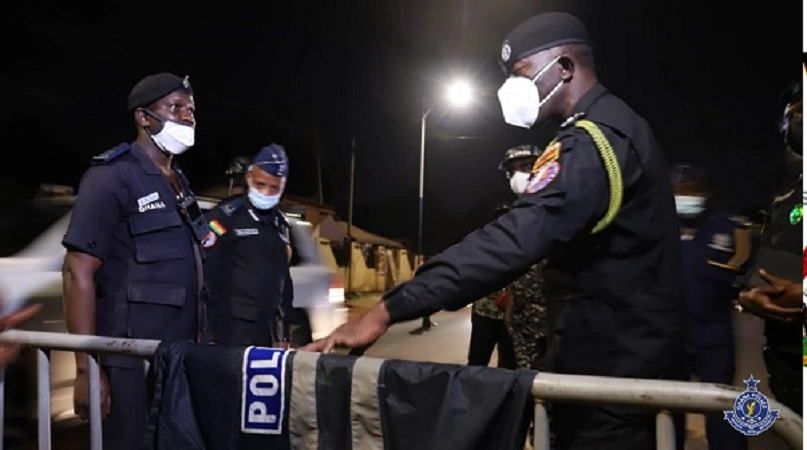
The Ghanaian government have had enough of these so called new year prophecies from religious leaders and they released a newsletter through the police department in a broadcast titled “Ghana Police Service Statement on Communication of Prophecies and their Legal Implications” warning religious leaders to mind their prophecies this coming new year if not the risk facing a jail term of 5 years.

Read the full statement here!

GHANA POLICE SERVICE STATEMENT ON COMMUNICATION OF PROPHECIES AND THEIR LEGAL IMPLICATIONS

As the year 2021 draws to a close, the Ghana Police Service wishes to draw the attention of Ghanaians, especially religious groups, to the fact that whereas we have the right to religion, freedom of worship and free speech, all of these rights are subject to the respect for the rights and freedoms of others according to our laws.

Over the years, communication of prophesies of harm, danger and death, by some religious leaders, have created tension and panic in the Ghanaian society and put the lives of many people in fear and danger.

We want to caution that under Ghanaian law, it is a crime for a person to publish or reproduce a statement, rumour or report which is likely to cause fear and alarm to the public or to disturb the public peace, where that person has no evidence to prove that the statement, rumour or report is true.

It is also a crime for a person, by means of electronic communications service, to knowingly send a communication that is false or misleading and likely to prejudice the efficiency of life saving service or to endanger the safety of any person.

A person found guilty under these laws could be liable to a term of imprisonment of up to five years.

We therefore wish to caution all Ghanaians, especially religious groups and leaders to be measured in their utterances, especially how they communicate prophecies, which may injure the right of others and the public interest.

The Ghana Police Service wishes to place on record that the Police are not against prophecies; we acknowledge that we Ghanaians are a religious people who know, and believe in, the centrality of God in our lives.

The Police wish to assure all religious organizations that we are committed to ensuring maximum security during the 31st December night, end of year services and beyond. There should be no apprehensions therefore about undertaking the various activities. We ask only that everyone keeps within the law and is mindful of the welfare of each other.

We also urge all Ghanaians to observe the COVID-19 protocols religiously so as to protect ourselves, families and friends from this ravaging pandemic.

We also take this opportunity to wish all Ghanaians a Merry Christmas and a happy New Year.

SUPT. ALEXANDER KWAKU OBENG DIRECTOR, PUBLIC AFFAIRS

How the Length, the Breadth and the Depth of Your PhD Thesis Make You a Complete Doctor of Philosophy

0

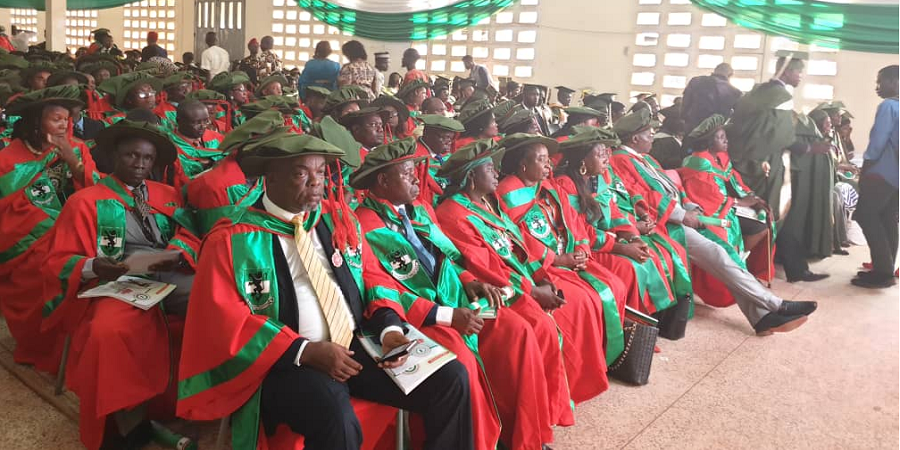
The moment one acquires a PhD degree, that signifies the end of pursing higher degrees in life. Reaching this stage has several implications for individuals and society in general. For the individuals, it is a signal that they have in-depth knowledge of the areas or fields they researched for a number of years. Society gains when they use their knowledge for solution creation towards solving problems and challenges in all aspects of humanity.

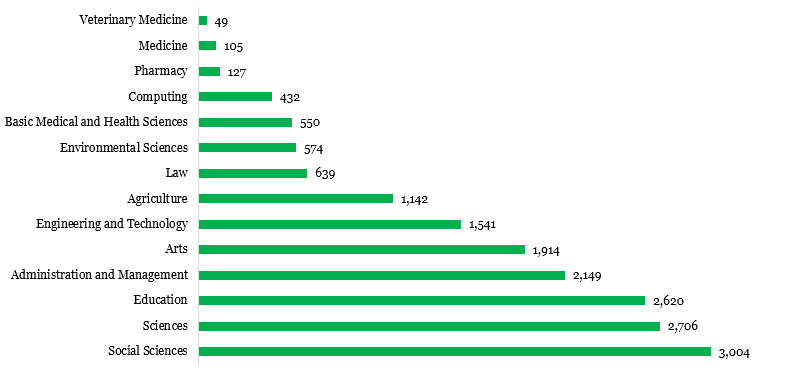
According to various sources, PhD degrees are being pursued most in developed countries, such as the United States of America, the United Kingdom, and others. This does not mean that developing countries are not part of the trend of having people with the degree. For example, the National Bureau of Statistics reported in 2017 that Nigeria has 70, 739 PhD holders. During the second quarter of 2020, the agency reported 76,526 PhD holders. With the recent data (76,526), our analyst notes that it is possible that some of the 17,552 PhD students that were at various universities in 2019 [see Exhibit 1] must have graduated in 2020 and 2021. Expectedly, some of these students will graduate in 2022 and subsequent years.

The rate at which the country is churning out these graduates could be attributed to the increase in the number of academics with PhD degrees and their capacity to supervise the students. This position is better appreciated in 2019 because some years later, the National Universities Commission lamented the poor PhD graduates from the universities. According to the Commission, Nigeria needs to produce good PhD holders because “doctoral research is expected to play critical roles in terms of innovation, creating new relevant knowledge by generating knowledge that is marketable for goods and services converted to goods and service.”

Exhibit 1: Number of PhD students at universities in Nigeria as of 2019 by discipline

Source: Statista, 2021; Infoprations Analysis, 2021

This has been the narrative from the agency and others saddled with the responsibility of ensuring quality higher education in Nigeria over the years. Non-governmental organisations and individuals have also expressed their mixed feelings during different fora. Students are not left out in blaming the educational system, which makes it difficult for them and their supervisors to be productive towards the quick and thorough completion of the programme.

From another perspective, based on our analyst’s experience, students have largely been blamed for delays in completing their programmes. Observational analysis shows the majority of PhD students do not have a better understanding of what they want to do during the first and second years of their programme. From selecting a topic or area of specialization to writing a researchable proposal, many students have spent more than 2 years. This challenge is most common among students who are not university lecturers.

Regardless of the blame game, Nigeria requires high-quality PhD holders, not low-quality ones. The length, breadth, and depth of a thesis are prioritized by supervisors, students, and universities in order to produce quality PhD holders. According to our research, most Nigerian colleges have made it a practice in the previous five years to require a thesis to pass a thesis depth test. This indicates that a student must meet the depth of thesis standards after passing the length and breadth assessments in order to receive a PhD. In most situations, the length and breadth tests will be completed collaboratively by the students, their supervisor(s), and other instructors.

The Length

Whether you are pursuing your PhD at a Nigerian or an American university, the length of your thesis will be evaluated based on the number of pages and words written. The required number of pages and words varies from country to country. According to our research, the average page length is between 200 and 300 pages. The average number of words is 80,000. The maximum word count at most UK universities is 80,000. If you want to run your programme in the United States of America, you need to plan for 100,000 words [being expected word count in some schools]. If you need to exceed the maximum word count, you and your supervisor(s) are expected to write the Postgraduate School and justify the reason for the increase, according to our checks.

The Breadth

However, several pages and thousand words are not sufficient to make you a complete PhD holder. Afterall, John Nash produced the shortest PhD thesis in history. His thesis on non-cooperative games has 28 pages with only two references. It is also important to learn a lot about a range of concepts in relation to your chosen area of specialization. This is the breath, which can be achieved through the adoption of mixed methods and theories that are quite different from your field but relevant to the chosen topic.

Doing this has several theoretical and practical implications. For instance, the use of mixed methods will help you collect data from different sources and understand how things work or not in other settings. Using theories from other fields will assist you in getting insights that could be used for solution creation and delivery when the need arises for the people, animals, and objects that were originally considered while formulating the theories.

The Depth

Naturally, depth begins with the first chapter of your thesis. In your background or motivation section, you are expected to walk the readers through general to specific details of what has happened in the area you are working on. Your second chapter, which in most cases is the literature review, shows the extent to which you could be called an expert. This is hinged on the fact that it is the chapter that establishes your understanding of the logic within PhD thesis writing. Failure to present various concepts critically towards forming constructs for your work means your thesis lacks the required depth. Achieving a good depth of thesis does not depend on these alone. Your chapters four and five [for some schools, this is the last chapter] give you the opportunity to acquire more points towards a better depth of thesis. In these chapters, your breath remains the key tool for gaining points.

You need to showcase your understanding of higher-order logic in chapter four by selecting parts of the collected data and presenting them appropriately using an integrative approach. In order to avoid failing the depth of your thesis test several times, you need to pay attention to data analysis, especially the choice of methods of analysis for quantitative data. The era of using simple statistics has absolutely gone for good. The world has shifted to the use of bivariate and multivariate analyses. Not only that, a PhD thesis without concrete contributions to knowledge from the perspective of creating a model quantitatively or narratively [through storytelling] is not deep enough.