


In this video, I explain how software is eating and saving the world – and how one can monetize it. It was an old video which I just realized that I did not post in our account.
A Look into Productivity and Transparency in Remote Work

A recruiter shared on LinkedIn recently how he had difficulty recruiting good hands in a full-time on-site position. Most of the best hands in the advertised position were only interested in a remote work offer, or at least partly a remote offer where they only have to report to the office location on predetermined days.
“Throughout last year, my experience has been that people just want to stay home and fritter away time. A person is working remotely and you try calling to get him on a task, and he says his mother-in-law stopped by to say Hi. Some are actually brazen enough to tell you they are picking up a couple of groceries at the mall. During work hours??? I’d rather have staff on-site and know that it is now up to me to ensure they are working maximally than have them in remote locations where I hardly even know what they are up to” he posted.
Now to the facts. Remote working is not just ‘a thing’. It has become ‘the thing’. It has moved from being a secondary option an employer may extend to staff, to become primary offer employees want on the table. Another fact is that not every job role can be done remotely. Irrespective of skill or competence, there are job roles that will require you to be on-site every day of the week. One more fact that some employers are having to deal with is that productivity may be drastically affected if you don’t have a structure for remote work.
Given the way the coronavirus pandemic came upon us last year, it is understandable that a lot of employers did not have time to set up and finetune a structure for remote working before they were forced into it. Even when the lockdown was lifted in some places, some companies were not willing to expose their staff to all the risks of commuting to work daily, and still allowed people to work from home for as long as it was possible.
For many companies, remote working first came as a government order. Some however anticipated it and had started putting some structures in place ahead of the lockdown.
Back to the issue of transparency and productivity. How do you determine if your staff is still in bed by 11 am? How do you know that your employee is not seeing a movie on his Tv set at the time he is supposed to be working on your mission-critical project? How can you be sure your sales manager is not making that follow-up call to the client, in the bathroom and still in his bathrobe? How can you tell that your manager is not busy with some extra-work affairs at the expense of his defined roles?
As far as remote working is concerned, there will be a lot you don’t know and cannot confirm – probably much more than you know at any point in time. This explains why some employers are still uncomfortable with the idea.
One technology some employers used in checking their staff was a clocking innovation. I would not want to mention specific names here, but there is some technology that staffs use to clock in when they are about to resume work, clock out for a break, and at the close of work. With such technology, they could have a rough idea of how many hours staff was devoted to work. However, such technology has its shortcomings. While it tells you staff has clocked in for work, there is still no way to determine if the person clocked in and went back to sleep or actually resumed work.
Now, what you could do is combine this with any of the task manager technologies. While clocking in, staffs also have to enter projects they are working on, what stage they are on, how many hours it would take to get past that stage, etc. At the end of the day, they also use the task manager to check the items that have been completed, and the tasks which will spill over to the next day.
With this combination, the HR manager should be able to summarise a staff’s productivity for the week, the tasks that have dragged on for too long, the tasks that have been completed, etc. If a staff keeps entering the same task the entire week, even though the task should have been completed in 8 hours, the HR personnel can then call him for a chat and decipher what should be the next steps. This works excellently even for on-site working and helps avoid situations where staffs simply sit around all day doing the barest minimum needed to keep their job. Obviously, if a person has spent the entire day on a 2-hour task, he would have questions to answer.
The fact is that if you run a business, you will have to consider the remote working option sooner or later, especially for the high-skilled staff.
Nigeria And Her Intriguing Borrowing Tradition
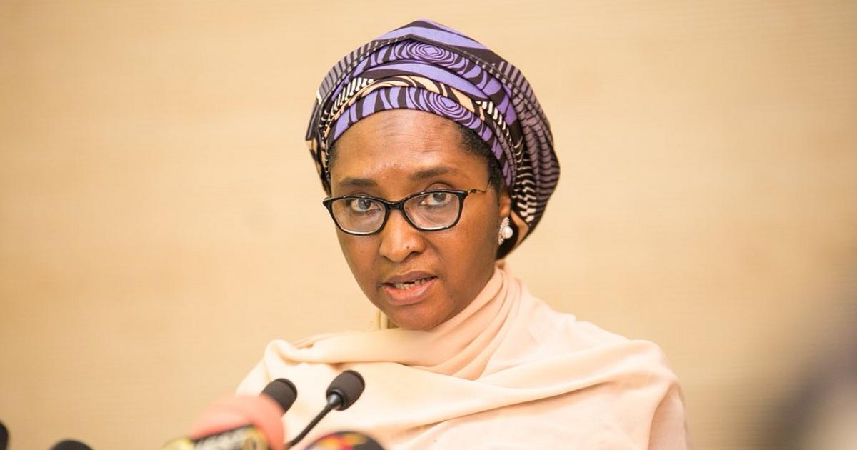
Last time I checked, the 2022 appropriation bill had been successfully passed by the Senate before proceeding for its annual recess.
It’s worth noting that a total sum of N17.126 trillion was passed by the Senators as against the N16.391 trillion tendered to the joint session of the National Assembly (NASS) by President Mohammadu Buhari.
The 2022 budget has it that the projects to be executed in Nigeria in the upcoming fiscal year will be financed by the foreseen assistance of both local and international loans yet to be sought, albeit mainly local borrowing, having estimated the expected oil benchmark for the year among other sources of the finance.
It’s pertinent to acknowledge that governments in rich as well as poor nations borrow money from such domestic and international markets as the World Bank, the International Monetary Fund (IMF), and commercial banks.
In rich nations, government borrowing obviously stimulates the private economy; it creates jobs and raises incomes of the majority of the population of the affected nation, thereby improving their standard of living. However, in poor or developing nations, government borrowing does not generally produce the same results or the required effect.
In Nigeria, for instance, for decades now, the government incessantly enjoys domestic and international borrowing but pathetically, such gesture hasn’t stimulated the private economy as anticipated. To say the least, the role of Foreign Direct Investment (FDI) in the country’s economy has not been significant.
Between 2009 and 2015 alone, the government engaged tremendously in international borrowing. This gesture was reflected in the country’s balance of payments deficits. In spite of the enormous borrowing by the government, grants received out of benevolence, and debts rescheduled as well as forgiven, the nominal income per capita hasn’t shown any significant improvement.
The country average income per capita on a monthly basis for the recent years was about USD130 dollars or thereabouts which was far below the $500 average income for the poorest African countries. Pitiably, the country cannot presently boast of up to USD80 dollars as its monthly average income per capita.
Conspicuously, Nigeria has recently faced an unprecedented population growth. Although the population is increasing at an alarming pace, its purchasing power is not.
Such a phenomenon as posited above has two cogent and inevitable effects on the economy. The first is that the rapid increase in population impoverishes the country as a whole, hence making the accumulation of capital very difficult. Secondly, the low purchasing power limits the internal market.
The major economic plight in a country like Nigeria remains that the government has not been accountable to the people. Thus, it can borrow as it pleases, and the unsuspecting electorate would still foot the bills.
We must acknowledge that the government will continue to borrow as long as there are interested lenders, provided the fiscal policies of the country remain docile. This is why suchlike policies are seriously yearning for restructuring.
Besides, there’s enormous politics involved in international lending. Though Nigeria can invariably find her way as regards assessing loans from either official or unofficial sources via the use of her international connections or immunity, for how long will she continue to depend on external borrowing? This, among other paramount questions, is required to be raised by any one or analyst who truly thinks good of the country.
It would be recalled that during 1966-1974, or thereabouts, developing nations were growing at a high rate simply because they were yet to be involved in external borrowing or importation of goods and services. In view of this, their annual average growth rate stood at 7%.
But in order to meet their subsequent population growth needs, many of them began to import heavily, particularly capital goods, oil and foods. Funnily enough, they are mostly involved in export-oriented strategy as it’s presently witnessed in Nigeria in the oil sector.
It’s not anymore news that the borrowing, especially external, that’s captured in the 2022 budget, which is not unusual in the Nigeria’s budgeting pattern, has been generating a lot of ripples and mixed feelings in various quarters, thereby making several Nigerian analysts as well as social commentators – both home and abroad – to be involved in series of fallacious arguments. This is probably owing to partisanship, incompetence, quackery, unpatriotism, ignorance, or what have you, as the case may be.
It’s amusing and perhaps very awful to realize that sometimes most Nigerians play politics with issues of national interest, particularly very sensitive economic matters. We are not unaware that borrowing is necessary, but it ought not to be seen or adopted as a measure that needs to be taken if a country must survive or grow.
Editor’s Note: this post concludes here
What is entrepreneurship without innovation?
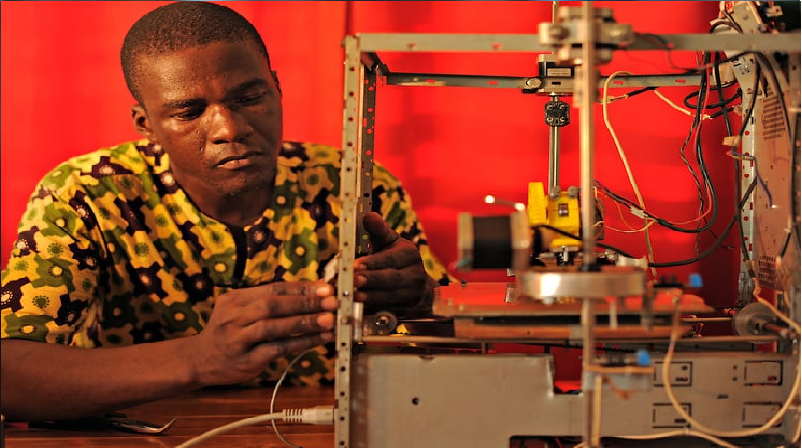
One single reason why entrepreneurs are finding it harder to get a foothold in their industry is the lack of innovation. Someone wakes up one morning and decides that he is going to start a business based on his skills in welding. What is he doing differently? Nothing. Are his prices cheaper than others? No! Is his service delivery process faster than others? No! Is there something exceptional about his customer service? No!
So what exactly makes him special? Nothing!
He becomes just another player in the space. Every attempt to get customers to keep meeting a brick wall because people really do not see why they should leave the established competition to patronize you. There is nothing special about what you do, how you do it, or what you charge for it. There is no added benefit to be gotten from patronizing you. The list goes on and on.
This is more of what we see around these days — A lot of businesses springing up with no clear innovation. ‘Entrepreneurs’ are venturing into different sectors and industries without a clear difference in what they want to offer when compared to the established competition. This is the reason some of them will struggle for months and eventually fold up.
Entrepreneurship should be about innovation, and loosely speaking, we could say that innovation is a new, easier, faster, better, and/or cheaper way of doing things. If you are going into an established industry to compete with existing brands, you already know that they have a lot of advantages over you. Consumers know and patronize them already so they already have their market share. They have the economies of scale to their advantage, and can naturally afford to give out their services and products at reduced prices when compared to you. They would probably have a strong and qualified team to deliver optimum services.
The only thing you can have as your competitive advantage is your innovation. If you are coming in to do what existing brands already do, there is no reason to choose you over them. Your business should be hinged on what you do differently, what you bring into the market that the competition does not. You should be able to clearly define what you bring to the table that is different from what the market can get elsewhere. If you don’t have innovation, you become just another player in a space that is already choked with the competition.
The concept of zero financing

Kay was serving his National Youth Service Corps in Ondo state when he went with his friend to visit a relative. When they got there, they discovered that even though the fans were all turned on, the room was really hot. When Kay inquired to know why the elderly man complained about how all the fans in his house had refused to work properly since he bought them. According to him, he had called several electricians and spent thousands of naira trying to get it fixed but nothing worked.
As an Electrical engineer, Kay got curious and asked if the man could allow him to check out the fan. “Go ahead and do what you want. I wouldn’t even mind if you spoilt it in the process. The fan is just no good. You have no idea how many electricians have tried to fix it”.
Within a few minutes of checking it, Kay excused himself, rushed to the market to get what he needed to fix the fan. Just like that, the fan picked up and started working properly. The elderly man was very appreciative of his efforts, paid him for his services, and had him fix the rest of the fans in the house.
Right there, he asked Kay if he would be interested in handling the electric wiring of a new house he just completed building. To cut the story short, that was the start of a business that is now worth millions of naira. Kay went from being self-employed after his service year, to employing people under his electrical wiring and installation business.
This is a perfect example of zero financing. A lot of would-be entrepreneurs can write a long list about why they are yet to start a business because they have not secured funding. But the fact is – it is possible to start with zero financing.
A business only exists because it is solving a problem, and there are two ways to go about it. One way is to gather funds to solve the problem and begin to seek the market. The second way is to get a client or two, solve their problems, and then use the funds to set about getting other clients. You can tell that the first method is riskier because you could pump in funds to get all the materials you need and never get a client. I am sure you know that there are businesses that are yet to become profitable even after two years of operations.
The second method holds less risk for you and allows you to start the business on the side while getting some income from other sources. You cannot afford to treat a business as a side hustle when you have pumped in funds, yours or others. But when you get one client and offer your services, you get paid, you get a review, and possibly a referral. This also becomes part of your portfolio. You sure know that you could have the funds and after pitching to a client, they would still ask for reviews and portfolio.
According to smallbizgenius, over 60% of successful businesses started with zero or minimal finance and built their way up. Don’t put off that business any longer. Just sniff out a client, and solve his problem. The funds will trickle in gradually.