DD
MM
YYYY

PAGES

DD
MM
YYYY

spot_img

PAGES

Home Blog Page 5419

The Portable vs Poco Lee saga: a case of intellectual property theft

2

The social media went agog yesterday, 21st December, 2021 with the video release of an upcoming “blown” Nigerian artiste with the stage name “Portable” who has recently clinched on to the highlight with his song “Zazuu”.

In the video, the Zazu hit singer complained bitterly of how Poco Lee a popular Nigerian dancer and entertainer is ripping him off the earnings accruing from his music hit song “Zazu”. He accused Poco Lee of stealing his song where Poco Lee is taking all the glory and credit of the song and that Poco Lee go about claiming that he Poco is the owner of the song and not giving him (Portable) the rightful owner of the song the credit and the earnings coming in from the song.

In no doubt, the Zazu song has become a street national anthem, topping musical charts and trending nationwide, hence the reason for the uproar.

It was discovered that Poco Lee who was only featured in the song together with Olamide by Portable, the owner of the song, went ahead and uploaded the song on Audiomack (a popular music streaming platform) under his (Poco Lee) name in that effect Poco Lee claiming ownership of the song.

This action of Poco Lee appears to be a clear case of intellectual property theft as he is stealing the copyright ownership of Portable over his song, and Portable can choose to drag him to court for the theft, and the court will award damages against Poco Lee and mandate Poco Lee to refrain from ever claiming ownership or copyright ownership of the Zazu song.

A person in the art world has a copyright ownership over his or her work and this copyright ownership is duly protected by the copyright laws against intellectual property theft and dispute in ownership from interlopers.

https://youtu.be/nxra-vddsQE
Where do you draw the line on Automation?

0

A couple of months ago, during the investigation of the burning down of a supermarket in the FCT, Abuja, CCTV footage was released showing how a little girl had started the fire in one of the sections of the supermarket. The question on everyone’s mind was “if the CCTV footage caught it, was there no one in the monitoring room to have acted immediately?”

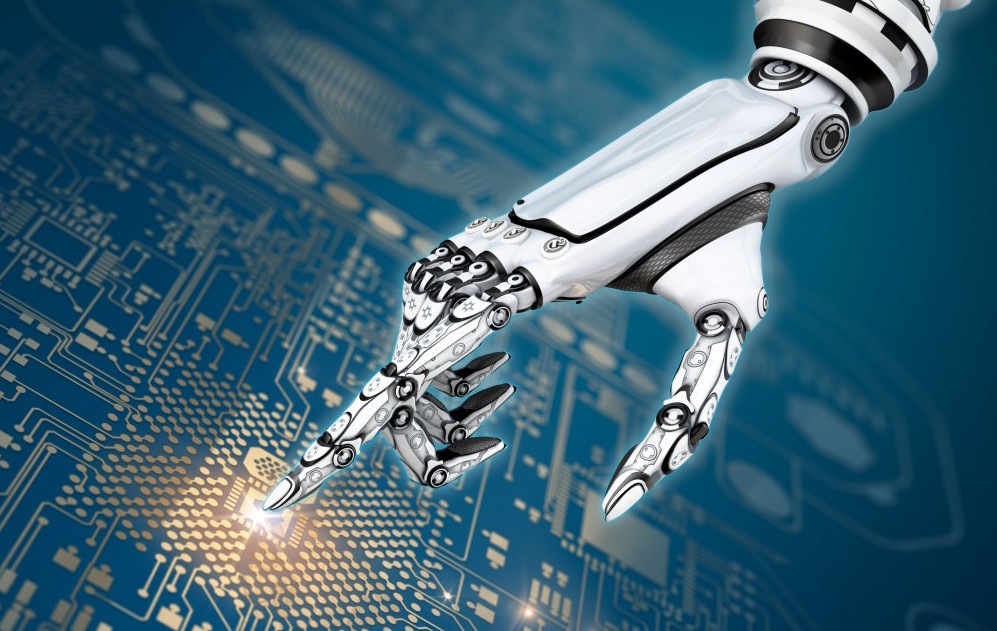
Thanks to the advancement of technology and artificial intelligence, the coming years will see the invention of more machines and devices that can take over tasks previously performed by humans. Companies may see the need to trim down their workforce and where possible, have humans work side by side with these machines. Already, we have situations where chatbots automatically take over customer service inquiries. In the medical field, doctors and surgeons are collaborating with robots in carrying out surgical procedures as well? The question now is that in the drive towards automating tasks with artificial intelligence, where do we draw the line?

What tasks should be done by humans and what should be taken over by the smart robots? Are there areas where both would need to collaborate for better flow? Will humans reduce the efficiency of machines? What happens to points of critical decision-making? Can the machines determine when to stop?

Place of value

There are tasks in the workplace that are so monotonous and mundane that they add no value whatsoever to the staff who has to carry them out. Even though these tasks may be gatekeeper tasks (one that unlocks other tasks to be done), they are on their own of little mental benefit to the staff who has to carry them out. I think these tasks should be the first ones you should consider having a machine take over. Work should be fun, but if you check within your organization, you may find that the staff who has to get these tasks done may find it boring and monotonous.

In every organization, there is that one task that probably unlocks others, but is of so little value that your staff would prefer to avoid it. It may be offloading supplies from the truck into the warehouse. It may also be taking out the trash, moving heavy stuff from one place to the other, and the likes.

Critical response and decisions

There are tasks that require critical decisions to be made in the process, depending on how they turn out. It could be difficult to have these tasks automated unless the decisions for each possible scenario have been clearly spelled out, and do not change on a situation to situation basis. You could have humans work side by side with the smart robots in some cases.

Consider work structure/model

The pandemic has had a lot of businesses adjusting to a remote work model, and in some cases, a hybrid model of both remote and on-site workers. If you decide to adopt automation to your processes or introduce some smart robots, it will largely depend on your model and what you seek to achieve with it. Like with other business decisions, there is no ‘one size fits all structure. It will differ from business to business, and from sector to sector.

Who Would You Be in 2022?

0

People and businesses have used the last 356 days to do one thing or the other for personal and corporate benefits. We have also seen people and businesses that used the days to create challenges or problems for other people and businesses with the intent of gaining financial and non-financial value.

Issues and challenges, the world experienced in 2021 will not be different in 2022. A number of global issues were carried over from 2020 into 2021. This will also occur in 2022. Our analyst expects business and political leaders to continue working on the best approaches and practices for reducing or eliminating challenges in the areas of health, education, mobility, and employment creation among others. Significantly, we expect countries, businesses, and individuals to experience issues in the areas of religious and human rights, environment, international political economy and security, gender equality and rights of girls and women.

Looking at the possible global humanitarian crisis in 2022, our analyst notes that food insecurity is more likely to fuel a number of conflicts in “troubled countries.” Already, “the United Nations Office for the Coordination of Humanitarian Affairs (OCHA) has warned that 274 million people could be in need of humanitarian assistance in 2022, with the world currently battling the worst hunger crisis this century. This is up from 235 million people in 2020 and 168 million in 2019. ”

In all, who would you be? Are you ready to use the skills and knowledge you acquired in 2021 to advance or destroy humanity? Do you believe in creating solutions based on the need to address global concerns without getting huge profits from the users? How would you feel when your services and products are created purposely to exploit the less privileged?

As long as the pandemic continues wreaking havoc on business operations and people’s movement, information and communication technology will continue to be a key factor in value creation and delivery. How sure are you that your ICT skills and knowledge will be applied to advance humanity, not destroy it?

It’s not too late to give the gift of Tekedia Mini-MBA

0

In a constantly changing business ecosystem in the emerging world, you need a compass to master the mechanics of entrepreneurial capitalism. Markets are vector quantities with sizes and directions, and your company cannot afford to be a scalar (no direction). Besides your firm, you have loved ones, students, friends and associates. You can make them better.

Simply, there has never been a better time to gift a Tekedia Mini-MBA. Your gift unlocks ideas that will spark solutions, new models, strategies and big wins.

When you gift Tekedia Mini-MBA, you provide tools to win the markets and career opportunities of 2022. Go here (on click) and do it, and send our team the recipient’s email via the email on the page.

Then relax, you will see impact in the person’s ascension because every Tekedia Mini-MBA gift unlocks futures.

Mentornaut Raises €200k Fund from EstBAN to Expand Edtech to Kenya

0

Edtech has continued to gain popularity in Africa, with more startups securing investments to expand online education. Covid pandemic, which has continued to limit in-person activities, accelerated the use of digital platforms for education since 2020. By 2026, the market is estimated to be worth $202 billion.

As such, Africa has seen an uptick in the number of startups offering online classes. Like others, the continent has also witnessed growing investors’ interest.

The Estonian Business Angels Network EstBAN has led a €200,000 funding round in Mentornaut, an online tuition platform. The program will debut in Kenya with the goal of increasing access to tailored education.

Mentornaut has a number of investors, including Superangel, United Angels VC, and a number of EdTech advocates, including Bolt co-founder Martin Villig, IT visionary Linnar Viik, and Clanbeat co-founder Kadri Tuisk.

Mentornaut is working on an online learning network that will connect K-12 kids with a large number of accredited private tutors in their local education systems to assist students bridge knowledge gaps and achieve their full potential in school. It was founded in 2020, at the peak of the pandemic by Markus Meresma and Gregor Mändma, when about 1.5 billion children around were forced to learn remotely.

“Superangel invests in forward-thinking entrepreneurs who are working to make the world a better place.” Mentornaut’s vision of local educational standards becoming empowered is inspiring.

“Personalised education for African children is still largely unaddressed, but it is critical to the development of better economies and societies,” said Veljo Otsason, a co – founder at Superangel and also an early investor with tech startups such as Bolt, Veriff, Starship, and Monese.

Parents are becoming more amenable to private tutoring to help their children overcome learning gaps as distance and remote learning become more widespread around the world.

Mentornaut has seen 2,500 private courses booked on its website since its launch in Estonia last year. Mentornaut distinguishes out by delivering a full service – from bookings to payments – and is praised by its many users.

“Thanks to our vast range of private teachers, we’ve seen a lot of positive feedback from our clients who have rediscovered the fun in learning,” Meresma added.

In the first few hours after the company opened in Kenya, tutor onboarding resulted in more than 120 sign-up requests. The average pupil-to-teacher ratio in African elementary schools is 42:1, necessitating the need of private additional tuition.

Mentornaut takes a proactive approach to expanding its tutoring pool, bringing on students, schoolteachers, and experienced private tutors to broaden the pool and make individualized learning more accessible to more individuals.

The fresh funds will be utilized to improve the platform’s automation in order to speed tailored education for parents, children, and private tutors throughout Africa and Eastern Europe.

The company’s long-term goal is to develop an adaptive learning system that will help shape the establishment of individualized learning paths and assist studies in schools.