DD
MM
YYYY

PAGES

DD
MM
YYYY

spot_img

PAGES

Home Blog Page 5425

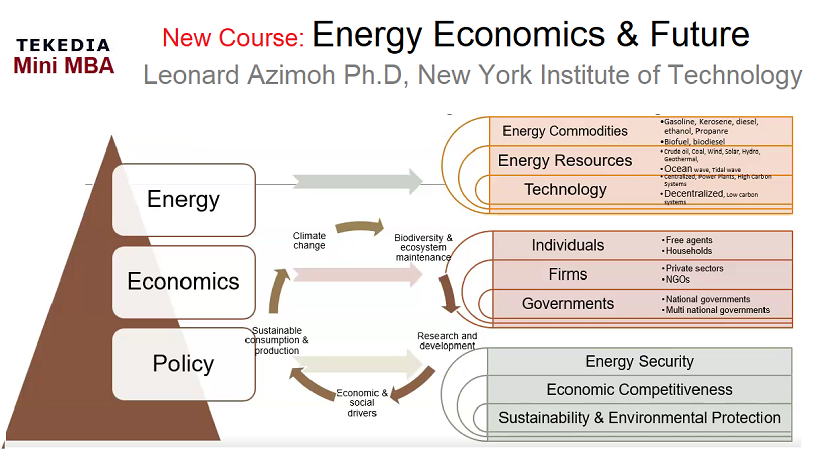
Tekedia Mini-MBA New Course: Energy Economics & Future

0

Tekedia Institute revamps our curriculum every year. For the 2022 academic session, I am very happy to note that we are introducing a new course: Energy Economics & Future. Our Faculty is Leonard Azimoh, Ph.D, an energy economics expert who also teaches a similar course at New York Institute of Technology.

People, there are many equations in his course notes. But if you persevere and study the progression, series and calculus equations he has provided, you can  confidently walk to your local government chairman, and provide the energy requirement, cost and form, to light up the community. (You will see why some equations you learnt how to derive in college are really very important).

Visit Tekedia Institute and see the new courses coming in our next academic year:

Fasmicro Group Congratulates CADAP World Sierra Leone For Its Success

0

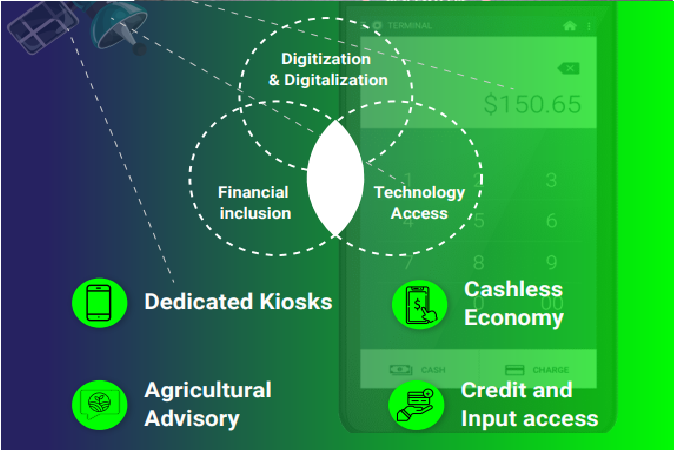
Let me congratulate CADAP World and DAVID MEEK JAH for building an important digital technology infrastructures which would be catalytic in the redesign of the African economy. The CADAP Digital Economy Infrastructure (Connectivity for all, Power as a service, Global payment platform and infrastructure, cloud content management services, satellite and space technology) is super-promising.

I also congratulate CADAP for the new deal: “SatSure will be delivering it’s #creditlending solutions along with crop advisories through the CADAP’s innovative service delivery model to the farmers in West Africa.”

Out of Sierra Leone, CADAP has provided a solution which even the Nigerian government has adopted for some of its digital economy projects. They have brought a new basis of competition via frugal innovation. Well done Team.

Fasmicro Group is proud to be a partner in this emerging African powerhouse.

CADAP stands with #AfCFTA and we acknowledge immense support from Afreximbank, etc. The future looks promising.

Why your customers want to know you better

0
Customers

A poll I carried out among small business owners recently proved what I had always thought. Customers will generally connect better to a brand when they can put a face to it.

Some business owners made the mistake of thinking that customers did not need to know them. They thought that all they needed to do was put their product out there, drive their marketing campaigns and ads and the customers will come rushing. They thought the focus should be on their company, product, and service, not them.

Not true. Unless your product or company is already successful, people do actually want to know about you and in fact, they are more interested in your story than they are in the company that is still faceless to them.

Customer engagement with brands will come easily once they can put a face to the brand. What does this do for them? It gives the customers a face they can relate with and breeds trust. No one would do business with you unless they know you, like you, and trust you.

Whether or not you are a private person or introverted by nature, the minute you choose to start a business, you have put yourself out there for people. They want to know everything about your story as it connects with the business, the product, and the brand.

That little story about your AHA moment; that personal pain point that drove you to seek a solution; that story about how you came about the solution; the story of the sleepless nights it took you to develop the software; the story of how you drove the business when you had not secured funding; the story of how you found your partners and financiers;  it is all part of your story and they want to know about it.

You will find more success in your business when you start realizing that at least for the first 10 years, you are one with the business. If your personal brand appreciates, more people will feel confident to do business with your company.

Buhari Declares October 5 Senior Citizens Day

0
Buhari New Appointments
Mr. Buhari, President of Nigeria

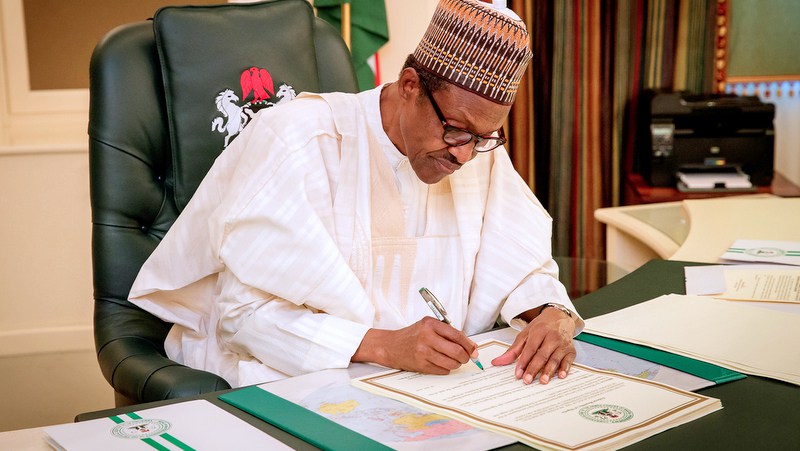
October 5 will henceforth be known as the National Day for Senior Citizens in Nigeria. This is according to a declaration made by President Muhammadu Buhari at the First Presidential Summit on Ageing and Awards ceremony held at the Yar’Adua Centre, Abuja.

The declaration is to recognize the contribution of the elderly to nation building and also to highlight their plights.

The Minister of Interior Ogbeni Rauf Aregbesola, who represented Buhari, said that 4.7% of Nigeria’s citizens or about 9 million citizens have made huge sacrifices for National development. But he noted in addition that despite their contribution, the elderly have been maligned and treated in undignified way.

“Senior citizens are the most neglected and abused in the society and have been left to die in silence. In bringing about a paradigm shift, I, President Muhammadu Buhari, signed into law, the National Senior Citizen’s Centre Act 2017, to cater for the needs of senior citizens.

“The Federal Government of Nigeria is committed to effectively mobilising capital resources needed to develop the appropriate mechanism that will be geared towards promoting and providing unhindered access to social services.

“As a further demonstration of our support for senior citizens, the 5th of October every year will be celebrated as National Day for Senior Citizens in Nigeria,” he said.

Eight senior citizens, including Nathaniel Okoro, the first indigenous Managing Director of the Nigeria Railway Corporation; Chief Richard Olajide Idowu, the first blind Television Producer and radio presenter as well as Hajiya Saudatu Usman Bungudu, a one-time Minister of Women Affairs and Social Development, amongst others, were recognized for their service with awards of excellence.

Before now, notable Nigerians have been voicing concern about the negligence of the elderly in Nigeria are facing, which is remarkable in the lack of welfare and government support for them.

The Minister of Humanitarian Affairs, Disaster Management and Social Development, Sadiya Umar Farouq, commended the event, describing it as the first ever Summit on Ageing in recognition of the senior citizens in Nigeria.

She thanked the President for signing the Disability Acts 2018, and the National Senior Citizens Centre Acts 2017, and appealed for takeoff funds for the Centre.

The Permanent Secretary of Humanitarian Affairs Ministry, Bashir Nura Alkali, was another notable figure to speak regarding the event. In a presentation titled: “The Stakes for Policy and Legal Framework and Implications for Social Inclusion of Older Persons”, Alkali said Nigeria has lagged behind in global index when it comes to the welfare of the elderly. He noted that “the 2013 and 2015 Global Agewatch Index, published respectively, in which 96 countries, were consecutively assessed, showed that Nigeria’s ranking among the 96 selected countries was abysmal; 85th in 2013 and 86th in 2015.”

However, he commended the initiative. He said the National Policy on Ageing and the National Senior Citizens Centre Act 2017, which was also unveiled at the Summit, would go a long way in improving the standard of living of ageing persons in the country.

While the initiative is applauded, governments have been largely blamed for the suffering of the elderly in Nigeria, which has come mostly as a result of the former’s inability to live up to its responsibilities. For instance, the embezzlement and withholding of pension funds, which cuts across all governments in Nigeria, is a major reason why most senior citizens are living in abject poverty.

The three tiers of government in Nigeria are still deeply buried in this practice. In 2019, the federal government made move to borrow N2 trillion from Pension Fund. Though the move was fiercely resisted by the public, the government has been dipping hand into the retirees’ reserve.

A report made in September by Leadership Newspaper said that the federal government has borrowed a whopping N8.29 trillion from Pension Fund Assets which stood at N12.9 trillion at the end of August.

In addition to providing social amenities for the elderly in the country, the government has been advised to ensure that Pension Fund is protected and retirees are timely paid their pension.

Here is key simple difference between Nigeria and America

0

The simple difference between Nigeria and America is this: in America, wealthy people pay big taxes; in Nigeria, most “wealthy” people are bailed out by AMCON, a crazy financial vehicle which weaponizes stupidity, and ironically is funded by the poor citizens.

You take a loan of $100 with Company A, you move the money to Company B. Then, you default on the loan (i.e. refuse to pay back) for Company A. Then magically, a government institution comes to bailout Company A even when Company B is doing just fine. Check the records, the person owns and controls both Company A and Company B.

Why do these things happen?

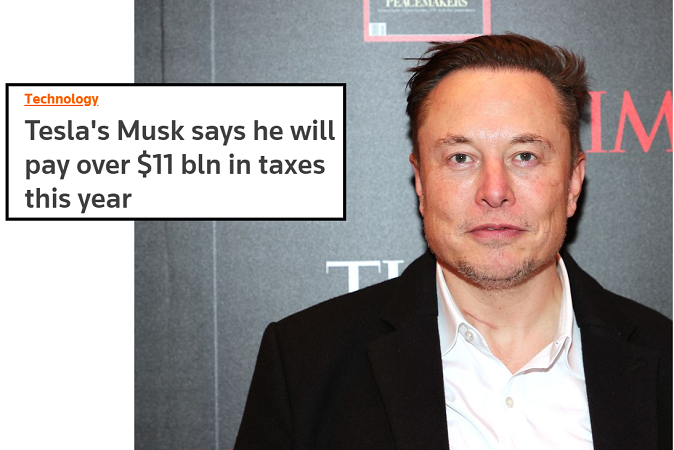
Electric-car maker Tesla Inc’s Chief Executive Officer Elon Musk said on Sunday on Twitter that he will pay more than $11 billion in taxes this year.

Earlier this week, Democratic U.S. Senator Elizabeth Warren took to Twitter to say that Musk should pay taxes and stop “freeloading off everyone else” after Time magazine named him its “person of the year”.

Musk responded by saying that he “will pay more taxes than any American in history this year”.

Musk is the world’s richest person and his company Tesla is worth about $1 trillion. Over the last few weeks, Musk has sold nearly $14 billion worth of Tesla shares.

Comment on LinkedIn Feed

Comment 1: We are still too engrossed in achieving personal successes, to point that we have near zero institutional capabilities, so when people tout how great Nigerians are, ask them in what sense exactly? Doing relatively well as an individual does not mean you can build and run a working system, the sets of capabilities required are worlds apart.

Whenever we set out to solve problems here, we end up inflicting pains and creating bigger problems, at the end, it’s all round disaster. This is a product of flawed thinking, the depth is lacking, the robustness and nuances that help unpack things to critically examine finer details are lacking; add that to morally compromised and ethically challenged mentalities of those spearheading these policy ideas. It takes more than coincidence to be subpar so often.

As always, everything is rigged against the small guys, so the people who mismanage institutions and run companies into the ground are never held accountable, instead we create avenues for them to brag about how they ‘gamed’ the system, and we consciously or unconsciously hail them as smart guys. We have too many deficiencies that impair sound judgment, that is why it’s difficult for best of us to lead, because we despise excellence.