DD
MM
YYYY

PAGES

DD
MM
YYYY

spot_img

PAGES

Home Blog Page 5461

Nigeria’s Investment One Takes Stake in South African Fintech Startup, Paycode

0

Nigerian investors are increasingly taking stakes in fintech startups in and outside the country, upping their investment game in the tech ecosystem where foreign investors have been leading the way.

Nigeria’s leading financial services providers, Investment One Financial Services Limited (Investment One), has made an undisclosed investment in a South African-based fintech startup, Paycode. The investment was made through Investment One’s subsidiary, Investment One Vencap Limited.

Nigeria and South Africa are leaders in Africa’s fintech market, though other countries like Kenya and Egypt are very much in the competition. Though many players are springing up every day, the market remains untapped and each of the startups has distinct services to attract investors.

Investment One says it was particularly attracted by the technological USPs of Paycode, a valuation that focused on current revenues and users while reasonably discounting cashflows (in an environment where fintech valuations have noticeably sky-rocketed during 2021) and the scope for growth in Nigeria through projects already won.

Paycode provides technology solutions that use biometric digital identity to guarantee proof of life and enable low-cost, last mile delivery of basic financial services. The startup addresses three critical problems for the unbanked and underserved by providing low-cost solutions to those without formal identification in areas with little or no mobile or internet connectivity.

Paycode enables access to basic financial services including cash pay-outs, mobile money, remittances, insurance, microloans, airtime, electricity and social grants by providing a platform that combines biometric digital identity and payments in one convenient platform.

Investment One Group Managing Director, Nicholas Nyamali said the investment in Paycode is part of his company’s financial inclusion efforts.

“Our investment in Paycode represents both our drive to achieve excellent returns for our clients, but also our commitment to bringing financial services to excluded sectors in Nigeria. Paycode’s unique approach to solving the most complex challenges of the financially excluded fits perfectly with our own innovative DNA” he said.

Investment One’s interest in Paycode was also spurred by its market growth.  The company looked into Paycode’s future growth trajectory in Nigeria alone to make its investment decision as it is packed with value.

The startup has over 6 million registered card users, a partnership with Mastercard and a strong pipeline of fee-driven grant and social programmes under its belt, and also plans a Series A capital raise in the first Quarter of 2022. The plan is to expand globally and achieve a target of serving over 50 million people by 2025.

Currently, Paycode has active users in Ghana, Zambia and Mozambique but securing a share in a large market like Nigeria presents a key to growth.

Paycode CEO, Ralph Pecker, says having Investment One onboard will help the company to achieve its objective to expand to the Nigerian market.

“We see Investment One as so much more than just an equity partner to Paycode. Investment One is a significant and innovative player in the financial services sector of Nigeria, a key growth market for us. We believe that having them onboard will greatly accelerate our expansion objectives in Nigeria, and that we in turn can provide an excellent return on their investment.”

The Davido’s Birthday Donations

1

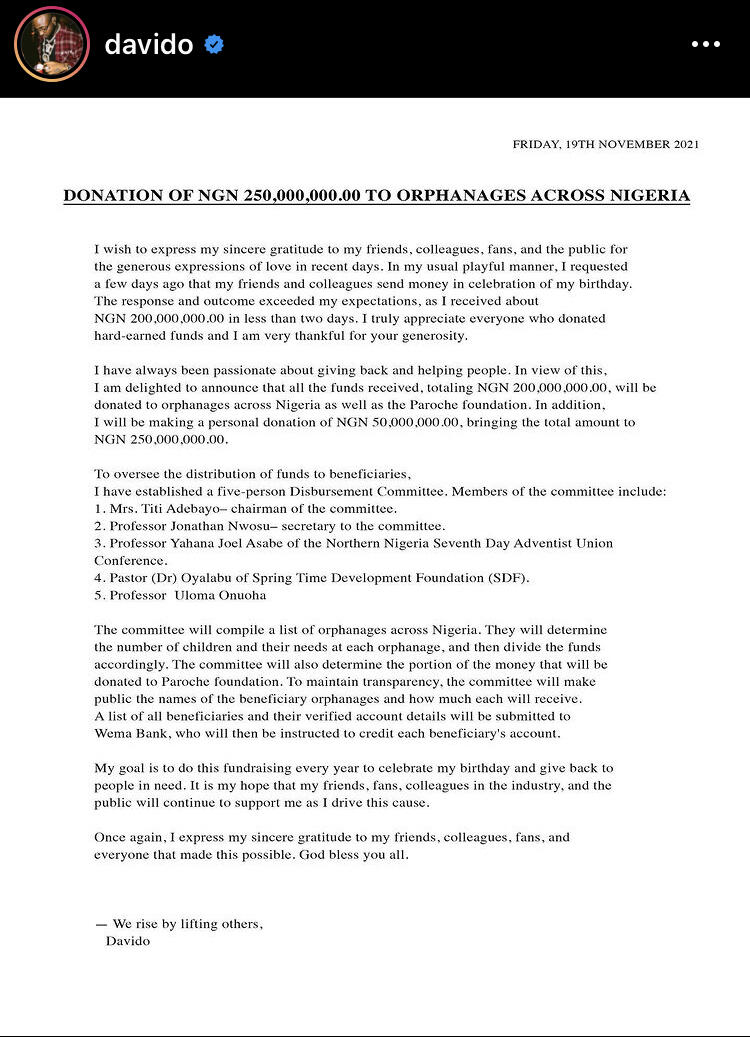
Nigeria’s ace musician, Davido Adeleke, went on Twitter, asking the people to donate money for his 29th birthday: “If you know I’ve given you a hit song, send me money.” Within hours, many have donated to the bank account he provided. As of last count, he has closed more than N174 million!

One of Nigeria’s biggest singers, David Adeleke, a.k.a Davido, has received over N174m in less than 24 hours after he challenged his friends to send him N1m each ahead of his birthday. The singer turns 29 on Monday. Davido posted his account number on his verified Twitter account on Wednesday.

Some donors include BB Naija’s Nengi, Perruzi, Teni, Phyno, Don Jazzy, Tiwa Savage, Mayokun, Adekunle Gold, Mr Eazi, Zlatan, Cubana Chief Priest, Oyo State lawmaker Akin Alabi, businessman & socialite Emeka Okonkwo aka E-money, Obi Cubana, and Femi Otedola.

People, what is happening here? Can a teacher like me substitute for Davido and get a percentage outcome?  Would you support this teacher? Lol. 

Indeed, our world has changed that one of Nigeria’s most successful musicians can convince people to take loans on apps to make sure he has a great birthday! That is the power of the new age. Salute Davido for building that social capital; he is a brand!

Comment on LinkedIn Feed

The world has not changed because people donated to one of their own, it has always been that way, the only difference here is that social media makes it viral.

What happens when a wealthy man hosts an event, whether birthday, chieftaincy title or a simple get together? Plenty money flows, it’s a network power thing, no surprises. If an unknown person or poor man tries it, he become depressed.

The same brand power also worked in your Tekedia Institute and its constituents, the early believers didn’t congregate because of richness of content or faculties, but rather because of Ndubuisi Ekekwe as a brand, everything draws its power from there.

Again, many of those who donated to Davido equally increased their own social capitals by doing so, think about Davido’s mammoth followers and all the people who will be jostling to read list of donors, they all add up, the donors are not stupid…

There is an intrinsic value for the participant, it has nothing to do with generosity, because if Davido skips your name from list of donors (after donating), you will feel terrible for a long time.

It’s business, those who wail and complain about show of wealth in the midst of poverty do not understand, and they remain miserable.

Game on…

Update: he is turning the donations into a bigger call

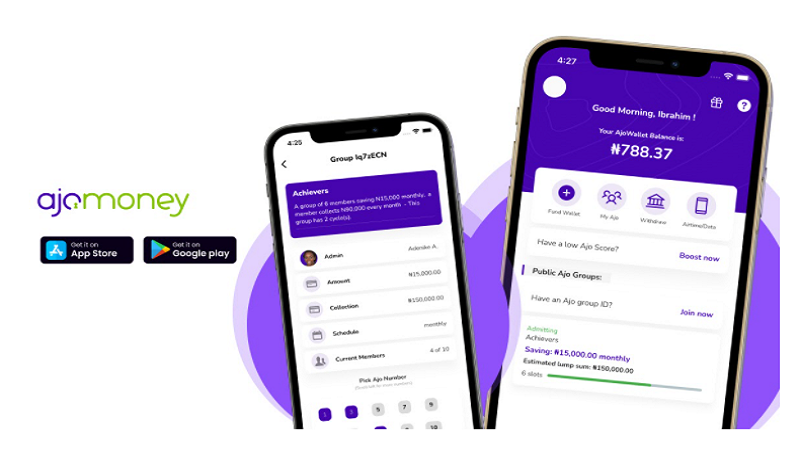
AjoMoney digitized the rotating group savings to promote zero-interest financing in Nigeria

0

Rotating savings and credit associations (ROSCAs) are informal financial institutions serving the financial needs of many people in Nigeria and other developing countries for centuries. It has several names across different countries in the world. In Nigeria, it is popularly known as Esusu, Osusu, Enusu, Ajo (Yoruba), Cha (Ibo), Oha, Oja, Adashi (Haussa, Tiv), Bam (Tiv), Isusu (Ot), Utu (Ibo), Dashi (Nupe), Efe (Ibibios), Oku (Kalabari Ijawas), Mitiri, Compiri, Club (Ibo).

In the ROSCAs system being digitized by AjoMoney, a group of trusted individuals agree to contribute a fixed amount into a fund at regular intervals. This process continues until all members receive the sum of the money that has been deposited into the fund in turn. In Nigeria, through traditional means, rotating group savings is one of the community support mechanisms helping fragile households cope with certain crises through the network of informal and formal relationships.

A larger percentage of Nigerians are undercapitalized, suggesting major operational difficulties in accessing credit and pursuing corporate goals. Non-availability of long-term finance and long procedures to access financial help, where available, has been identified as a major constraint facing individuals and businesses in Nigeria.

As technology and other financial technology companies have made access to financing possible through loans with monthly interests, AjoMoney believes that they can travel back in time to fully digitize the centuries-old method our forefathers have been using to gain access to financing without the burden of paying a high-interest.

As the ROSCA system is actively being adopted by 50% – 90% of the adult population in Nigeria. It has really been a tool for easy access to credit, mutual insurance, purchase of goods, early acquisition of assets, poverty reduction and money saving discipline.

AjoMoney, which was founded by Ibrahim Adepoju and Chineye Ochem was able to digitize the rotating savings and credit association system through their mobile application, which is currently available on google play store and apple app store.

The social and information age is changing the way people see rotating savings. The issue of trust and safety by the individual managing the rotating savings has made many lose hope in the rotating savings system. AjoMoney, ever since it was launched in July 2021, has registered more than 1500 users in averagely three (3) months with zero advertising budget. Users in the age range of 19 to 45 years have been searching for related apps on both playstore and Appstore, and were eager to check it out upon seeing the arrival of AjoMoney.

AjoMoney not only targets adults to whom the rotating savings system is very notable, but also targets millennials and gen-z who are having issues with zero-burden access to finance, enabling them to also benefit from the system their parents have been using to cover many bills and sponsor the family needs during tough economic times.

“Growing up in Nigeria, my parents leveraged on rotating savings with collections scheduled for August, September and October, so as to be able to pay our school fees and other amenities needed, which also included investing into other assets like renovating our house and upgrading the livelihood of the family. They have been doing this for decades and they pay back flexibly with zero interest. In a time of financial crisis like this, AjoMoney was built for Nigerians struggling to stabilize their finances to meet necessary immediate and future needs.” 

Ibrahim Adepoju, Co-founder and CEO, AjoMoney

AjoMoney leverages on the user’s initial credit score upon joining the system to match them to a rotating savings group where they can save a specific amount of money monthly or weekly with other people of the same financial strength. AjoMoney is unlike other savings platforms where an individual is tasked with saving alone and having access to it at a specific time and likely getting to lose the benefit attached for withdrawing the money at an early stage or other lending platforms where an individual is offered a loan and mandated to pay with additional interest ranging from 6% to 30% monthly.

While AjoMoney is not just only providing credit and savings solutions to Nigerians, AjoMoney also has sister products in the alpha stage, which includes AjoStore for merchants to sell products and receive early payment from AjoMoney users who got access to finance early to meet their needs. Also, AjoMoney wallet system is being linked to AjoPay, the flexible payment solution that AjoMoney users can use to easily checkout from AjoStore and other partnering e-commerce sites; this also supports sending and receiving money between banks and different AjoPay wallets. Other features live on AjoMoney is the bill payment feature.

Recently, Professor Ndubuisi Ekekwe of Tekedia Institute became a member of the AjoMoney Advisory Board to help foster the growth of the company.

With AjoMoney, if you can afford it later, you should be able to get it now.

The greatest victory happens when a person wins over the mindset

0

The honeybee looks for nectar in flowers, irrespective of the surroundings of the flowers. So, whether in a garden or a landfill, the honeybee focuses on nectar. 

On the other hand, the housefly looks for waste and dead tissues. If it makes it into a palace, it makes the waste area its home, ignoring all the splendours.

These two insects teach us something: most times, our environment is not always the problem but our mindsets. If we become like the honeybee, we will keep looking for nectar (opportunities) even in all places.

But if we act like the housefly, even in abundance of opportunities, we see none.


I study the honeybee and how diligent it is to look for nectar in flowers, irrespective of where they’re situated. I also watch the housefly, and how it prefers wastes and dead tissues, even when in palaces. 

I’ve come to this conclusion: the greatest victory happens when a person wins over his mindset.

The honeybee finds opportunities in all places while the housefly, even in abundance, prefers to feed on dead tissues.


The Upcoming Apple Car – And Beginning of the Wave 2

1

In the world of making physical things, in this knowledge era, two sectors will drive the buzz: smart consumer devices and cars. Those are the core two domains you have a chance to ramp up volume and revenue if you want to stay at the core of consumer manufacturing business. Apple is a category-king in the smart devices area. Now, it wants to enter into the second one – making cars. Those cars are expected to be self-driving and of course electric-powered.

Apple has reportedly set a 2025 deadline for its driverless electric vehicle, with a reinforced approach focusing on self-driving capabilities. Bloomberg reports, citing people familiar with the matter.

The push to accelerate the Apple car project came after a period of recess that saw the smartphone maker suspend work on the project. Now, the Cupertino giant is revitalizing the electric vehicle project, aiming to develop fast and reliable technicalities to meet the deadline.

The focus had been two key areas; to create a model with limited self-driving capabilities focused on steering and acceleration — similar to many current cars — or a version with full self-driving ability that doesn’t require human intervention.

This is not bad news for Tesla. But this is bad news for Ford, GM, etc. I do think that we will have at least 3 great EV and self-driving brands in the world. Tesla is there. Apple joins. Then, you can pick another. Yes, Apple will displace most of the other car brands because it is Apple!

Why do I think that way? Apple has the foundational stack – yes, AI systems for those your iDevices – and it will simply remake some. The AI systems will win and competition will come down to who makes smarter cars besides the ergonomics.

The physical bodies of cars certainly cannot be seen as the core basis of competition and Apple will likely outsource that component. Largely, it will SIMPLY focus on the heartbeat where it can run SERVICES on soon-fashionista car brands. If that happens, your car becomes like your phone with many services which can be unlocked via subscriptions.

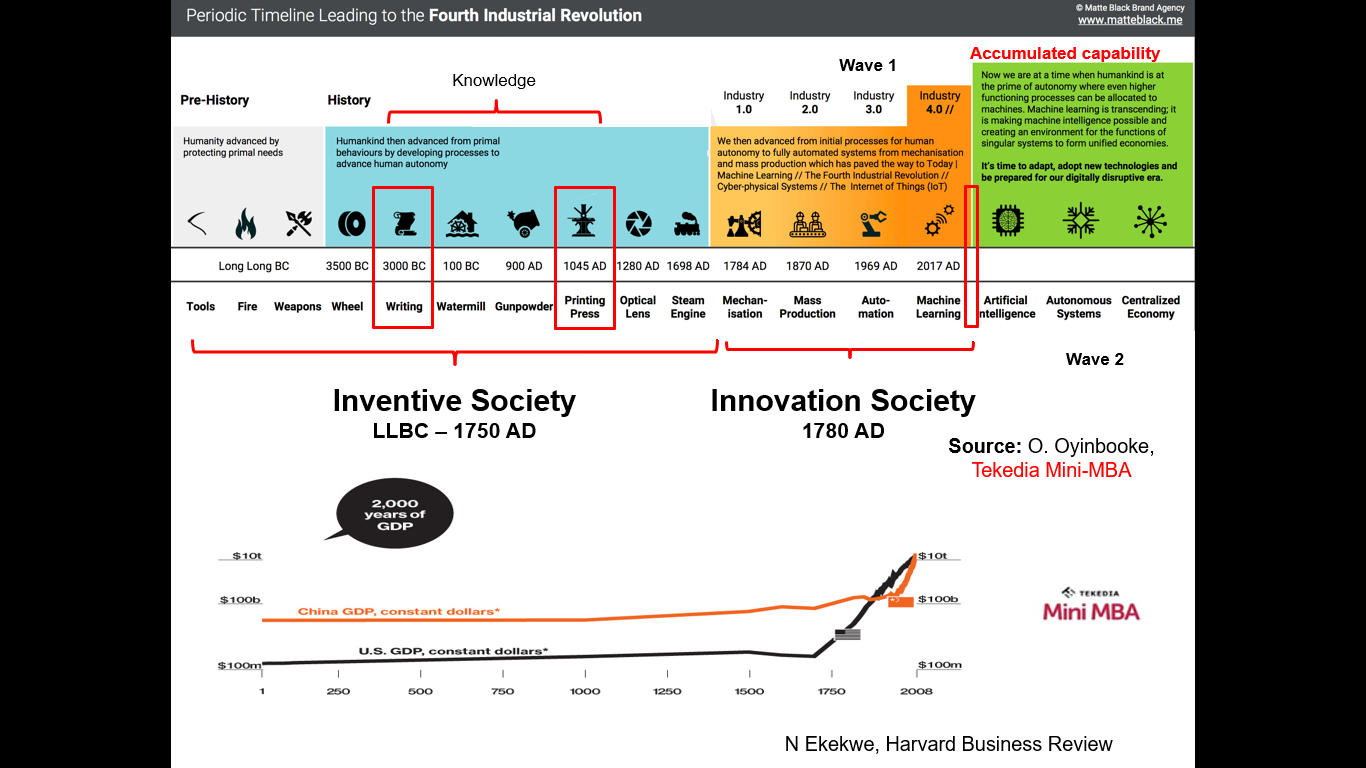
In Tekedia Mini-MBA, we talk of the second wave of the innovation society. It is  just starting with autonomous systems leading the way.

Apple to Launch Self-driving Electric Vehicle by 2025