DD
MM
YYYY

PAGES

DD
MM
YYYY

spot_img

PAGES

Home Blog Page 5463

When Will Britain, Others Return Nigeria’s Artefacts?

0

As countries across the global community, particularly those on the African continent, are making frantic efforts to redeem and revive their respective technically-oriented heritage as regards culture and history, Nigeria shouldn’t be an exception.

Three years back, the Benin Republic seemingly wore a cheering physiognomy in respect of the struggle. This assertion wasn’t unconnected with the approval cum pronouncement made by the young and vibrant French President, Mr. Emmanuel Macron in the aforesaid period.

On Friday, 23rd November 2018, Mr. Macron who apparently has enormous passion in issues pertaining to culture and tourism, reportedly indicated his government’s willingness to return all the ‘stolen’ cultural artefacts to Benin Republic, the original home of the ornaments.

The decision, which Mr. Macron said should not be seen as an “isolated or symbolic case”, was informed on the receipt of the findings of a study he commissioned on repatriating African treasures held by French museums.

He therefore agreed to return 26 works, mainly royal statues from the palaces of Abomey – formerly the capital of the Kingdom of Dahomey – taken by the French army during a war in 1892 and now in Paris’ Quai Branly museum.

The president, who hoped that all possible circulation of these works are duly considered and returned, additionally proposed gathering African and European partners in Paris the following year to define a framework for an “exchange policy” for African artworks.

It’s noteworthy that in recent times, calls have been growing in Africa for restitution of artworks to the continent, but it’s also worthy of note that the French law strictly forbids the government from ceding state property to any nation or entity even in well-documented cases of pillaging. Notwithstanding, it seems Macron had broken that jinx.

In 2016, the Benin Republic demanded that France return her items including statues, artworks, carving, sceptres and sacred doors. While that request was initially denied, in November same year, President Macron raised hopes in a speech he delivered in Burkina Faso, pledging to repatriate African heritage to the continent.

Following the speech, he asked the French art historian, Mr. Benedicte Savoy and the Senegalese writer, Mr. Felwine Sarr to painstakingly study the matter. Their report, thereafter, was welcomed by advocates of restitution of works that were bought, bartered, looted, or in some cases stolen.

The said report proposes that legislation should be developed to return thousands of African artefacts taken during the colonial period to the nations that requested them. There are conditions, however, including a proper request from the relevant country, precise information about the origin of the demanded works, as well as the proof of the existence of adequate facilities such as museums to house them back in their home country when eventually returned.

In his further speech, Macron stated that museums would be invited to identify African belongings and organize possible returns and ought to quickly establish an “online inventory of their African collections”. He also called for in-depth work with other European states that still retain collections of the same nature “acquired in comparable circumstances”.

It could be recalled that the United Nations Educational, Scientific and Cultural Organization (UNESCO) convention against the export of illicit cultural goods adopted in 1970 called for the return of cultural property taken from a country but it didn’t address historic cases.

Nevertheless, with museums fearing they could be compelled to return artefacts, some former colonial powers had sluggishly ratified the resolution as made by UNESCO. France only did so in 1997, followed by Britain, Germany and Belgium in 2002, 2007 and 2009, respectively.

The aforementioned report, as was commissioned by Macron, opined that such collections were severely depriving Africans of their artistic and cultural heritage. It said “On a continent where 60 percent of the population is under the age of 20 years old, what is first and foremost of a great importance is for young people to have access to their own culture, creativity, and spirituality from other eras.”

As countries across the African continent are currently filled with the desire to see that their technically-oriented heritage are duly returned by their respective colonial masters, Nigeria shouldn’t place herself in abeyance.

Since Nigeria gained her independence in 1960, successive governments have sought from Britain the return of the country’s looted artefacts but such a quest had ostensibly failed on deaf ears.

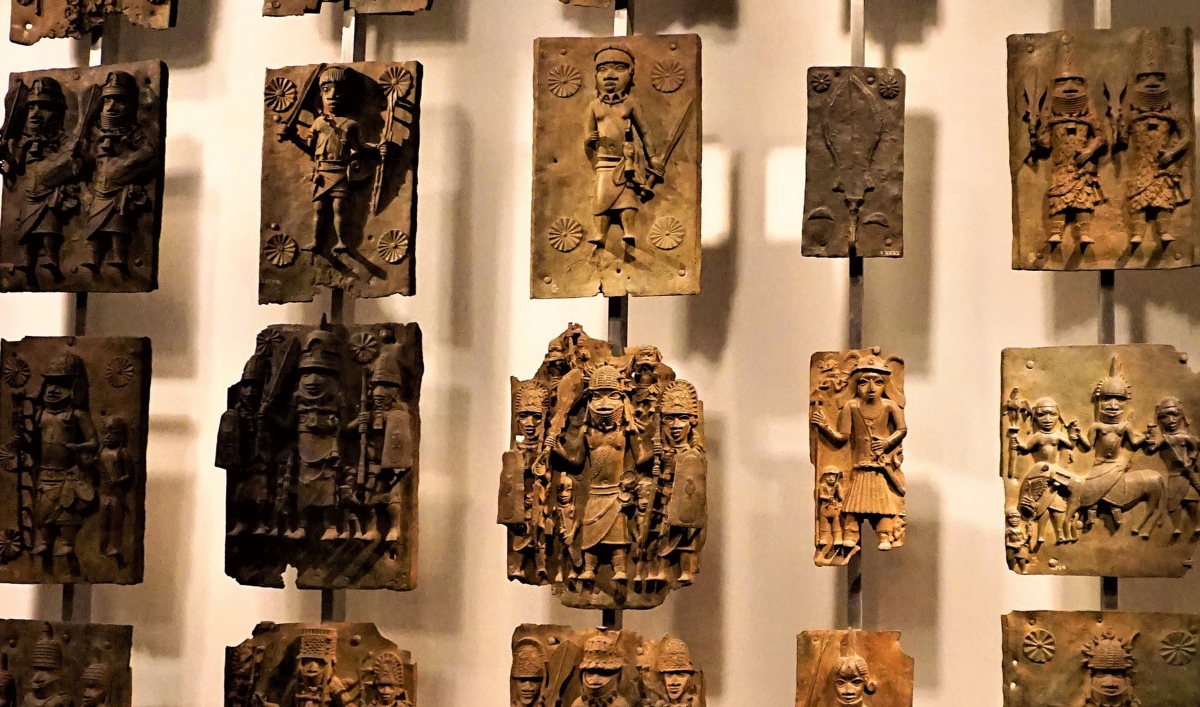
Just recently, more than a century after the British soldiers ‘stole’ a collection of priceless artefacts from the Benin Kingdom in Edo State, a deal was struck between the Benin Dialogue Group (BDG) and the Britain towards ensuring that some of the most iconic pieces such as the Benin bronzes are returned on a “temporary basis” to form an exhibition at the new Benin Royal Museum “within three years”.

However, the troubling follow-up question thereof was, ‘why must Nigeria’s looted treasures be loaned to her?’ How could a country receive her assets or heritage in the form of a loan?

Aside from the bronzes, there are many other precious works like the Benin ivory mask that are equally yearning for repatriation. It’s noteworthy that Britain’s soldiers seized thousands of metal castings and sculptures from the Kingdom of Benin in 1897.

A few months back, precisely in March 2021, the University of Aberdeen in the United Kingdom (UK) disclosed it would return the Benin Bronze to Nigeria ‘within weeks’. It was one of the first public institutions to do so more than a century after Britain looted the sculptures and auctioned them to Western museums and collectors.

The University said in its press release that the sculpture of an Oba, or ruler, of the Kingdom of Benin, had left Nigeria in an “extremely immoral” fashion, thereby making the institution to reach out to the concerned authorities in 2019 to negotiate its return.

The University’s Head of Museums and Special Collections, Mr. Neil Curtis stated that the Bronzes, which were purportedly purchased in 1957, had been “blatantly looted 124 years ago by British soldiers, hence it became clear we had to do something.”

In the same vein, penultimate month, the Jesus College, part of Cambridge University in the UK handed over to Nigeria via her delegation an artefact known as Okukor, the sculpture of a cockerel, that was looted by the British troops in the aforementioned year. The college described the handover as “the first institutional return of its kind”, signifying that the move made the college the first institution to carry out such a rare gesture.

On its part, Germany was recently reportedly in talks to return 440 Benin Bronzes as early as the autumn, while the University of Cambridge’s Jesus College said it had finalized approvals in December 2020 to return one Bronze to Nigeria.

Hence, as the present Nigerian government led by President Muhammadu Buhari is ostensibly concerned to diversify the country’s economy, it must expedite action to see that the tourism industry is fully resuscitated and boosted by ensuring all the looted artefacts are wholly returned to the country by the various nations that stole them.

Similarly, as was stated by the French President, Mr. Macron in regard to creating an online inventory, the governments at all levels ought to acknowledge that it’s high time they fully embraced the Information Technology (IT) concerning tourism, therefore should ensure their respective tourist centres cum possessions could henceforth be assessed online to enable outsiders or foreigners appreciate their worth. The features of the digital age mustn’t be overlooked.

As countries across the African continent and beyond are currently making waves towards regaining their respective artefacts, Nigeria must follow suit headlong without much ado. 
CBN Grants Airtel Super Agent License to Offer Financial Services

0

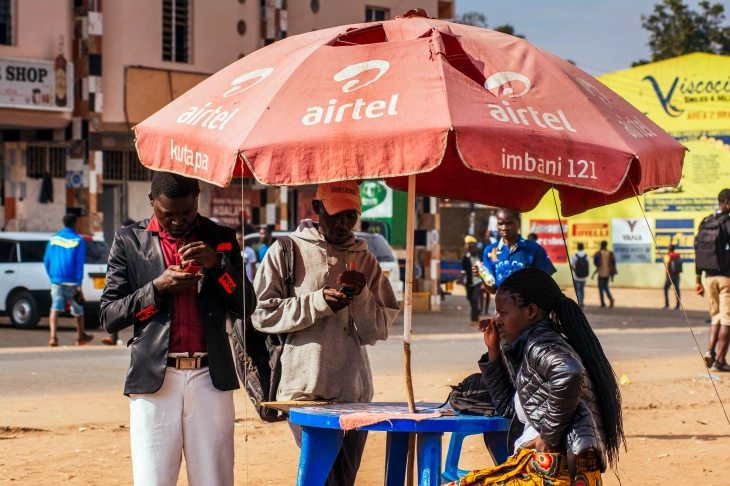
A week after both Airtel and MTN were granted approval by the Central Bank of Nigeria (CBN), to operate a payment service bank (PSB) via Smartcash Payment Service Bank Limited, Airtel Africa Plc has announced that it has been granted approval-in-principle by the CBN to operate as a super-agent in Nigeria.

The telecom company announced this on Monday, explaining in a statement on the Nigeria Exchange Limited (NGX), that Airtel Mobile Commerce Nigeria, its subsidiary will operate the agent banking license.

Super agents are companies approved by CBN to recruit agents for agency banking, such as financial services within communities on behalf of banks to deepen financial inclusion.

Airtel explained in a statement that super agent license, which is different from the PSB, gives it the opportunity to carry out financial services on behalf Nigerian banks.

“The super agent licence is distinct from the Payment Service Bank (PSB) licence for which it received approval in principle on 4 November 2021.

“The PSB licence is required for Airtel to be able to provide financial services in Nigeria such as accepting cash deposits and carrying out payments and remittances, issuing debit and prepaid cards, operating electronic wallets, and rendering other financial services.

“Under the super agent licence, we would be able to create an agent network that can service the customers of licensed Nigerian banks, Payment service banks and licenced mobile money operators in Nigeria.

“Final approval of the super agent licence is subject to the Group satisfying certain standard conditions,” it said.

The federal government of Nigeria, through the CBN, has been working on policies that will facilitate financial inclusion in the country. Among them is the issuance of financial service licenses to qualified telecom operators.

Despite Nigeria’s fintech boom, the African largest economy still has a wide gap of about 40 million people who lack access to financial services. With this gap, telcos, with their huge customer-base that covers even the rural dwellers, are being selected to offer financial services to the underserved.

The Chief Executive Officer, Airtel Africa, Segun Ogunsanya said Airtel is working to meet all the requirements for the license.

“I am very pleased that Smartcash has been granted an approval in principle to operate a service bank business in Nigeria. We will now work closely with the Central Bank to meet all its conditions to receive the operating licence and commence operations.

“The final operating licence will enable us to expand our digital financial products and reach the millions of Nigerians that do not have access to traditional financial services.

“I am looking forward to working closely with the Government, the Central Bank and traditional financial institutions to expand financial inclusion and meet the evolving needs of our customers and the economy.“

Depending much on the success of Airtel and MTN, It is expected that more companies in the telecom industry will be approved to offer financial services soon.

Panel of Enquiry of time wasting; A quick drive to sad memory lane.

0

Whenever the government of Nigeria wreck havocs on the citizens of Nigeria, their next step is always to set up a panel of enquiry to look into the incidence; get to know the cause of the incident and make recommendations to make amends and make sure that such issue never occur again. Unfortunately, those panels of enquiry end up being a fluke, a bluff, a scam to the people and a waste of time and tax payers’ resources as it has been the history that none, absolutely none of the panels of enquiry set up that their reports have been implemented and amends made even during the colonial eras.

There are instance to back up this claim: 

In November,1929, the famous Aba women riot which took place. The Aba women protested against the injustice melted against them by the warrant chiefs and this led to numerous lost of lives and properties. A panel of enquiry was set up to look into the issues raised by the aggrieved women and highlight ways to meet up with  their demands. The first panel was tagged Aba commission of Enquiry and was set up in January, 1930. According to history, the panel of enquiry made no head way as there was no recorded success from the panel. Another panel of enquiry was set up and it was called the Aba commission in March 1930 for the same issue before there was a meagre of success.

Also, many may not have read or heard about the Iva valley massacre in the old Enugu state which occurred on November 18th, 1949 where about 50 armed police arrived the Iva Valley led by a Senior Superintendent of Police, F.S Philips and brutally massacred over 20 miners who were only peacefully protesting against the bad state of their work environment. Panel of enquiry was set up by authorities to look into the incident, since 1949 till today, about 70 years later, nothing have been heard about the panel of enquiry set up or the implementations of the panel’s report as it has since been swept under the carpet while everyone moved on as if nothing happened. 

Should we go on to the Asaba massacre of October, 1967 which occurred during the civil war where the Nigerian soldiers invaded Asaba, a town in southern Nigeria which was a part of the defunct Biafra country. The Nigerian soldiers nearly wiped out the entire people from the face of the earth. A false panel of enquiry was also set up after that incident and nothing came out of it.

Fast forward to 20th of November, 1999, the Odi incident in Bayelsa state where the Nigerian military at the order of the then president and commander in chief of the arm forces, President Olusegun Onasanjo invaded and massacred the people of Odi community. A panel of enquiry was set up and we both know the outcome of the panel; nothing, yes, absolute nothing came out of the panel of enquiry.

If you are too young to know of or too old to remember the above incidents then the Zaria massacre of Saturday, 12th December, 2015 which the Nigerian army shot and killed large numbers of the Shia Muslims in cold blood in Zaria, Kaduna state should still be fresh in your memory. As of panel of enquiry set up? Nothing has been heard of it 6 years later.


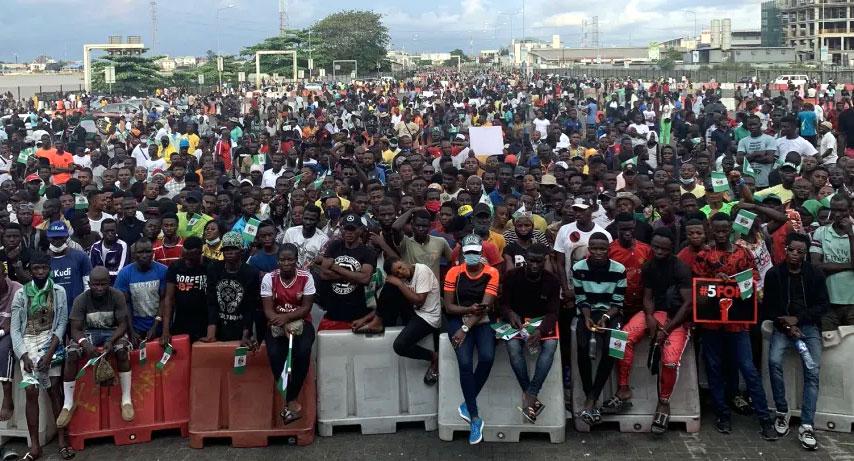
Lastly before the 2020 Endsars massacre, do you remember the Operation python dance (Egwu Eke) of 2016/2017 whereby over 100 persons were reported killed and mass buried by the Nigeria army in Abia state. Nothing have been done to assuage the death of the innocent citizens brutally murdered by the Nigerian army till today. 

While we eagerly wait to see how this report of the endsars panel already submitted to the Lagos state government will turn out, we also pray that our predictions that the reports will never be implemented will be wrong.

Amazon Cuts Visa – Nigeria Needs BNPL Innovation

0

Amazon has cut Visa from processing payments in the UK business. The Reason? “As a result of Visa’s continued high cost of payments, we regret that Amazon UK will no longer accept UK-issued Visa credit cards as of January 19, 2022,” said the ecommerce pioneer.

This is the future and I expect credit card companies to continue to lose markets. The age of Buy Now Pay Later[BNPL] which does not require processing expensive card payments will change things.

However, the e-commerce giant said it will continue to accept payments on Visa debit cards, as well as other credit cards from other firms, such as Mastercard and American Express.

The new rules highlight the impact of disruption decentralized finance (DeFi) and blockchain-powered payment systems have brought to the payment industry.

It thus beckons on payment companies such as Visa and Mastercard to adjust their framework to accommodate the new financial order of things.

Amazon said that technology advancements should be making payment processing fees reduce, but complained that they were actually increasing.

Nigeria needs a super-pioneer in BNPL as this market is ready.

Amazon Divorces Visa UK Over Costly Transaction Processing Fees

Amazon Divorces Visa UK Over Costly Transaction Processing Fees

1

Amazon has announced it will stop accepting Visa credit cards for payments in the UK from January, citing the cost of processing payments, which has made it too expensive to support them.

“As a result of Visa’s continued high cost of payments, we regret that Amazon.co.uk will no longer accept UK-issued Visa credit cards as of January 19, 2022,” Amazon said in an email sent to customers.

However, the e-commerce giant said it will continue to accept payments on Visa debit cards, as well as other credit cards from other firms, such as Mastercard and American Express.

The new rules highlight the impact of disruption decentralized finance (DeFi) and blockchain-powered payment systems have brought to the payment industry.

It thus beckons on payment companies such as Visa and Mastercard to adjust their framework to accommodate the new financial order of things.

Amazon said that technology advancements should be making payment processing fees reduce, but complained that they were actually increasing.

“The cost of accepting card payments continues to be an obstacle for businesses striving to provide the best prices for customers,” the company said in a statement.

“These costs should be going down over time with technological advancements, but instead they continue to stay high or even rise.

“With the rapidly changing payments landscape around the world, we will continue innovating on behalf of customers to add and promote faster, cheaper, and more inclusive payment options to our stores across the globe.”

A Visa spokesperson said the company was disappointed and hoped to resolve the situation before the deadline went into effect.

“UK shoppers can use their Visa debit and credit cards at Amazon UK today and throughout the holiday season,” the company said.

“We are very disappointed that Amazon is threatening to restrict consumer choice in the future. When consumer choice is limited, nobody wins.

“We have a long-standing relationship with Amazon, and we continue to work toward a resolution, so our cardholders can use their preferred Visa credit cards at Amazon UK without Amazon-imposed restrictions come January 2022.”

Fintech and cryptocurrencies have provided alternative payment systems that are tremendously being adopted. One of the key factors driving the wide adoption is cheap transaction processing fees, which was made possible through the elimination of intermediaries.

The backdrop poses a huge challenge to traditional payment firms, as the adoption of blockchain and fintech means losing their clients. Though some, like Mastercard, who has been partnering with other payment companies, are redesigning to tag along the shift, others are still stuck in their costly traditional system, and it’s beginning to tank their customer-base.