DD
MM
YYYY

PAGES

DD
MM
YYYY

spot_img

PAGES

Home Blog Page 547

Binance Partners Ethena to Integrate and List USDe Stablecoin, as Black Mirror IP Token Launches on Base, Solana

0

Ethena Labs announced a major partnership with Binance, the world’s largest cryptocurrency exchange by trading volume, to integrate its synthetic stablecoin USDe across the platform.

This collaboration embeds USDe into Binance’s ecosystem, making it accessible to over 280 million users and $190 billion in managed assets. The integration marks a significant step for Ethena, positioning USDe as a yield-generating alternative to dominant stablecoins like USDT and USDC in centralized exchange (CEX) trading.

Binance listed USDe for spot trading starting September 9, 2025, at 12:00 UTC (8:00 PM Beijing Time). Initial pairs include USDe/USDC and USDe/USDT, with deposits already open and a zero BNB listing fee to encourage adoption. Withdrawals are scheduled to begin on September 10, 2025, at 8:00 PM UTC.

For the first time on Binance, USDe will serve as reward-bearing collateral for futures and perpetuals trading. Users can hold USDe in portfolio margin accounts and earn weekly dollar-denominated rewards from Binance, paid out simply for holding the asset anywhere on the exchange.

USDe is directly integrated with Binance Earn, allowing users to stake it for yields. Eligible holders (minimum 0.01 USDe) will receive a one-time September distribution followed by ongoing weekly rewards. Note that rewards are subject to regional restrictions, excluding areas like the U.S. and EU.

Additional USDe trading pairs and features are expected in the coming weeks, further deepening the integration. Ethena described this as “one of our most important integrations to date,” highlighting USDe’s role in transforming stablecoin utility on CEXs.

Similar to its 2024 deployment on Bybit—where USDe captured 12% of USD balances—Ethena aims to disrupt Binance’s $40 billion stablecoin market share, currently led by USDT and USDC.

USDe is Ethena’s flagship synthetic dollar, a non-fiat-backed stablecoin pegged 1:1 to the USD. It generates yield through delta-hedged positions on staked ETH (stETH), BTC, and other stablecoins, offering around 6.5% annualized returns—higher than many traditional options like USDC lending on Aave. Launched in late 2023, USDe has grown rapidly:

Over $12-13 billion in circulating supply, making it the third-largest USD-pegged asset behind USDT and USDC. Ethena’s total value locked (TVL) exceeds $14 billion. Generated $54 million in revenue last month and over $480 million since inception. It’s the largest non-fiat-backed digital dollar, backed by crypto assets rather than traditional reserves.

This listing fulfills a key milestone for Ethena’s governance token, ENA, activating the “fee switch” mechanism. This shares protocol profits with ENA holders and unlocks up to $500 million in potential buybacks, as noted by BitMEX co-founder Arthur Hayes. ENA surged 8% to around $0.84—its highest since January—following the announcement, driven by buyback speculation and increased DeFi yield demand.

ENA’s rally reflects optimism about Ethena’s growth, with analysts targeting $0.85-$1.00 short-term. USDe’s peg remains stable at ~$0.998, with low volatility post-listing. Ethena is expanding aggressively:

Partnership with Based on Hyperliquid for USDH stablecoin. Launch of USDm with MegaETH to subsidize sequencer fees. $530 million treasury raise by Stablecoin X to accumulate ENA. Indirect backing from BlackRock’s tokenized BUIDL fund via USDtb.

Stablecoins captured 25% of Q3 2025 crypto fundraising, underscoring their dominance in payments and DeFi. USDe’s CEX push challenges incumbents by offering native yields, potentially boosting on-chain activity and institutional interest.

This partnership enhances capital efficiency for Binance traders while accelerating Ethena’s adoption in both CEX and DeFi. As of September 10, 2025, trading is live, and users can explore USDe on Binance for rewards and liquidity.

Black Mirror IP Token Launches on Base and Solana

Official Black Mirror IP Goes Onchain

The $MIRROR token, the first-ever officially licensed franchise token tied to the Black Mirror intellectual property (IP), has launched on both Base (an Ethereum Layer 2 blockchain) and Solana.

This marks a significant milestone in blending mainstream entertainment with Web3, allowing fans to participate in the ecosystem through tokenized access, rewards, and community governance. The project is built on KOR Protocol and backed by major players including Animoca Brands, Avalanche (AVAX), Solana, and Republic Crypto.

The $MIRROR token is the official utility token for the “Black Mirror Experience,” an officially licensed Web3 expansion of Netflix’s iconic dystopian series Black Mirror.

Launched on September 8, 2025, via a Token Generation Event (TGE) on the Base network (Coinbase’s Ethereum Layer 2), it transforms passive viewership into an interactive, community-owned ecosystem.

Fans can now participate in shaping the franchise’s narrative, earn rewards through on-chain activities, and access real-world perks like animated episodes, NFTs, and events.

It’s fully licensed by Banijay (the IP holder for Black Mirror, produced in partnership with Netflix). Primary Token Generation Event (TGE) on September 8, 2025, on Base, where it went live and started trading immediately.

Expanded to Solana as part of its multi-chain strategy, leveraging Solana’s high-speed infrastructure for broader accessibility. Over 500,000 users registered pre-launch via the Black Mirror Club platform, qualifying for airdrops.

58% of the total supply is allocated to the community through airdrops, incentives, and rewards. This includes confirmed partner airdrops from entities like Meebits NFTs. The token powers an AI-driven ecosystem for reputation scores, privacy-focused identity, and interactive storytelling, where holders can influence Black Mirror narratives and access exclusive content.

Immediately listed on Binance Alpha and Aerodrome Finance (on Base) for trading. Also available on Kraken. As of early post-launch reports (September 8-9, 2025), the market cap hovered around $6 million, with strong initial engagement: thousands of likes, reposts, and replies on announcement posts.

Black Mirror, known for its dystopian tech explorations, is transitioning from TV to an “onchain universe.” $MIRROR enables fans to “build the next chapter” through decentralized tools, merging culture with blockchain. The launch video and announcements emphasize “Black Mirror is based” (a nod to Base chain and internet slang for authenticity), positioning it as a cultural experiment on Base, which is emerging as a hub for IP-backed projects.

CEO Inder Phull discussed the vision in a live session on September 3, 2025, highlighting onchain media’s future. This isn’t just a meme coin or fan token—it’s a pioneering “franchise token” that could redefine how entertainment IPs engage audiences onchain.

Users claim a dynamic “Social ID” NFT that evolves based on on-chain and social behavior. Tracked by AI assistant “Iris,” your reputation score influences airdrop allocations, access to exclusive content, and influence over story arcs.

While the token launches on Base for scalability and low fees, users can connect Ethereum (EVM) or Solana wallets during registration. This enables cross-chain participation.

With Black Mirror’s billions of global views and cultural resonance, $MIRROR has potential to onboard mainstream users to Web3 via familiar storytelling. Early buzz suggests it’s one of 2025’s most anticipated launches, though as with all crypto projects, it’s high-risk and speculative.


Best Crypto Casino Affiliate Programs 2025: Spartans vs Stake.com & Betfair Compared

0

Affiliate networks remain central to digital marketing in online betting. For creators, streamers, and content publishers, the right deal can turn audiences into a steady income. Yet, the programs vary widely. Some reduce commission levels, others trap partners in strict terms, and many overlook smaller creators by failing to provide real tools to grow.

With competition intensifying in 2025, a rewarding and adaptable crypto casino affiliate program has become critical. This review focuses on Spartans, Stake.com, and Betfair to identify where creators can build a stable income and unlock higher returns.

Spartans: Flexible Models with Strong Support

Spartans positions itself as a leading affiliate choice in 2025. Its program lets creators select from three structures: CPA, Revenue Share, or a Hybrid combining both. This choice helps affiliates align with their audience strategy. For instance, paid advertisers may prefer CPA for instant payouts, while community builders can earn through steady revenue share.

Support is a clear strength. Spartans equips affiliates with branded resources, tracking dashboards, and responsive support teams. Rather than leaving partners unsupported, Spartans actively ensures campaigns succeed. Affiliates can promote campaigns such as the Lamborghini Giveaway, 300% sportsbook bonuses, reload rewards, and popular crash games. These provide versatile content angles that appeal to casual bettors and serious users.

Payment flexibility also sets Spartans apart. Both crypto and fiat withdrawals are available, making it practical for markets like Latin America, where banking rules complicate transfers. Commissions scale with volume, rewarding creators as they expand. Because the Spartans’ program is newer than platforms like Stake, there is less market saturation, creating high earning potential for early entrants. For those who want a program that treats creators as partners, Spartans stands out on all counts.

Stake.com: Market Leader with Challenges for Smaller Creators

Stake.com is one of the most recognized gambling brands globally, and its affiliate program reflects that influence. It benefits from wide visibility, sports sponsorships, and entertainment ties, which help convert users efficiently. Affiliates who join gain access to strong revenue share offers and the stability of a proven platform.

Yet, the size of Stake.com also creates entry issues. Smaller creators often face rejection or receive less favorable terms. Stake tends to prioritize affiliates with big audiences, making it difficult for new streamers to secure meaningful agreements. While established partners can earn significantly, those starting out may find progress slow.

The program remains a powerful option, but its exclusivity limits access. For creators with established reach, it can be profitable, but for others, the barriers outweigh the benefits.

Betfair: Reliable but Limited on Crypto Options

Betfair remains one of the most trusted names in betting, and its affiliate program reflects long-term credibility. It offers dependable B2B support, detailed analytics, and guaranteed payouts, making it attractive for affiliates promoting established brands. Betfair’s reputation ensures partners can market a platform known for fairness and trust.

The drawback is its absence of crypto features. Unlike Spartans and Stake, Betfair does not provide crypto deposit or withdrawal options, which is a significant limitation in 2025. As users increasingly expect instant crypto transactions, affiliates risk losing potential traffic by promoting Betfair. In addition, its affiliate structures are less versatile, often fixed rather than offering CPA, Revenue Share, or Hybrid models.

Betfair works best for affiliates serving traditional betting audiences. However, compared with crypto-driven programs like Spartans, it does not capture the full growth potential.

To Sum Up

For streamers and creators, 2025 presents fresh opportunities, but choosing the right partner is key. Spartans leads with flexible structures, branded support, and crypto payout options, making it one of the top affiliate programs today. Stake.com delivers reach and strong conversions, but its exclusivity makes it harder for smaller affiliates. Betfair offers reliability and trust in traditional betting but lacks crypto adaptability.

For creators aiming to build revenue from their audience, Spartans offers the strongest mix of flexibility, accessibility, and growth. In an industry where programs often tilt in favor of platforms, Spartans shows that a creator-first approach can redefine affiliate marketing.

Find Out More About Spartans:

Website: https://spartans.com/

Instagram: https://www.instagram.com/spartans/

Twitter/X: https://x.com/SpartansBet

YouTube: https://www.youtube.com/@SpartansBet

12 US Senate Democrats Release Framework for Digital Market Structuring, as Kazakhstan Outlines Plan on Digital Assets

0

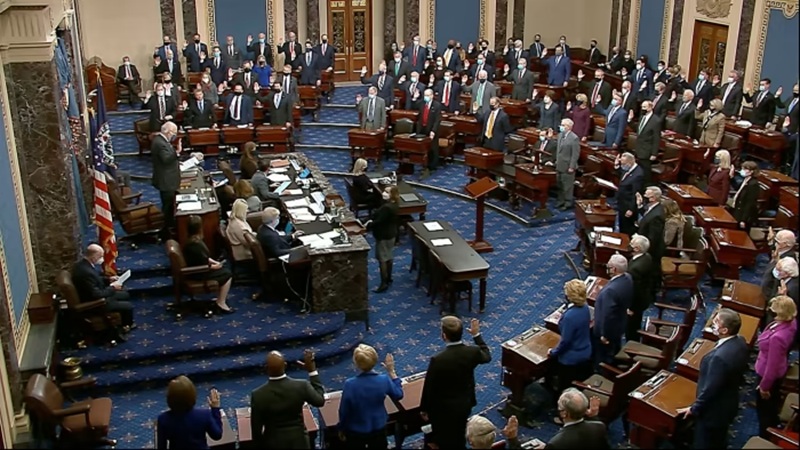
A group of 12 Senate Democrats, including Sens. Ruben Gallego (D-AZ), Mark Warner (D-VA), Kirsten Gillibrand (D-NY), Cory Booker (D-NJ), Catherine Cortez Masto (D-NV), Ben Ray Luján (D-NM), John Hickenlooper (D-CO), Raphael Warnock (D-GA), Adam Schiff (D-CA), Andy Kim (D-NJ), Lisa Blunt Rochester (D-DE), and Angela Alsobrooks (D-MD), released a comprehensive six-page framework for digital asset market structure legislation.

This move ends months of relative public silence from Democrats on the issue and signals their intent to engage in bipartisan negotiations with Republicans, who have been pushing their own versions of similar bills.

The framework emphasizes that the nearly $4 trillion global crypto market is too significant to leave unregulated, highlighting the need for rules that foster innovation while prioritizing consumer protection, financial stability, and preventing illicit activities.

The senators stated: “Digital asset technology has the potential to unlock new businesses and spur American innovation. But questions about digital assets’ place in the U.S. regulatory framework have hobbled both innovation and consumer protection.” They stressed that achieving a “strong, bipartisan outcome will require time and cannot be rushed,” contrasting with Republican calls for faster passage, such as Sen. Cynthia Lummis’s (R-WY) push to deliver legislation to President Trump’s desk by Thanksgiving.

Key Elements of the Seven-Pillar Framework

The proposal outlines seven core pillars to guide future legislation, focusing on regulatory clarity, enforcement, and ethics.

Closing the Gap in the Spot Market for Non-Security Digital Assets | Assign exclusive jurisdiction to the Commodity Futures Trading Commission (CFTC) over non-security tokens in spot markets, addressing current regulatory voids where no agency has clear authority. |

Clarifying the Legal Status of Digital Assets and Regulator Jurisdiction | Provide clear token classification guidelines, distinguishing securities (under SEC oversight) from commodities, and require regulators to issue guidance on how existing securities laws apply to digital assets.

Bringing Issuers into a Regulatory Framework, Mandate disclosures for token issuers, including details on project risks, tokenomics, and compliance with anti-money laundering (AML) rules, while integrating stablecoin issuers (building on the recently passed GENIUS Act) without allowing them to offer interest-bearing products.

Bringing Other Platforms into a Regulatory Framework | Require decentralized finance (DeFi) platforms, decentralized exchanges, and other digital asset trading venues to register with the Financial Crimes Enforcement Network (FinCEN) and comply with AML/KYC standards; incorporate existing platforms into SEC frameworks where applicable.

Blocking Illicit Finance | Strengthen tools to combat money laundering and terrorism financing in crypto, including enhanced reporting, international cooperation, and mechanisms to isolate non-compliant platforms while aiming to protect user financial privacy.

Preventing Corruption and Abuse | Impose restrictions on elected officials and their families from issuing, endorsing, or profiting from crypto projects while in office; require full disclosure of holdings. This pillar explicitly targets potential conflicts, such as those linked to President Trump and his family’s crypto ventures.

Ensuring Fair, Effective Regulation | Boost funding and staffing for the SEC, CFTC, and Treasury; mandate bipartisan rulemaking processes to avoid partisan dominance; streamline hiring for enforcement roles.

This framework overlaps with Republican proposals, like the Senate Banking Committee’s updated discussion draft from September 5, 2025, and the House-passed CLARITY Act (which advanced in July 2025 with 294-134 support), in areas like token classification and dual SEC/CFTC roles.

However, it diverges on stricter DeFi oversight, ethics provisions, and a deliberate pace, which could complicate negotiations. Critics like Sen. Elizabeth Warren (D-MA) have opposed lighter-touch Republican bills, arguing they enable corruption, but the 12 signatories (most of whom supported the bipartisan GENIUS Act for stablecoins) represent a more crypto-friendly Democratic bloc.

Implications for Crypto Regulation

This release marks a pivotal shift, as Democrats had largely ceded the conversation to Republicans in 2025. It paves the way for intensified talks in the Senate Banking Committee, potentially leading to a comprehensive bill by year’s end—though partisan divides on enforcement and timelines remain.

Industry observers, including Paradigm’s Justin Slaughter, see it as a “strong” foundation for bipartisan passage, especially after crypto groups like Fairshake spent $195 million influencing 2024 elections.

On X (formerly Twitter), reactions ranged from optimism about regulatory clarity to concerns over privacy impacts from anti-illicit finance measures. Overall, it underscores growing congressional consensus that the U.S. needs a unified framework to compete globally while safeguarding markets.

Kazakhstan Outlined Plans of Integrating Digital Assets into the Country’s Financial Framework

Meanwhile, on September 8, 2025, during his annual State of the Nation address in Astana, Kazakhstan’s President Kassym-Jomart Tokayev outlined ambitious plans to integrate digital assets into the country’s financial framework.

A key highlight was the proposal to establish a State Fund of Digital Assets (also referred to as the National Digital Asset Fund), which would serve as a strategic cryptocurrency reserve. This move positions Kazakhstan as a proactive player in the global crypto landscape, building on its established role as a major Bitcoin mining hub.

The fund will be created under the Investment Corporation of the National Bank of Kazakhstan. It aims to accumulate “promising assets” in the digital financial system, including high-potential cryptocurrencies like Bitcoin. The reserve will help diversify national holdings, hedge against economic volatility, and support long-term financial returns.

Initial funding could come from seized digital assets from criminal investigations, revenues from state-regulated mining operations, and potentially allocations from the National Fund (Kazakhstan’s sovereign wealth fund, valued at around $60 billion, primarily from oil revenues).

Tokayev directed the Agency for Regulation and Development of the Financial Market to draft comprehensive digital asset legislation by the end of 2025, with full implementation targeted for 2026. This new law will liberalize crypto markets, promote fintech innovation, integrate tokenized assets, and attract new participants while maintaining regulatory oversight.

It builds on existing efforts, such as the launch of the digital tenge in pilot mode in 2023, which is already used for National Fund project financing and will expand to budgets at national, local, and state-owned enterprise levels. The president proposed up to $1 billion in joint government and central bank investments to fuel high-tech and fintech sectors.

This includes channeling bank liquidity into productive economic areas, addressing criticisms that domestic banks favor low-risk investments over real-economy lending. The broader goal is to modernize the financial system, boost competitiveness, and reduce reliance on traditional commodities like oil and gas.

The “CryptoCity” Initiative

In tandem with the fund, Tokayev confirmed plans for CryptoCity in Alatau (a town in southeastern Kazakhstan near Almaty). This will be Central Asia’s first fully digitalized smart city, where residents and businesses can use cryptocurrencies for everyday payments—such as groceries, services, and utilities.

The project emphasizes advanced technology, favorable living conditions, and blockchain integration to showcase digital finance in action. It aligns with a pilot zone announced in May 2025 allowing crypto payments for goods and services, and it could attract IT specialists, developers, and investors to drive economic growth.

Kazakhstan currently holds about 13-14% of global Bitcoin mining hashrate (down from a 2021 peak of 27.3% after China’s ban), generating millions in tax revenue despite challenges like unlicensed operations straining the power grid. Crypto ownership among citizens has doubled in the last two years, reflecting growing adoption.

This announcement follows global trends, with countries like the United States (under President Trump’s executive order for a crypto reserve), Brazil, Indonesia, El Salvador, and Bhutan exploring similar sovereign digital asset strategies.

Kazakhstan’s International Financial Center (AIFC) in Astana already hosts crypto-friendly regulations, including the region’s first spot Bitcoin ETF launched in August 2024 and acceptance of stablecoins for regulatory fees.

However, nationwide crypto payments remain prohibited outside controlled environments to balance innovation with risk management, including warnings about rising online fraud and cybersecurity threats. Tokayev’s vision also includes establishing a dedicated Ministry for AI Development and a “Digital Code” to integrate AI, big data, and the platform economy.

These steps could solidify Kazakhstan’s role as a regional digital finance hub, potentially increasing global attention to its ecosystem while fostering economic diversification. The reaction on X (formerly Twitter) has been positive, with crypto influencers and news outlets highlighting the “snowball effect” of institutional adoption.

Uniswap Analysis Slows & Chainlink Forecast Stalls While BlockDAG Proves Adoption With Viral X10 Miner Rollout

0

Chainlink (LINK) has kept traders waiting for a clear move, with many questioning if the forecast signals real upside ahead. Meanwhile, Uniswap (UNI) is struggling under $10 even as decentralized exchange volumes remain high. Both projects have credibility, but right now, they are not showing tangible signs of adoption that buyers can act on.

BlockDAG offers a different picture. Its X10 miner is already in homes, running and being reviewed by users. Viral unboxing clips confirm the hardware is real, not a concept on a roadmap. With its presale fixed at $0.0013 ahead of the Singapore Deployment Event and a record $403M raised, BlockDAG (BDAG) is providing evidence at scale. For those asking what is the best crypto to invest in now, this mix of utility and community traction makes BlockDAG hard to overlook.

From Unboxings to Proof: BlockDAG’s X10 Miner

BlockDAG is reshaping expectations of presale projects. The X10 miner has moved beyond presentation slides and is now installed in real homes. Unboxing videos across social channels show the hardware plugged in and producing results. This rollout is not a trial run; it is a full adoption happening before a market listing. Such visible proof is rare, which is why many are calling BDAG the best crypto to invest in now.

Every miner shipped is also free marketing. With 19,600 units sold and shipments scaling to 2,000 each week, each setup strengthens legitimacy and demonstrates real-world use. At the same time, the presale has already surpassed $403M, with more than 25.9B coins sold. The coin’s current price is $0.03 in Batch 30, but the rollback to $0.0013 until October 1 offers a limited-time entry point. Early participants who joined at $0.001 are already seeing 2900% paper gains, underscoring the scale of demand.

The ecosystem is also taking shape. The X1 Mobile Miner app has attracted over 3M users, and partnerships with Uniswap, Axelar, and Rarable extend reach into DeFi and NFTs. Hackathons in Africa and Asia are producing 30–50 projects per event, supported by grants paid directly in BDAG and USDT. Community activity is strong too, with 325K+ members and billboard campaigns in Tokyo, London, New York, and Las Vegas.

BlockDAG has also confirmed a Deployment Event in Singapore, setting the stage for the next phase of its roadmap. This mix of shipped hardware, community growth, and presale pricing sets BlockDAG apart. It is delivering results in real time and positioning itself as the best crypto to invest in now before its official exchange debut.

Chainlink (LINK) Forecast: Waiting for Breakout

The current Chainlink (LINK) forecast shows price action struggling to break out with conviction. LINK has faced repeated resistance after short-lived rallies, leaving it range-bound and testing trader patience. On-chain activity remains steady, as Chainlink continues to dominate the oracle space with integrations across DeFi platforms and blockchain networks. This consistency underlines its long-term importance, but it has yet to trigger immediate price momentum.

Analysts highlight nearby resistance levels that must be broken before sustained gains are possible. Until then, buyers remain cautious. Support is holding at familiar ranges, but unless a decisive breakout occurs, LINK may continue to drift sideways. Longer-term, Chainlink’s position as the leading oracle provider secures its utility and relevance, but short-term action keeps traders debating entry points.

Uniswap (UNI) Analysis: Holding Near Support

Uniswap (UNI) is trading around $9.45, slipping under $10 as it struggles to hold above resistance near $9.64. Technical signals remain mixed, with some short-term momentum showing buy interest while neutral RSI readings suggest indecision. Support is steady at $8.93, but UNI must reclaim $10–$12 to attract stronger buying. A push beyond that level could open the way toward $15–$18.60, though rejection could see prices fall toward $8.10.

Despite the technical uncertainty, Uniswap maintains its role as the top decentralized exchange. August trading volumes reached $143B, representing almost 40% of the DEX market. Governance activity is also in focus, with two key votes underway: one to create a Wyoming-based entity (DUNI) and another to expand Uniswap v3 to the Ronin chain. Both could influence adoption and market perception. Traders remain cautious, but UNI’s ecosystem strength ensures it stays central to discussions about the best crypto to invest in now.

Summing Up

The Chainlink (LINK) forecast still leaves traders waiting, while the latest Uniswap (UNI) analysis shows the token holding but not breaking higher. Both projects remain important, but neither is demonstrating adoption that is visible to everyday users.

BlockDAG is different. With the X10 miner shipped, 19,600 units sold, 3M users on its app, and a presale that has raised $403M, it is proving its utility before launch. Combined with its fixed $0.0013 presale price and 2900% ROI, BlockDAG is showing real traction. That combination of proof and access is why it continues to be named the best crypto to invest in now.

Presale: https://purchase.blockdag.network

Website: https://blockdag.network

Telegram: https://t.me/blockDAGnetworkOfficial

Discord: https://discord.gg/Q7BxghMVyu


Dogecoin Holds Ground, Pi Network Pushes Forward, BlockDAG Steals the Spotlight With 3M+ X1 Miners

0

The crypto scene is full of stories that keep gaining attention. Dogecoin (DOGE) is holding steady at key support levels, while Pi Network (PI) is looking to spark energy again with its planned mainnet launch. Both coins are drawing attention, yet they face challenges that could slow their path.

On the other side, BlockDAG (BDAG) is showing numbers that set it apart. It has already pulled in nearly $403 million through its presale, now sitting in Batch 30 with a listing price of $0.03.

The launch value has been set at $0.05, locking in clear growth for early entries. Over 26.1 billion coins have been sold, with more than 3 million users mining on the X1 Mobile Miner app. BlockDAG (BDAG) is also planning a major Deployment Event in Singapore on October 1, where the coin will be available at a special $0.0013 price for a limited time, along with the launch of BlockDAG Academy.

While Dogecoin and Pi Network push to rebuild momentum, BlockDAG’s mix of funding, adoption, and global reach shows it as the coin gathering the strongest pace heading toward 2025.

Dogecoin Nears Support But Big Holders Add Pressure

Dogecoin (DOGE) is currently priced close to $0.21 and resting on its 200-day EMA, a zone that many analysts call a major point for decision-making. Chart signals reveal a triangle structure, similar to patterns seen before Dogecoin’s rallies in 2016 and 2020. The coin now faces a squeeze, as it holds support while pushing against falling resistance, leaving open the chance of another breakout move.

But warning signs remain. Derivative reports point to negative funding rates and a jump in short positions, showing doubt among traders. At the same time, large holders have let go of about 250 million DOGE since late August, which adds extra selling weight. Analysts are eyeing support at $0.214 and $0.185, with barriers higher up at $0.253 and $0.370.

Market signals are split. The RSI is near 46, which shows weaker momentum, while the MACD has made a bearish cross. If the daily candle drops below $0.211, losses could stretch toward $0.181. Still, Dogecoin’s community keeps supporting the coin, giving it energy despite these hurdles.

Pi Network Pins Hopes On Mainnet Launch

Pi Network (PI) has struggled through falling prices, exits, and doubt, but crypto analyst Dr. Altcoin says its path does not depend on hitting $1 like a stablecoin. He explains that what matters most is building trust, adoption, and actual use in payments between people. If enough users and shops accept Pi for goods and services, he says, the price will find stability naturally through demand and supply, without needing a one-to-one tie to the U.S. dollar.

Pi’s real strength, he adds, lies in becoming the main unit of its own digital system instead of trying to copy traditional currencies.

Meanwhile, the Pi Network group is working toward its September 3 mainnet release with version 23.01, which introduces enhanced safety features and improved speed. If this rollout works as planned, it could bring back faith and give the project new life. Many now wait to see if Pi will finally match the long-time promises and prove its place in digital payments.

BlockDAG Rockets Ahead With $403M And Global Growth

BlockDAG is outpacing its rivals by achieving milestones that demonstrate genuine strength and adoption. The project has already raised close to $403 million, putting it among the biggest fundraising efforts in the market this year.

Its current presale has advanced to Batch 30, where the coin is listed at $0.03, marking a 2,900% surge since its starting phase. With a confirmed launch price of $0.05, BlockDAG provides clear growth momentum for early backers and shows no signs of slowing down.

Community numbers highlight how quickly interest is building. More than 26.1 billion coins have been sold so far, while the X1 Mobile Miner app has drawn over 3 million daily users from more than 130 countries. This easy-to-use mining system is fueling worldwide participation and building long-term network strength. In addition, over 19,000 physical miners have already been delivered, strengthening the system ahead of its official launch.

Looking ahead to future events, excitement is building for the upcoming mega Deployment gathering in Singapore on October 1. To celebrate the milestone, BlockDAG (BDAG) is offering the community a limited-time chance to secure coins at just $0.0013.

This bold move highlights the project’s confidence in its path toward mainstream adoption. Beyond events and pricing, the team is also focusing on learning tools with the launch of BlockDAG Academy, which helps new users understand blockchain and boosts awareness on a global scale.

With financial traction, wide adoption, and expanding education, BlockDAG is not just another coin chasing hype. Building a strong foundation is key to placing it at the front of the race as crypto eyes 2025.

Final Thought

Dogecoin and Pi Network show sparks of hope but also face barriers. Dogecoin must stay strong above $0.21 while resisting sell pressure from whales and overcoming mixed technicals. Pi Network is betting on its September 3 mainnet release and new upgrade to restore belief, but the project still must prove reliability and real-world use.

In contrast, BlockDAG is already showing action, not just promises. With $403 million raised, Batch 30 at $0.03, over 26.1 billion coins sold, and a launch price at $0.05, its progress is clear. Add in 3M+ X1 miners, the October 1 Singapore Deployment Event, BlockDAG Academy, plus the special limited-time $0.0013 offer, and it’s easy to see why BlockDAG is setting the pace as top crypto presale into 2025.

Presale: https://purchase.blockdag.network

Website: https://blockdag.network

Telegram: https://t.me/blockDAGnetworkOfficial

Discord: https://discord.gg/Q7BxghMVyu