DD
MM
YYYY

PAGES

DD
MM
YYYY

spot_img

PAGES

Home Blog Page 5475

No Timetable for the Launch of China’s Digital Currency Yet

0

China is leading the global development of Central Bank Digital Currency (CBDC), with records of successful trials. But the world’s second-largest economy said it is not ready to roll out the digital currency, called eCNY, yet.

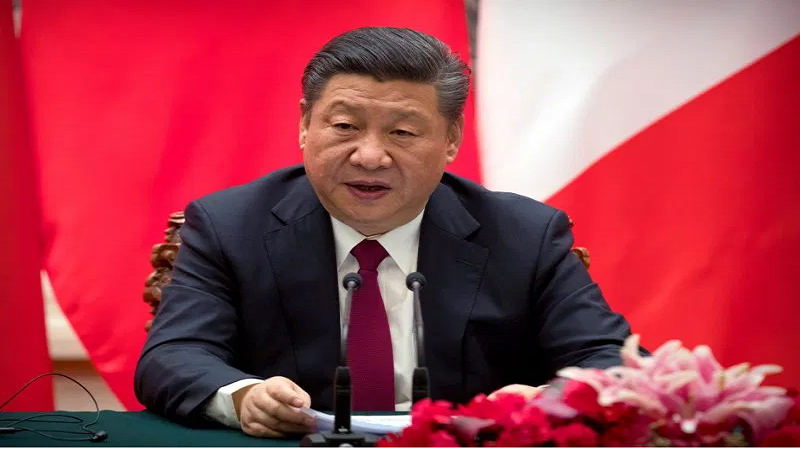
The People’s Bank of China governor Yi Gang said on Tuesday that China will continue to advance the development of its central bank digital currency and improve its design and usage.

“Going forward, we will continue to prudently advance R&D of eCNY, improve its design and use,” Yi said via video at a Bank of Finland event.

China has successfully tested eCNY in major cities including Shenzhen, Beijing and Shanghai and is poised to carry out more tests before launching the digital version of its fiat. In august, the eCNY was used to facilitate payments in the country’s futures market.

The application of e-CNY in the futures market provided an efficient, zero-cost and safe payment alternative for futures exchanges and market participants through real-time inter-bank payment, according to China Securities Journal.

Mu Changchun, head of the PBOC’s Digital Currency Institute, said at the Hong Kong Fintech Week conference last week, that About 140 million people had opened “wallets” for the digital yuan as of October and used it for transactions totaling around 62 billion yuan ($9.7 billion).

Despite the success the eCNY has recorded so far, China has not set a timetable for its roll out, but said it will continue to work on many components of the digital currency.

“China will improve eCNY’s privacy protection and anti-counterfeiting feature and increase its interoperability with existing payments tools,” Yi said, adding that China will also test eCNY’s impact on its monetary policy and financial markets.

Recently, the Chinese authorities have embarked on reforms to address concerns about the use of private information. That is one more area of eCNY that China wants to work on.

Yi said the PBOC attaches great importance to the issue of personal information protection, as CBDC issuers have to balance the need between safeguarding privacy and preventing crimes.

To strike the right balance, the PBOC collects information on a “minimum and necessary” basis in eCNY applications, and strictly controls the storage and usage of personal information.

China has been working on its digital currency for years, but recently sped up pace following the growing popularity of cryptocurrency. China rapidly became a huge cryptocurrency market, controlling the largest share of global bitcoin mining. In September, China declared all cryptocurrency transactions, including mining, illegal.

The move is part of China’s financial industry reforms that have targeted payment companies such as the Ant Group. It also is seen as a way of clearing obstacles that may stall the acceptance of eCNY. While the digital yuan has scored a significant measure of success in domestic trials, it still falls short in cross-border transactions. In February, Beinjing moved to team up with Hong Kong, Thailand, the United Arab Emirates (UAE), along with the Bank of International Settlements (BIS), to explore cross-border payment for digital currencies.

Yi said eCNY aims to meet the need of domestic retail payments as cross-border digital payments involve more complicated issues, such as anti-money laundering.

“The PBOC is willing to strengthen cooperation with world central banks in developing CBDC, including setting standards and rules,” Yi said.

Given the many holes yet to be filled in the eCNY development, China is not in a hurry to launch its CBDC, as it prioritizes efficiency over speed.

The Greatest Company in Nigeria YET to be Launched, Create Your New Path

2

Companies exist to solve customer problems. It requires moving the customers from friction spot (A) to the solution spot (B). I see it as a projectile where you create many trajectories to move from A to B. What happens there is this: there are many paths from A to B, and if you focus on developing a better path, you can find opportunities even in places which have many trajectories. 

Let’s say you want to build a new financial institution, you do not follow the path which First Bank pioneered centuries ago, to go from A to B.  Rather, you create a new path (like the Paystack guys) to move from A to B, and to a large extent accomplish the same result of providing a specific financial product.

If you have this mindset, you will agree that the greatest company in Nigeria has not been launched, because the possible paths from A to B are infinite – and you can create a better one in any sector than whatever anyone has there.

They say the insurance sector is competitive in Nigeria (!) even though they have less than 5% penetration. Can you create a new path to fix the friction? Think of electricity, education, etc.

Simply, the best companies in Nigeria have not been founded. And if anyone tells you that all the opportunities are gone, respectfully ignore him or her. If Nigeria is operating at its optimal productivity level, its GDP should be $3 trillion (well above the current  $500 billion). If you do the math, it means Nigeria needs 6X multiples to attain equilibrium.

About 90% of the companies in Nigeria today are not wired for that type of unbounded, unconstrained, and compounding  leverageable growth with accelerating returns. Yes, even if they try, the anchored elements upon which they are built cannot enable them to experience  that redesign.

Only new species will provide that growth under new tenets, driven by new business models, energized by new policies. Hope you get the point why our insurance sector has less than 2% penetration, electricity companies deliver darkness to more customers than light, potable clean water nonexistent, using 65% of workers to produce hunger, [add your list], and banks serving less than 50 million unique customers in a nation of about 210 million citizens.

People, the best companies for Nigeria have not been founded. So, begin to #BUILD.

Get Into Fandom – And Be A KING

0

Steve Jobs, an Apple founder, was legendary for stimulating demand. He worked without surveys or focus groups. He was a genius, peerless in his generation. He saw an unborn future many years ago. He was an icon, who changed his world. He developed a good design paradigm of working at the perception of customers, beyond their needs and expectations. He found glory and Apple triumphed with iPod, iPhone, iPad and more.

I call this Perception Demand because Mr Jobs used his vision to create new industrial sectors. He used his talent to launch the new dawns in the apps economy and the smartphone economy, at scale. Who remembers that Kuda, Nigeria’s digital bank is a microfinance bank? Not many because they used perception demand to make customers become FANS.

Go back to the playbook and transform that company, pushing it beyond the needs and expectations to the perceptions of customers. Until you do that, transformation has not started. From consumers to customers to FANS; when a company gets into fandom, it becomes a category-king. 

Be a KING … in that market. Read more here.

Steve Jobs’ Perception Demand Construct, for Africa


Managing Operations for Productivity – Tekedia Live

0

We have Tekedia Mini-MBA Live today as follows:

Tue, Nov 9 | 7pm-8pm WAT |  Managing Operations for Productivity. Our Faculty is Modupe Olusoga, the Chief Operating Officer in Streamsowers & Köhn and a former HR Business Partner in KPMG.

When all the factors are ready, how do you manage them for productivity and business growth? Our Faculty will provide guidance on how to unlock new vistas in your company.

Tekedia Institute >> learn from the best.

RESEARCH: Combating Fake News, Misinformation and Disinformation in West Africa with Critical Thinking Literacy

0

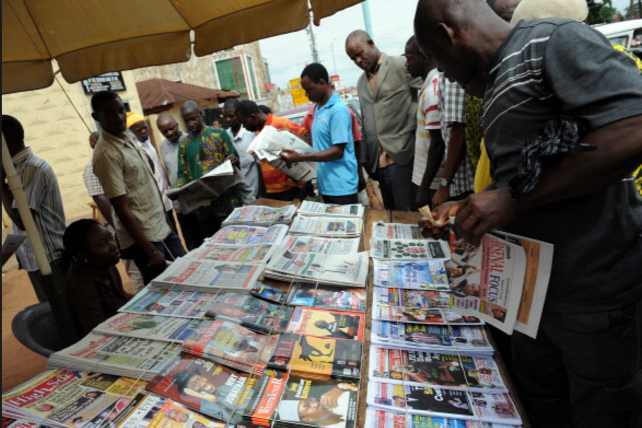
With the increasing access to smartphones, Internet data and social networking sites, fake news, misinformation and disinformation remain key disruptors in sustainable information creation and sharing ecosystem across the world. From the global north to the global south, individuals, organisations and governments are battling the menace. In the course of finding sustainable solutions to the problem, stakeholders in various political and non-political institutions have developed and still working on the right approaches and strategies for taming the trends of FMD.

From fact-checking spread FMD to training of information creators and individuals, a number of organisations in West Africa have done well when one looks at the number of fact-checked stories and trainings held between 2015 and 2021, our analyst notes. Some individuals who believe that providing solutions to the menace should not be the sole responsibility of the practitioners in the media industry and political leaders have initiated and executed various programmes. Some people and organisations have written reports and popular articles, educating people on the danger and cost of FMD.

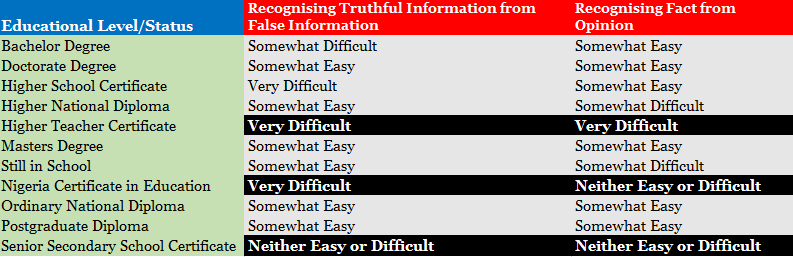
In West Africa being worried about FMD does not mean being ready for sustainable solutions. This was part of the outcomes of the ongoing FMD research in the sub-region earlier reported by our analyst. Despite believing existence of FMD, analysis of the views of hundreds of West Africans who participated in the research indicates that they are not ready for media literacy courses or training.

Our analyst points out that this is really surprising when one considers the low severity of the participants who believe that they know the difference between truthful information and false one. This is also applicable to citizens’ ability to separate facts from opinions. Our analysis largely indicates that female citizens are finding it somewhat easy to separate facts from opinions and truthful information from false information, while it is being somewhat difficult for male citizens.

Exhibit 1: West Africans’ Recognition of Truthful Information and Facts

Source: West Africa’s Fake News, Misinformation and Disinformation 2021 Survey; Infoprations Analysis, 2021

In other research, being carried out by our analyst in conjunction with other researchers in Nigeria, Russia and other countries in Europe, when Nigeria consumed and shared fake security and political news on Facebook and Twitter, they are not conscious of national unity. In terms of velocity [time of engaging with fake news, misinformation and disinformation], analysis reveals that Nigerians reacted to fake news that conformed with their readiness to spread information that could cause chaos and lead to disunity among ethnic groups, individuals and organisations.

As political leaders and non-governmental institutions, including individuals continue finding solutions to the menace, our analyst states that there is a need to consider critical thinking literacy as part of civic education subjects in primary and secondary schools. In higher education institutions [HEIs], stakeholders also need to consider it in the general studies courses. From the insights, it is obvious that West Africans need to be equipped with analysis, interpretation, inference, explanation, self-regulation, open-mindedness and problem-solving skills. These will help them in being conscious of what they read, watch, listen to and share.

Teaching critical thinking literacy, according to a number of experts in sociology and psychology, requires consideration of specific and general contexts in which FMD is being spread. Instead of teaching people the identified skills using general approach, tutors or trainers should take a critical look at the format of FMD. According to our analyst, if the FMD is mostly political or economic, teaching critical thinking in the context(s) requires specific consideration of the information in relation to the manifest and latent features that resonated with the political or economic environment of the people who spread the identified FMD.