DD
MM
YYYY

PAGES

DD
MM
YYYY

spot_img

PAGES

Home Blog Page 5475

Lagos Judicial Panel Found Nigerian Army, Police Carried Out Lekki Massacre

0

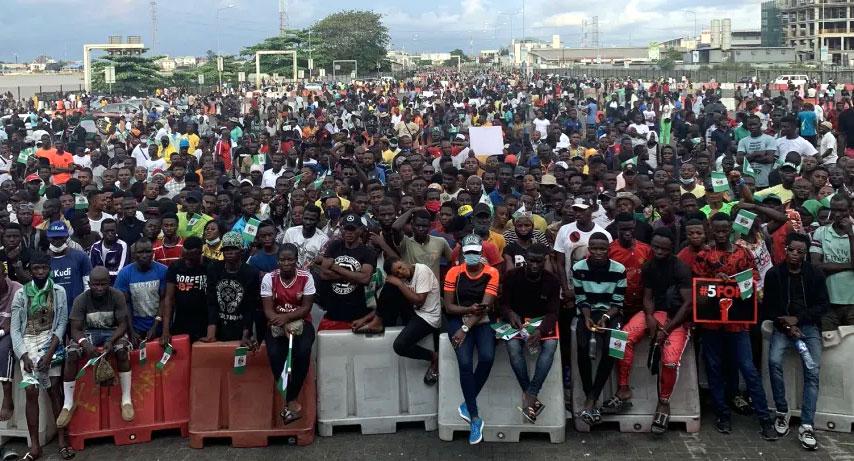
On October 20, 2020, scores of Nigerians, especially youths, protesting against police brutality were shot and killed by members of the Nigerian Army and the police. The incident, which is known as Lekki Massacre, has been the most controversial issue in Nigeria since last year.

The Nigerian Army denied there was any killing at the Lekki Toll Gate Lagos where the protest took place, claiming that soldiers deployed at the scene fired only blank ammunition.

A judicial panel set up on October 19, 2020 by Lagos State government to investigate and address allegations of police brutality, got the additional task to probe the Lekki Massacre.

A year after, the judicial panel has concluded their investigation, after interviewing many witnesses and examining available evidences. It thus found that there was killing of unarmed protesters by the Nigerian security forces at Lekki Toll Gate on October 20, 2020.

In a 309-page report, which has been submitted to the Lagos State government, the panel reported that officers of the Nigerian Army “provocatively and unjustifiably” shot live bullets and killed several #EndSARS protesters at the Lekki Tollgate, and then took their corpses away.

Key findings of the judicial panel.

“The Panel finds that the firing of live bullets by the Army at genuine protesters at the Lekki Toll Gate on October 20, 2020, resulted in grievous injuries and the loss of lives of the protesters.

“The Panel also found that the conduct of the Nigerian Army was exacerbated by its refusal to allow ambulances render medical assistance to victims who required such assistance.

“The testimony of the EndSARS protesters, especially Miss Serah Ibrahim, Mr. Onileowo Legend, Miss Dabira Ayuku, Miss Kamsichukwu (all of whom were personally present at the Lekki Toll Gate on October 20), as to the fact that the Army shot live bullets, video evidence of casualties, fatalities, etc, all lend credence to the fact that the Army shot at the protesters at the Lekki Toll Gate on October 20, 2020, which resulted into deaths and other physical injuries.”

The panel held that it found from witnesses’ testimonies that “soldiers  had  their  vans  parked  at the Lekki Toll Gate and  removed  as  many  bodies  and corpses of the  fallen protesters  which  they  took  away  with  their  vans.

“One  of  the  protesters  who was  shot  and  taken  for  dead,  Olalekan  Sanusi,  who  eventually  escaped  to narrate  his  ordeal  and  experience  stated  that  11  corpses  were  in  the  van, where  he  was  placed  in  and  presumed  dead.  Miss  Dabira  Ayuku  also corroborated  the  above  by  stating  that  she  saw  about  7  dead  bodies  placed in  one  of  the  military  trucks  at  the  Lekki  Toll  Gate  on  the  night  of  20th October, 2020.

“The Panel believes that the deliberate absence of officers of the Nigerian Army who were present at the Lekki Toll Gate and who were summoned by the Panel was a calculated attempt to conceal material evidence from the Panel and verily believes that their presence would have damaged the case of the Nigerian Army.”

John Obafunwa, a Forensic Pathologist of Lagos State University Teaching Hospital, had presented autopsy reports of 99 bodies, three of which he claimed were recovered from the Toll Gate.

But the panel “finds that the fact of lack of identity of some of the other 96 corpses on the list supplied by Professor Obafunwa would not obliterate the fact that some of them could have come from the Lekki Toll Gate Incident of October 20, 2020, or that some other unidentified corpses may have been removed by their families or the military, as claimed by the EndSARS protesters, far and beyond the list tendered by Professor Obafunwa.

“The Panel is reluctant to accept the view that a large number of the corpses tagged unknown were from the riot in Ikoyi Correctional Centre, being an institution with proper records to identify such corpses and that these may be part of the Lekki Toll Gate casualties.

“After the Nigerian Army left, the Nigeria Police Force, followed up with the killing of the protesters, shooting directly at fleeing protesters into the shanties and the Lagoon at the Lekki Phase 1 Foreshore, close to the Lekki Toll Gate, floating corpse and one-shot close to Serah Ibrahim.”

It further alleged that the LCC obstructed the panel’s investigation by refusing to provide useful evidence and an attempt to conceal the incident by cleaning up the scene.

“The panel found that LCC hampered the panel’s investigation by refusing to turn over some useful and vital information/evidence as requested by the Panel and the Forensic Expert engaged by the panel, even where such information and evidence was by the company’s admission, available. It manipulated the incomplete CCTV Video footage of the Lekki Toll Gate on the night of the 20th of October 2020, which it tendered before the Panel.

“The Panel found that there was an attempt to cover up the Incident of the 20th of October by the cleaning of the Lekki Toll Gate and the failure to preserve the scene ahead of potential investigations.”

The panel also found that the police officers also tried to cover up their actions by picking up bullets and the Army was also found not to have adhered to its own Rules of Engagement.

At the conclusion of the report, the panel lists the names of those killed at the Lekki Toll Gate and made recommendations.

“The panel recommends disciplinary actions to the following officers (Lt. Col S.O. Bello and Major General Godwin Umelo), who refused to honor the summons of the panel in order to frustrate the investigation,” part of the recommendation read.

“All officers (excluding Major General Omata) and men of the Nigerian Army that were deployed to the Lekki Toll Gate on October 20, 2020 should be made to face appropriate disciplinary action, stripped of their status, and dismissed as they are not fit and proper to serve in any public or security service of the nation.

“The panel recommends that all those arrested in the course of the protest should be granted bail, prosecuted for any offence that may be alleged against them or where no prima facie evidence of culpability is disclosed upon due investigation, they should be released forthwith.

“The panel recommends that the Nigeria Army be discouraged in intervening in internal security.”

It also added that the Divisional Police Officer of Maroko Police Station along with policemen deployed from Maroko the station on the 20th and 21st of October 2020 should be prosecuted for arbitrary and indiscriminate shooting and killing of protesters.
Cancel culture, the universal enemy of divergent opinions

0

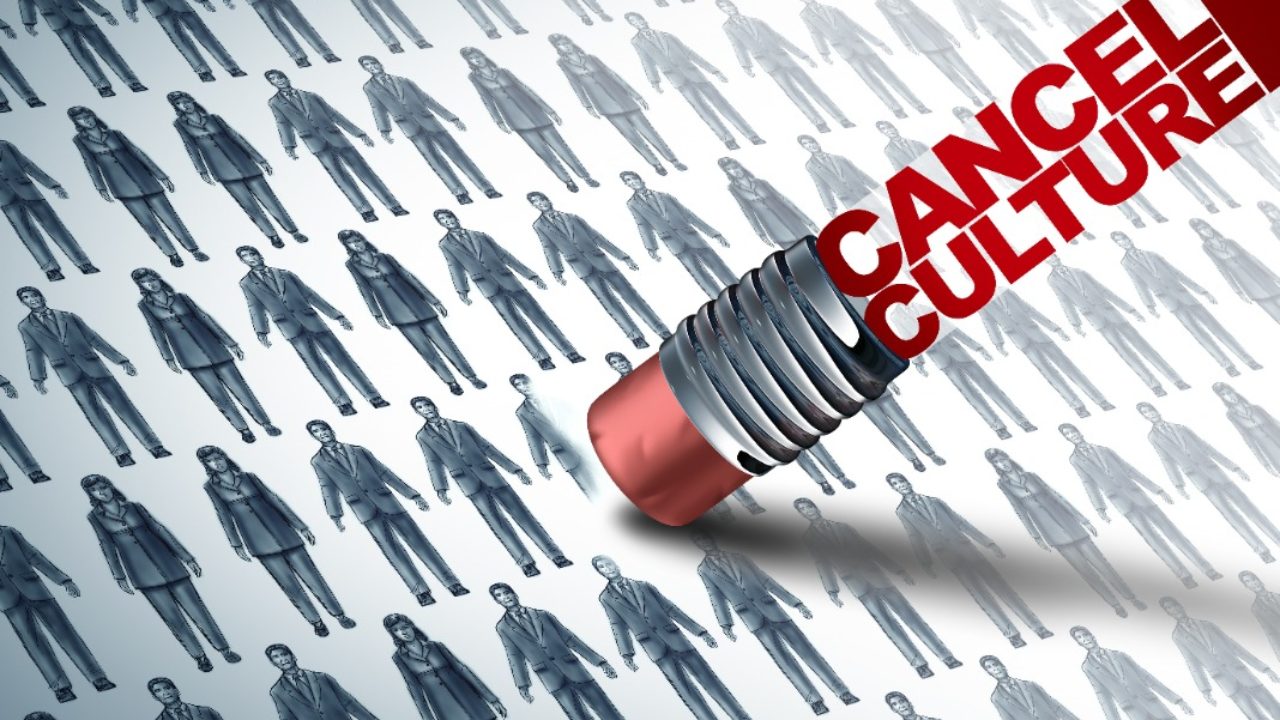
Cancel culture is a call-out culture and it is a modern form of ostracism in which someone is forced out of social or professional circles over his views or opinions which does conform to a particular sect. It is the secular way of giving an individual a ‘back seat’ when he shares a different view or opinion that are held to be the accepted views or opinion of the majority. Those subject to this ostracism are said to have been “cancelled; culturally blocked from having a prominent public platform or career. It can also be described to be an open conspiracy to publicly boycott an individual who is popular, an event or an organization for sharing an opinion which conflicts with the cancellers’ opinion. It’s literally; if you say or do anything that does not show support to us then you are against us and we will in turn be against you.

It won’t be far from the truth to say that the cancel culture is one of the major reasons why people struggle to be politically, socially and religiously correct in a public setting even at the detriment of their private and personal views on a matter and it forces them to be hypocrites for the fear of not to get cancelled by majority.

Many American celebrities have been burnt from the fire of the cancel culture in recent times:

J.K. Rowling, the creator of the popular Harry popular was not spared when she began to voice out her personal views and opinions about the LGBT community. She has faced a lot of brutal criticism even from her own fans as some even threatened to boycott her movies and never to buy her books. She earned herself the title of the most “canceled” person at the center of the cancel culture.

Also, American pop star, DaBaby was also recently ‘canceled’ and was forced to tender public apology after making some homophobic comments at the Rolling Loud music festival in Miami, USA in July 2021. Organizers of subsequent festivals announced that DaBaby had been removed from the 2021 lineup which was as the result of him being ‘canceled’.

The most recent case is that of  Dave Chappelle’s. Dave Chappelle is a renowned and controversial American standup comedian and actor. Due to his series of transphobic and homophobic comments during his Netflix comedy special, cancel protest was staged against him in different American cities, calling for show organizers, media executives to cancel him and never have anything to do with him again and for his fans to stop attending his comedy shows or ever watch any of it. The protesters threatened Netflix to pull down the comedian’s Netflix special video or they will boycott the video platform too. This is still an on going  trend as a high school in Washington, D.C., Dave Chappelle’s Alma matter had to postpone a planned fundraiser with the comedian after students threatened to stage a walkout because they were uncomfortable with remarks he made about transgender people in his recent Netflix special, according to a new CNN report.

The cancel culture gained prominence in Nigeria during the 2020 #endsars protest where many politicians were canceled for no supporting the movement, many celebrities where canceled too and some were threatened that their songs will never again be listened to or their movies will never again be watched for expressing different opinion during the protest. Financial organizations like banks were also canceled and people threatened to withdraw all their funds from the bank so that the bank can collapse for the sole reason of the organization having a different view about the movement. 

The cancel culture is also in play in the eastern part of Nigeria whereby every politician or public figure who openly criticize the modus operandi of the Biafra movement will be forced into unpopularity or face public lashing for having a divergent view. 

This cancel culture is a bully culture which is totally uncalled for, this should only be the case in the jungle and the animal kingdom and mustn’t be given room to thrive amongst mankind as one of the characteristics of human beings is the ability to have and express different views and opinions.

It shouldn’t be a case of ‘either you’re with us or against us’ and  if you’re against us, you deserve to be ‘cancelled’ as the cancellers make it seem. People should not be cowed into swallowing their views or opinions, humans should be able to share their views without the fear of getting backlashed or canceled. That we share different views about an issue doesn’t necessarily mean I am against you or I don’t support you, it may mean that although I support your movement but I don’t support the mode of operations of the movement. 

Roger Joseph Ebert who was an American film critic, film historian, journalist, screenwriter, and writer is quoted to have said, “I think both the left and the right should celebrate people who have different opinions, and disagree with them, and argue with them, and differ with them, but don’t just try to shut them up”.

Rowan Atkinson Aka Mr. Bean a popular British actor has openly cautioned against so-called “cancel culture”, describing it as the “digital equivalent of the medieval mob roaming the streets looking for someone to burn. He went ahead to say that the cancel culture had made it hard for people to be “exposed to a wide spectrum of opinion” and he was fearful for the future. 

Reproducing his statement here, he stated thus “It’s important that we’re exposed to a wide spectrum of opinion, but what we have now is the digital equivalent of the medieval mob roaming the streets looking for someone to burn. So it is scary for anyone who’s a victim of that mob, and it fills me with fear about the future.”

I will end this by quoting Juan Pablo Galavis a former professional soccer player and television personality:

“Different people have different opinions, and its okay to respect all of them “.

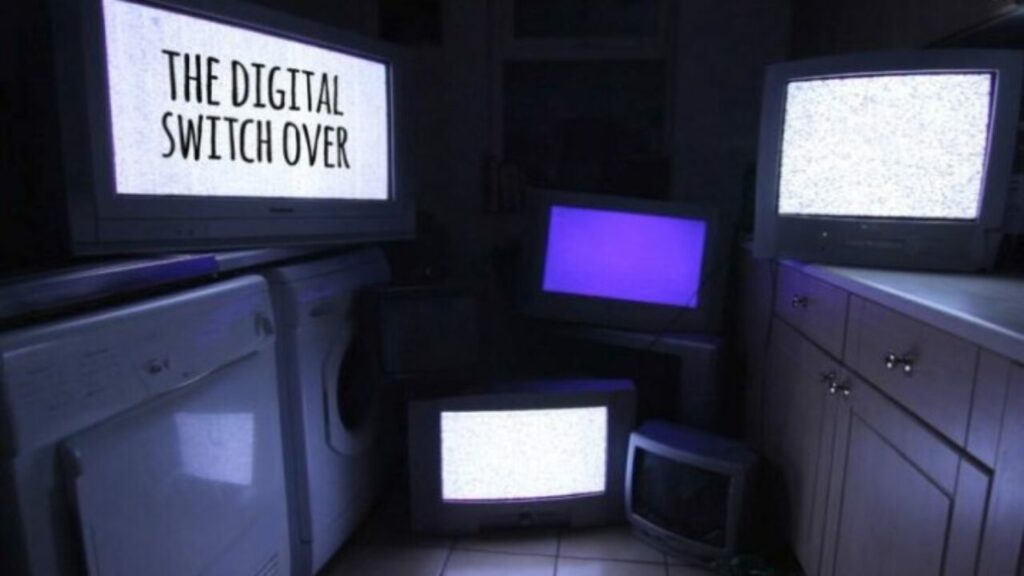
On Nigeria’s Journey To Digital Switch-Over

0

The last time I checked, Nigeria as a country was still in the process of attaining a complete Digital Switch-Over (DSO) in her broadcasting sector across the federation.

It could be recalled that on 29th April 2021, the Federal Government (FG) of Nigeria led by the Minister of Information and Culture, Alhaji Lai Mohammed launched the long-awaited DSO in the city of Lagos.

The event marked the beginning of the second phase of the rollout of the DSO across the federation. It could be recalled that the first phase respectively held in Jos, Abuja, Ilorin, Kaduna, Enugu and Osogho-Ajala, between April 2016 and February 2018.

During the launch of the DSO whose brand name was given as FreeTV, the minister said “This may look like a daunting task. Indeed, it is. But the fact that we are here in Lagos today is a testimony to our resilience and determination to ensure the success of the transition from analog to digital television across the country”.

Let’s be notified that the DSO offers the teeming viewers about 60 digital channels, including sports, music, movies and news. It also provides Value Added Services (VAS).

It’s noteworthy that the campaign regarding global migration from analogue to digital broadcasting precisely commenced on June 17, 2006, hence about fifteen years back.

In respect of the quest, the Nigerian government graciously signed a regional and international agreement to conclude the digital migration by June 17, 2012, which was then the stipulated deadline.

In a bid to meet up the deadline, in 2008, the FG set up a Presidential Advisory Committee (PAC). The following year, the committee submitted its report but the FG ostensibly failed to implement it, causing Nigeria to miss the June 2012 deadline. The migration deadline was however shifted to June 17, 2015.

Though the ‘Digi-team’ inaugurated by the FG alongside the National Broadcasting Commission (NBC) made a frantic effort to fulfill the mandate, the efforts again didn’t yield any result owing to paucity of funds as was reported.

Thereafter, June 17, 2017 was recognized as the new deadline for the lingered transition. In spite of all the efforts put in place by the NBC to actualize the feat, yet the motive wasn’t realized.

Nigerians were thereafter  promised that June 2019 wouldn’t pass them by as regards the DSO. Painfully, the target was missed four consecutive times, thereby making countless concerned Nigerians to apparently lose hope.

It therefore became obvious that some technical and political policies cum measures were yet to be inculcated into the approach being carried out by the relevant authorities.

Hence, the launch of the DSO in Ikeja, Lagos State in April this year was seemingly an indication that the FG politically and technically prepared to eventually actualize the much lingered feat. However, for the needed goal to be holistically achieved, the concerned bodies must comprehend the inevitable role of digital broadcasting.

Analogue mode of transmission is an unreliable system, though it has worked well enough for over half a century. Analogue Television (TV) transmits programming in a continuous signal.

The signal varies in amplitude, depending on the information contained in the audio or picture. It is transmitted on a particular radio frequency from the TV station’s transmitting antenna over the air, to the viewer’s TV set.

It’s noteworthy that each TV station is assigned a particular frequency that corresponds to its channel number. So, when a viewer tunes his/her TV to a given channel, he/she has actually chosen to receive transmissions on that certain frequency.

TV frequencies are calibrated in Megahertz (MHz). There are two major transmission frequency bands, namely: Very High Frequency (VHF) and Ultra High Frequency (UHF). VHF channels 2 to 6 operate in the frequency range between 54 and 88MHz. VHF channels 7 to 13 operate in the frequency range between 174 and 216MHz. And UHF channels 14 to 83 operate in the frequency range between 470 and 890MHz.

The aforementioned analog signal is far from perfect. It does not usually reproduce the exact original programming. It can easily deteriorate over long distances. It can equally suffer interference from other sources, thereby producing ghost images, static, and ‘snow’.

Hence, analog transmissions typically produce a lower-quality visual output than the original. The picture is not quite as sharp; the background is sometimes grainy. And the sound suffers from noise and reduced frequency response.

A situation where the viewer tries to receive a signal from a distant station is even more unbearable. The farther the station, the worse the picture, likewise the sound. The results are also poor if the viewer is located in a big city with lots of buildings that bounce the signal around. Among all, analogue transmission is inefficient; each VHF or UHF channel takes up a lot of valuable bandwidth.

Unlike analogue transmission that is prone to fading, digital technology reproduces a reliable crystal-clear picture without any form of interference. Digital tech equally enables TV stations to broadcast multiple channels with different programming. It can fit four or more channels into a single analogue channel; hence, it can accommodate as many wavebands as possible within the existing spectrum.

Digital tech makes the work easier, improves the professionalism, viewers’ delight, boosts capacity of the broadcasting industry, and creates more job opportunities as well as uplifts income (revenue) for both the broadcasters and the governments. Above all, it would enable more prospective broadcasting firms in Nigeria to be licensed by the NBC.

To this end, Nigeria needs to hasten up towards meeting up with her sister countries that have already completely keyed into the trend. Launching the DSO is a way-forward, but practical actions must be inculcated in the ongoing mantra towards complete actualization of the motive.

Digital Terrestrial Multimedia Broadcasting (DTMB), to be utilized by Nigeria, adopts time-domain synchronous Orthogonal Frequency-Division Multiplexing (OFDM) modulation technology, with a pseudo-random signal frame to serve as the Guard Interval (GI) of the OFDM block and the training symbol. Its content is viable and reliable, thus worthy of emulation.

In the event held in Lagos, Alhaji Lai stated that the launch of the DSO showed the power and the extensive reach of modern broadcasting, which makes it a veritable tool for national development.

According to the boss, there were over one million Set-Top-Boxes ready to be released to households. A Set-Top-Box is a device that enables a TV set to receive band decode digital broadcasts.

The minister further hinted “Once a TV household acquires the Set-Top-Box and pays the once-a-year access fee, which is a token, it is free viewing all the way. Our FreeTV brand is not a fluke. There is no monthly subscription payment”.

The Broadcasting Organization of Nigeria (BON) has a very vital role to play in a bid to achieve this lofty objective of the FG. They must acknowledge what they stand to gain in the long run.

Broadcasting involves generation, transmission and distribution of signals. It’s the duty of the various broadcasting stations to provide the required equipment for the first two phases such as computers, amplifiers and solid-state digital transmitters. The government, on its part, is to provide the instruments for the distribution phase such as ITS and pinnacle.

BON must, therefore, conscientize their teeming members to do the needful. They ought to equally ensure that the radio broadcasting section joins the campaign for the sake of thoroughness as regards digital broadcasting within the shores of Nigeria.

Towards sustaining the feat, if actualized, the FG needs to create stiff policies and regulations. The NBC would be expected to be more proactive and endeavour to create the needed awareness.

Similarly, the broadcasting firms need to deploy standard maintenance and anti-hacking softwares as well as engage reliable tech experts in their daily activities, either as consultants or employees.

The overall project is capital-intensive, so there’s a need for adequate collaboration both on the part of the government and the investors. 

Tekedia Institute offers virtual seminars and workshops to startups, SMEs, NGOs, companies, etc

0

We are excited to inform you that besides our Tekedia Mini-MBA and Tekedia Startup Masterclass programs, Tekedia Institute now offers virtual (online) seminars and workshops to startups, SMEs, NGOs, companies and public sector entities. On engagement, we design, develop and deliver live seminars and workshops on many business domains.

These themes are covered:

  • -Logistics & Supply Chain Management
  • -Business Innovation, Growth & Sustainability
  • -Business Transformation & Project Management
  • -Risk Management
  • -Business Administration
  • -Innovation & Design Thinking
  • -Accounting, Auditing, Forensics & Taxation
  • -Workplace, Teams, Communication and Collaboration
  • -Media, Advertising & Branding
  • -Startup and Small Business Management
  • -Exponential Technologies and Singularity
  • -Marketing and Sales Management
  • -Digital Business Growth
  • -Agribusiness Management
  • -Human Resources Management
  • -Personal Finance & Wealth Management

Our pricing is based on a maximum of 4 hours per day at a daily rate of $2,000 or N900,000 naira. We issue a Tekedia Certificate to each participate, aligned with the finalized theme of the program, at the end of the program.

Learn more and register here.