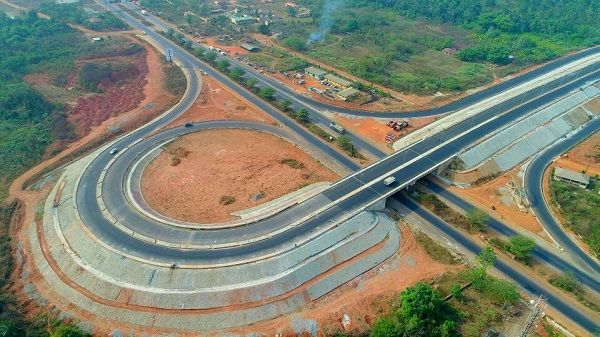
On 27th October 2021, the Nigeria’s Federal Executive Council (FEC) in its not unusual weekly meeting, approved the sum of N621.23 billion for reconstruction of 21 roads covering a total distance of 1,804.6 kilometres across the six geo-political zones in Nigeria.
It’s noteworthy that the proposed projects are to be undertaken by the Nigerian National Petroleum Corporation (NNPC) through the deployment of its own tax liabilities.
The development was graciously disclosed by the Minister of Works and Housing, Mr. Babatunde Fashola while briefing the State House correspondents at the end of the FEC meeting held in Abuja.
According to the Minister, who stated that there would be no more financing problems regarding the execution of road projects across the federation, nine among the 21 roads are in North Central, particularly Niger state. The reason is that Niger State is a major storage centre for the NNPC. He said “NNPC is doing this to facilitate the total distribution of its products across the country.”
He further gave an assurance that in the South-West, the Lagos-Badagry Expressway, the Agabara Junction, Ibadan to Ilorin (Oyo-Ogbomoso section) would be fixed.
Three other roads are reportedly located in the North-East, two in the North-West, and two others in the South-East. The Odukpani-Itu-Ikot/Ekpene road, the minister said, had now been fully covered to resolve the problem of financing.
He stated that in the South-East and South-South, there are Aba–Ikot Ekpene in Abia and Akwa Ibom States. Then the Umuahia-Ikwuamo-Ikot Ekpene road and so on. Similarly, in the North-West, it is Gada Zaima-Zuru-Gamji road, and also Zaria-Funtau-Gusau-Sokoto road. In the North-East, it is Cham, Bali Serti and Gombe-Biu roads.
It could be recalled that in July this year, the FEC approved the award of a contract to Dangote Industries for the construction of five roads totalling 274.9 kilometres at the cost of N309.9 billion, reportedly advanced by the company as tax credit.
In any given clime across the global community, capital projects are invariably what well-meaning citizens clamour for whenever a call to usher in good governance is raised in the public sphere.
This is so, because, it is only by establishment of such projects as good road network, creation of portable water, sound health and education systems, that the governed could feel the impact of the government.
This is the sole reason the ratio between the capital and recurrent expenditures of the annual budget of a particular nation for a certain fiscal year often tends to favour the former to the detriment of the latter. It suffices to enthuse that it has become unarguable that capital expenditures usually benefit virtually the entire occupants of the concerned clime compared to recurrent expenditures that’s targeted to favour only a few.
In view of these facts, successive governments all over the world that truly mean well for the governed have overtime made frantic and genuine efforts to initiate capital projects that would stand the test of time. Those who actualize this quest invariably succeed in writing their names in bold and gold.
In this part of the world, particularly Nigeria, issues pertaining to governance seem to be given a different attention and interpretation by the relevant authorities. We have hitherto observed a prevalent situation whereby a certain prospective government would rigorously embark on election campaigns with the mantra to treat capital projects as priority, but would abruptly sound differently the moment it assumed duty.
This uncalled nonchalant attitude of governments at all levels has continued unabated under our nose as if the people are a set of imbeciles. Sometimes when asked for clarification by the affected citizens, the enquiry would be regarded as unimportant by the failing government.
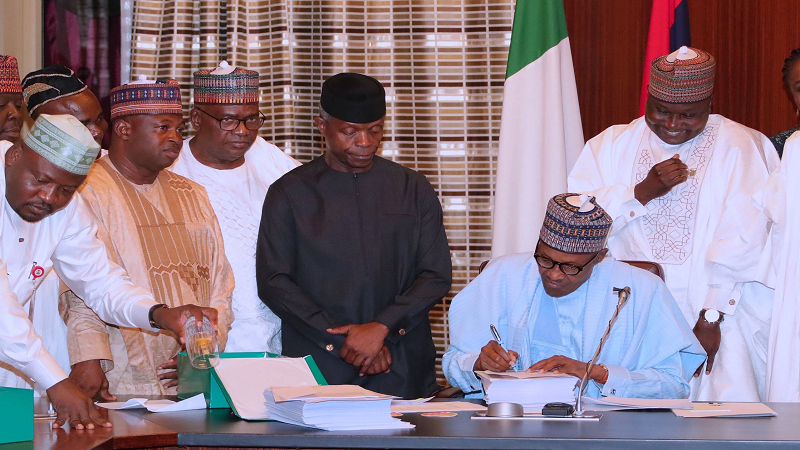
Lest we forget; on Thursday, 10th January 2019, the Federal Government (FG) led by President Muhammadu Buhari approved the sum of N100 billion for the Federal Ministry of Works, out of the proceeds of the Sovereign Sukuk fund, to finance critical road infrastructure across the country. The fund was for the construction and rehabilitation of 28 key economic road networks as captured in the 2018 budget.
The FG disclosed that the road projects were located in the six geo-political zones of the country with each zone having a total allocation of N16.67bn. This signifies that the capital projects were evenly distributed among the entire regions.
Speaking at the presentation of symbolic cheque to the concerned ministry, the Minister of Finance, Mrs. Zainab Ahmed noted that “the funds will be released to the Federal Ministry of Power, Works and Housing based on the framework agreed with the Trustees in order to ensure transparency and accountability in the use of proceeds.”
She added that “the Sukuk funding option is part of the initiatives of the government to diversify government funding sources, while also deepening the Nigerian capital market, mobilizing more savings and promoting financial inclusion.” The roads to be funded “will ease commuting, spur economic activities across the country and further close our infrastructural gap.”
In his response, the Minister of Power, Works and Housing (now Ministry of Works and Housing), Mr. Babatunde Fashola stated thus, “roads are coming, those are assets that would enable business that would enable transport, movement of goods and services and assets that will last 25, 30 to 40 years. This is a good investment to make. So, for those who asked why are we borrowing, we are borrowing to build at today’s prices assets that will last us for another 30 years.”
He further said “it will be more expensive to build but more importantly, where is the money going. As soon as I collect this cheque, I am going to give it to the contractors. But even, they can’t keep it; they have to give it to their suppliers because they need aggregates, they need materials and labourers but they first need suppliers.”
The Minister went further to assure that the Buhari-led administration “Is committed to follow the part of greatness, build the foundation for tomorrow by investing in infrastructure. It means that for example, we have to raise money and I am very happy to learn that over 1,876 investors are already doing business because Buhari government decides to build. That is how to build an economy.”
Two years down the line, the ‘28 key roads’ as mentioned in the said contract are still reportedly undergoing rehabilitation in spite of all the assurances tendered therein. One may then begin to wonder the kind of country called Nigeria we found ourselves.
In view of this omen, which has unabated been a recurring decimal in the Nigerian polity, the governed may have lost their trust in any government in power, or its allies. This is the reason the NNPC must take into cognizance that initiating a certain project is quite different from completing it, hence must consider the key steps needed to be followed towards ensuring the proposed projects are duly executed as planned.
The contracts are required to be awarded to corporate bodies of proven background and antecedents. Thus, no compromise should be reached for whatever reason. The contracts ought to be implemented in line with the country’s Public Procurement Act, thus a levelling playing ground is expected to be provided among the prospective construction firms.
In this regard, the memo for the proposed contracts should be made public to enable any interested firm apply for the job and due process ought to be followed afterwards in awarding the project to the deserving entities. Also, the contracts are meant to be awarded to only indigenous firms towards boosting our local content. So, the Executive Order 5 implemented by President Buhari must be adhered to.
When eventually awarded, the benefitting residents or communities should be properly made to comprehend the profile of the firms handling the respective projects with a view to making them able to alert/contact the relevant agencies whenever they observe any prank or foul play. It suffices to say that the beneficiaries must be a stakeholder in the overall implementation of the projects.
As regards adequate monitoring, viable mobile teams comprising reliable personnel ought to be constituted by the concerned authority. This would enable a regular supervision as the work progresses. In the same vein, the contractors must be mandated to complete the projects within a given time frame, else, should be made to face sanctions.
We are meant to acknowledge that initiating a capital project by the government is invariably the wish of the governed, but ensuring their completion remains their greatest desire.
Like this:
Like Loading...