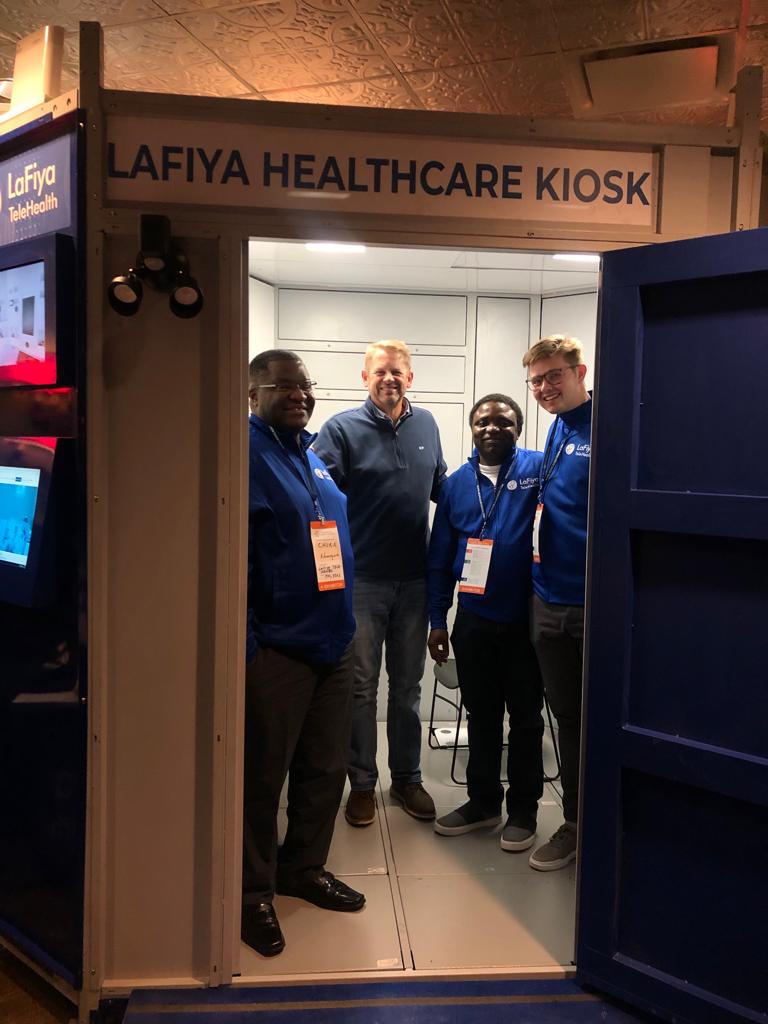
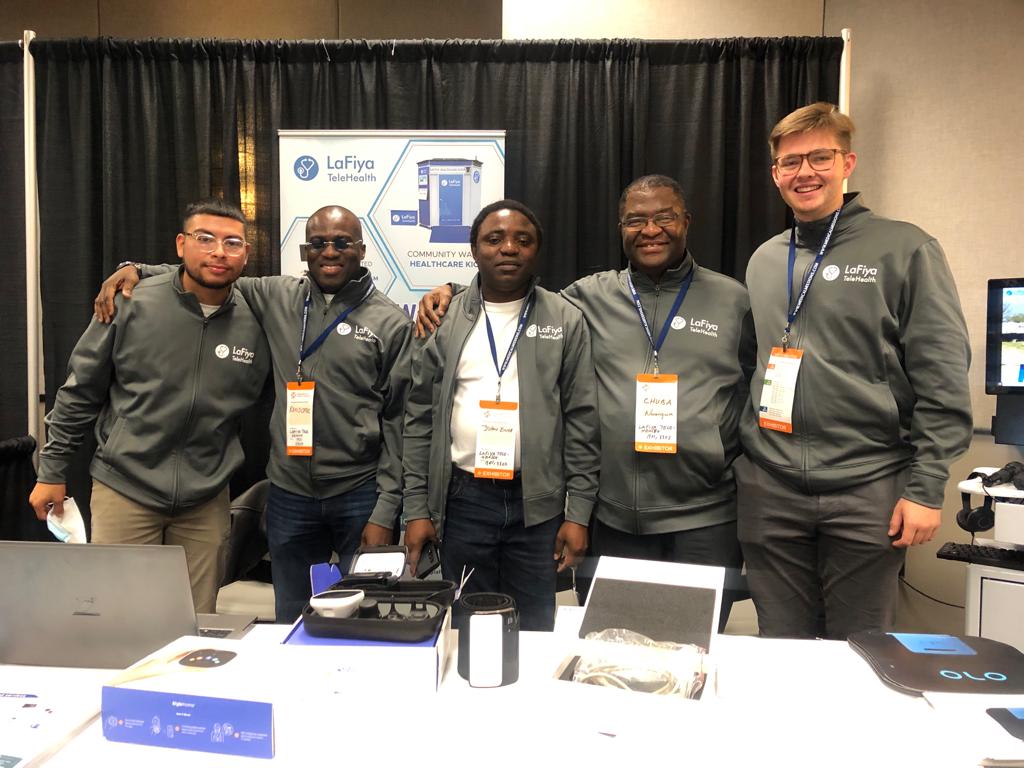
At the world’s largest medical equipment conference, Lafiya Telehealth Kiosk has been recognized as the world’s first Cloud Hospital. Besides everything we have added already – from ultrasound scanners to diabetic tests – you have cameras equipped with AI technologies that can make decisions on vital signs and wellness just via images and selfies.
So, you walk into the Kiosk, the camera is activated and we tell you if there are issues. Our vision is that medicine has to improve its marginal cost problem and we are building technologies to make that happen.
One Kiosk is coming to Ovim (Abia state): walk in and you can speak with doctors. As they talk with you, you can use all the equipment in the Kiosk to provide hard data to help the doctors make their scientific miraculous calls. This is the fusion of computational vision, AI, medical practice and data science with solid electronics powering all!
Get Lafiya in your company, construction site, church, mosque, market, town hall, etc because with Lafiya, and via satellite, medical service delivery becomes unbounded by geography. Yes, even if there are no doctors in that village, through us, you will have access to anywhere they are. Lafiya is a Tekedia Capital portfolio startup, based in Texas, USA.
Any hardwork it would take for me to ring a special bell in London, or New York, or Lagos, let’s do it. And I promise that on that one, I will not have a no-show. Well done people – Lafiya Telehealth for the world. We originally engineered it with Africa in mind. But rural America came calling. They’re all markets and we’re open for business https://www.lafiyatelehealth.com/#/contact
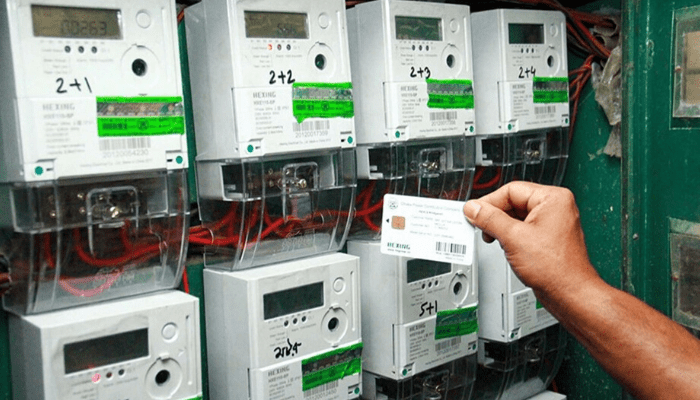
On 25th January 2019, the Nigerian Electricity Management Services Agency (NEMSA) graciously commissioned a remodelled electricity lab in Ijora, Lagos State to aid further testing cum confirmation of the commercial viability of the gadgets used by Generating Companies (GenCos), Transmission Company of Nigeria (TCN) and Distribution Companies (DisCos), virtually on a daily basis.
Is there anyone who’s domiciled in Nigeria that’s yet to realize what the country has overtime been passing through as regards electricity supply? The apt response to the candid enquiry ought to be ‘No’.
It’s not anymore news that Nigerians in their entirety have hitherto been experiencing untold hardship when it calls for electricity across the nooks and crannies of the acclaimed giant of Africa.
Aside the fact that the Nigerian State cannot boast of a steady power supply, it’s noteworthy that even the available one is densely characterized by myriad of irregularities alongside poor service delivery by the authorities in charge of the said public utility.
This could be one of the reasons that resulted in the creation of the NEMSA, the government authority that sees to the day-to-day standardization of power supply and other related technical issues across the Nigerian federation.
NEMSA was established to carry out the functions of enforcement of technical standards and regulations, inspection, testing and certification of all categories of electrical installations, meters and instruments, to ensure efficient production cum delivery of safe, reliable and sustainable power supply as well as guarantee safety of lives and property in the Nigerian electricity supply industry coupled with allied matters.
The regular supply of power in any locality around the globe is characterized by three major segments, namely: generation, transmission and distribution. In each of these segments, it’s worth noting that different gadgets or machines are being utilized towards enabling effective and efficient services.
To guarantee apt functionality of these technical materials, an electricity laboratory, or otherwise known as ‘electricity lab’, is needed in the process by the relevant authorities. It’s the said lab that would assure the genuineness and adequacy of the gadgets before they are duly installed in the localities where they are required.
Similarly, whenever any of the instruments broke down or malfunctioned, the lab in question is being used to run some needed tests, or technical diagnoses, to ascertain what is/are actually wrong with them as well as map out strategies on how best the anomalies could be addressed. After the needed ‘diagnosis’, and due corrections afterwards, the equipment would further be installed for onward usage.
It was perhaps the keen quest for such a well-equipped testing unit that informed the practical gesture displayed by NEMSA on the aforementioned date. This piece is, however, necessitated by the need to realize how far the said Electricity Lab has fared two years after it was established.
It’s noteworthy that commissioning of the upgraded ‘Chemical and Engineering Laboratory’ received tremendous accolades from numerous stakeholders in the power sector within and outside Nigeria.
In his words, the then Minister of Power, Works and Housing, Mr. Babatunde Fashola who was physically present at the epochal occasion, commended the leadership of the NEMSA for adhering to safety compliance and enhancing the growth of the industry.
He elatedly stated “This is now an upgraded and properly fitted laboratory to help the agency in enforcing compliance in the power sector. This will also make them do their jobs effectively now that they have tools. We hope there will be improvement in all the operators’ compliance conducts”.
In his remarks, the Managing Director of the NEMSA, Mr. Peter Ewesor proudly disclosed that the remodelling of the lab would help the agency to curb substandard equipment in the power sector.
He said “The facility is a specialized analytical laboratory for inspection, sampling, testing and analysis services for transformer insulating and lubricating oils. Others include greases of various grades, turbine oil, and hydraulic oil, used in the Nigerian Electricity Supply Industry (NESI) and allied industries as well as potable and effluent water resources.”
Mr. Ewesor, a chartered engineer and equally the Chief Electrical Inspector of the Federation, further revealed “This laboratory has been operating as a reference quality control laboratory for the entire power industry since the era of the defunct NEPA and PHCN, and now in the post-privatization era when NEMSA took it over in a dilapidated state in 2014. NEMSA, in realization of its key role in furthering its mandate as enshrined in NEMSA Act-2015, embarked on the upgrading and remodelling of the laboratory to provide accurate tests and analyses.”
He added that the electricity lab was equipped with a wide range of world-class test equipment, instruments and devices, including Dissolved Gas Analyzer (DGA) – a diagnostic machine. According to the boss, it equally contains equipment for detecting, identifying and evaluating incipient faults within transformers and reactors, such as Dielectric Strength Tester (DST) to determine oil viscosity.
At the time, I stated that NEMSA may had done novel by thinking it wise to come up with the milestone, but was rather bothered over a certain cankerworm that has overtime bedevilled the Nigeria’s system, which was and remained sustainability syndrome. The country’s sustenance culture has unabated colossally deteriorated that it has eaten deep into her blood stream.
It’s on this premise I urged the leadership of the NEMSA to ensure the lab was secured and safeguarded at all cost, so that, it would thoroughly succeed in actualizing the core motives for which it was established or upgraded.
I therefore advised that the authority must be prepared to fish out saboteurs in their midst having been proven that in any clime or entity, there must be a Judas, thus the NEMSA wouldn’t be an exception. I actually meant that the unpatriotic Nigerians or unscrupulous elements found in the agency needed to be shown the way out without much ado if its management was truly ready to soar beyond expectations.
The power story in Nigeria still remains the same in various quarters across the country in spite of all efforts put together by various relevant authorities, hence the need for the NEMSA to step up actions in doing the needful.
More so, as the concerned authorities strive towards improving power supply across the federation, the NEMSA alongside the Nigerian Electricity Regulatory Commission (NERC), needs to become more proactive in their day-to-day bid to monitor the activities of the GenCos, TCN and DisCos by respectively setting up mobile technical teams in different part of the country.
There ought to equally be a daily routine to checkmate the activity of the men at the field towards averting or curtailing series of prangs being played by them while at work. This measure will go a long way in sustaining the adequacy of the installed gadgets at different localities.
Two years after we celebrated the emergence of the milestone, let the NEMSA be reminded that the teeming Nigerians are still variously suffering from an untold hardship in the hands of the stakeholders that are meant to serve and protect them.
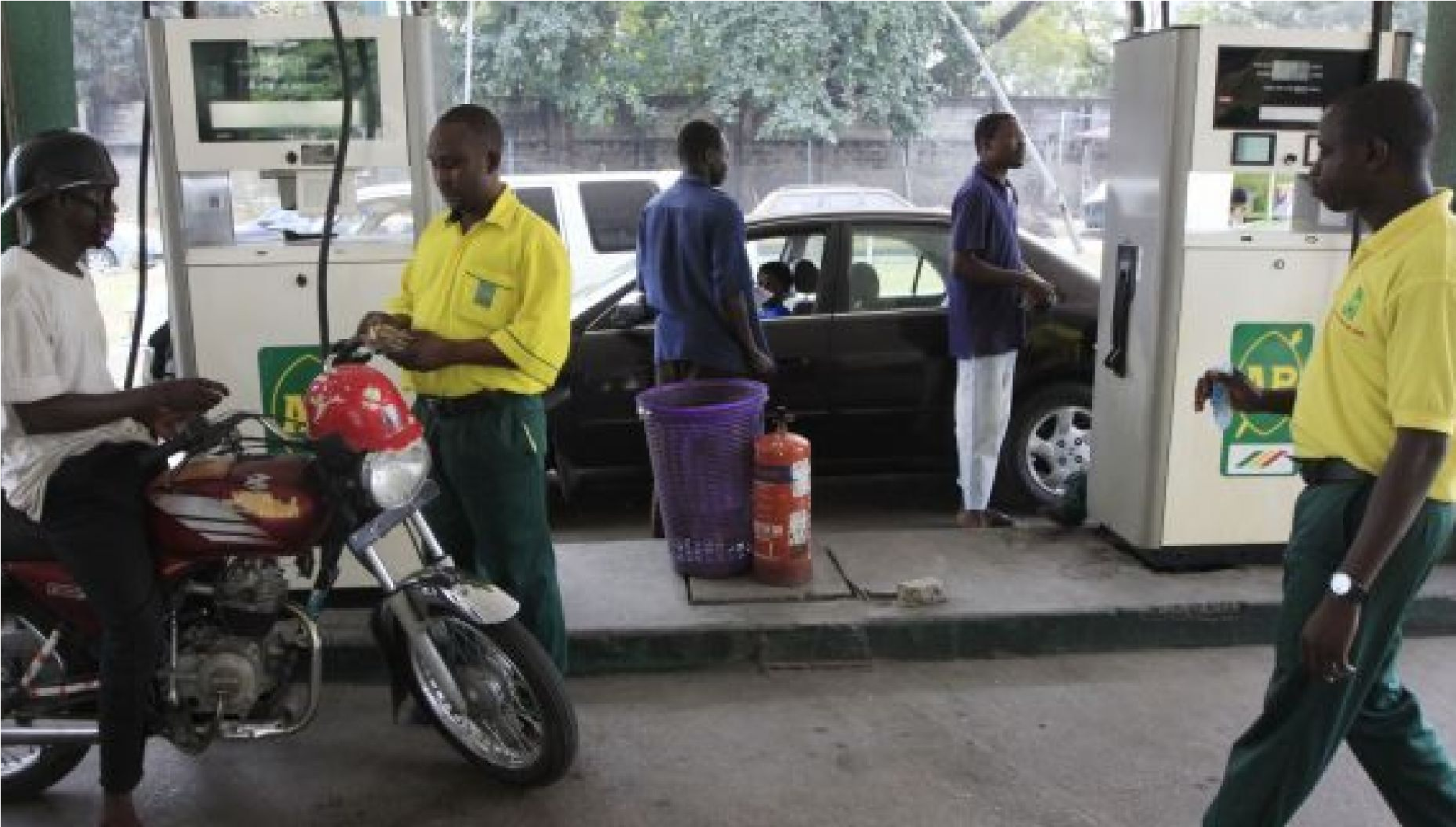
World Bank: Nigeria is really very smart. You asked for the removal of the fuel subsidy and the nation agreed. But now, the nation has introduced a “transport subsidy”. Hope everyone is happy with the new nomenclature. Nigeria needs BOLD leadership with the fierce urgency of now. Otherwise, we will just be running around.
“In a new move to put an end to the lingering protest that has greeted the federal government’s moves to remove fuel subsidy, the Minister of Budget and National Planning, Mrs Zainab Ahmed said on Thursday that the government is planning to introduce transport subsidy.
“The Minister, while describing fuel subsidy as a major waste and drain on the Nigerian economy that only benefits the rich, explained that temporarily replacing it with transport subsidy will minimize the impact fuel subsidy removal will have on the masses.”
The need for subsidy is because Nigeria does not want to fix its refineries. Why can’t that be done? If we do that, all the issues of subsidies will go.
In a new move to put an end to the lingering protest that has greeted the federal government’s moves to remove fuel subsidy, the Minister of Budget and National Planning, Mrs Zainab Ahmed said on Thursday that the government is planning to introduce transport subsidy.
The Minister, while describing fuel subsidy as a major waste and drain on the Nigerian economy that only benefits the rich, explained that temporarily replacing it with transport subsidy will minimize the impact fuel subsidy removal will have on the masses.
She announced the plan while speaking on the Channels Television’s Politics Today show, where she also explained that the government was considering the possibility of ending fuel subsidies before July 2022.
While acknowledging the challenge the subsidy replacement will pose, Ahmed said that the federal government is engaging with the World Bank in designing a programme that will make the transition possible. The programme is expected to help cushion the effect of transport fare hike that will result from the fuel subsidy removal for a minimum of six months and a maximum of 12 months.
The World Bank has for long urged Nigeria to do away with fuel subsidies, as it undermines the country’s development. The Nigerian government is thus counting on the financial body to make the subsidy removal possible. Ahmed said if the government is able to get the funding for the transport subsidy, then the removal of the fuel subsidy would be earlier than planned.
“The Petroleum Industry Act that has been passed has a provision that says petroleum products should be deregulated, which means there should be no subsidy of any petroleum product. In making our plans, we assume that this deregulation would take effect from July 2022.
“It is important that we exit the subsidy. It is costing us a significant amount of resources that we could have applied for education, health and critical infrastructure. It is a major waste and drain on the economy.
“Who is benefiting from this subsidy? It is the people with a number of cars that they run. It is not the person entering a bus from the village to the market. If you look at those large mass transit buses, they run on diesel and diesel is deregulated.
“If you look at trucks that carry goods from farm to market, they run on diesel. What the common man use for cooking is kerosene; that also is deregulated. So, why should we continue to keep the subsidy for a product that is only benefiting the people that can actually afford the market price?
“We are looking at providing some palliatives for a large number of the population, in terms of a transport subsidy for a short period like six to 12 months. Transport subsidy that would be given straight to individuals.
“What is constraining us is the issue of registration. The national identity registration process is ongoing, and we want to make sure that this subsidy goes into the hands of the right people, that we can make transfers to people using their BVN, account number and NIN, and we know that it is has gone to the right people. That is part of the thing we are negotiating and working on,” she said.
While the move has been largely supported by advocates of fuel subsidy removal, concerns about the weight of economic hardship it would bring remain.
The Nigerian Labour Congress (NLC) and the Trade Union Congress (TUC) have stood in opposition to the idea for long, since the government has failed to provide a clear cut economic plan that will ameliorate the pains the subsidy removal will usher in.
Nigeria’s monthly minimum wage was recently reviewed N30,000 ($75) upward, with some states still sticking to the old N18,000 ($44). Inflation has been on a wild ride for years, spiking the cost of living for the majority of people living on the meagre salary. In addition, small businesses in the country depend on fuel to generate much needed electricity.
Against this backdrop, the fuel subsidy is regarded as the only thing the Nigerian government does for the masses, and removing it will exacerbate the plights of people already drowning in suffering as it would lift the cost of living.
Ahmed said the federal government’s transport subsidy plan will be implemented through BVN-verified fund transfer to poor Nigerians, but that poses another financial inclusion-based challenge. Nigeria has about 40 million unbanked people, mostly poor, who will be sidelined if the transport subsidy is implemented through banking services.
Relationship with a great manager is like a road to the stream; the road is never covered by weeds because people go to the stream to fetch water in seasons and out of seasons. You put your best for an enduring organization.
But a relationship with a bad manager is like a farmland on fallow which people only visit just to fetch firewood; once the woods are gone, the road is abandoned, covered by weeds. You do your best to hang around until everything ends!
Leaders must send us to fetch water, not to set fire!