DD
MM
YYYY

PAGES

DD
MM
YYYY

spot_img

PAGES

Home Blog Page 5484

The Tricks And Intrigues Of Democratic Systems

0

The last time I checked, democracy seemingly remained the best system of government in any clime. Till this very moment, this widely accepted assertion hasn’t changed.

Many in various quarters have overtime opined that the worst democracy can never be compared to the best autocracy anywhere in the world, meaning literally that the former is far better than the latter.

In view of the above, several persons all over the global community have invariably and rigorously been canvassing for apt sustenance of democratic systems and processes in their respective societies. According to them, the said system has convincingly proven to run an all-inclusive pattern of government compared to others.

It’s noteworthy that democracy is conspicuously characterized by two prime recipes namely: elections and freedom of speech. These key factors spice up the regular functionality of any democratic terrain wherever it is found.

An electoral process invariably heralds any democratic government or leadership, whereby a set of leaders is constitutionally empowered to be at the helm of affairs of the given nation or province, as might be the case.

The above clause implies that it is through elections the leadership class of any democracy emerges. It suffices to say that it’s only by the conduct of an election the people would meet their leaders. When the leaders are eventually produced via the polls, the people or the electorate can then be classified as followers.

The bone of contention is that an election is not unlike a pivot on which a democratic state firmly stands. It is, therefore, the progenitor of the system of leadership in question. It’s the foundation or basis of this lovable platform currently enjoyed by the majority of countries across the globe.

Election is simply the rudiment of democratic values. It’s apparently one of the paramount reasons discerning individuals all over the world clamour for democracies. It’s the origin of good governance, which equally is one of the main features of any existing democracy. An election is summarily the engine room of all democratic processes and values.

It’s on this premise people are urged to safeguard elections with all their might. The obvious beauty of an electoral process is why rational mindsets in every nook and cranny have at all times preached the reason it must be treated with all manners of seriousness.

It’s of note that the peaceful and credible conduct of any election, either national, state or association, does not depend on the electoral umpire alone. That is to say, for any election to be fair or for its outcome to be appreciated and acceptable by all and sundry, all hands such as the umpire, voters, candidates, security outfits, the media, and observers are required to meaningfully contribute their quota.

Each of the stakeholders mentioned above has a very vital and inevitable role to play towards guaranteeing a well transparent and commendable election, particularly a societal electoral process. Their respective roles are well defined in the Electoral Act guiding the election in question in such a way that they aren’t meant to derail in the long run till the exercise is holistically concluded.

The most basic attitude that’s expected of all participants in any election is to see the overall interest of the benefitting entity as more crucial than the various interests of the individuals that make up the union or group.

Considering the interest of the province, nation or association, or collective interest of the members, as sacrosanct would enable all participating parties to render contributions that are devoid of pranks or what have you. Placing the people’s general interest ahead of their personal gains remains the best way indisputable credible polls could be witnessed in any clime that upholds or understands the language of democracy.

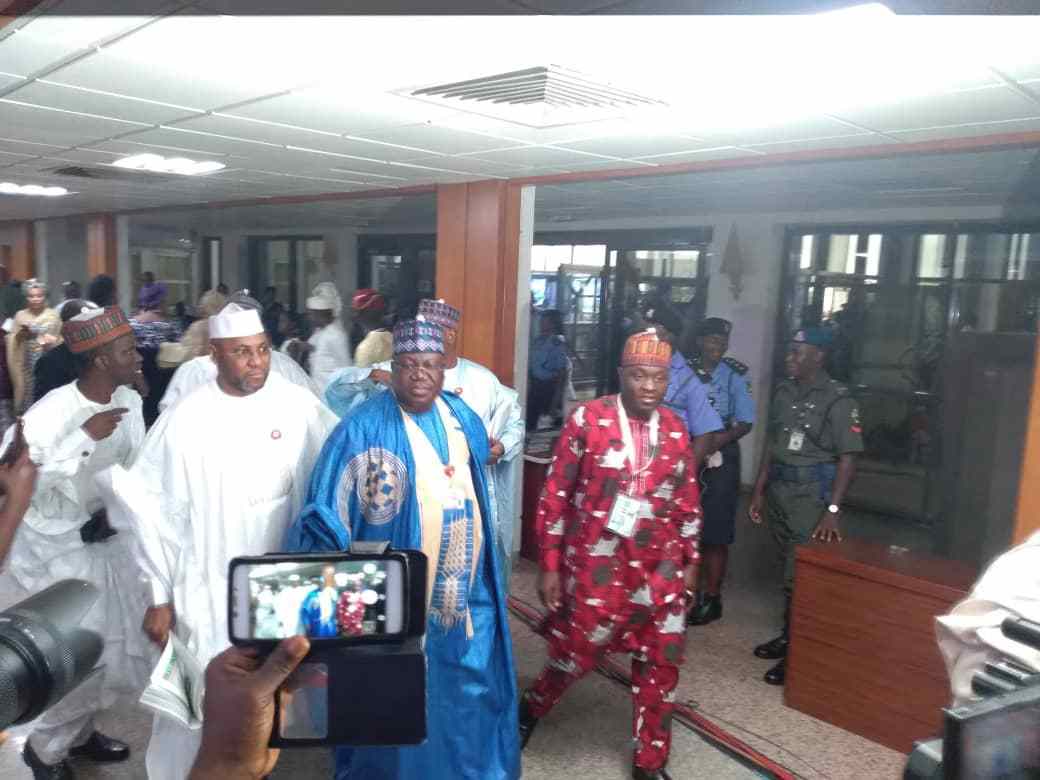
Taking Nigeria as a case study, it’s needless to assert that the acclaimed giant of Africa is presently undergoing a serious trial period as regards elections and their possible outcomes. As well-meaning and patriotic Nigerians are at the moment apparently perturbed, there are key facts they are required to embrace with a view to ensuring the country isn’t in any way marred by any form of crisis, irregularity, or mayhem during elections.

If any right thinking Nigerian truly looks forward to seeing a more peaceful and greater country called Nigeria, then he/she shouldn’t be told or reminded that the citizenry are expected to be and remain rational and law abiding throughout the conduct of any scheduled poll.

The candidates or political parties involved need to bear the national interest in mind as they variously receive the results of the elections. Thus, if the results aren’t in their favour, they must be willing and ready to accept them in good faith.

They shouldn’t see victory after the elections as a “do or die affair” or an anticipated outcome that must come to pass. It’s imperative to comprehend that, among the numerous contenders, only one of them is meant to emerge victoriously at the polls for a particular position.

It’s pertinent to acknowledge that not being successful at a certain poll doesn’t signify you can’t succeed subsequently, or no more room for you to excel. We must always take into cognizance that election is a continuum, hence remains endless. In other words, if the outcome of today’s election isn’t in your favour, tomorrow’s might make you grin again.

It’s undoubtedly the collective civic responsibility of the citizens to at all cost defend the sanctity of their country and the human life at large. To adhere to this mandate, they must at all times be fully prepared to accept their individual fates in good faith.

If it’s ideal that a certain electoral outcome ought to be disputed, let the aggrieved party endeavour to head to the election tribunal rathan than resorting to violence or related acts.

Mind you, if you incite your followers against your rival, you’re equally doing so against the country in question.

The Lessons from America On The Top Six – And Challenge for Nigeria

2

Google (yes, Alphabet) joined the grand party when it shot over $2 trillion: “Google parent Alphabet Inc. rallied Monday to breach $2 trillion in market value for the first time, fueled by a rebound in spending on digital ads and growth in its cloud business.” As you look at these companies, I can explain how American senators made them possible through policies. Yes, they began and then the government came to make them better. (That has been the pattern, going back to Carnegie, Mellon and other titans of American capitalism.)

Google was possible because of the Bayh-Dole Act. The landmark Act celebrated my quote on its Washington DC-based website – “For me, the Bayh-Dole Act is the most important business legislation of the last century in the United States. And this is the American Congress at its very best moment. It delivered through the legislature, and transformed the pace of innovation by providing a fluidic system that enhances U.S competitiveness.” https://autm.net/about-tech-transfer/advocacy/legislation/bayh-dole-act

Amazon would not have worked if not that US Congress waived collection of sales taxes from ecommerce firms thereby making everything bought online cheaper. In other words, if you buy a dishwasher for $1,000 from your physical store, you will be off by $1,100 if sales tax is 10%. But on Amazon, you will pay only $1,000. Because of that, US used tax policy to change purchasing habits, creating a new industry called ecommerce sector. Simply, everyone bought online to save that 10% – and the government knew people were not paying those taxes.

Tesla would have died if not for the EV vehicle tax credits. Facebook? Online portals got waivers on secondary contents they host. Indeed, there are clear paths on how policies made these firms better. I can keep going.

This is the deal: Nigeria needs pioneering innovators along with brilliant parliamentarians who can see the big picture to redesign our industries to advance the wealth of the nation. The innovators are working, may 2023 bring these great leaders.

The US did not care about the old retails leaders like JCPenney when Amazon was coming. Yes, America disrupted itself and today it is better. 

By next year, I expect four of their firms to be in that 2T club; it did not happen by luck: they made it possible.

No Timetable for the Launch of China’s Digital Currency Yet

0

China is leading the global development of Central Bank Digital Currency (CBDC), with records of successful trials. But the world’s second-largest economy said it is not ready to roll out the digital currency, called eCNY, yet.

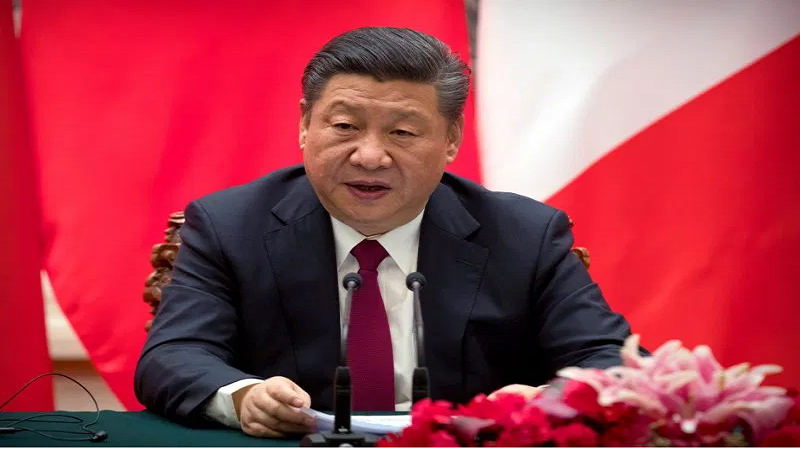
The People’s Bank of China governor Yi Gang said on Tuesday that China will continue to advance the development of its central bank digital currency and improve its design and usage.

“Going forward, we will continue to prudently advance R&D of eCNY, improve its design and use,” Yi said via video at a Bank of Finland event.

China has successfully tested eCNY in major cities including Shenzhen, Beijing and Shanghai and is poised to carry out more tests before launching the digital version of its fiat. In august, the eCNY was used to facilitate payments in the country’s futures market.

The application of e-CNY in the futures market provided an efficient, zero-cost and safe payment alternative for futures exchanges and market participants through real-time inter-bank payment, according to China Securities Journal.

Mu Changchun, head of the PBOC’s Digital Currency Institute, said at the Hong Kong Fintech Week conference last week, that About 140 million people had opened “wallets” for the digital yuan as of October and used it for transactions totaling around 62 billion yuan ($9.7 billion).

Despite the success the eCNY has recorded so far, China has not set a timetable for its roll out, but said it will continue to work on many components of the digital currency.

“China will improve eCNY’s privacy protection and anti-counterfeiting feature and increase its interoperability with existing payments tools,” Yi said, adding that China will also test eCNY’s impact on its monetary policy and financial markets.

Recently, the Chinese authorities have embarked on reforms to address concerns about the use of private information. That is one more area of eCNY that China wants to work on.

Yi said the PBOC attaches great importance to the issue of personal information protection, as CBDC issuers have to balance the need between safeguarding privacy and preventing crimes.

To strike the right balance, the PBOC collects information on a “minimum and necessary” basis in eCNY applications, and strictly controls the storage and usage of personal information.

China has been working on its digital currency for years, but recently sped up pace following the growing popularity of cryptocurrency. China rapidly became a huge cryptocurrency market, controlling the largest share of global bitcoin mining. In September, China declared all cryptocurrency transactions, including mining, illegal.

The move is part of China’s financial industry reforms that have targeted payment companies such as the Ant Group. It also is seen as a way of clearing obstacles that may stall the acceptance of eCNY. While the digital yuan has scored a significant measure of success in domestic trials, it still falls short in cross-border transactions. In February, Beinjing moved to team up with Hong Kong, Thailand, the United Arab Emirates (UAE), along with the Bank of International Settlements (BIS), to explore cross-border payment for digital currencies.

Yi said eCNY aims to meet the need of domestic retail payments as cross-border digital payments involve more complicated issues, such as anti-money laundering.

“The PBOC is willing to strengthen cooperation with world central banks in developing CBDC, including setting standards and rules,” Yi said.

Given the many holes yet to be filled in the eCNY development, China is not in a hurry to launch its CBDC, as it prioritizes efficiency over speed.

The Greatest Company in Nigeria YET to be Launched, Create Your New Path

2

Companies exist to solve customer problems. It requires moving the customers from friction spot (A) to the solution spot (B). I see it as a projectile where you create many trajectories to move from A to B. What happens there is this: there are many paths from A to B, and if you focus on developing a better path, you can find opportunities even in places which have many trajectories. 

Let’s say you want to build a new financial institution, you do not follow the path which First Bank pioneered centuries ago, to go from A to B.  Rather, you create a new path (like the Paystack guys) to move from A to B, and to a large extent accomplish the same result of providing a specific financial product.

If you have this mindset, you will agree that the greatest company in Nigeria has not been launched, because the possible paths from A to B are infinite – and you can create a better one in any sector than whatever anyone has there.

They say the insurance sector is competitive in Nigeria (!) even though they have less than 5% penetration. Can you create a new path to fix the friction? Think of electricity, education, etc.

Simply, the best companies in Nigeria have not been founded. And if anyone tells you that all the opportunities are gone, respectfully ignore him or her. If Nigeria is operating at its optimal productivity level, its GDP should be $3 trillion (well above the current  $500 billion). If you do the math, it means Nigeria needs 6X multiples to attain equilibrium.

About 90% of the companies in Nigeria today are not wired for that type of unbounded, unconstrained, and compounding  leverageable growth with accelerating returns. Yes, even if they try, the anchored elements upon which they are built cannot enable them to experience  that redesign.

Only new species will provide that growth under new tenets, driven by new business models, energized by new policies. Hope you get the point why our insurance sector has less than 2% penetration, electricity companies deliver darkness to more customers than light, potable clean water nonexistent, using 65% of workers to produce hunger, [add your list], and banks serving less than 50 million unique customers in a nation of about 210 million citizens.

People, the best companies for Nigeria have not been founded. So, begin to #BUILD.

Get Into Fandom – And Be A KING

0

Steve Jobs, an Apple founder, was legendary for stimulating demand. He worked without surveys or focus groups. He was a genius, peerless in his generation. He saw an unborn future many years ago. He was an icon, who changed his world. He developed a good design paradigm of working at the perception of customers, beyond their needs and expectations. He found glory and Apple triumphed with iPod, iPhone, iPad and more.

I call this Perception Demand because Mr Jobs used his vision to create new industrial sectors. He used his talent to launch the new dawns in the apps economy and the smartphone economy, at scale. Who remembers that Kuda, Nigeria’s digital bank is a microfinance bank? Not many because they used perception demand to make customers become FANS.

Go back to the playbook and transform that company, pushing it beyond the needs and expectations to the perceptions of customers. Until you do that, transformation has not started. From consumers to customers to FANS; when a company gets into fandom, it becomes a category-king. 

Be a KING … in that market. Read more here.

Steve Jobs’ Perception Demand Construct, for Africa