DD
MM
YYYY

PAGES

DD
MM
YYYY

spot_img

PAGES

Home Blog Page 549

September’s Bullish Coins: Ethereum Nears ATH, DOGE Eyes Breakout, and BlockDAG Dominates With $403M Presale!

0

September’s market energy is unmistakable. Ethereum is approaching peak levels again, and Dogecoin is flashing signs of another upward breakout. Ethereum (ETH) continues to benefit from institutional momentum and ETF-related demand, while traders are eyeing Dogecoin (DOGE) for a possible breakout if its triangle pattern holds.

Yet despite these narratives, BlockDAG has emerged as the most action-packed story. The project has raked in over $403 million, with a current offer of $0.0013 per coin, despite Batch 30 pricing being officially set at $0.03. With a confirmed launch price of $0.05, early buyers from Batch 1 have already locked in 2,900% returns.

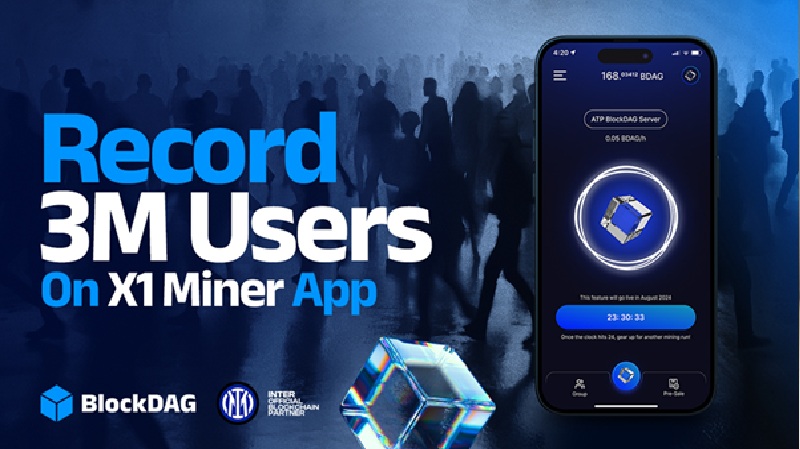
Backed by 3 million mobile miners using the X1 app, a major event lined up in Singapore, and 19,700 miners already in distribution, BlockDAG is scaling in both presence and impact, making it a top contender for anyone tracking breakout crypto opportunities.

Ethereum Nears All-Time High

Ethereum is hovering just under its all-time high of $4,950, and the Ethereum Foundation (EF) has announced plans to liquidate 10,000 ETH to support development, grants, and operational funding. This step aligns with EF’s ongoing treasury policy, where ETH sales fund long-term ecosystem initiatives.

To avoid sudden market shifts, the sale will be broken into smaller chunks rather than one large dump. EF aims to maintain a stable fiat reserve buffer, used to manage payroll and operations efficiently.

Historically, these moves are part of the Foundation’s strategy. Back in 2022, EF offloaded 150,000 ETH, while 2024 saw just over 4,400 ETH sold. Only 300 ETH had been liquidated so far this year, until now. Once this current round finishes, the annual total will cross 10,000 ETH, signaling EF’s ongoing financial discipline and continued support for Ethereum’s growth story.

Dogecoin Forms Bullish Pattern

Dogecoin is moving sideways inside a two-month-long ascending triangle, consistently finding support near the $0.20–$0.21 zone. Recent data shows weekly volume jumping to $13.49B in late August, pushing its market cap past $31.7B.

Technical indicators are warming up. RSI is climbing toward neutral territory and MACD is flattening, conditions that often hint at a shift in momentum. A breakout above $0.245 could send DOGE flying toward $0.38, marking a 75% surge from current prices.

Despite the upside, DOGE still rides on retail sentiment, making its moves more unpredictable. While the pattern is promising, it remains speculative, especially when compared to the real-world traction and infrastructure rollouts that are actively fueling BlockDAG’s rise.

BlockDAG Scales Fast With $403M Presale & Solid Community Power!

BlockDAG is gaining serious ground as the top crypto to watch. The presale has now crossed $403 million, and coin availability in Batch 30 sits at $0.03. However, a limited-time offer allows buyers to grab coins at just $0.0013, while the confirmed launch price stays at $0.05. That’s a potential 38x gain at launch. Early holders of the coin have already seen a 2,900% ROI.

What sets BlockDAG apart is its active user base. Over 3 million people are mining BDAG daily through the X1 mobile app, leveraging a Proof-of-Engagement system that rewards participation. The scale of adoption here isn’t theoretical; it’s already playing out globally.

All eyes are on the upcoming Deployment Event in Singapore, held in partnership with Coinstore. This event is expected to showcase BlockDAG’s full infrastructure, kickstart global scaling efforts, and prepare the project for major exchange listings. For many, it marks a key proof-of-delivery moment.

Meanwhile, 19,700 ASIC miners are being shipped, bridging digital demand with physical deployment. This combination of community, crypto mining hardware, and momentum cements BlockDAG’s status as the top crypto pick right now.

Looking Ahead

Ethereum continues to attract capital thanks to its solid fundamentals, and bullish ETH analysis supports the idea of a sustained rally. Dogecoin has technical setups pointing toward a breakout, but retail hype is still the biggest variable.

By contrast, BlockDAG is delivering results in real-time. A $403M+ presale, 3 million X1 app miners, ongoing hardware shipments, and the major Singapore deployment aren’t just roadmaps; they’re live moves that show execution at scale.

So when it comes to choosing the top crypto to follow right now, the answer isn’t found in chart patterns or speculative setups. BlockDAG is combining mass participation, ongoing progress, and huge upside potential, all while offering coins at just $0.0013. In a market full of promises, it’s one of the few projects already delivering.

Presale: https://purchase.blockdag.network

Website: https://blockdag.network

Telegram: https://t.me/blockDAGnetworkOfficial

Discord: https://discord.gg/Q7BxghMVyu
Amazon Zoox Launches Free Robo Taxi Rides in Las Vegas Strip, Seeking Edge Over Waymo and Tesla

0

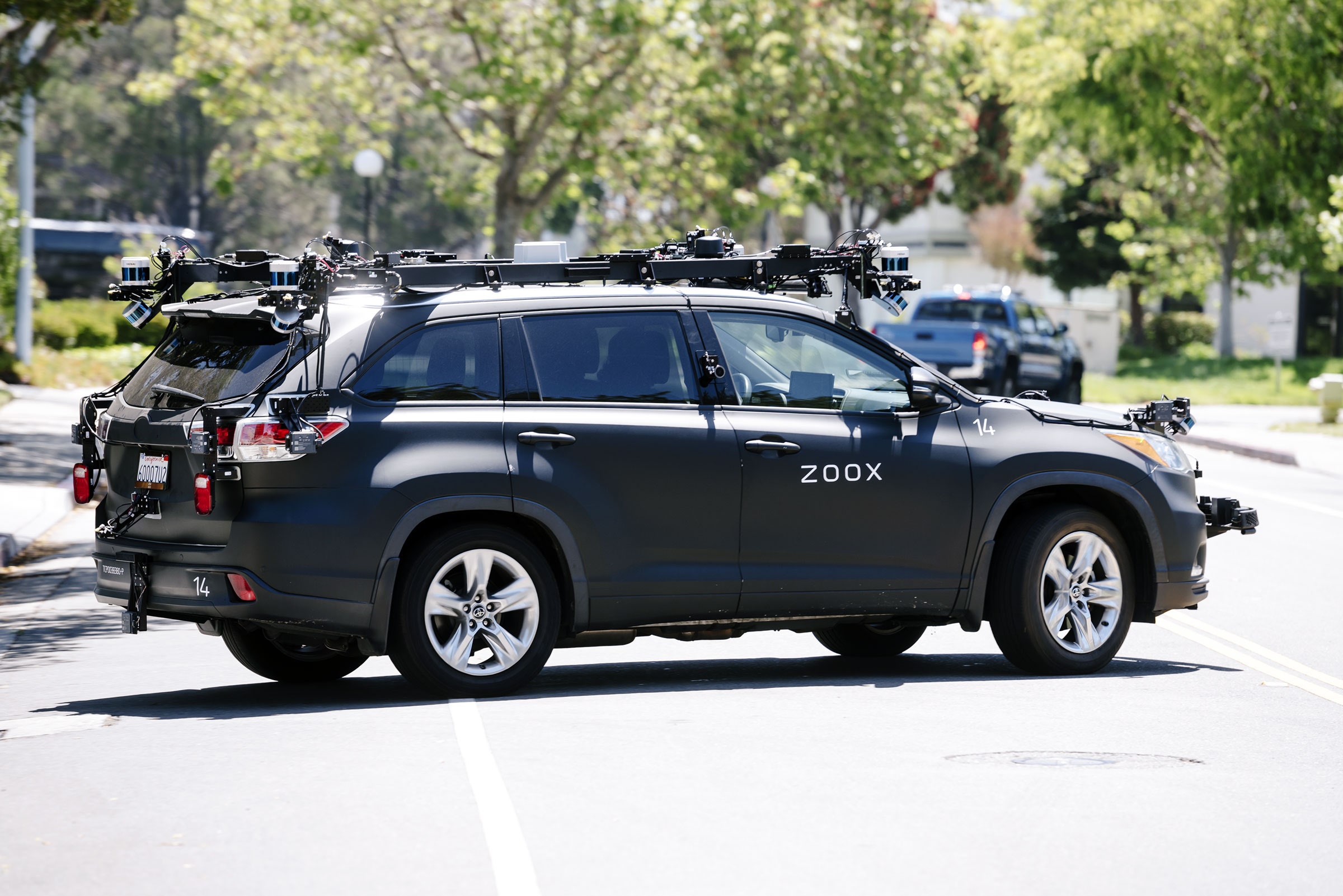
Amazon-owned Zoox has begun offering free robotaxi rides to the public on and around the Las Vegas Strip, marking its most ambitious step yet in the push toward commercializing fully autonomous ride-hailing.

The service, which started on Wednesday, comes as Zoox awaits state approval to collect fares and formally compete with Alphabet’s Waymo and Tesla.

Unlike its rivals, Zoox’s vehicles stand out: purpose-built, carriage-style pods with no steering wheels, pedals, or driver seats. Passengers instead sit facing each other in a cabin that Zoox executives admit looks more like a “toaster oven on wheels” than a traditional car.

“This is a very differentiating experience that you want people to sort of get to understand and know the robotaxi, get used to it, and give us feedback too,” Zoox CEO Aicha Evans told Reuters. “That’s good for the community, that’s good for the riders, and that’s good for Zoox.”

Robotaxi Race and Rivalry

Zoox’s rollout underscores the increasingly crowded fight over robotaxi dominance. Waymo, with a fleet of roughly 2,000 vehicles, already runs fare-collecting services in parts of Phoenix, Los Angeles, San Francisco, Austin, and Atlanta.

Tesla, meanwhile, has begun offering rides in Austin, Texas, and has launched a small ride-hailing program in the San Francisco Bay Area using its driver-assistance technology — though with a safety driver still behind the wheel.

Traditional ride-hailing giant Uber is also fast emerging as a competitor, striking multiple deals to integrate autonomous vehicles into its network rather than building its own cars.

Why Zoox Looks Different

The design difference is Zoox’s biggest gamble. While Tesla retrofits its existing vehicles with self-driving systems and Waymo adapts Chrysler and Jaguar models, Zoox has pursued a ground-up redesign of the car itself. The all-electric pods are symmetrical, able to drive in either direction, and rely entirely on sensors and AI for navigation.

The absence of manual controls highlights Zoox’s commitment to a future where passengers won’t need to think of “drivers” at all. But it also makes the company more dependent on regulatory approval, as safety standards for such unconventional vehicles are still evolving.

Testing, Expansion, and Rider Feedback

Over the past month, Zoox has been quietly testing its vehicles on a loop from a Las Vegas casino, attracting thousands of weekly riders.

“We’ve actually been getting thousands of riders every week just from this one location, which actually quite exceeded our expectations,” Chief Technology Officer Jesse Levinson said.

Zoox currently operates about 50 vehicles, the majority in Las Vegas, and plans to “very soon” expand public rides to San Francisco, where testing has been underway for months. A rider wait list is already open. Further expansions are mapped out for Miami, Austin, Atlanta, and Los Angeles over the coming year.

The company envisions fleets running mostly on their own, with remote human assistance only stepping in when vehicles request help.

The High-Stakes Backstory

Commercializing robotaxis has proven far more difficult than promised. Across the U.S., rollout efforts have faced tight regulations, safety investigations, and public protests from communities wary of autonomous cars sharing the road. Several well-funded ventures — including Ford and Volkswagen-backed Argo AI — have already collapsed under the weight of high costs and slow regulatory progress.

Amazon’s 2020 $1.3 billion acquisition of Zoox signaled its long-term commitment to the space, giving the project deep-pocketed backing that many rivals lacked. For Amazon, the bet is about more than transportation: successful robotaxi fleets could generate huge returns by reshaping logistics, delivery, and mobility at scale.

Still, even with Amazon’s backing, Zoox faces stiff competition from Waymo’s head start, Tesla’s aggressive rollout strategy, and Uber’s vast ride-hailing network.

However, Zoox is pushing for regulatory clearance to begin charging fares in Las Vegas in the coming months. If approvals come through, the company will directly compete with Waymo in key U.S. cities while Tesla attempts to scale its own vision of robotaxis.

Currently, Zoox is betting that offering free rides will help the public grow comfortable with a very different kind of car — one where the driver’s seat no longer exists.

Barclays and Deutsche Bank Lift S&P 500 Targets as AI Optimism and Earnings Power Rally

0

The S&P 500’s record-setting run has prompted major investment banks to recalibrate their outlooks, with both Barclays and Deutsche Bank raising their year-end targets.

On Wednesday, Deutsche Bank lifted its forecast to 7,000 from 6,550, while Barclays moved its projection to 6,450 from 6,050. The upgrades underscore the market’s resilience, which has been fueled by stronger-than-expected corporate earnings, sturdy U.S. economic growth, and investor enthusiasm surrounding artificial intelligence.

The index climbed to an all-time high of 6,555.97 earlier in the day and has already risen 11.2% this year, buoyed by a rally that has lifted stocks more than 30% from their April lows. Both banks’ revisions add to a growing chorus of Wall Street firms that have raised their outlook despite persistent worries over President Donald Trump’s tariff policies and the risks they pose to both corporate profits and broader economic momentum.

“We expect equity valuations to remain elevated by historical standards, driven by higher payout ratios, perceptions of higher trend earnings growth…and earnings resilience with fewer significant drawdowns,” said Binky Chadha, chief global strategist at Deutsche Bank.

Barclays echoed that sentiment but injected a note of caution, saying, “Corporate earnings are solid and global GDP growth is stabilizing, but U.S. labor market risks are worsening.”

Fresh labor market data released Friday showed U.S. job growth weakening sharply in August, with the unemployment rate rising to 4.3%, its highest in nearly four years. Those figures, combined with tame inflation readings, have heightened expectations of Federal Reserve rate cuts, a factor that could continue to buoy equities. Barclays is betting on three rate cuts before year-end, which it argues would help offset labor market weakness. In addition to its year-end revision, Barclays also raised its 2026 target for the S&P 500 to 7,000 from 6,700.

For investors, the debate now shifts toward what 2026 might hold. Analysts see two sharply divergent scenarios.

In the best case, the AI-driven productivity boom continues to spread beyond big tech into manufacturing, healthcare, and financial services, fueling a broad-based rise in earnings. If Federal Reserve rate cuts succeed in engineering a soft landing—stabilizing growth without triggering a deeper labor market shock—the S&P 500 could not only meet but surpass Barclays’ 7,000 forecast. Under this trajectory, equity valuations would remain elevated, supported by strong global GDP growth and an environment where corporate payout ratios stay high.

The worst-case, however, casts a more fragile picture. If Trump’s tariffs intensify and escalate into broader trade conflicts, corporate margins could erode even as input costs climb. A more pronounced downturn in the U.S. labor market could sap consumer demand, forcing companies to cut back on hiring and investment.

Combined with the risk of a policy misstep by the Fed—either cutting rates too late or too aggressively—the S&P 500 could falter, erasing much of its recent rally and sinking well below current levels. In such a scenario, today’s optimism around AI could prove to be overstated, leading to painful corrections in valuations.

All eyes now turn to the Fed’s policy meeting next week, where investors hope to glean clues on the trajectory of rate cuts and the broader market direction. For now, Wall Street banks remain broadly bullish, betting that resilient earnings and AI momentum will keep the S&P 500 elevated.

But with job growth slowing and political risks simmering, 2026 could yet test how durable this record-setting rally really is.

PsiQuantum Raises $1bn, Partners with Nvidia in Bid to Build First Million-Qubit Quantum Computer

0
This Feb. 27, 2018, photo shows a quantum computer, encased in a refrigerator that keeps the temperature close to zero kelvin in the quantum computing lab at the IBM Thomas J. Watson Research Center in Yorktown Heights, N.Y. Describing the inner workings of a quantum computer isn’t easy, even for top scholars. That’s because the machines process information at the scale of elementary particles such as electrons and photons, where different laws of physics apply. (AP Photo/Seth Wenig)

Quantum computing startup PsiQuantum has raised $1 billion in a Series E funding round at a valuation of $7 billion, marking one of the largest financing hauls ever in the quantum sector.

The Palo Alto-based company also announced a strategic collaboration with Nvidia to accelerate development of its silicon-photonics quantum machines.

The fundraising was led by BlackRock, Temasek, and Baillie Gifford, with participation from NVentures (Nvidia’s venture capital arm), Macquarie Capital, and Ribbit Capital. PsiQuantum said the fresh capital will support its Brisbane, Australia, and Chicago, Illinois, sites while funding the rollout of large test systems to prove the company’s design.

PsiQuantum is pursuing a photonic approach to quantum computing, manipulating particles of light on silicon chips. The company argues this method offers a clearer path to scaling, leveraging semiconductor manufacturing techniques and fiber-optic networking.

As part of its Nvidia partnership, PsiQuantum will integrate its systems with the chipmaker’s advanced processors. The collaboration aims to make Nvidia’s chips interoperable with quantum machines, while simultaneously advancing PsiQuantum’s light-based silicon-photonics chips.

The startup’s long-term ambition is nothing short of building the world’s first million-qubit, fault-tolerant quantum computer — a scale far beyond today’s experimental systems, which typically operate with hundreds of qubits and struggle with high error rates. To achieve this, PsiQuantum has also partnered with GlobalFoundries, which fabricates its chips at the company’s New York factory.

Contrast with Industry Peers

PsiQuantum’s $7 billion valuation positions it as one of the most valuable quantum startups globally. It also underscores the widening gulf between well-capitalized players and smaller rivals. For example, U.S.-based IonQ, which went public via SPAC in 2021, has a market capitalization hovering around $2 billion and raised significantly less than PsiQuantum in its early rounds. Rigetti Computing, another U.S. quantum hopeful, has struggled with both financing and execution, with a market cap under $200 million as of this year.

By contrast, PsiQuantum’s latest funding round rivals levels more commonly seen in AI hardware. Nvidia itself, whose data center sales hit $41.1 billion in its most recent quarter, is flush with cash and continues to dominate AI chip markets. Anthropic, one of the leaders in AI models, raised $4 billion from Amazon in 2023, but in quantum computing, a single $1 billion round is rare and signals how investors view the technology as strategically important despite its longer time horizons.

Government Stakes in Quantum

For governments and investors, quantum represents both an economic opportunity and a matter of national security. Quantum systems could eventually crack today’s encryption, model new materials, and revolutionize drug discovery. Unlike the gradual slowdown in conventional computing, quantum offers the promise of leaps in processing power.

Currently, governments are pouring billions into quantum research. In the United States, the 2018 National Quantum Initiative Act allocated over $1.2 billion in funding for quantum R&D, with additional billions committed through the Department of Energy and Department of Defense for quantum-secure communication and computing.

In China, state-led investments dwarf private rounds, with analysts estimating more than $10 billion committed to national quantum programs, including facilities in Hefei focused on quantum communication and computing. The country has already demonstrated leadership in quantum satellite communication and has sought to tie advances to strategic military and industrial applications.

The European Union has launched the Quantum Flagship Program, a €1 billion, 10-year initiative to boost the bloc’s competitiveness, funding university labs, startups, and collaborative projects across member states. Several European governments, including Germany and France, have also announced national programs worth billions more to accelerate industrial adoption of quantum technology.

This dual-track strategy — large state-backed initiatives alongside deep-pocketed private investors — highlights how quantum is being treated as both a commercial frontier and a geopolitical race. PsiQuantum’s $1 billion raise signals that private capital is willing to match some of the scale governments are already deploying, especially when tied to heavyweight partners like Nvidia.

By securing Nvidia’s backing, PsiQuantum is ensuring that its photonic design remains tethered to the world’s dominant chip ecosystem, potentially smoothing the path to commercialization.

With more than 30 investors and a newly confirmed $1 billion war chest, PsiQuantum is now among the best-funded deep-tech startups on record. Its success or failure could help determine whether quantum computing shifts from hype to practical reality within the next decade.

Solana DeFi TVL Reaches New All-Time High Amid Growing Institutional Adoptions

0

Solana’s decentralized finance (DeFi) ecosystem has indeed hit a new all-time high (ATH) in Total Value Locked (TVL), marking a significant milestone for the blockchain.

As of September 9-10, 2025, the TVL has surged to approximately $12.2 billion, surpassing the previous record of nearly $12 billion set back on January 23, 2025. This represents a roughly 15% increase over the past 30 days, driven by heightened institutional interest, regulatory clarity on liquid staking tokens, and broad growth across key protocols.

Key Drivers Behind the Surge

Corporate treasuries are increasingly integrating Solana for its speed and low costs. For instance, the U.S. SEC’s August 5 statement clarified that liquid staking tokens are not securities by default, boosting confidence. Proposals like Canary’s Solana ETF (filed in May 2025 with Marinade) have further fueled inflows.

Solana’s DeFi TVL has more than doubled from $4.8 billion in early 2024 to the current levels, outpacing many competitors. While Ethereum still dominates overall DeFi with ~$96.86 billion TVL (up 50% in Q3 2025), Solana’s $12.2 billion now exceeds the combined TVL of Ethereum’s major Layer-2s like Base, Arbitrum, and Optimism.

Over the past week: +2.55% in stablecoin market cap, with daily DEX volumes around $4.6 billion and perpetuals at $2.1 billion. Over the past month: Double-digit gains in seven of the top eight protocols with >$1 billion TVL.

Stablecoin supply on Solana stands at ~$12 billion, providing a strong liquidity base. The news has generated significant buzz on X, with over 20 recent posts (from September 9-10) celebrating the ATH. Optimism about SOL price targets ($220–$300), tied to memecoin revivals and ETF approvals.

Users note Solana’s single-chain scalability (up to 100k TPS) outshines fragmented Layer-2s, with institutions adding $1.7B+ in Q3. Notably, while USD TVL is at ATH, SOL-denominated TVL remains ~16% below 2022 peaks (68M SOL), partly due to SOL’s price appreciation.

This ATH underscores Solana’s resurgence as a high-performance alternative to Ethereum, with DeFi now accounting for a larger share of on-chain activity. However, challenges like stagnant daily fees (~$2M) and historical September bearishness could temper short-term momentum.

If inflows continue—especially with potential ETF launches—Solana could solidify its position as the #2 DeFi chain. Solana’s TVL surpassing $12 billion cements its status as a top-tier DeFi chain, trailing only Ethereum (~$96.86B). Outpacing combined Ethereum Layer-2 TVLs highlights Solana’s single-chain scalability and efficiency.

The milestone signals growing trust in Solana’s infrastructure, drawing more institutional and retail capital. This could accelerate adoption in DeFi applications like lending (Kamino), trading (Jupiter, Raydium), and liquid staking (Jito, Sanctum).

The U.S. SEC’s August 2025 statement that liquid staking tokens are not securities by default reduces legal risks, encouraging institutional participation. This is critical for protocols like Jito and Marinade, which dominate Solana’s TVL.

Proposals like Canary’s Solana ETF could unlock billions in institutional inflows if approved, further boosting TVL and SOL’s price (currently ~$180, with X posts eyeing $220–$300). Double-digit TVL growth in major protocols (e.g., Raydium +32%, Jupiter +25%) reflects robust user activity and innovation.

High capital efficiency (e.g., Jupiter’s 14.7x utilization) makes Solana attractive for developers building high-throughput DeFi apps. Rising TVL fuels liquidity, attracting more projects and users. Stablecoin supply (~$12B) and high DEX volumes ($4.6B daily) create a virtuous cycle, fostering further protocol development.

The ATH has sparked optimism on X, with posts highlighting Solana’s scalability (up to 100k TPS) and memecoin-driven retail interest. This could drive speculative SOL price rallies, though SOL-denominated TVL (~68M SOL) remains below 2022 peaks, suggesting price growth hasn’t fully matched TVL gains.

Historical September bearishness and stagnant daily fees (~$2M) could temper short-term gains, especially if broader crypto markets correct. While Solana’s high throughput drives DeFi growth, past network outages (e.g., 2022) raise concerns about reliability under extreme demand.

Sustaining performance is critical to maintaining TVL momentum. Ethereum’s dominance and emerging chains like Aptos or Sui could challenge Solana’s growth if they offer better incentives or innovation.

Low transaction fees are a strength but limit revenue for validators, potentially constraining network security or development funding compared to Ethereum’s higher fee model. Solana’s ATH reinforces its role as a leading Layer-1 alternative to Ethereum, emphasizing single-chain scalability over fragmented Layer-2 solutions.

The surge signals growing mainstream DeFi adoption, with Solana’s low-cost, high-speed infrastructure appealing to both retail and institutional users. This could push competitors to innovate faster. High TVL in protocols like Kamino and Meteora offers users diverse ways to earn returns, though risks like impermanent loss or smart contract vulnerabilities remain.

Rising TVL and ETF prospects make SOL and Solana-based tokens attractive for investors, but they should monitor market volatility and protocol-specific risks. Solana’s DeFi TVL ATH underscores its growing dominance, driven by institutional adoption, regulatory clarity, and ecosystem efficiency.

It positions Solana as a formidable Ethereum rival, with potential for further growth if ETF approvals materialize and scalability holds. However, challenges like low fees and competition require ongoing innovation.