DD
MM
YYYY

PAGES

DD
MM
YYYY

spot_img

PAGES

Home Blog Page 5492

Payhippo, Nigerian Lending Startup Raises $3m in A Seed Round

0

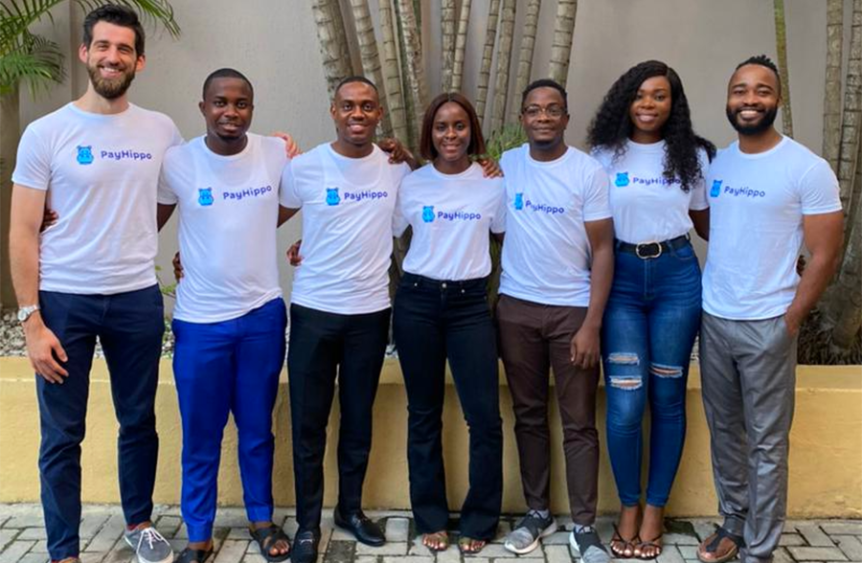
Payhippo, a Nigerian lending startup, has raised $3 million in a seed round to expand its talent base and network across more West African countries.

The startup focuses on credit delivery for small and medium-sized enterprises (SMEs), and needs to optimize its technology to accommodate its fast-paced growth.

The company’s co-founder and chief operations officer, Chioma Okotcha, said they are looking to hire more engineers and data scientists.

“We capture our data from the loans we issue, and more talent in the team would allow us to optimize our technology to serve our customers better,” she said.

The round was led by an array of angel investors, including Ham Serunjogi and Maijid Moujaled, the co-founders of the African cross-border payments company Chipper Cash; Olugbenga Agboola of the San-Francisco based payments firm Flutterwave; Bolaji Balogun, the CEO of investment banking firm Chapel Hill Denham; and Hakeem Belo-Osagie, the founder of Metis Capital Partners.

Payhippo has become a force in the Nigerian loan space in such a short time by being fast at it, eliminating the bottlenecks that have characterized banks’ loan process.

“We really focus on keeping this under three hours, and making sure that businesses can get the money they need when they need it. Ours is also a product that works for the SMEs in terms of a flexible repayment structure,” Okotcha said.

This is the largest amount Payhippo has raised to date after receiving $1 million in pre-seed funding earlier this year, according to TechCrunch.

The startup has focused on SMEs due to the size of its market. SMEs account for 96% of businesses and 84% of employment in Nigeria, and it’s seen as the backbone of the economy. However, it has come with a huge credit vacuum that has stalled the growth potential of the micro businesses.

Founded in 2019 by Okotcha, Zach Bijesse, now the chief executive officer, and Uche Nnadi, the chief technical officer, Payhippo was part of the 2021 Y Combinator summer cohort, and has shown its capability in filling the credit vacuum for SMEs.

“We had seen that traditional banks and lenders wouldn’t loan small businesses mainly because there were no credit scores, or the collateral requirements were too high. We decided to come into the market and create an instant financing option, where we create a credit score that allows small businesses to get the liquidity they need to buy inventory for business continuity,” Okotcha told TechCrunch.

“We use data from historical records that borrowers have built with us, but we also check their banking history to see the actual performance of their businesses,” said Okotcha.

But Payhippo is not the only digital lender in Nigeria offering short-term loans to SMEs. The startup is competing with others, including Carbon and FairMoney. Per TechCrunch, FairMoney disbursed a total loan volume of $93 million last year, representing a 128 percentage point increase from 2019, while Carbon said it had hit 659,000 customers last year and had disbursed $63 million in loans, an increase of 9.1 percentage points from the 2019 financial year.

Putting up a challenge to these rivals, Payhippo says it made $64,000 in revenue from around 5,000 it has so far disbursed. The startup says the repayment rate is 97% and that the total transaction is valued at $1 million. It added that the demand for credit is high, fueling its current 25% month-on-month growth.

Payhippo applies its own credit scoring formula that uses different SME data to determine the value of loans to give out. The loans are disbursed through mobile phones. The average loan disbursed by Payhippo is about $1,300, with the minimum loan being about $200.

The company says it is counting on its swift turnover in loan applications to grow its customer base within Nigeria before expanding to other countries.

Okotcha said going forward, Payhippo will ride on the untapped credit needs of the nearly 40 million SMEs in Nigeria to grow its business.

“We know that just 1% of the Nigerian market is about 40,000 businesses, and we want to be in a position where we disburse 40,000 loans in a day,” she said.


Chinese Digital Currency Records $9.7bn in Transaction As 140m People Create Wallets

0

China is nearing the launch of its Central Bank Digital Currency (CBDC) as more people sign up to it and create digital wallets.

About 140 million people had opened “wallets” for the digital yuan as of October and used it for transactions totaling around 62 billion yuan ($9.7 billion), Mu Changchun, head of the PBOC’s Digital Currency Institute, said at the Hong Kong Fintech Week conference on Wednesday.

The e-CNY has undergone a series of trials and appears to be in the final phase before it is rolled out, although Mu Changchun told Hong Kong’s “Fintech Week” conference there was no official launch date yet, but he disclosed how the digital currency will work.

“Digital yuan operators can open four types of e-wallets for customers. The least privileged only requires a phone number, so would be anonymous even to the PBOC. Daily transaction values for this type of e-wallet holder would be capped at 5,000 yuan, with an annual cap of 50,000 yuan.

“The highest privileged e-wallet would need to be opened at a bank counter with personal identification, with no transaction cap,” he said.

He reiterated that these e-wallets would collect less transaction information than traditional digital payment services. The PBOC would not provide the information to any third-party or other government agencies unless stipulated by the law

By the end of June, China had more than 24 million individual and enterprise users with e-CNY wallets, with transactions worth about 34.5 billion yuan, the central bank said at the time

Central banks around the world are looking at developing CBDCs to modernize their financial systems, ward off competition from cryptocurrencies like bitcoin and speed up domestic and international payments.

China’s efforts are among the most advanced globally, and the country has been running various trials and pilot schemes of different payment scenarios since last year.

Mu said so far 1.55 million merchants could accept payments using eCNY wallets, including utilities, catering services, transportation, retail and government services.

China intensified its crackdown on cryptocurrency earlier this year, and totally declared it illegal in September, paving the way for its CBDC.

“The surge in usage of cryptocurrencies has disrupted economic and financial order and prompted a proliferation of money laundering, illegal fund-raising, fraud, pyramid schemes and other illegal and criminal activities,” the PBoC said then.

Although Mu said it is not yet certain when the eCNY will be launched, the growing number of people using it so far suggests that it wouldn’t be long.

Leadership And The Monster Called Sycophancy (II)

0
Leader vs follower concept

In view of our previous analysis on this topic, it’s needless to state that such a way of life known as sycophancy requires to be holistically thrown to the waste-bin, which is its rightful place, for eternity.

Intriguingly, only but a few had openly condemned this monster that’s gradually but steadily getting engraved in the psyche of most individuals in various quarters, probably consciously or otherwise, while trading their sense of honour and candour.

We must note that, on the average, it’s sycophancy that breeds despotism in any democratic terrain. This is the reason any leader who truly thinks good of the society or country he leads mustn’t in any way pamper its practice that’s flourishing unabated not just on the African continent but across the global community in its entirety.

The most worrisome, and perhaps amusing aspect of it is a situation where you would notice that those who never wanted the leader in question to emerge, are apparently the prime ‘supporters’ or allies of the affected leadership. This could presently be discovered in countries like Nigeria.

Of course, since their man had been defeated, they decided to take a u-turn to the other side of the road just to quench their selfish urge. Any leader that finds himself as a victim of this circumstance needs to, without equivocations, distance his leadership from this set of people who actually mean no good for the administration.

Similarly, on the part of the electorate, if they are sincerely yearning for a positive change, then must individually or collectively, say no to all these partisan activities occurring on a daily basis in our political space.

The youth that are widely reckoned to be the ‘leaders of tomorrow’ must steer clear of presentation of unmerited eulogy to any leader, so that, power would become theirs somebody as they earnestly anticipate; or like Esau, they ought to go ahead and sell their birthright just for a bowl of meats.

It’s worth noting that if they failed to desist from such an unwholesome attitude, any town-hall meeting organized in their respective jurisdictions by the government, in respect of governance, would definitely be marred by sycophancy.

Another devastating phenomenon, which triggers the senses of anyone who understands the societal implications of sycophancy, is that most political players have resorted to adopting the lifestyle as a norm or an occupation having inured themselves to it, thereby relegating morality, modesty and integrity to the background.

Pitiably, such affected individuals or groups ostensibly have no iota of plan in the nearest future to abjure such uncalled way of life, or even lose a bit of interest as regards the unnecessary passion they abruptly developed for it.

Against this backdrop, every well-meaning leader is expected to do everything within their reach towards ensuring that sycophants are not just shown the way out, but thoroughly prosecuted, acknowledging that they are deadlier than highway robbers. Hence, any leadership that’s genuinely determined to wipe out corruption must see sycophancy as a priority.

It ought to be treated as a crime, because it is highly criminal both before God and mankind. It doesn’t in any way deserve to be harboured within our various institutions, societies, or what have you.

The damage sycophancy has caused thus far, if well estimated, is far more than the challenges attributed to other vices to include corruption, graft particularly, kidnapping, and robbery, among many others.

Sycophants as a whole have taken more than they could chew, hence shouldn’t be spared by any leader or authority that truly intends to live up to the people’s expectations. The governed can’t fold their hands and watch a certain set of deceitful individuals hijack their common patrimony. It’s their collective duty to safeguard the treasury for the good of all regardless of whose ox is gored.

This significantly implies that there’s a compelling need to enact a strict law towards aptly addressing such anomalies as blarney (sycophancy) currently observed in every field of human endeavour, including but not limited to trading, education, health, politics, governance, business, and journalism.

It suffices to assert that the cankerworm is found in our everyday social, economic, as well as political lives. It is even on the rampage in most existing religious institutions within the shores and caprices of the globe.

Inter alia, our respective families aren’t exempted from the lingering can of worms. You would in most cases find a child or ward flattering his/her parent or guardian, as the case might be, in a bid to acquire their want or need. This is to say that all settings are at the moment experiencing the dangers inherent in the said menace.

Indeed, sycophancy which remains a deceptive gesture in any setting, is wicked, inhumane and deadly, thus deserves to be considered as such. Like cancer, it has conspicuously eaten up the soul and conscience of any country or society that harbours it, thereby crippling their socio-economic prospect.

The truth is that any issue in regard to sycophancy isn’t meant to be treated with kid’s gloves by anyone. This is a bitter fact any leader or leadership anywhere across the world needs to take into consideration if they actually want to succeed in the long run or as the journey progresses.

As a people, the monster has colossally taken us aback in all ramifications, hence the need to truncate its unannounced and unlicensed existence. To actualize this, we must be truthful to ourselves at all cost. 

SpaceX’s Starlink to Roll Out 200k Satellite Internet Terminals in India

0

India’s digital economy is getting a big boost from Elon Musk’s satellite internet. Starlink’s director in India said on Monday that the company had set up a wholly-owned India subsidiary, per Insider.

Under the plan, SpaceX’s satellite internet network, Starlink, will roll out 200,000 user terminals in India in an effort to expand its service in Asia, according to a company presentation.

The company’s India director, Sanjay Bhargava, said in a LinkedIn post on Monday that Starlink has set up a wholly-owned subsidiary in India called Starlink Satellite Communications Private and the subsidiary can now apply for licenses and open bank accounts.

Prime Minister Narendra Modi’s digital economy plan has seen inflow of different tech ideas and investment into India, especially from the United States. Google, Facebook, Amazon and Apple are all racing to grab a share in the emerging market.

Google and Jio are expected to launch the JioPhone Next today, an affordable smartphone that will cost 6,499 Indian rupees ($87), developed by the companies to serve India’s underserved.

The pandemic brought an increase in digital activities, escalating India’s need for affordable internet as more people embrace the digital life, including edtech.

With smartphones and affordable internet, which would empower the second-largest market in the world for digital life, India is on the verge of creating one of the most competitive digital economies in the world.

Bhargava, a former PayPal executive, shared a company’s presentation last week on LinkedIn, which stated that the subsidiary has a “stretch goal” to deploy 200,000 Starlink user terminals in more than 160,000 rural districts in India by December 2022.

The user terminals, which connect to the Starlink satellites, are part of the $499 kit users buy after signing up to the $99-a-month internet service.

While the $499 for kit and $99-a-month seem high for the underserved individuals, it isn’t for corporations.

According to the company presentation, Starlink wants to introduce its internet to schools in and near to the capital city of New Delhi, too.

“We want to serve the underserved,” Bhargava wrote.

Bhargava previously worked with SpaceX CEO Elon Musk to create PayPal, according to Bhargava’s LinkedIn profile.

Musk tweeted on Monday: Sanjay deserves a lot of credit for making X/PayPal succeed. Now helping SpaceX serve rural communities in India. Much respect.

However, Musk admitted in June that Starlink will require at least $30 billion to execute its global internet goal, and the company has been reaching out to countries and companies for partnership.

Bloomberg reported On Friday that Starlink is also in talks with two telecommunications companies in the Philippines, where it also wants to launch its satellite service.

SpaceX has been working to put more satellites into space recently. There are currently more than 1,650 Starlink satellites in orbit. The company’s goal is to have 42,000 by mid-2027 in order to create an internet service which stretches across the world, per Insider.

Starlink’s satellite roll out in India will mean that the company is likely going to capture a huge market ahead of rival Blue Origin’s Kuiper. The Amazon-owned company has been at loggerhead with SpaceX, triggered by the latter’s request from the Federal Communication Commission (FCC) to modify its satellite operations. The two are jostling for constellations but Amazon said Starlink’s request for network modification will hurt other players in the industry.

Possibility of Disable Economies in the World With Growing Language Disorders

0

From 55 countries of the world, language disorders have largely occupied the minds of many global citizens in the last 5 years. According to the world interest in the receptive and expressive disorders, Zambia remains the leading country, where people have been developing interest in the last 5 years. Germany, Dominic Republic, Chile and Austria follow the East African country.

The United States of America is 36th among the countries that have been developing interest in the disorders since 2016. Different sources have shown levels of varied forms of disorders. Between 6 and 8 million individuals in the United States have some form of language impairment.  Approximately 7.5 million people in the United States have trouble using their voices. Disorders of the voice involve problems with pitch, loudness, and quality. The American public interest in language disorders from infancy through adolescence mostly common in the United States of America is on increase since 2016.

A number of academic and industrial sources show that the world language disorders impact both the understanding and use of language. Failure to identify the symptoms of the disorders early on has been linked to the inability to have proper care for the affected with the possibility of ensuring total cure. One of the sources lists symptoms of specific language impairment in older children and adults as “limited use of complex sentences, difficulty finding the right words, difficulty understanding figurative language, reading problems, disorganized storytelling and writing and frequent grammatical and spelling errors.”

These symptoms are not exclusive to a particular country or continent. They are almost emerging in every country and continent. This specifically explains the essence of rapidly working towards full realisation of strategic objectives in the World Disability Action Plan 2014-2021 [PDF] and carrying unrealised objectives to the next years.

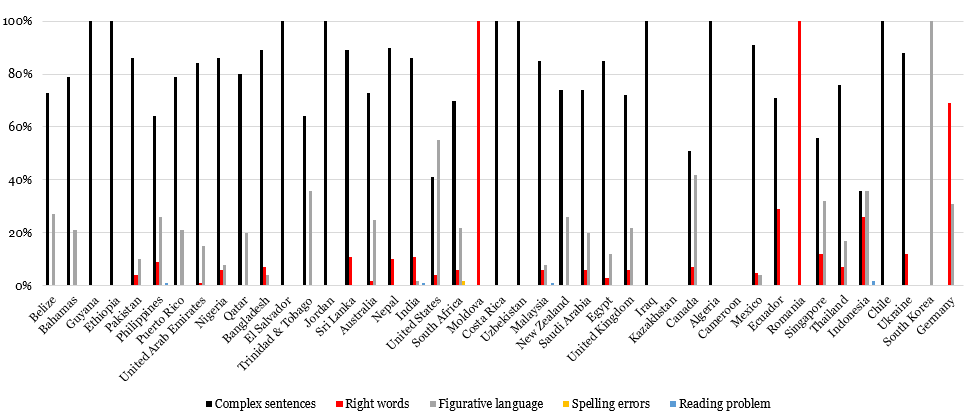
Exhibit 1: Interest in Select Language Disorders’ Symptoms

Source: Google Trends, 2021; Infoprations Analysis, 2021

Between November 5, 2017 and October 31, 2021, our analysis reveals significant relational interest in complex sentences, right words, figurative language, spelling errors and reading problem. According to our analyst, the global public, especially people in countries listed in Exhibit 1, had a strong interest in understanding how to use complex sentence and right words in their conversations [both written and verbal].

One percent interest in learning complex sentences translated to 89.1% in knowing the right words for sentence construction and use during verbal conversation. It significantly emerged that when the global public had a 1% interest in understanding complex sentences, it led to 96% of seeking knowledge about spelling errors and 90.9% in finding possible tactics for overcoming reading difficulties. Seeking knowledge about reading difficulties, in our analysis, largely connected with interest in understanding spelling errors.

These insights are further explored with a series of conversations with educationists and language therapists. They all agreed that the surge in complex sentence and right words is not surprising considering the fact that the world is not really interested in reading printed books where they could be easily learned. They note that emerging technologies such as social networking sites are impacting acquisition and use of appropriate language skills.  Beyond these, some of the symptoms emerged from the deficient childhood care.

Addressing language disorders using holistic and inclusive approaches would significantly help countries in reducing the number of people who dive into intellectual disability yearly, which has the tendency of impacting economic growth severely, especially in the developing world. The definition of the World Health Organisation on intellectual disability absolutely resonates with the listed symptoms of language disorders. According to the global health body, “a significantly reduced ability to understand new or complex information and to learn and apply new skills (impaired intelligence).”

Our analyst believes that collective strategies and tactics from concerned stakeholders in the private and public sectors are needed to avert disable economy, most importantly in countries where a significant number of the population is having different language disorders which prevent them from delivering appropriate the assigned tasks.