DD
MM
YYYY

PAGES

DD
MM
YYYY

spot_img

PAGES

Home Blog Page 5492

Washington Bans China Telecom from Operating in the US

0

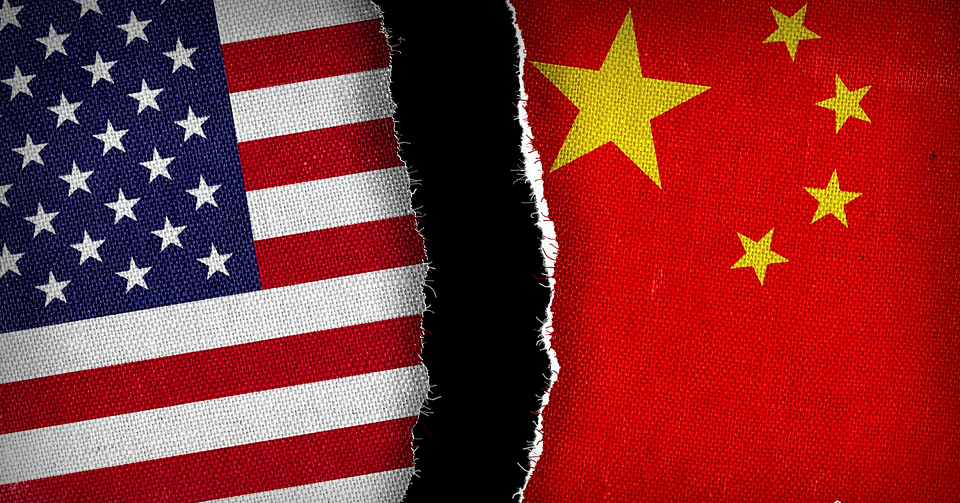
The US onslaught against Chinese tech companies has claimed another victim. The Federal Communications Commission has voted to revoke authorization for China Telecom’s US subsidiary to operate in the United States, citing national security concerns, Aljazeera and news agencies report.

China Telecom, the largest Chinese telecommunications company, has provided services in the US for nearly 20 years through China Telecom Americas but as of Tuesday must discontinue within 60 days, according to the FCC.

The telco has thus become the biggest victim of China-US rift, a position previously held by Huawei.

“The FCC’s decision is disappointing. We plan to pursue all available options while continuing to serve our customers,” a China Telecoms America spokesperson told the Reuters news service.

The FCC had warned in 2020 that it might shut down US operations of three state-controlled Chinese telecommunications companies, citing national security risks, including China Telecom Americas, as well as China Unicom Americas, Pacific Networks Corp and its wholly-owned subsidiary ComNet (USA) LLC.

On Tuesday, the FCC found that China Telecom “is subject to exploitation, influence, and control by the Chinese government and is highly likely to be forced to comply with Chinese government requests without sufficient legal procedures subject to independent judicial oversight”.

It added that “China Telecom Americas’ ownership and control by the Chinese government raise significant national security and law enforcement risks by providing opportunities” for the company and the Chinese government “to access, store, disrupt, and/or misroute US communications”.

China Telecom is one of the globe’s leading providers of communications and information technology services in more than 110 nations, according to the company website.

China foreign ministry spokeswoman Hua Chunying said at a news conference in January that the US should respect rule of law and market principles after the New York Stock Exchange said it would no longer trade three Chinese telecom giants, according to Reuters.

It has US offices in Chicago, Dallas, Los Angeles, New York, San Jose, Toronto, and Herndon, Virginia. It specializes in providing trans-Pacific connectivity for businesses and organizations including cloud and data centers.

US government agencies including the Department of Justice had recommended in April 2020 that the FCC revoke China Telecom’s authority to operate in the US. Further, the FCC said, “Classified evidence submitted by the Executive Branch agencies further supports the decisions.”

China Telecom’s conduct had demonstrated “a lack of candor, trustworthiness, and reliability that erodes the baseline level of trust that the Commission and other US government agencies require”, the FCC said.

Shares of China Telecom, China Mobile Ltd and China Unicom (Hong Kong) Ltd, were delisted by the New York Stock Exchange earlier this year following an investment ban ordered by former President Donald Trump. Shares continue to be traded on the Hong Kong exchange.

The FCC has taken other actions against Chinese telecoms and other companies on similar “national security” grounds in recent years.

In March, the FCC began efforts to revoke authorization for China Unicom Americas, Pacific Networks and ComNet to provide US telecommunications services.

Last year, the FCC designated Huawei Technologies Co and ZTE Corp as national security threats to communications networks – a declaration that barred US firms from tapping an $8.3bn government fund to buy equipment from the companies.

The FCC in December adopted rules requiring carriers with ZTE or Huawei equipment to “rip and replace” that equipment. In March, the FCC designated five Chinese companies as posing a threat to national security under a 2019 law, including Huawei, ZTE, Hytera Communications, Hangzhou Hikvision Digital Technology Co and Zhejiang Dahua Technology Co.

In May 2019, the FCC voted unanimously to deny China Mobile, also a Chinese state-owned company, the right to provide US services.

Crypto Exchange Platform, Luno, Plans to Reintroduce Naira Deposits and Withdrawals

0

Luno, a crypto exchange platform, plans to reintroduce naira deposits and withdrawals on its platform in November, the company announced via email sent to users.

The move signals a defining moment in Nigeria’s cryptocurrency market predicament, which has seen exchange platforms restricted to Peer to Peer (P2P) services only.

“You will be able to deposit funds to and from the Luno platform using vouchers purchased and redeemed through a trusted third party provider,” Luno said.

In February, the Central Bank of Nigeria (CBN), had banned regulated financial institutions from carrying out crypto-related transactions, dampening the boom that had put Nigeria at the top of crypto market.

As of December 2020, Nigeria traded more than $566 million worth of bitcoin, thus becoming the world’s second largest peer-to-peer (P2P) bitcoin market after the U.S., which traded $3.75 billion, according to data from crypto exchange platform Paxful.

The ban has narrowed Nigeria’s crypto market to P2P, hampering the sustainability of this growth. Recently, the CBN embarked on Central Bank Digital Currency (CBDC) development project. The CBDC called eNaira has been launched in a push to provide alternative to cryptocurrency that has increasingly become a better choice for Nigerians. Local banks have also been automatically onboarded to facilitate fast and reliable transactions for users.

The financial regulator had said that the cryptocurrency boom is a threat to Nigeria’s financial sector and national security as it is being used by criminals to facilitate money laundering and to sponsor terrorism.

Luno, alongside other exchanges, have been working to provide alternatives to the naira deposits and withdrawals that banks offer. Given the CBN ban, the exchange said using a “trusted third party” to facilitate such transactions is the only choice for now.

“We believe that this is the safest and easiest-to-use solution currently available to our customers in Nigeria and look forward to you experiencing it for yourselves,” the exchange said.

The launch of eNaira is expected to temporarily capture a section of Nigerians, who want to experience the CBDC service. This is because, compared with cryptocurrency, the eNaira is not profitable. Furthermore, the eNaira guidelines issued by the CBN have transaction limitations that huge fund merchants don’t want to reckon with.

However, the trade volume decline in Nigeria’s cryptocurrency market, which was induced by the CBN’s ban, emphasizes the need for the naira deposits and withdrawals gap to be filled, even without the help of the banks.

It is not clear who the “third party” mentioned by Luno is. What is clear is that the exchange’s move, if successful, may be the antidote the Nigeria’s crypto market needs to totally break free from the central bank’s shackles.

But Luno said it may come with a price: “The return of Naira deposits and withdrawals may cause significant price volatility, with the release of pent-up customer demand to buy and sell cryptocurrency causing unusual market behavior that could last for several weeks.”

Nigeria’s $200 Million Loan for Mosquito Nets, Etc And Wisdom from Ibrahim Oloriegbe

1

Nigeria has in the budget money to fight malaria but some foreign creditors have offered Nigeria $200 million loan more: “The Senate has frowned at a plan by the federal government to borrow $200 million to purchase mosquito nets and other ancillary medical therapies to prevent malaria”.  And the government wanted to take it. Then, some reasonable parliamentarians asked questions:

“This is unacceptable. We should be able to put our feet down when dealing with these donor agencies or creditors as regards loans to be taken and what it should be expended on. This is a clear case of money and jobs for the boys by creditors luring you for loans and railroading you on what it should be spent on.

“Washington or whatever creditor offering the loan, should stop giving us money with one hand and taking it back with another hand through railroaded spending,”  Ibrahim Oloriegbe (APC, Kwara).

You know what is happening: they will never give you the loan to buy from mosquito nets producers in Kano, Lagos, Aba and Uyo. They will give you the money and you have to import expensive and overpriced products from abroad. That is one of the major reasons I hate these loans – you never get market value because you take whatever you are given.

 Ibrahim Oloriegbe, keep speaking and please do not allow this loan to go through unless there is a clause that Nigeria can take the $200 million and buy from local companies, not exclusively foreign firms whose governments/funds are providing the loans.

We Stand With The Sudanese People – And Lessons from General Abacha

2

I write to stand with the good people of Sudan after the military punted their evolving democracy with a coup. I stand with the oil workers, doctors, pilots, carpenters, market women, and all Sudanese as they oppose these soft-target soldiers. Africa has security issues, and if these soldiers are bored, there are many battlefields available to engage them. Yes, government houses are not the destinations in this age.

Coup is evil. It remains like yesterday when Prof Obah, a Vice Chancellor when I was in FUTO, sent a directive to me that the Students FM Radio Station (just an engineering students thing) we had designed and installed to communicate within campus, has been mandated by General Abacha to be taken down. I could not believe myself. Imagine if they have done the unthinkable: came in and arrested us with no trace. That was my campaign manifesto as Director of Research: I will give FUTO a radio station – and we delivered. The finest Director of Social, Osita Njokubi, P.Eng, C.Eng, made it more popular than the state radio station that non-students were tuning in.

So, khaki boys are NEVER the solution irrespective of the mess from politicians. Sudan took down the last leader, Omar al-Bashir, because of a loaf of bread. These coup plotters should expect fire because this is more than bread – and they will be down.

We stand with Sudan – and peace in the land.

Tekedia Capital Q4 2021 Investment Cycle is currently active; register for access to the deal flow

0

The Tekedia Capital Q4 2021 Investment Cycle is currently active; register for access to the deal flow – and join our members and invest in Africa’s future promising startups. A membership fee which covers four investment cycles is $1,000 or N550,000. The Demo Day will take place on Saturday, Oct 30 with all the startups presenting.  We’ve got great companies, from one which processes $10 million monthly transactions in Nigeria (never raised money) to more. To join us, begin here