DD
MM
YYYY

PAGES

DD
MM
YYYY

spot_img

PAGES

Home Blog Page 5493

An Entity Yearning For Panacea

0
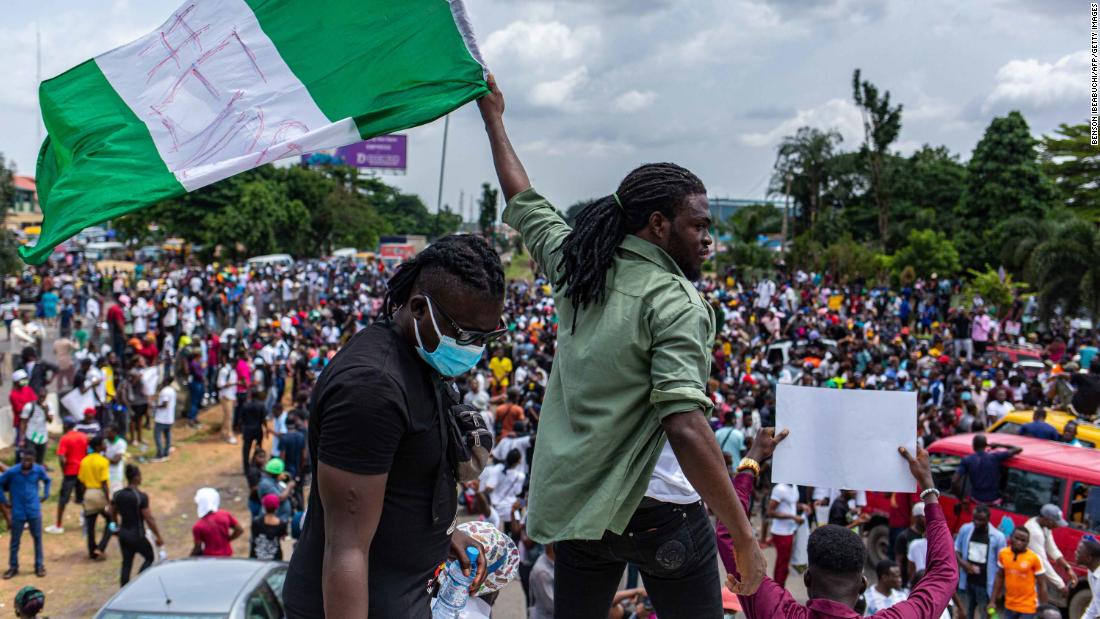
A Nigerian youth seen waving the Nigerian national flag in support of the ongoing protest against the unjust brutality of The Nigerian Police Force Unit named Special Anti-Robbery Squad (SARS) in Lagos on October 13, 2020. - Nigerians took to the streets once again on October 13, 2020, in several cities for fresh protests against police brutality, bringing key roads to a standstill in economic hub Lagos. Demonstrations organised on social media erupted earlier this month calling for the abolition of a notorious police unit accused of unlawful arrests, torture and extra-judicial killings. The government gave in to the demand on October 11, 2020, announcing that the federal Special Anti-Robbery Squad (SARS) was being disbanded in a rare concession to people power in Africa's most populous nation. (Photo by Benson Ibeabuchi / AFP) (Photo by BENSON IBEABUCHI/AFP via Getty Images)

In recent times, several unpredictable scenes, such but not limited to as the rapid and abrupt fall of the crude oil price, hike of petrol pump price, reemergence of Biafra agitation, outrageous increment of electricity tariff, the stamp duty charges of the Central Bank of Nigeria (CBN), as well as emergence of drowsy physiognomy of foreign reserves, had in different occasions transpired on the socio-political platform of an entity reckoned to be the ‘giant of Africa’ thereby posing an astronomical threat to its entire citizenry.

The aforementioned seemingly foreseen anomalies had made many of her citizens, both home and in the diaspora, coupled with concerned observers, to unequivocally insinuate that she’s doomed. It’s worthy of note that such a speculation preoccupying the mindset of the majority might not be unconnected with the fact that quick assertion of conclusion to happenings is peculiar to the human nature.

However, every sane being and anyone who thinks good of the affected country ought to be concerned with the needed panacea for this vertex of quagmire that seems not unlike a paradox. To this end, it’s needless to state that this topic was informed by the need to acknowledge the inevitable role of a panacea in a situation like this.

In any circumstance, while searching for the most viable way of settling a crisis or putting a holistic end to any menace, it’s imperative to first ascertain the origin of the plight. Hence, the ongoing societal conundrum in the entity called Nigeria won’t be exceptional. In view of this, there’s a compelling need to look inwards towards unravelling the genesis of this apparently poignant odyssey initiated by a set of unscrupulous elements.

While we seek the way out, the first paramount question is, how did we get here? In some quarters, people are of the view that the predicaments are attributable to the 16-year ‘misrule’ of the People’s Democratic Party (PDP). Whilst many persons are preoccupied with a belief that the plights are attributed to so many promises made by the current ruling party, the All Progressives Congress (APC).

In other quarters, most individuals are of the notion that most of the ongoing crises were occasioned by Nigeria’s unending sole dependence on the oil sector. Among all, some schools of thought are strongly of the opinion that the origin of the state of poignancy is particularly traceable to the presumed high level of docility that marred Dr. Goodluck Jonathan’s leadership.

If I’m bound to be whole and unequivocal, in a concise term, I would say that there are two major factors responsible for the tantrums and brouhahas currently ravaging all facets of Nigeria’s socio-economic and political space. First, those who are negatively affected by the ongoing anti-graft war or who have perceived a ‘witch-hunt’, as the case may be, had vowed to make the country ungovernable.

The second factor is skepticism on the part of the governed. Most Nigerians had been and are still sceptical over the established notion that President Muhammadu Buhari was the awaited Messiah; they are still in doubt over the sincerity surrounding the ongoing anti-corruption war; the electorate are doubting the ability of the present administration to lead the country to the anticipated promised-land.

It’s invariably the prerogative of everyone to nurture any opinion. But for the interest of Nigeria who is already crying foul, we are not meant to be concerned or bothered over people’s personal opinions, rather how to salvage them from this untold hardship irrespective of whose ox is gored. Thus at this juncture, the most consequential and rational question becomes, what’s the panacea?

For the present administration to be thoroughly described and recognized as a responsible and responsive government, it must be ready to absorb constructive criticism, which remains an inevitable veritable tool in nation-building. It’s expected to spread its hands open for any form of criticism that is aimed at addressing any anomaly or ill.

In the same vein, the leadership must at all cost be willing to adhere to the principles guiding the rule of law. If anyone detained by the Economic and Financial Crimes Commission (EFCC) or the Department of the State’s Service (DSS), or other related agencies, has reached or tendered all the required conditions to be bailed, he should be released without much ado prior to when next he would be needed for further scrutiny or interrogation.

It’s only the military that does not understand the language of bail. To restrict the person’s movement afterwards, they ought to endeavour to seize his/her International Passport coupled with other travelling documents.

Similarly, anyone who is still in detention that pleads to be allowed to see his doctor abroad or claims to be passing through a severe medical condition, should be allowed to travel out, but in custody of a reliable security team. Better still his doctor should be invited to attend to him in the cell.

It’s noteworthy that the person’s health condition is very crucial in such a situation; a detainee must be medically sound to enable them pass through any stress during arraignment. In other words, one must be alive to attend to any query.

More so, the government ought to be prepared to charge accused persons to court without much ado. Constitutionally, it’s only the judiciary that has the immunity to tender justice. Alleged looters or corrupt individuals cum organizations shouldn’t just return stolen monies and be allowed to get away scot-free. If such practice is being upheld, subsequently public office holders would attempt to steal funds in their custodies since they would only be asked to return them if caught in the process.

In the same vein, the judicial custodians or members of the bench must endeavour to give speedy hearing to any prosecution with a view to salvaging the electorate from the bondage of unending suspense invariably witnessed during court proceedings.

Regarding the renewed Biafra agitation, the government is enjoined to handle the matter with optimum diplomacy. First, it ought to endeavour to unravel what actually prompted the reemergence of a protest believed to have faded off long ago. It ought to equally be noted that the aggrieved group has a constitutional right to ask for freedom if it felt marginalized, hence the need to grant its members a fair hearing. Thus, the treasonable felony established against the leader of the Indigenous People of Biafra (IPOB), Mr. Nnamdi Kanu should be reviewed in earnest for the interest of Nigeria at large.

It’s worth noting that the budget remains the bedrock of any nation’s quest for development. Taking into cognizance that currently, none of Nigeria’s fiscal budget could be aptly financed without indulging in borrowing, it’s obviously highly time the government thought outside the box. To ensure a feasible budget, the government must not compromise every effort targeted towards diversification of the country’s economy as it has unabated been sung in various quarters and fora by well-meaning analysts and social commentators.

Against this backdrop, I enjoin the government to take sectors such as education, health, power, science and technology, tourism, agriculture as well as solid minerals, as priorities. These areas that have hitherto been maltreated and relegated need to be strengthened and resuscitated headlong.

Taxing the poor masses by outrageously hiking their electricity tariffs as well as imposing stamp-duty charges on their transactions isn’t the panacea. Honestly, if the needful is done or taken care of as expected, there won’t be any need to sub-charge ordinary citizens; also, the ongoing continuous decline of the crude-oil value would be seen as a blessing in disguise.

The education arena requires a drastic upgrade or total overhaul in order to encourage entrepreneurship among our young ones. Isn’t it ridiculous that among the best one thousand universities in the world, no Nigerian university is included?  Yet, on a daily basis, millions of naira are being transported to foreign countries by most Nigerian parents or guardians, who are mostly serving/past government officials, to cater for their wards’ tuition fees.

The health sector too, cannot be neglected because billions of naira are equally invariably sent to foreign nations by the rich, for payment of medical treatments at the expense of our foreign reserve.

Nigeria is tremendously blessed with enormous cultural heritage, thus it’s time she harnessed the viable and lucrative ones for the sake of tourism. Similarly, it’s so pathetic that the farmers are still using farming implements used by their forefathers.

The governors, rather than depending solely on the federal allocation, ought to be mandated to follow suit as regards diversification of the Internally Generated Revenues (IGRs) in their respective states, to enable them not to see payment of the current national minimum wage as a far-fetched consignment as it’s presently witnessed.

Inter alia, the leaders are expected to note that Nigeria requires meritocracy in a bid to actualize her anticipated change or economic turnaround. People should be considered important and relevant based on their abilities and competence rather than their wealth, social statuses or political affiliations.

The electorate on their part must desist from a cantankerous lifestyle. They can’t continue sitting on the fence and expect miracles to happen. However, they ought to deploy the use of civil language while tendering or pouring out their lamentations, criticisms, protests, commentaries and what have you, if truly they pray and earnestly seek a salvaged Nigeria. 
Company Directors, Pay Attention to This Central Bank of Nigeria Playbook

2

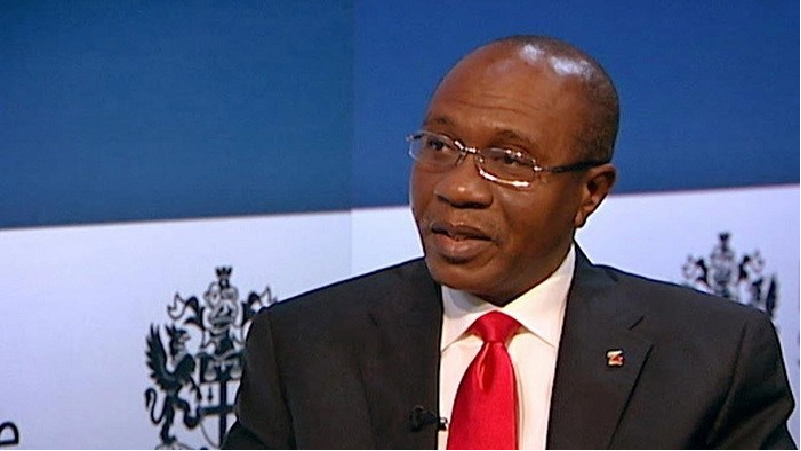
The Central Bank of Nigeria (CBN) noted: “the Global Standing Instruction (GSI) started with personal accounts but we are expanding to corporate accounts and microfinance banks. We understand that an individual can take a loan with commercial banks and choose not to fund his account and take his money to OFI [Other Financial Institutions]. Microfinance banks are going to be part of the Global Standing Instruction (GSI) policy but that phase would come gradually”.

Simply, the apex bank of Nigeria will expand GSI to corporate accounts and microfinance banks in the country: “Standing Instruction (GSI) policy is meant to facilitate improved credit repayment culture in the country; reduce non-performing loans (NPLs), and promote watch-listing of chronic loan defaulters in the Nigerian Banking System”.

In other words, your company cannot borrow from Bank A and intentionally refuses to fund the account therein while doing banking with Bank B. With this new playbook, Bank A can go after your balance in Bank B. This is good policy in a trust-challenged ecosystem.

But it opens risks to company directors. In Nigeria, corporate accounts are largely tracked in banks by the BVNs of the directors, and not necessarily by the Corporate Affairs registration (CAC) numbers. So, if you are a director in any company with your BVN in the bank account, this is the time to ask questions even if you are not actively running that business!

  • The Financial Policy and Regulation Department of the Central Bank of Nigeria (CBN) announced the operational guidelines for the new policy for individual bank customers in the country in circular No. FPRD/DIR/GEN/CIR/07/056 to all banks and other financial institutions on July 13, 2020.

  • The CBN released recommendations for all banks and other financial institutions on August 28, 2019, to ensure successful implementation of the GSI process, including eligible loans given by banks.

  • Under the GSI, a bank client will no longer be able to accept a loan or credit from one bank and refuse to pay it back while maintaining many other bank accounts with sufficient credit balances to pay off the amount owed to the first bank.

The Lessons from Zillow And The Limits of Algorithm

3
Real estate theme with person using a smartphone

Automation works VERY well under a controlled environment. Every other place is yoyo. Yes, you can automate a car assembly line because you can control nearly all the variables. But building an autonomous vehicle with infinite ways weather can perform or other drivers can behave, you have a real challenge at hand. Then add events like valuing houses which theoretically have unbounded variables to consider! I mean, a small bill in Washington can change the prices of homes.

A small sneeze from the US Federal Reserve can have huge impacts on interest rates. Then local politics and many elements including gangs on streets, construction rate growth, etc.

Zillow, a leading real estate company with technology DNA has learned hard lessons: algorithms have limits. The company’s AI for buying homes messed up and it has shut it down with 2,000 people losing their jobs: “a painful move that will result in 2,000 employees losing their jobs, a $304 million third quarter write-down, a spiraling stock price (shares are down more than 18%…)” in hours”.

Yet, the destination is that more things will become more automated including buying homes, over time. It may not be right now but over time, humans will get there. The rule remains: do not be too early and do not be too late as patterns emerge.

But optimizing that timing separates the legends from the commoners. Humans continue to WIN – and we need to respect them in companies.

Just because a business process can be automated, doesn’t necessarily mean it should be automated. And maybe — just maybe — there are components of business that are not better served with AI algorithms doing the job.

That’s a key takeaway after Zillow Group made the unexpected decision on Tuesday to shutter its home buying business — a painful move that will result in 2,000 employees losing their jobs, a $304 million third quarter write-down, a spiraling stock price (shares are down more than 18% today), and egg on the face of co-founder and CEO Rich Barton.

Zillow’s move also represents a big loss for the algorithms that powered its nascent iBuying business, and it is a warning sign to other businesses — both in real estate and other industries — that rely heavily on the almighty algorithm.

Your ears are not there to hear everything!

1

Your ears are not there to hear everything. Learn how to shut down and disconnect from those who sap your energy. When I was in university, I avoided anyone who ever said: “Ndubuisi, you read too much. Always going back to classrooms”. Yes, I was a bookworm but it was not an offence. I knew that I was not the smartest but I knew if I worked harder, I would always come out fine.

Define your purpose and filter the noise – and stay focused on the mission. Every great thing requires a sacrifice, including being the #best.

Good People, master when to disconnect from that noise to stay focused!

Payhippo, Nigerian Lending Startup Raises $3m in A Seed Round

0

Payhippo, a Nigerian lending startup, has raised $3 million in a seed round to expand its talent base and network across more West African countries.

The startup focuses on credit delivery for small and medium-sized enterprises (SMEs), and needs to optimize its technology to accommodate its fast-paced growth.

The company’s co-founder and chief operations officer, Chioma Okotcha, said they are looking to hire more engineers and data scientists.

“We capture our data from the loans we issue, and more talent in the team would allow us to optimize our technology to serve our customers better,” she said.

The round was led by an array of angel investors, including Ham Serunjogi and Maijid Moujaled, the co-founders of the African cross-border payments company Chipper Cash; Olugbenga Agboola of the San-Francisco based payments firm Flutterwave; Bolaji Balogun, the CEO of investment banking firm Chapel Hill Denham; and Hakeem Belo-Osagie, the founder of Metis Capital Partners.

Payhippo has become a force in the Nigerian loan space in such a short time by being fast at it, eliminating the bottlenecks that have characterized banks’ loan process.

“We really focus on keeping this under three hours, and making sure that businesses can get the money they need when they need it. Ours is also a product that works for the SMEs in terms of a flexible repayment structure,” Okotcha said.

This is the largest amount Payhippo has raised to date after receiving $1 million in pre-seed funding earlier this year, according to TechCrunch.

The startup has focused on SMEs due to the size of its market. SMEs account for 96% of businesses and 84% of employment in Nigeria, and it’s seen as the backbone of the economy. However, it has come with a huge credit vacuum that has stalled the growth potential of the micro businesses.

Founded in 2019 by Okotcha, Zach Bijesse, now the chief executive officer, and Uche Nnadi, the chief technical officer, Payhippo was part of the 2021 Y Combinator summer cohort, and has shown its capability in filling the credit vacuum for SMEs.

“We had seen that traditional banks and lenders wouldn’t loan small businesses mainly because there were no credit scores, or the collateral requirements were too high. We decided to come into the market and create an instant financing option, where we create a credit score that allows small businesses to get the liquidity they need to buy inventory for business continuity,” Okotcha told TechCrunch.

“We use data from historical records that borrowers have built with us, but we also check their banking history to see the actual performance of their businesses,” said Okotcha.

But Payhippo is not the only digital lender in Nigeria offering short-term loans to SMEs. The startup is competing with others, including Carbon and FairMoney. Per TechCrunch, FairMoney disbursed a total loan volume of $93 million last year, representing a 128 percentage point increase from 2019, while Carbon said it had hit 659,000 customers last year and had disbursed $63 million in loans, an increase of 9.1 percentage points from the 2019 financial year.

Putting up a challenge to these rivals, Payhippo says it made $64,000 in revenue from around 5,000 it has so far disbursed. The startup says the repayment rate is 97% and that the total transaction is valued at $1 million. It added that the demand for credit is high, fueling its current 25% month-on-month growth.

Payhippo applies its own credit scoring formula that uses different SME data to determine the value of loans to give out. The loans are disbursed through mobile phones. The average loan disbursed by Payhippo is about $1,300, with the minimum loan being about $200.

The company says it is counting on its swift turnover in loan applications to grow its customer base within Nigeria before expanding to other countries.

Okotcha said going forward, Payhippo will ride on the untapped credit needs of the nearly 40 million SMEs in Nigeria to grow its business.

“We know that just 1% of the Nigerian market is about 40,000 businesses, and we want to be in a position where we disburse 40,000 loans in a day,” she said.