DD
MM
YYYY

PAGES

DD
MM
YYYY

spot_img

PAGES

Home Blog Page 5497

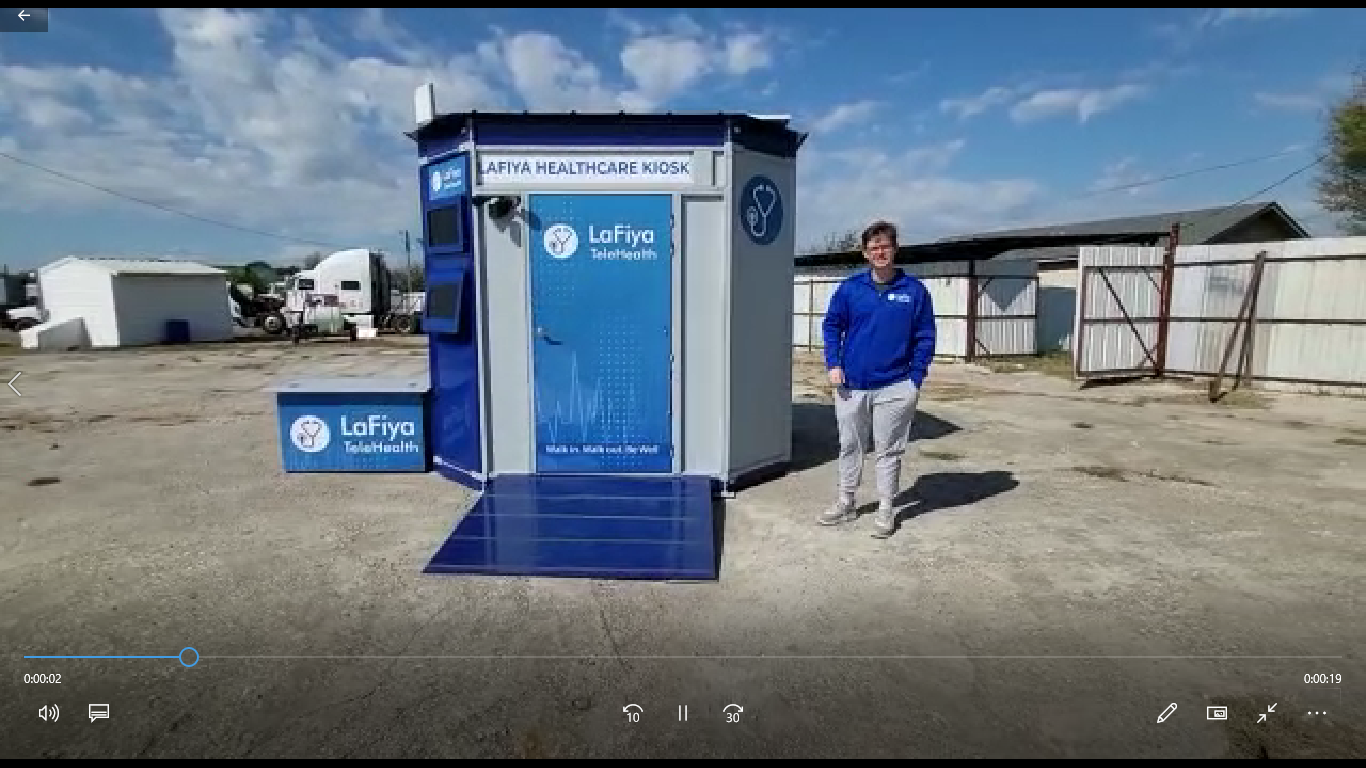
Lafiya Telehealth’s Cloud Hospital Is Serving Communities

0

Our Cloud Hospital is shipping to construction sites, oil rigs, stadiums, churches, markets, offices, clinics, etc. American cities are ramping up adoption because with Lafiya Telehealth, you can set up a “hospital” within 6 hours. You walk into the Kiosk say in Owerri, Nigeria, and you dial a doctor in America or Lagos or London via our app. With dozens of testing and measurement tools – from ultrasound scanner to  hemoglobin analyzer – that come with the kiosk, the doctor can provide services. Connection comes via satellite and that means it works in any place on earth. Everything solar powered!

Doctors are scientific miracle workers; Lafiya Telehealth is making it possible to expand those miracles. Some devices and tests that come with Lafiya include:

  • -12 lead ECG, URT (Urine Routine) & GLU (Glucose).
  •  -UA (Uric Acid) & Blood Lipid (TG, LDL-C, HDL-C, TCHO).
  •  -Non-invasive Blood Pressure (NIBP) & Infrared Forehead TEMP.
  •  -Pulse Oximeter/SPO2, Heart Rate (HR) & Pulse Rate (PR).
  •  -GLU (Blood Glucose) & UA (Uric Acid).
  •  -GLU Strip 50pcs/bottle & UA Strip – 50pcs/bottle.
  •  -Urine Analyzer & 11 items urine test strip 100pcs/bottle.
  •  -Dry Biochemical Analyzer & Blood lipid strip 15pcs/bottle & Adapter.
  •  -Hemoglobin Analyzer & HB strip 50pcs/bottle.
  •  -WBC Analyzer & WBC strip 100pcs/bottle for 100 persons..
  •  ETC

Tekedia Capital is proud of our tradition of funding innovators of the future. We also played a major role in the design as yours truly has that tradition of Johns Hopkins University Medicine.

The video is our Growth Team Lead in US ; he is available to speak with you. We also have an office in Lagos. Go cloud, provide an agile hospital system with Lafiya Telehealth; contacts here. 

Elon Musk’s Grand Disintermediation – Satellite Broadband Directly to Users

2

A few months ago, I wrote that SpaceX Starlink would in near future develop a “special phone” which would make it possible for users to connect directly to SpaceX satellites without an “intermediary” or downlink station. That call has come to pass: “OneWeb, Amazon, and others—is to offer broadband service directly to consumers. That’s the approach SpaceX’s Starlink is taking thus far; it has rolled out beta service to hundreds of thousands of users by selling them their own ground terminals.”

After you’ve spent a few billion dollars putting tens of thousands of internet-connected computers in space, what do you do with them?

One answer for the companies building mega satellite constellations in low-Earth orbit—SpaceX, OneWeb, Amazon, and others—is to offer broadband service directly to consumers. That’s the approach SpaceX’s Starlink is taking thus far; it has rolled out beta service to hundreds of thousands of users by selling them their own ground terminals.

The benefits? There’s no middleman, the company has total control of the system, and if like Elon Musk you have a global fan base, they’ll line up to take part. The drawbacks? The terminals are expensive to design and produce, and they expose users to the tricky parts of satellite communication, like making sure your antenna has a clear view of the sky and not a tree or nearby building.

Largely with this, SpaceX Starlink can deal directly with users, cutting even regulatory ordinance in nations. Unless a country bans the distribution of the phones, there is no way it can stop this redesign. The Nigerian Communication Commission (NCC) may need to review its playbook as these companies can reach directly to Nigerians without internet service providers or agents. That puts those lucrative spectrum licensing in jeopardy.

With Moore’s law on its side, the cost of the electronics will keep dropping – and over time, the phones will become cheap enough. If that trajectory is followed, be concerned if you are running a telco business, especially in rural Africa, because satellite broadband in this format Starlink is bringing it will provide a new basis of competition.

Yahoo Quits China As Beijing Tightens Censorship Grip

0

For the past six months, the Chinese authorities have intensified their aim to control data, which includes dictating how internet companies use private information stored in their platforms.

For this reason, a few American companies that have been operating in China under the strict censorship rules, that keep being updated, have two choices; quit or accept the rules. Choosing the former, LinkedIn announced last week is shuttering its professional network, citing “more challenging operating environment and greater compliance requirements in China.”

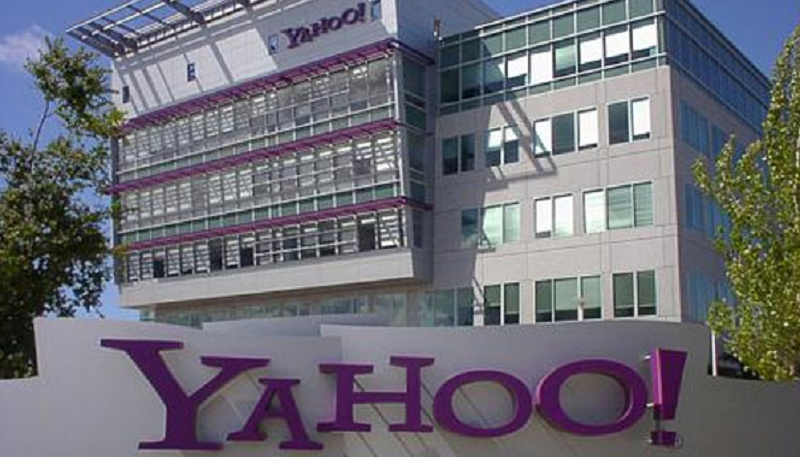
On Tuesday, Yahoo Inc. announced it has pulled out of China, citing an “increasingly challenging business and legal environment,” becoming the second major American company to quit China in recent weeks.

“In recognition of the increasingly challenging business and legal environment in China, Yahoo’s suite of services will no longer be accessible from mainland China as of November 1,” the company said in a statement.

Like LinkedIn, Yahoo said it “remains committed to the rights of our users and a free and open internet.”

China, in order to maintain a firm grip on internet censorship in the country, has implemented Personal Information Protection Law, which limits what information companies can gather, and sets standards for how it must be stored. Under this new law, companies operating in China are required to censor content and keywords deemed politically sensitive or inappropriate.

Chinese laws also stipulate that companies operating in the country must hand over data if requested by authorities, a major concern for the US government which has fueled the scrutiny of Chinese companies operating in the US recently.

It has remained a constant battle for US tech companies, who have to choose between the huge Chinese market and freedom of expression. Some of them had irked the government back home as they tried to cooperate with Chinese authorities.

Yahoo was lambasted by lawmakers in the U.S. in 2007 after it handed over data on two Chinese dissidents to Beijing, eventually leading to their imprisonment.

Likewise, LinkedIn was heavily criticized after it updated the profile of many journalists and publishers in accordance with the new Chinese censorship laws. The Microsoft-owned company was accused of “choosing profit over truth.”

China spends billions of dollars to maintain its firewall, an internet blockade it has created to protect the Chinese people from unauthorized information. Through the firewall, most international tech companies including Google, Facebook and Twitter have been blocked. Yahoo’s services, including its web portal, have also been blocked.

Yahoo also previously operated a music and email service in China, but both services were also stopped in the early 2010s. In 2015, Yahoo shuttered its office in Beijing, and had increasingly downsized its operations in China since then.

Verizon Communications Inc. acquired Yahoo in 2017 and merged it with AOL, but later sold the entity off to private equity firm Apollo Global Management in a $5 billion deal. Apollo announced in September that its acquisition of Yahoo was complete.

The new Chinese censorship laws are seen as part of major reforms taking place under President Xi Jinping’s leadership, which has touched all sectors of the country’s economy, including edtech.

However, the world’s second-largest economy appears to have chosen to protect its security apparatus at the expense of the economy, which has seen billions of dollars wiped off it as a result of the new rules.

Chipper Cash Becomes Most Valuable African Startup At $2bn Valuation

0

Adding to the rising investment rounds that have characterized the African fintech space, Chipper Cash, an African cross-border payments company, has raised $150 million in a Series C extension round.

The round was led by Sam Bankman-Fried’s cryptocurrency exchange platform FTX, putting the startup’s valuation at more than $2 billion. Participating in the new round is SVB Capital, the corporate venture capital arm of SVB Financial Group, who led the first Series C round. Other existing investors are Deciens Capital, Ribbit Capital, Bezos Expeditions, One Way Ventures and Tribe Capital. The company’s total Series C stands at $250 million but its total funding to date is over $305 million, according to TechCrunch.

The new investment has confirmed Chipper Cash as “the most valuable private startup in Africa”, upholding what the CEO Ham Serunjogi’ earlier told TechCrunch during an interview.

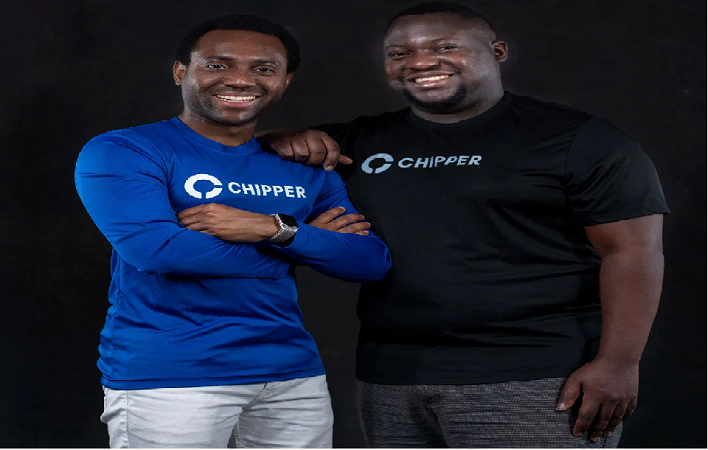
Chipper Cash has seen its services burgeoned since it was founded in 2018 by Serunjogi and Maijid Moujaled. The app transaction fee-free peer-to-peer cross-border payment service has seen wide adoption across seven African countries – Ghana, Uganda, Nigeria, Tanzania, Rwanda, South Africa and Kenya. The startup boasts of over four million users, and has been aggressively exploring new markets outside Africa.

Per TechCrunch, Chipper expanded to the U.K., allowing people to send money from the European nation to Chipper Cash’s African markets, in May. Also last month, the fintech ventured into the U.S. to Africa market, pushing for a share in the saturated market.

While the markets are ripe with competition, Chipper Cash is counting on its cheap services to win a section of each of the markets it has ventured into.

“Chipper Cash is offering remittances considerably cheaper than anyone else,” Serunjogi told TechCrunch over a call. “More important to that is that we are now the first ones that I know honestly to be able to support Africa to the U.S. in terms of sending money.”

Chipper Cash is focusing on U.S. to Africa payment services as a key market to spur growth. In addition, Africa to U.S. outflow services is also in the pipeline. Serunjogi says peer-to-peer money movement from the U.S. to Nigeria and Uganda is currently live for users in those markets. The company will roll out the service to users in Ghana, South Africa and Kenya before the end of the year.

For outflow payment services — sending money from Africa to the U.S. — the CEO says that users in Uganda, South Africa and Kenya will be the first to get access next year.

To augment its cross-border payment services, Chipper Cash has been collaborating with other international payment services. For instance, TechCrunch mentioned that the startup has been picked to offer the newly launched Twitter Tip Jar service, which allows creators to receive money on the platform, to African creators through its payments link.

“The idea for Twitter and ourselves is to offer multiple ways for creators to be able to be paid for their work and their contribution online,” said Serunjogi. “And Twitter worked with us on this given our presence as the largest cross-border payments platform in Africa that could support multiple countries for Africans using Twitter.”

Chipper Cash plans to make its Tip Jar integration accessible for users in the U.S. by next year, said Serunjogi.

The Series C round extension led by FTX offers opportunity for Chipper Cash to expand its play in the international stage. FTX is one of the largest cryptocurrency derivatives exchanges in the world. Last month, the company raised a $420 million round at a $25 billion valuation.

With FTX’s far-reaching wings under the control of Sam Bankman-Fired, Chipper Cash is hoping to also expand its crypto base in Africa. Bankman-Fried said although there is exponential growth in the continent’s crypto market, there is still room for growth. “Despite the recent growth in Africa, moving money across the continent is still slow and expensive. Unsurprisingly it is the fastest growing market with grassroots crypto adoption,” he told TechCrunch, adding that FTX’s partnership with Chipper Cash is to make money transfer as simple as a text message and accelerate the adoption of crypto within Africa and beyond.

Chipper Cash’s new investment has added to the growing equity rounds that have seen African fintech market’s value rise monthly, putting up show of relevance in a stage where similar markets in Asia, Europe and Latin America rule.

Africa has recorded six unicorns, and many more payment services keep springing up, indicating there is still large room for growth. The continent is expected to triple its number of unicorns in 2022.

Intellectual Property: Strategy, Management & Commercialization – Tekedia Live

0

Join us today as we discuss Intellectual Property: Strategy, Management & Commercialization with Ifeanyi E. Okonkwo of University of Cape Town & Jackson, Etti & Edu at 7pm WAT.

Ifeanyi E. Okonkwo is a Legal Practitioner focused on Intellectual property, technology, entertainment, and business law practice. As a Legal Practitioner (Dip; LLB, BL; LLM), he has many years experience in the field and has argued some novel cases on IP-Tech. He is an  Intellectual Property, Corporate-Commercial professional at Jackson, Etti & Edu.

To learn more about Tekedia Mini-MBA, go here.