DD
MM
YYYY

PAGES

DD
MM
YYYY

spot_img

PAGES

Home Blog Page 55

US SEC Acknowledges 2025 Enforcement under Gensler Delivered No Meaningful Investor Benefit

0
WASHINGTON, DC - OCTOBER 03: Securities and Exchange Commission (SEC) Chair Gary Gensler listens during a meeting with the Treasury Department's Financial Stability Oversight Council at the U.S. Treasury Department on October 03, 2022 in Washington, DC. The council held the meeting to discuss a range of topics including climate-related financial risk and the recent Treasury report on the adoption of cloud services in the financial sector. (Photo by Anna Moneymaker/Getty Images)

The SEC has officially acknowledged in its fiscal 2025 enforcement results that certain Gary Gensler-era crypto cases delivered no meaningful investor benefit, reflected a misinterpretation of federal securities laws, and represented a misallocation of agency resources.

In a public statement accompanying its FY 2025 enforcement report, the agency highlighted: Seven crypto registration cases and six dealer definition cases from FY 2022–2024 that applied novel legal theories without establishing clear investor harm. These actions identified no direct investor harm and produced no investor benefit or protection. The current Commission views them as demonstrating a misinterpretation of the federal securities laws, a misallocation of Commission resources, and a bias for volume of cases brought versus matters of investor protection.

The report also critiqued a broader set of 95 recordkeeping actions mostly off-channel communications cases that generated $2.3 billion in penalties but similarly yielded no direct investor protection benefits. This marks a clear pivot from the regulation by enforcement approach under former Chair Gary Gensler who left in January 2025. Under Gensler, the SEC pursued dozens of crypto-related actions—peaking at 46 in 2023—often targeting unregistered securities offerings, staking, exchanges, and related activities using the Howey Test.

Current Chair Paul Atkins has emphasized redirecting resources toward high-harm misconduct like fraud, market manipulation, and abuses of trust, rather than pursuing volume or novel theories with limited investor impact. He stated: “We have redirected resources toward the types of misconduct that inflict the greatest harm… and away from approaches that prioritized volume and record-setting penalties over true investor protection.”

This aligns with broader changes since early 2025: Dismissals or closures of high-profile cases against Coinbase, Binance, Kraken, Consensys, and others. Overall drop in enforcement actions; down ~22–30% in some metrics and a sharper decline in crypto-specific cases. Establishment of a Crypto Task Force and moves toward clearer rulemaking rather than litigation-driven regulation.

The admission is notable because it comes directly from the SEC itself—not just critics or industry groups. It validates long-standing complaints from the crypto sector that many actions were overly aggressive, created regulatory uncertainty, and diverted resources from genuine fraud cases. Critics of the Gensler era argued this regulation by enforcement chilled innovation, cost the industry hundreds of millions in legal defense, and pushed activity offshore.

Supporters countered that widespread noncompliance in crypto necessitated strong action to protect investors. The current SEC appears to be signaling to courts, industry, and Congress that it wants to reset expectations: focus on clear harm and fraud, while exploring rulemaking and innovation-friendly frameworks. This doesn’t mean the SEC is abandoning oversight—fraud and manipulation remain priorities—but it does represent an explicit rejection of parts of the prior strategy as inefficient and legally strained.

The development reflects the broader policy shift following the 2024 election and leadership change at the agency. The SEC’s April 2026 acknowledgment that certain Gensler-era crypto enforcement actions produced no direct investor harm or benefit, involved novel legal theories, and represented a misallocation of resources has triggered several tangible and ongoing impacts across the industry, markets, regulation, and legal landscape.

The SEC dismissed often with prejudice at least seven major crypto cases starting in February 2025, including actions against Coinbase, Binance, Consensys, Kraken (Payward), Cumberland DRW, Dragonchain, and Balina. This removed significant legal overhang for these firms, halting protracted litigation over unregistered securities offerings, staking, and platform operations.

Investigations or actions involving entities like Gemini, Uniswap Labs, OpenSea, Crypto.com, Robinhood, and Ondo Finance were dropped or wound down for policy reasons, shifting away from regulation by enforcement. By publicly labeling these approaches as flawed or misguided, the SEC has undermined the legal foundation for future cases relying on the same novel interpretations of the Howey Test or dealer definitions. This strengthens defendants’ positions in any remaining or new litigation.


“It’s Time” – SEC Chair Atkins Urges Congress to Future-Proof Crypto Markets

0

The chair of the U.S. Securities and Exchange Commission, Paul Atkins, has issued a clear call to action, urging Congress to move decisively in modernizing the regulatory framework for digital assets.

Atkins emphasized the need to “future-proof” U.S. markets against “rogue regulators” by delivering a clear statutory framework that can be signed into law by President Donald Trump.

“It’s time for Congress to future-proof against rogue regulators & advance comprehensive market structure legislation to President Trump’s desk,” Atkins stated. The remarks come as the crypto industry continues to seek long-term certainty following years of regulatory uncertainty under previous SEC leadership.

Atkins’ statement aligns with the Trump administration’s pro-crypto stance and ongoing efforts to position the United States as the “crypto capital of the world.”

Under the administration of Donald Trump, this pro-crypto stance signals an effort to reshape the regulatory, economic, and technological landscape in favor of blockchain growth and global competitiveness.

At the heart of this strategy is the push for regulatory clarity. For years, uncertainty surrounding how digital assets should be classified—particularly by agencies like the U.S. Securities and Exchange Commission—has created friction for companies operating in the space.

A pro-crypto approach aims to replace ambiguity with well-defined rules, allowing businesses to innovate without fear of sudden enforcement actions. By clearly distinguishing between securities and commodities, the U.S. hopes to retain crypto firms that might otherwise relocate to more accommodating jurisdictions.

Background on The Clarity Act

The legislation in question is widely referred to as the CLARITY Act (Digital Asset Market Clarity Act), which was passed the House of Representatives last year June. The bill aims to establish clear rules for how digital assets are classified, issued, traded, and supervised, drawing a sharper line between the roles of the SEC (for securities-like tokens) and the Commodity Futures Trading Commission (CFTC) (for commodities-like tokens).

It also includes provisions for innovation-friendly measures such as startup exemptions, fundraising safe harbors, and clearer pathways for decentralized finance (DeFi) and token offerings while maintaining strong investor protections.

Atkins has repeatedly stressed that while the SEC’s internal Project Crypto initiative, a joint effort with the CFTC, is preparing rules and interpretations to provide immediate clarity, only Congressional legislation can truly “future-proof” the framework against potential policy reversals by future administrations.

A Shift Toward Pro-Innovation Regulation

Under Chair Atkins, the SEC has moved away from the aggressive enforcement-heavy approach of the Gensler era toward a more collaborative and innovation-focused posture. This includes new interpretations clarifying that many crypto assets are not securities, proposed safe harbors for token projects, and reduced enforcement actions against compliant firms.

Atkins’ latest call reinforces that regulatory rulemaking alone is not enough. Durable, bipartisan statutory text from Congress is essential to give markets, innovators, and investors the confidence needed for long-term growth. Market participants have largely reacted positively to the news, viewing it as another bullish signal for the sector.

If passed and signed, the legislation could spur significant institutional adoption, streamline compliance for exchanges and projects, and solidify America’s competitive edge in blockchain technology against global rivals.

Abia’s Rise: Restoring Excellence Through Vision, Discipline, and Results

0

His Excellency, Dr. Alex Otti, this is a public THANK YOU for restoring excellence in our educational system in Abia State. In Igbo tradition, it takes the killing of one leopard to be called a killer of leopards; yes, across multiple sectors in our dear state, you have subdued many economic and developmental “leopards.”

I am deeply proud of where we stand today in NECO, WASC, and JAMB. Abia State has delivered outstanding performance in the 2024 and 2025 NECO Senior School Certificate Examinations (SSCE), with over 83% of candidates securing five credits or more, including Mathematics and English, ranking the state first nationally. This is not just success; it is a statement of direction and discipline.

Fellow Nigerians, this outcome is not accidental. It is the result of deliberate design and disciplined execution, the physics of governance at work. When the Governor assumed office, he articulated a clear playbook, with education at its core. We examined the processes, strengthened the people, and improved the tools. With clarity of purpose, our commissioners, permanent secretaries, and dedicated Abia workers went to work. Their collective effort is now elevating the state to the very top.

As Abians, we commend our students for their dedication, appreciate our teachers for their unwavering commitment, and thank our leaders for strengthening the ecosystem that makes this progress possible. Abia is rising. God bless Abia State and the Federal Republic of Nigeria.

Prof Ndubuisi Ekekwe

Holder of all-time best academic record in the history of

Secondary Technical School, Ovim, Abia State

Meta AI App Rockets to No. 5 on U.S. Charts After Muse Spark Debut as Addiction Lawsuits Loom Large

0

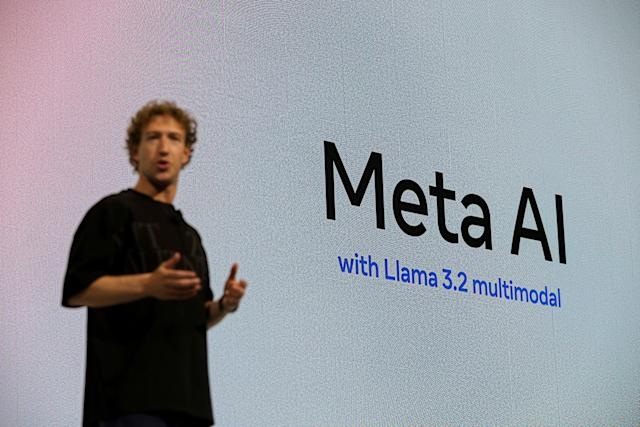
Meta Platforms has chalked up one of its clearest consumer victories in the generative AI race. Just 24 hours after unveiling Muse Spark on Wednesday, the Meta AI app shot from No. 57 to No. 5 on the U.S. App Store, according to Appfigures data.

The surge points to a wave of fresh installs driven by genuine curiosity about the company’s new flagship model.

The numbers tell a story of accelerating momentum. Worldwide, the Meta AI app has now been downloaded 60.5 million times across the App Store and Google Play, with 25 million of those coming in 2026 alone. Over the past five months, downloads have jumped 138 percent compared with the same stretch after the app first launched.

India has become the biggest market, followed by the United States, Brazil, Pakistan, and Mexico—underscoring Meta’s ability to leverage its enormous global user base for rapid distribution.

Muse Spark is the first model to emerge from Meta Superintelligence Labs, the high-powered unit created last year under Alexandr Wang, the 28-year-old former CEO of Scale AI, whom Mark Zuckerberg poached in a deal that included a $14.3 billion investment in his old company. After Llama 4 failed to excite the market last year, Wang was handed the mandate to rebuild Meta’s AI efforts from the ground up.

The result is a deliberately compact, fast model optimized for real-world tasks rather than raw scale. It handles voice, text, and images, shines at health education and complex reasoning in science and math, and lets users generate websites or simple games from plain prompts. It can also spin up multiple sub-agents to divide and conquer a single query.

For now, the model powers the Meta AI app and website, with a sleek new interface that lets users toggle between specialized modes. Rollouts to WhatsApp, Instagram, Facebook, Messenger, and Meta’s AI glasses are slated for the coming weeks. Independent benchmarks show Muse Spark holding its own against rivals in some categories while still trailing in others, particularly coding and deeper reasoning.

Still, the early user response suggests Meta may finally have a credible seat at the frontier AI table.

Wang himself highlighted the ranking on X, noting the app was “still growing.” It was a rare public victory lap for a company that has spent billions hiring talent from OpenAI, Anthropic, and Google to close the gap.

The Unending Regulatory Scrutiny

Yet the upbeat AI moment arrives at a precarious time for Meta’s core social media empire. Late last month, the company suffered twin courtroom defeats that could reshape its legal exposure for years. In New Mexico, a jury hit Meta with a $375 million civil penalty, finding it violated consumer protection laws by misleading families about platform safety and failing to shield children from sexual predators on Instagram and Facebook.

A day later, a Los Angeles jury delivered a landmark “bellwether” verdict in the first major social media addiction trial. The now 20-year-old plaintiff, identified as K.G.M., was awarded $6 million in compensatory and punitive damages after jurors concluded that Instagram’s addictive features—infinite scroll, auto-play, face filters, and algorithm-driven engagement loops—had contributed to her depression, anxiety, and self-harm thoughts since childhood. Meta was found 70 percent responsible.

For more than two decades, platforms have leaned on Section 230 of the Communications Decency Act for broad immunity over user-generated content. The jury’s finding that Meta can be held liable for its own product design choices punches a hole in that shield.

Legal observers say the verdict could serve as a template for thousands of pending cases and has drawn comparisons to the 1990s tobacco litigation that forced Big Tobacco to change its ways.

Meta is already playing defense. It has begun yanking advertisements placed by plaintiff lawyers seeking clients for fresh addiction suits. Spots from firms such as Morgan & Morgan, which highlighted links between social media and anxiety, depression, withdrawal, and self-harm in children, have been removed.

A Meta spokesperson told Axios the company “will not allow trial lawyers to profit from our platforms while simultaneously claiming they are harmful,” citing the advertising standards that give it wide latitude to reject content contrary to its interests.

In its January earnings report, Meta warned investors of potential “material loss” this year tied to youth-related scrutiny. The company also quietly backed off a marketing push using Motion Picture Association PG-13 ratings to promote its new Teen Accounts after pushback from the MPA. Internationally, the pressure is mounting.

Australia’s December 2025 ban on social media for minors has inspired copycat moves; Greece and Indonesia joined the list in recent weeks.

TSMC Delivers a Record Quarter, Reinforcing Role as the Financial Backbone of the Global AI Boom

0

Taiwan Semiconductor Manufacturing Co. (TSMC) has once again delivered a record quarter, offering perhaps the clearest evidence yet that the global artificial intelligence buildout remains in full acceleration mode.

The world’s largest contract chipmaker reported first-quarter revenue of NT$1.134 trillion, equivalent to roughly $35.7 billion, for the January-to-March period, comfortably ahead of market expectations and up 35.1% from the same period a year earlier. The figure also exceeded the top end of its own guidance range of $34.6 billion to $35.8 billion, a strong signal that demand for advanced semiconductors continues to outpace even management’s already bullish forecasts.

For March alone, revenue rose 45.2% year-on-year to NT$415.19 billion, while also climbing 30.7% from February, setting a fresh monthly record and bringing first-quarter sales to an all-time high.

This is not merely another quarterly beat. It is a strong read-through for the entire AI ecosystem.

TSMC sits at the center of the semiconductor value chain, manufacturing the most advanced processors for companies such as Nvidia, Apple, Google, and a growing list of hyperscalers and AI-native firms designing custom chips. This means that nearly every major AI infrastructure winner ultimately depends on TSMC’s foundry capacity.

That is what makes these numbers especially significant for markets. The company benefits regardless of which AI platform or chip designer leads the race. Whether the demand comes from GPUs for model training, inference accelerators for cloud deployments, or custom silicon for enterprise workloads, the manufacturing layer remains indispensable.

“We think TSMC will easily exceed its 30% annual growth target,” semiconductor analyst Sravan Kundojjala noted

He added that “while smartphone and PC end markets took a hit due to memory shortages,” the AI segment “pulled the weight.”

That assessment goes to the heart of the current semiconductor cycle. Traditional consumer electronics markets remain uneven. Smartphone and PC demand, which once drove semiconductor growth, has slowed as replacement cycles lengthen and supply constraints persist in certain memory categories.

Yet AI-related demand is now more than compensating for that softness. This shift is transforming the composition of TSMC’s revenue base. Historically, consumer devices such as smartphones accounted for a large share of advanced node demand. Today, high-performance computing, particularly AI accelerators and server chips, is increasingly becoming the dominant driver of growth.

TSMC has reportedly raised prices for its most advanced nodes, a move Kundojjala described as a “big factor” behind the first-quarter sales beat. He is forecasting gross margins of around 64%, which would sit near the upper end of the company’s own 63% to 65% guidance range.

This is crucial because it suggests that growth is being driven not only by volume, but by pricing power. Few companies globally possess the technological depth to manufacture at TSMC’s leading-edge nodes. That scarcity gives it substantial leverage over customers whose product roadmaps depend on access to the latest fabrication technology.

But an increasing number of players are now designing their own chips. Beyond hyperscalers such as Google and Meta, firms like Arm Holdings have expanded into CPU products, while AI companies, including Anthropic, are reportedly exploring proprietary silicon.

Much of that manufacturing will still have to run through TSMC, or through a very limited pool of competitors such as Samsung Electronics and Intel. This concentration is one of the most important structural realities in the semiconductor industry.

AI is no longer simply a software story. It has become an industrial infrastructure story, driven by foundry capacity, advanced packaging, high-bandwidth memory integration, and data-center power efficiency.

TSMC is central to each of those layers. Recent filings show the company’s continued capital commitments to overseas capacity, including substantial guarantees and financing support for its Arizona operations. This underscores that TSMC is not merely responding to customer demand, but also to geopolitical pressure for supply-chain diversification.

That diversification effort is particularly relevant given lingering concerns over geopolitical risk in Asia and ongoing instability in the Middle East, which could disrupt broader technology supply chains and energy costs.

Investors will now turn their focus to TSMC’s full first-quarter earnings report due on April 16, where the market will be looking for updated second-quarter guidance, capex commentary, and management’s view on AI demand sustainability.

Next week’s earnings from ASML Holding will also be closely watched. As the maker of the extreme ultraviolet lithography machines essential to TSMC’s most advanced production processes, ASML remains a critical bellwether for the semiconductor sector.

Together, TSMC’s latest numbers suggest that the AI capex cycle remains robust, pricing power is intact, and demand for leading-edge chips continues to run ahead of expectations.