DD
MM
YYYY

PAGES

DD
MM
YYYY

spot_img

PAGES

Home Blog Page 5507

The Technicalities Of Television Satellites

0

Satellite has since inception in the world proven to be a veritable tech-driven tool in mankind’s day-to-day activity, and is presently gaining greater relevance by the day.

A satellite is a celestial object or spacecraft that orbits another object while serving for a particular purpose. It could be natural or artificial (manmade).

The Moon is a good example of a natural satellite that orbits the Earth. The world’s first ever artificial satellite – the Sputnik 1 – was launched by the Soviet Union in 1957. Since then, countless satellites have been launched into the Earth’s orbit.

So far, about 6,600 satellites have been launched by different countries around the globe. Survey shows that, by 2013, 3600 of them remained in orbit. Among these, only about 1,000 were operational, whilst the rest have lived out their useful lives and thus become mere space debris.

Research further indicates that approximately 500 operational satellites are in low-Earth orbit (at about 2000km altitude), 50 are in medium-Earth orbit or intermediate circular orbit (at about 20000km altitude), and the rest are in geostationary orbit (at about 36000km altitude).

It’s worth noting that satellites are used for many purposes. Common types include the weather satellites, navigation satellites, military cum civilian earth observation satellites, communications satellites, and space telescopes.

Moreover, space stations and human spacecrafts in orbit are equally known as satellites. This discussion, as long as it lasts, will border on communication satellites, particularly ‘television satellites’ as the topic implies.

A communication satellite, which is purposely deployed for telecommunications, is an artificial satellite that relays and amplifies radio telecom signals via a transponder. It creates a communication channel between a source transmitter and a receiver at different locations on the Earth.
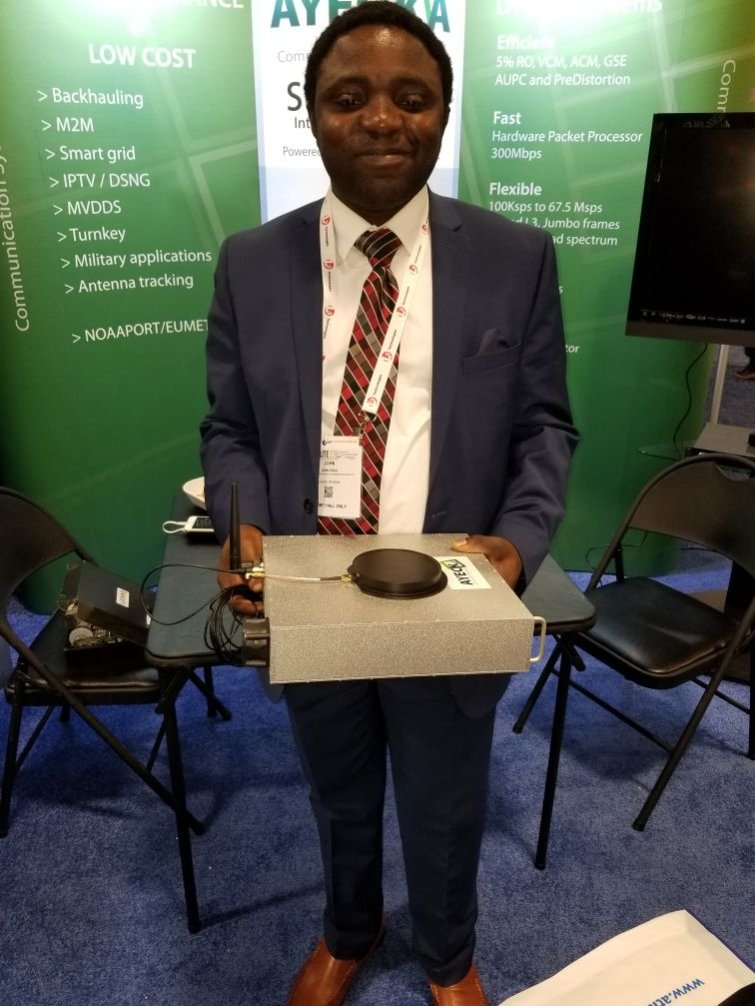
The Beeptool satellite

It is used for television, radio, internet, telephone, or military applications, as might be the case. There are, at the moment, over 2,000 communication satellites in the Earth’s orbit, used by both private and government organizations.

Wireless communication via television, for instance, uses electromagnetic (EM) waves to carry signals. These waves require line-of-sight, and are thus obstructed by the curvature of the Earth. Hence, the prime purpose of communication satellites is to relay the signal around the curve of the Earth allowing communication between widely separated points.

A communication satellite uses a wide range of radio and microwave frequencies. To avoid signal interference, international bodies have regulations for which frequency range or band any firm is allowed to use.

Specifically, the Television (TV) satellite delivers TV programming using signals relayed from space radio stations. The signals are received via an outdoor parabolic reflector antenna often referred to as a satellite dish, and a low-noise block (LNB) down-converter.

A satellite receiver then decodes the desired TV programme for viewing on a TV set. The receiving device can be in the form of an external set-top box known as ‘decoder’, or a built-in TV tuner.

On TV satellites, some transmissions and channels are unencrypted, hence are free-to-air or free-to-view, whilst many other channels are transmitted with encryption requiring a subscription.

Most homes these days are set up for Cable TV – a system that distributes television signals by means of coaxial or fibre-optic cables, though there’s a growing number who have opted for the more advanced Direct Broadcast Satellite (DBS) TV commonly called Satellite TV.

With newer technologies in satellite broadcast being developed, it has apparently overtaken cable pattern of broadcast. Meanwhile, there are two sides to satellite TV that you should consider before cutting your ties with cable providers.

Satellite TV has access to a wide range of channels and services, especially in geographic areas without terrestrial/cable TV. The ability to receive and send broadcast signals using satellite tech increases the possibilities of gaining access to channels from other countries that utilize similar tech for broadcasting.

It suffices to say that, with satellite tech, you are not restricted to only the channels on cable networks. DBS TV has high-quality audio and picture display compared to cable TV.

DBS TV possesses parental lock-out options. It takes the worry out of parents who are concerned at what their kids are watching while they are away. Most DBS TV receivers are now able to block certain channels from a TV set.

It equally has a WebTV option, contrary to cable TV that does not. Internet data can be transmitted wirelessly, thus DBS TV can receive internet service from your TV set. In addition, it has digital video recorders. With some satellite TV receivers, one can record shows or programmes directly to a hard-disk drive for playback later.

However, for initial investment, the receiver and satellite dish could be exorbitant. Similarly, multiple TV sets would require multiple receivers unlike in the case of cable TV, thereby making both installation and sustenance very expensive if one has more than one TV set at home.

Its installation techniques, which involved many technologies, might attract additional charges. Above all, DBS can malfunction in bad weather. Since the satellite dish is usually located outdoors, it becomes susceptible to malfunction owing to atmospheric conditions like rainfall, strong winds, snow, and lightning, or what have you. For instance, thunderstorms could pose a threat to, or even completely damage, the receiver.

However, it’s noteworthy that obtaining high quality products could help to curtail or prevent any of these anomalies. Hence, we are advised to invariably opt for products manufactured by reliable firms whenever we intend to upgrade our viewing pleasure. This precaution can best be adhered to by involving an expert when need be.

Whatever the case might be, the fact is that TV satellites remain the best mode of radio cum microwaves transmission. But it’s pertinent to note that its installation and day-to-day maintenance require sound and adequate professional attention. 
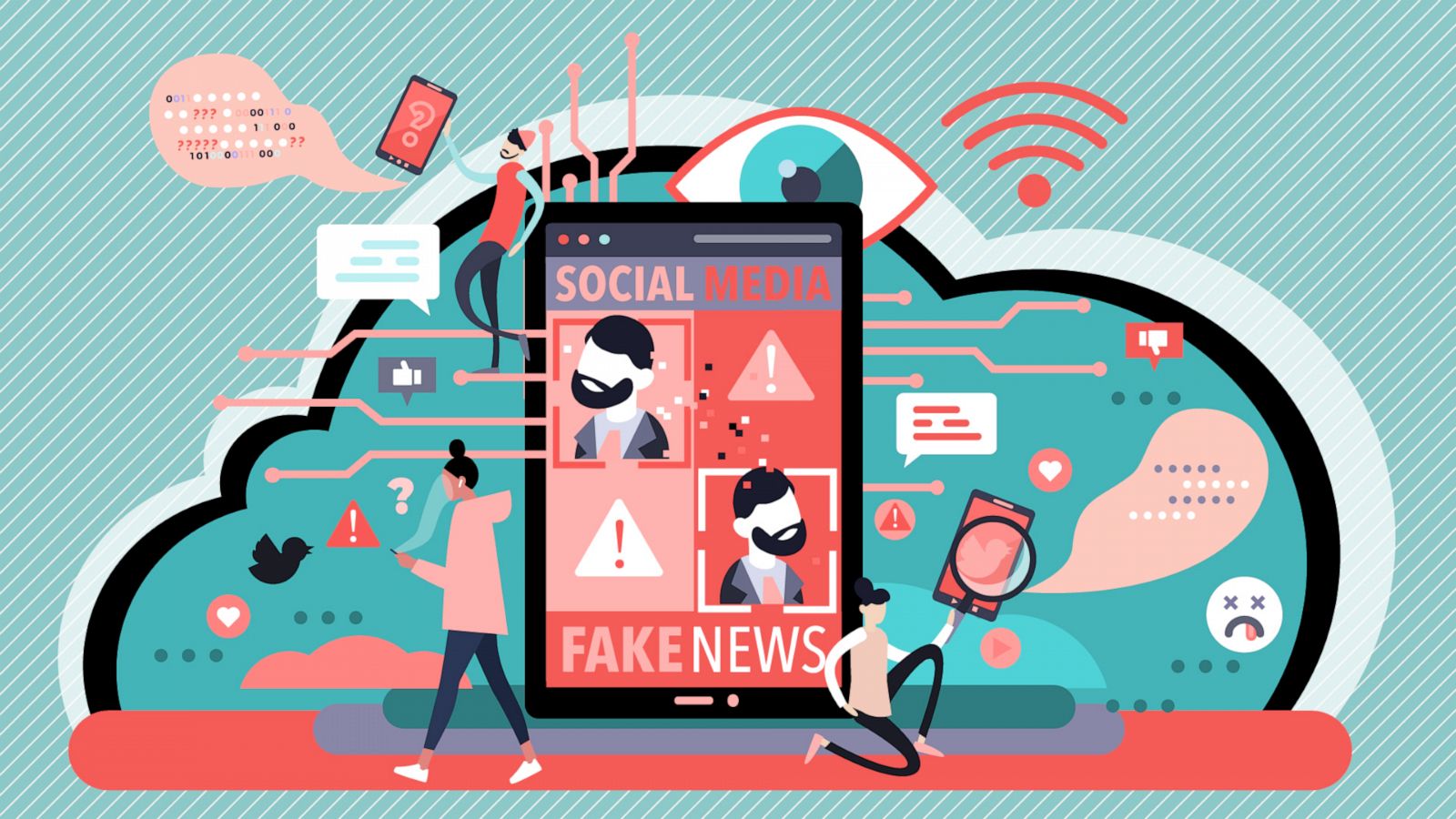
In West Africa, Being Worried About Fake News, Misinformation and Disinformation Doesn’t Mean Being Ready for Sustainable Solutions

0

Ordinarily, there should not be anything like fake news because news is a truth-driven information developed and distributed by a group of people or an individual who have the ability, capability and professional principles of generating and communicating what constituted the news to the public. However, the emergence of the new technologies and the failure of people to hold unto telling truth led to the addition of “fake” before news in recent times.

Apart from fake news, which is part of information pollution ecosystem, misinformation and disinformation are also key components of the ecosystem. From academic scholars to members of varied professional associations, especially those in the media and entertainment industry, misinformation is a concept that has the tendency of misleading the public despite an avalanche of elements of truth in the information. Disinformation, on other hand, does more harm than misinformation, is an attempt of a source to deceive the public using propaganda.

Considering how these components are being traded in the economic, social and political life of every country, our analyst and other partners in the Europe started regional research [focusing on West Africa] a few months ago with a specific focus on knowledge of and attitude of West Africans towards FMD in the sub-region. This piece presents part of the preliminary findings.

From over 200 citizens of the region, who participated in the first stage of the research, it emerged that the majority is familiar with fake news, political bias, misinformation, hate speech and media literacy than other components of fake news, misinformation and disinformation. Over 90% of the citizens are extremely worried about the FMD.

The more they are familiar with fake news and political bias, the more they have interest in taking a media literacy course or attending media literacy training.  Their familiarity with media literacy as a course or training only led to having 2.7% interest in going through the course or training.  The results further indicate that the more they are familiar with disinformation and hate speech, the more they are disinterested in learning media literacy or going through any training associated with it.

Looking at the preliminary outcomes, it is surprising that the citizens are not ready for media literacy course or training despite the fact that a large number of them are consuming news contents from social media and online bloggers, sources that have been established by a number of previous researches as conduits of fake news, misinformation and disinformation in the region.

Though, 46.5% of the citizens said media literacy course is not popular in the region, Mustapha Muhammadu Jamiu, the European Leading Investigator and Assistant Professor at the RUND University, Russia, notes that the results clearly indicate that there is a need for further studies on factors that could influence the citizens’ non-interest in having media literacy course or training.

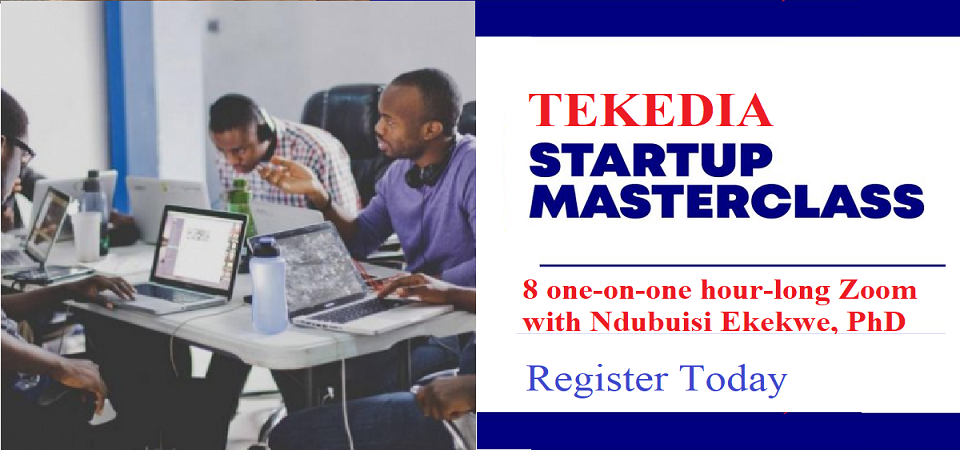
Register for Tekedia Startup Masterclass And Understand How To Build Great Startups

0

Tekedia Startup Masterclass: from Start-Up to Unicorn is designed to help founders, entrepreneurs, and those generally working in the startup ecosystems, to master the mechanics of building category-king startups. The program runs for 8 weeks and it includes an hour-long one-on-one Zoom session every week, per participant, with Tekedia Institute’s Lead Faculty, Prof Ndubuisi Ekekwe. 

We invite you to register and let us meet in the class. Begin here 

Pricing: $400 or N180,000 naira; you begin once you register.

Curriculum for Startup Masterclass

Week Topic
1 The Mission of Startups

Private Zoom Session

2 The Gameplays of Great Startups

Private Zoom Session

3 The Greatest Business Models

Private Zoom Session

4 The Pursuit of Massive Growth

Private Zoom Session

5 Raising Money, Global Accelerators like YC & Techstars

Valuation and Re-domiciliation (Delaware State)

Private Zoom Session

6 Making Money – Pricing, Revenue and Profit

Private Zoom Session

7 The Africa Ecosystems, Opportunities & Competition

Private Zoom Session

8 Managing A Startup, Leading with High Intensity

Private Zoom Session


As You Build, Work Hard To Find A Great Business Mentor

1
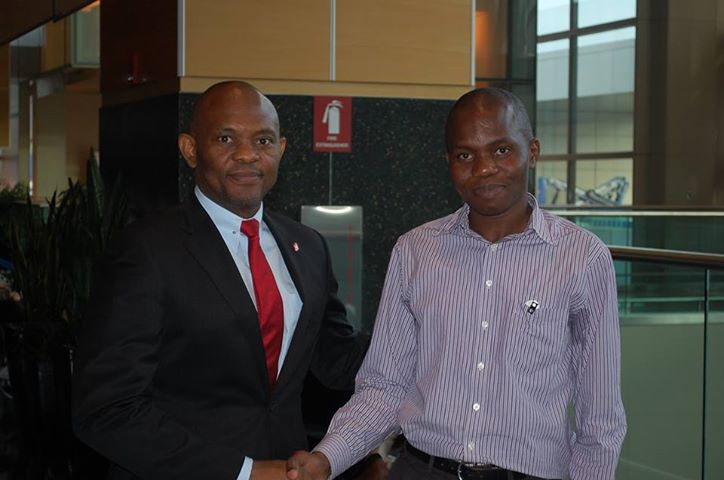
The first day I met Mr. Tony Elumelu. He became a mentor and I remain thankful for how he has helped me over the years. 

If you want to do very well in business especially in Africa, invest to find a mentor. Business mentoring is very important and if you are lucky to have access to the legends, your path to glory is paved. Yet, you must work for it. Understand what you do, be concise and clear on what you want. Never ask for free money. Focus on the ideas!

Your mentor must be someone you know has proven that he/she understands the ecosystem you need help.  And the person holds laurels. Business is not about who is the most intelligent person. It is about who can combine factors of production to solve market problems; that is not an easy skill to have.  And that means your university professor, while your former academic mentor, may not be your business mentor.

As a young banker in Lagos, I read one book – The Richest Man in Babylon – and since then, I have mastered where to ask for help. I do not waste time asking a carpenter about clean water. Never.  Find a mentor and make sure it is not parasitic. In short, that mentor must gain something as he/she mentors you.

When I was starting, I asked Mr. Tony Elumelu many questions. In his responses, he cuts out the noise. He has more access to data and his perspectives are closer to reality than mine. Why? He sees Nigeria and Africa through the balance sheets of his companies! Simply, he feels the pulse of markets. His support made me better. Find someone who can make you better.

Comment on LinkedIn Feed

On books and mentoring in Africa: . You do not need a mentor in US that much because their business leaders write many books. If you get the insights from books, perfect. But the books have to be written first. Have been waiting for Dangote to write a book; I will order 100 on day 1 for all our startups.

Comment #1: Prof: ‘Find a mentor and make sure it is not parasitic. In short, that mentor must gain something as he/she mentors you.’ This is an extremely important point Ndubuisi Ekekwe.
I get 5-10 requests to mentor per week. It is a rolling program ? Some even expect that at some point along the way, I will fund or sponsor something they are into. Can’t see how that can work.
Time = Money.
You invest one, you expect the other in return. They don’t both flow the same way.
I usually point to my writings on Tekedia Institute and let people know it is for free. There is a lot of good stuff on there that is open source which can be browsed. My content is just a very very small part of what is available.
If anybody is interested in a specific mentor then my advice would be to formulate what the mentor can gain from the process and lead with it as a value proposition instantaneously with the mentoring request.

This way the targeted mentor can weigh up if it works for them or not, and they can do that right away. Requests for mentoring that leave the prospective mentor scratching their head and having to tease out information like pulling a tooth will probably end right there.

My response

“Time = Money” . The first law of business

Eradicating The Unending Societal Menace Of Malnutrition

0

The last time I checked, malnutrition was fully and obviously here with us and till date, remains a monster that needs to be combated fiercely without any fear or favour.

Malnutrition can be defined as a physical weakness caused by not eating enough food of the right kind. It can also be described as a situation involving the state at which the human body lacks the required food components known as ‘balanced diet’.

Malnutrition, which is a serious condition that occurs when a person’s diet doesn’t contain the right amount of nutrients, simply means poor nutrition, and can be referred to as ‘under-nutrition’ when the carrier does not possess enough nutrients or ‘over-nutrition’ when the sufferer has more nutrients than he or she requires.

Malnutrition, which could be in the form of kwashiorkor, anaemia, obesity, xerophthalmia, or pellagra, among others, is mainly caused by having an inadequate diet or a problem absorbing nutrients from food.

There are several reasons either of the two aforementioned conditions might occur, to include having reduced mobility, a long-term health condition such as a chronic disease, and/or a low income, as the case might be.

Other medical conditions that can lead to malnutrition include, but not limited to:

  • A condition that results in a lack of appetite such as cancer, liver disease, persistent pain or nausea.
  • A mental health condition including depression, dementia, or schizophrenia, which may affect one’s ability to look after him/herself.
  • A condition that disrupts one’s body ability to digest food particles or absorb nutrients such as dyspepsia or ulcerative colitis.
  • A condition that makes swallowing difficult or painful such as dysphagia as well as persistent vomiting or diarrhoea and eating disorders including anorexia nervosa.

It is worth noting that some kinds of medication can increase one’s risk of developing malnutrition. Medical experts are of the opinion that over two hundred and fifty (250) types of medicine are known to disrupt the body’s ability to absorb as well as breakdown nutrients.

One may also be at risk of becoming malnourished if his or her body has an increased demand for energy. For example, if it’s trying to heal itself after undergoing a major surgery or having sustained a serious injury such as a burn, or if the body is experiencing involuntary movements like tremor.

Physical factors can equally contribute to malnutrition. For instance, if one’s teeth are in a poor state, eating could be difficult or painful. One might also lose his appetite as a result of losing his sense of smell and taste. Similarly, one may be passing through a physical disability or other impairment that makes it difficult for them to cook or shop for food.

Social factors that can contribute to malnutrition include: living alone and being socially isolated, having limited knowledge about nutrition or cooking, as well as alcohol and drug dependency.

The most common symptom of under-nutrition is unintentional weight-loss. Other signs may include: weak muscles, low mood, feeling tired all the time and an increased chances of contracting various illnesses or infections.

On the other hand, the main sign of over-nutrition is being overweight or obese. However, persons living with under-nutrition can also be overweight if they feed on a diet high in energy (calories) but low in other nutrients.

It’s noteworthy that signs of malnutrition in children can include failure to grow at the expected rate coupled with behavioural changes such as appearing unusually irritable, sluggish and/or anxious.

In the hospital or clinic, one could be diagnosed to be malnourished or not, by calculating their Body Mass Index (BMI). Someone with a BMI that falls within 18.5 to 24.9 is considered healthy. Thus, one with BMI either less than or greater than the above stipulated range is considered malnourished.

It is worthy to note that malnutrition is a severe and deadly medical condition. Significantly, accordingly to the United Nations Children’s Emergency Fund (UNICEF), statistics show that about 10.9 million children under the age of five die in developing countries like Nigeria each year. Survey indicates that malnutrition and other hunger-related diseases result in about 60% of the said deaths.

In addition, the cost of under-nutrition to national economic development in any of the affected countries around the globe is estimated at 20-30 billion US-dollars per annum.

Based on what caused someone to become malnourished and how severe the condition is, treatment may be carried out at home or in the hospital. Dietary changes are the main treatment for malnutrition. If one is undernourished, he might need to increase the nutritional content of their foods or diet, with or without taking nutritional supplements.

If the person in question is unable to eat enough to meet their nutritional needs, they might need a feeding tube to provide nutrients directly into the digestive system or a drip to provide nutrients and fluids directly into the vein.

The best way to prevent malnutrition is to eat a healthy balanced diet, which is indeed vital for maintaining good health and fitness. To stay healthy, one needs to eat a variety of foods from the four main food groups, namely: plenty of fruit and vegetables; plenty of bread, rice, potatoes, pasta and other starchy foods; some milk and dairy foods; as well as some meat, fish, eggs, and beans, among other non-dairy sources of protein.

Considering the aforementioned likely causes of malnutrition, analysts are of the view that the health anomaly could be fundamentally attributed to illiteracy, ignorance or poverty, as the case may be. This implies that the ongoing crusade regarding the eradication of all forms of malnutrition in the contemporary global society requires the holistic effort of all and sundry including the governments, health experts, civil society, the media, non-governmental organizations (NGOs) as well as well-meaning individuals.

The government at all levels in the various affected countries ought to endeavour to establish primary health-care centres within the reach of the citizenry, especially the ordinary people. They must ensure that each of the health centres enjoys the services of at least a qualified resident dietician.

In the same vein, people should be conscientized to visit the health centres situated at their respective localities from time-to-time, in order to acquire the consequential or needed counselling on dietary.

Furthermore, the civil society and NGOs that are concerned with health matters are expected to intensify awareness on the possible causes of malnutrition. It is advisable for them to regularly embark on a door-to-door sensitization campaign and at all times endeavour to organize seminars cum workshops with a view to bringing the less-privileged individuals closer to health cum dietary issues. It’s worth noting that this proposed measure can effectively and efficiently be actualized by involving the mass media.

It’s obvious that most people, particularly those residing at the rural areas, are yet to understand the actual meaning of ‘balanced diet’ owing to lack of education. This is where the informed minds are meant to come in; they should let their relatives, friends, well-wishers, neighbours, and what have you, who are less-privileged – information or education wise – to acknowledge the fact that balanced diet can be obtained within their places of residence such as their home gardens.

It’s no longer news that most individuals are preoccupied with the notion or mindset that a balanced diet comprises ‘expensive’ foods that can only be acquired by high-income earners. On this note, they should be meant to comprehend that anyone can produce essential foods at their houses without involving any tangible or reasonable capital.

Besides, it is estimated that 684,000 child deaths worldwide could be prevented by increasing access to vitamin A and zinc, which can be obtained from vegetables. It’s noteworthy that vegetables can be cultivated and harvested at the comfort of one’s abode.

The schools at all levels to include primary, secondary and tertiary, on their part, ought to ensure that teachings involving dietary are taken more seriously. In this regard, the various tertiary institutions should introduce a General Studies (GS) course that would educate the undergraduates mainly on issues concerning dietary, and agriculture in general.

Such studies as stated above ought to be made to be mandatory and ubiquitous by the various concerned governments through their legislatures. The measure is required to be extended to the secondary and primary schools therein.

Above all, in our individual capacities, we ought to note that malnutrition can easily be prevented if we are continually mindful or conscious of whatever we eat, drink as well as our lifestyles. Also, we mustn’t fail to remain close to our health counsellors or those who are more informed than us regarding dietary matters. This approach alone would go a long way towards keeping us healthy at all times irrespective of the circumstance.

The truth is that, individuals or groups can possibly avert any form of malnutrition in their respective climes, if they adapt the right rules in their everyday life.