DD
MM
YYYY

PAGES

DD
MM
YYYY

spot_img

PAGES

Home Blog Page 5518

80% Of Nigeria’s Richest By 2030 Will Be Tech-Made And They Will Lead Building Critical Infrastructures

0

By 2030, I expect 80% of richest Nigerians to have made money from technology. Nigeria is having its finest cambrian moment on the formation of enduring companies. The last time we were this bold, on entrepreneurial capitalism, was in the early 1990s when some of Nigeria’s current  leading banks were established.

The 1990s gave us the new generation banks. The 2000s brought voice telephony. The 2010s ushered mobile internet. The 2020s would deliver the era of application utility across industry sectors and market territories.

We will see software systems change the ordinance of markets by “eating” frictions along the way. From education to healthcare, from financial services to logistics, and beyond, it would be exciting. The empires of the future are being built – get ready, Nigeria is a promise!

That is going to be the Wave 1 (biased for Nigeria)  as I noted in this presentation on “Investing in Africa’s Next Unicorns”. The Wave 2 for Nigeria will be when young men and women suddenly have resources and they will begin to build catalytic infrastructures. The people that will fix clean water, electricity, etc problems in Nigeria are going to come from men and women who are passing this application utility moment. I expect that to begin 2035, the Critical Infrastructure Era.

Be optimistic and #believe.

Understanding Payment and Transaction Nodes

0

For the past couple of months, I’ve been trying to verify the feasibility of going a whole day in Lagos without a single Naira in cash on me. The spirit of ‘wisdom is profitable to direct’ has however hindered me from doing so. While I am personally digitally savvy, and more than 70% of my personal transaction value occurs via digital channels, there’s always the psychological safety that comes from having some amount of cash with you in case something happens and the person you need to make a transaction with ‘doesn’t accept transfer’

Either way, some weeks back through some act of providence, I moved out of my house without a single Naira in cash on me – not a single Naira. Here’s the experience.

COMPETING WITH CASH

There’s a very popular story that goes around fintech circles where an executive at VISA was asked who their biggest competitor was and he said cash.

Every payments company in Nigeria and broadly in Africa is competing with cash. According to the CBN, as of March 2021, excluding money in banks, more than N2.7trillion (US$6.5billion) was circulating in the Nigerian economy. Every year the Central Bank of Nigeria and other Central Banks in Africa print billions of dollars in local currency equivalent in cash annually. While cash transaction usage is gradually reducing and being eaten up by the plethora of digital payment channels and rails that are springing up every now and then, a Gallup, Inc. survey of 11 countries in Sub-Saharan Africa found that more than 80 percent of adults make bill payments or remittances with cash. There are many reasons for this, and why this trend may continue unabated for a while.

CASH’S VALUE PROPOSITION

 Competing with cash is really about understanding the value proposition of cash and its weaknesses. The first thing we must realize is that the core strength of cash transactions is in the in-store payments space (proximity payments). Most of the growth that has come up in the payments space today has been largely focused on the long-distance payment journey – I have money in Lagos and I want to pay a merchant in Aba, Kano, Ghana, or even Beijing. These are historical areas where cash has been exceptionally weak and digital channels have found it easier to capitalize on. Today, the only reason any person would want to move cash from Lagos to Abuja in a vehicle would be either they were laundering the money, wanted to use it for something illegal, or if something was plain wrong with them.

Moving cash around has always been a weakness of cash. In the past, safety was a huge concern, people would carry cash with them on luxurious buses traveling interstate in Nigeria, these buses were magnets for armed robbers who could be right at least 4 in 10 times that the vehicle they chose to attack had at least 1 person on it who was carrying cash around for transaction purposes. All these naturally created a strong value proposition for digital payment methods that allowed people to perform these transactions without the need for cash. Nigeria and broadly Africa as a whole has witnessed a significant rise in digital payments over the last couple of years, In fact, one of the biggest spaces for venture capital money in Nigeria has been in digital payments. The other day, my guy was calling it legitimate “Yahoo Yahoo” where all you need to do is build something that works, do some unique PR, and in about 6 months to 1-year cash out on some 7 figure venture raise. But I digress.

While cash has been weaker in terms of long-distance transactions, in-store and in-person payments have been cash’s largest stronghold, and has obviously been the harder nut to crack. While payment gateways and card processors like VISA and MasterCard lead the online digital payments space and are running circles on everyone, in the in-person payments space, cash has and still is the 800-pound gorilla in the room.

Cash is exceptionally stronger in the in-payments space because cash has weak competitors. Cash payments do not need data to work, require no interaction with electricity whatsoever (POS terminals need to be recharged), do not rely on NIBSS or any other switch’s network stability, and have no security risk whatsoever attached to it (Latest NIBSS Fraud Report (2020) indicates that e-payment fraud had seen a 186% YoY increase).

Cash is also the default payments method for almost every and anyone who wants to receive payments of any kind. The truth is you can perform ALMOST ALL essential in-person payments in Nigeria today with cash, this however, cannot be said of other digital payment methods – as neither the bus conductor, Suya guy or Aboki in front of your street “collects transfer” or has a POS terminal.

UNDERSTANDING PAYMENT NODES

This is essentially where the opportunity lies. One core thing is that while the majority of Nigerians live below a certain income line and therefore perform transactions that roll around a certain spending band – say N10 – N100,000 – one of cash’s weaknesses of handling bulk amounts is actually mitigated because the kind (value) of transactions that occur amongst the largest purview of the Nigerian and broadly African market are well within its workable layer. Look at it from this angle – Only very few people will carry cash of N550,000+ to a Slot dealer to buy an iPhone 12 Pro – fortunately for cash, most people do not buy an iPhone 12 Pro.

Most transactions between N10 to N1,000 mandatorily happen in cash, considering the economic level of the majority of Nigerians, it shouldn’t surprise you to imagine what number of transactions happen between that value band. From N1,000 to even N5,000 in in-person payments may see less than 30% or even 20% occurring via digital platforms. What this proves is that beyond the clamor for financial inclusion and the likes, the more people live below certain economic bands, the more likely cash will remain king of the masses in those bands regardless of what anyone tries to do. It is unlikely you will buy a car of say N3 million with cash, however, the only acceptable way you can pay for N1000 suya from Abdullahi that stays in front of your street is through cash.

ECONOMIC LEVELS AND FINANCIAL INCLUSION

Let’s face it, there is no way we can talk about financial inclusion without economic inclusion because the reality is that below a certain economic band, digital in-person transactions make no sense and cash is the only acceptable way to make any kind of reasonable transaction.

Some years back, I needed to pay an artisan for some work he had done, and since I didn’t want to physically go to where he was, I requested for his account number to enable me to make a bank transfer. Brothers and Sisters, people of God – this man didn’t have a functioning bank account, in fact, according to him the bank had frozen his account about six months prior to when I had requested for his details, and he wasn’t the least bothered to try and get a new account because at the economic band he dwells, beyond helping you to collect money, a bank account has no true value proposition.

The only reason I was able to go a whole day in Lagos without a single Naira in cash on me was because at the economic band I dwell in, digital transactions are possible, and make a lot of sense. The day I went out without cash, I ordered food on JumiaFoods and paid with a debit card. Transportation to and fro was via Bolt and both payments were funded via bank transfers, I branched a Pie Xpress outlet and also paid with my card, there was no need to even interact with cash, because at the economic band I dwell in, making those transactions are possible because the payment and transaction nodes to do so exist.

PAYMENT AND TRANSACTION NODES

Cash will continue to be king because the payment and transaction nodes required to make digital in-person transactions possible do not exist at all economic bands, most people dwell in the lower economic bands, and at those bands, the nodes to facilitate digital in-person payments do not exist uniformly and are therefore largely meaningless to most people. More than 970 million ATM transactions valued at over N12 trillion (US$29.2billion) occurred between Q1-Q3 2020, representing an almost 100% rise in ATM Transaction value between the Full-year 2019 and Q1 – Q3 2020.

ATM transaction numbers should be in my opinion an accurate measure of financial inclusion because every time a person withdraws money from an ATM, it is an indicator that our digital payment nodes are not as uniform as they need to be, and people still need to revert to cash (which is accepted everywhere) for transaction purposes.

In economic bands where cash works, people just need to present the equivalent legal tender to merchants, the only existing friction could be finding change, but except for that, most transactions are as smooth as they can get.

The most ubiquitous digital transaction node in the Nigerian market today are POS terminals. POS terminals are not accessible to all merchants, need to be charged, receipt papers need to be purchased, etc., while people can still make transactions via bank transfers to merchants, the advent of fake digital receipts, means that most merchants will wait till they have gotten a credit alert before releasing the product to you “to avoid stories that touch” while there are about 976,898 registered POS terminals in Nigeria as at June 2021 with only about 638,983 deployed terminals, there are probably millions of payment node touch points that do not have, and cannot have access to these POS terminals for payment and transaction purposes.

The future of financial inclusion in Nigeria and effective payment and transaction nodes for in-person digital payments does not lie in the hands of POS terminals. Regardless of what anyone thinks, the future of digital transactions in Nigeria for the in-person payments space is largely a function of finding a node system that is cheap, easily accessible with minimum onboarding requirements, easy to use and understand and requires little or no electrical power to run. This node will also need to be accessible on feature phones as well as smartphone devices, and allow for a smooth and seamless payment interaction.

CONCLUSION

To conclude, while I do have something in mind (which I do not intend to share in an open forum like this), I think it is important we do not get carried away by cognitive bias and miss out on the true problems innovation and technology in the fintech space is trying to solve.

One of the major motivations for writing this piece was a conversation I had with a cashier at the supermarket I buy most of my things from. As I was concluding a payment with my debit card (as usual), I asked him what payment channel the majority of his customers use – and I was expecting to hear the card (considering that Is what I use the most) was surprised to hear cash.

As long as an effective payment and transaction node that can seamlessly delve through and work for all (or at least most) economic bands hasn’t been developed; whether in an air-conditioned supermarket or the crowded and rough Oshodi market, cash will continue to remain king.


Inspired By The Holy Spirit

Alibaba Launches Yitian 710, A New Server Chip; Backblaze Files for IPO As Cloud Computing Competition Heats Up

0

In the age of cloud computing, which has witnessed tremendous growth as people and businesses seek safer storages and artificial intelligence-powered services, companies in the market, old and new, are working to secure market shares.

When it comes to cloud, Google, Microsoft and Amazon Web Services (AWS) reign supreme. But a horde of other players in the market are revving up to wrestle some users off from the dominant companies or win fresh users by offering peculiar cloud services.

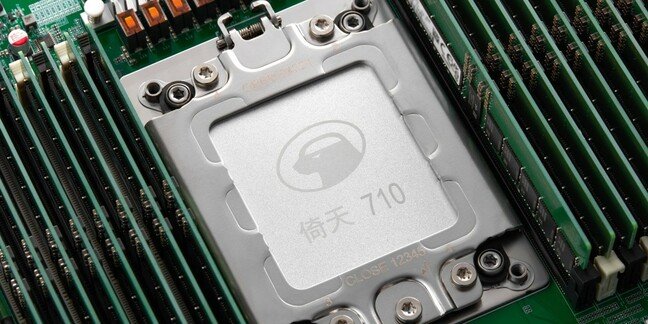
On Tuesday, Chinese e-commerce giant Alibaba launched a new server chip, pushing to stage competition against US Amazon. The processor, called Yitian 710, is based on architecture from British semiconductor firm Arm and some latest manufacturing processes. It will go into new servers called Panjiu.

The servers are designed for artificial intelligence applications and storage, but will not be directly sold to customers. Alibaba’s cloud computing customers are instead expected to buy services based on these latest technologies.

Covid-19 ignited an unprecedented shift to digital life, opening opportunity for expansion in Internet of Things (IoT) and AI, and companies are seizing it.

Backblaze, a company that backs up data on people’s computers and provides cloud-based storage space that companies use to store and retrieve files, filed to go public on the Nasdaq on Monday. It is one of the small players in the cloud computing industry, but has witnessed massive growth since the outbreak of coronavirus.

Backblaze, which was founded in 2007, was offering online backup services for PCs running Apple’s MacOS and Microsoft Windows until 2016, when it shifted to object storage.

Although the company has been up against some of the world’s largest companies, including Amazon, Google and Microsoft, which offer cloud computing services to companies, schools and governments, it has grown from the shadows of the big names by carving out a niche.

“The market is demanding alternatives to the traditional, diversified public cloud vendors for multiple reasons,” Backblaze said in its IPO prospectus. “These public cloud vendors have increasingly focused on the largest enterprises, resulting in significant complexity in their products and pricing that leaves behind mid-market businesses.”

For Backblaze, the year has been amazing. Per CNBC, B2 revenue saw a record growth of over 60% year over year in the first half of 2021, while the online backup business grew 12% during the same period. Plus, existing customers more consistently stick with B2 than with backup, and B2 has higher annual average revenue per user.

If Backblaze completes its initial public offering, it would join DigitalOcean in providing cloud capabilities to smaller businesses.

Alibaba and Backblaze are towing the niche path to survive the dominance of Amazon, Google and Microsoft in the cloud computing arena. Alibaba will not be manufacturing the semiconductor but will be designing it. But the e-commerce giant did not disclose when the latest chip and server services will be available.

Besides carving out a niche in China

For Chinese companies in the cloud computing market, the niche strategy means more than winning market share. Following Huawei’s US sanctions, the push to develop homegrown chips has been on high, with many Chinese companies developing their own.

Backed by the Chinese government, Huawei leads the trend. The telecom vendor, currently grappling with the impact of US sanctions, which have limited it from leading 5G roll out globally and producing enough smartphones to meet its consumers demand, has designed its own chips.

Earlier this year, another Chinese company, Baidu raised money to pursue a standalone semiconductor business. The companies’ efforts have been backed by the government that is keen to eliminate its tech industry’s dependence on foreign chips.

However, Alibaba is China’s largest cloud computing player, according to market analyst firm Canalys. Besides seeing it as a key part of its future growth, the company believes developing its own will boost its efficiency.

“Customizing our own server chips is consistent with our ongoing efforts toward boosting our computing capabilities with better performance and improved energy efficiency,” Jeff Zhang, president of Alibaba Cloud Intelligence, said in a press release.

Cloud computing currently accounts for 8% of Alibaba’s total revenue as it works to expand internationally to markets dominated by US rivals. Cloud service providers in the US are also increasingly moving to establish standalone operations.

But for Alibaba and other Chinese companies, the push for cloud computing is also a new way of receiving the blessing of the authorities. The recent government’s crackdown on China’s tech industry that has affected many of the big players, resulting in intense scrutiny, is instigating a move into the line of businesses that will have government’s support.

In April, Alibaba was slapped with a $2.8 billion fine as a result of an antitrust investigation into the company’s activities. So many others have also been indicted and punished for various antitrust offences. The companies are now operating in line with government’s body language.

The Big Convergence Is Creating Massive Job Opportunities

1

There is a major redesign in the world of business: digital platforms like Amazon and Facebook are increasingly hiring people at a pace few would have expected. Amazon employs about 1 million people in the United States; Walmart remains the private sector leader at 1.6 million workers. No one would have predicted this trajectory for a web company like Amazon during the fledgling era of digital commerce.

But as maturity comes, it does seem like internet companies can actually create huge jobs. There is a reason for that: if you scale digital products via improved unit economics and better marginal costs, you need more workers to unite the bytes with atoms. Those atoms are the meatspace  because humans still live in the real space of it. So, expect this evolution of more workers to happen in the next coming years as that convergence of bytes and atoms enters the next phase.

Facebook is dropping big numbers for the European Union (EU): “So today, we’re announcing a plan to create 10,000 new high-skilled jobs within the European Union (EU) over the next five years. ” Those will work on the metaverse, possibly a new domain for the internet.

Someone should remind Facebook that Africa needs its own thousands also! And be concerned if Facebook becomes the “creator” of the “metaverse internet”; they could put “tax” on it unlike the current one which evolved out of public labs!

Dissecting The Nigeria’s Technology Value

0

It’s worthwhile for one to, from time-to-time, re-examine his or her personality value towards making amends where need be. It equally helps to know the qualities or features to be sustained thereof.

Such a step, as mentioned above, isn’t only wholesome for an individual, but also in the case of an entity. It’s, therefore, needless to state that every creature requires scrutiny.

Herein, as the topic implies, we are specifically concerned about the tech value of the acclaimed giant of Africa. In other words, we’re dissecting how far and well she has hitherto fared in tech-driven matters and activities.

One might wonder if Nigeria really has technology, let alone its value. The truth is that the country could currently boast of over ninety tech hubs across the federation, the highest on the African continent.

In recent years, Nigeria has ostensibly become an incubator for some of the continent’s biggest start-ups, including online marketplace such as Jumia and Konga; and these digital outlets are unarguably driven by tech expertise.

It’s noteworthy that Nigeria reportedly has the largest economy in Africa with a Gross Domestic Product (GDP) of about $448.12 billion compared to its closest rival, South Africa whose present GDP is about $320 billion.

However, it’s worthy of note that the real wealth of any nation is calculated by its GDP per capita, and Nigeria ranks 140 out of 186 in GDP per capita global ranking.

Per capita GDP is a financial metric that breaks down a country’s economic value (output) per person, and is calculated by dividing the whole GDP by the country’s overall population.

In Economics, it’s widely accepted that technology is the key driver of economic growth of countries, regions or cities. Technological progress allows more efficient production of goods and services, in which prosperity depends on.

Technology brings skills, knowledge, process, technique, and tools together, toward solving problems concerning human existence, thereby making their life secure and happy.

It’s very pertinent in today’s world, because it is driving the global community as well as making it appear better. In fact, it is gradually becoming inevitable in our various homes, offices, and workplaces.

Nigeria’s tech patent has grown to be an envy of all who understands its real content. In terms of human and material attributes, it has over the years remains significant in the global society and market.

Take a walk round the world, you would comprehend that, most recent tech inventions and innovations across the globe were mainly as a result of contributions from Nigerians. Similarly, Nigerians remain the reason several countries’ tech sectors have grown beyond limits.

Ironically, Nigeria’s tech sector is presently nothing to write home about. As the days unfold, the sector continues to decline in its value, hence taking the country’s name to a state of ridicule.

Each day, the governments at all levels come up with empty promises and policies as regards tech-driven activity and innovation. The politicians at the country’s helm of affairs have unequivocally, over the donkey’s years, failed us in this regard.

The good news is that, in spite of the lingering hurdles and challenges, the prospects of the country’s tech value remain obviously great, perhaps owing to the fathomless resources lying fallow.

It’s worth noting that countless factors are behind the ongoing impediments in Nigeria’s tech sector. For us to get it right as a people, these barriers continually posing a threat must be severely tackled by the concerned authorities at all cost.

A certain tech-driven contract might be awarded by the government. In the long run, we would be greeted with a myriad of untold stories attributed to paucity of funds. In such case, it could be either the fund made available for execution of the project had been squandered or that insufficient fund was approved ab initio.

The steady economic fluctuation is another glaring factor that cannot be swept under the carpet. This particular plight has left Nigerians tech experts with no choice than to cloud their reasoning with uncertainties and fear of the unknown.

More so, those who – amidst the tough times – insisted on putting something together, would not find the apt market to sell their products or patents. This could be as a result of infrastructural decay occasioned by lack of maintenance culture, or the required physical infrastructures have never been in existence from the onset. The cost of running a tech firm in Nigeria is too high, to say the least.

Poverty has also on its part really posed a great danger to Nigeria’s tech value. The individuals who have the zeal and ability to invest in their expertise might end up being frustrated, due to lack of capital. This is why the country’s GDP per capita has to be fixed or elevated if she actually wants her tech sector to excel headlong.

Nigerians do not trust made-in-Nigeria goods. The mentality of seeing foreign products as superior while branding domestically-made ones inferior, must be tackled. Aside from sensitization, apt policies can properly assist in eradicating the social menace, which could best be described as a cankerworm that has eaten deep into our collective bone marrow.

The governments must not necessarily invest in technology for their respective tech values to grow. In most countries where technology is seriously thriving, the individuals domiciled therein remain the key players, not the government. But such a phenomenon can never be witnessed if the enabling environment is conspicuously missing.

To fix this anomaly, we must be ready and determined to address the quagmire in the political system. The country’s political instability is so intense, and continues to skyrocket by the day, that one cannot possibly say what the nearest future entails for our indigenous tech patent.

The policies are so weak that they can’t even initiate a project, let alone accomplish it. To get things rightly done, we need to acknowledge that a country’s growth in any sector depends majorly, if not solely, on her extant policies.

To be on the same page with me, take a look at any nation that has grown in a certain sector, and then take time to painstakingly x-ray the policies guiding the area in question. Just a research and adequate analysis would make you understand where exactly I’m coming from.

Growth is not rocket science; it takes some processes. For such processes or procedures to occur, there must be existing principles. The moment the rules (principles) are thwarted, it marks the beginning of the end of the procedures. There are no two ways about it.

Lest I forget, we need to equally take into cognizance that the reason most of the needed policies cannot exist in countries like Nigeria is that our corrupt political leaders have realized that technology exposes corruption. Read my lips.

They are apparently of the view that if tech is deployed in any area, it would certainly expose their corrupt practices. Take for instance, a situation where technology is fully implemented in the country’s electoral system as well as using forensic audit patterns in the finance sector.

The above factors are the reason we ought to clamour for overhaul. The country is in damn need of total overhaul of the system. To achieve this, we need to realize the full benefits of investing in technology.

We are not here to reiterate the numerous merits of technology but to point out the goals and lapses in the said sector, in a bid to do the needful. If we spend time to highlight the outpouring merits, three editions of this column might not be sufficient.

Artificial intelligence is deeply gaining momentum on a daily basis, signifying it has come to stay. Ease of access to information cannot be overestimated. Ease of mobility is another overwhelming experience. Better communication means and improved banking have, beyond reasonable doubts, made the world seem not unlike a minute village.

Learning has been digitized, thereby silencing any form of impediment, owing to the presence of technology. Cost efficiency and apt time management are being assured in all tech-driven activities. These are verifiable facts.

Countless innovations are springing up by the day in every facet of human endeavour. The ‘disabled’ are now abled, because of tech-driven tools, yet Nigeria and her likes seemingly await more prophets to tell them that technology has come to take the planet to the promised land.

Understanding that the presence of an adequate tech hub drastically changes the economic outlook of any country involved, is enough reason to place its content ahead of others.