DD
MM
YYYY

PAGES

DD
MM
YYYY

spot_img

PAGES

Home Blog Page 5520

There’s Poverty And Hunger In The Land

1
Nigeria poverty

A friend and I attended a burial somewhere in Delta State on June 25, 2021. At the funeral were the high and mighty- captains of industries, politicians, ranking officers; as well as the lowest of the lows. Every social strata of the Nigerian society was represented. As it is with most burial ceremonies these days, it was a carnival of sort.

While the ceremony went on, something happened that sent shock waves down my spine. The invited guests were treated to sumptuous meals and assorted drinks. As they ate, the caterers would clear the tables and do the dishes. In the process, the leftovers were either poured into a wastebin or left on the open field. As that went on, children- some with sores in their hands or legs, obviously from the neighbourhood scampered for the remnants on the ground. They literally packed every grain of rice with sand and grasses either directly into their mouths or polythene bags to be taken home. The sight was not only horrifically disgusting, it also made me sick.

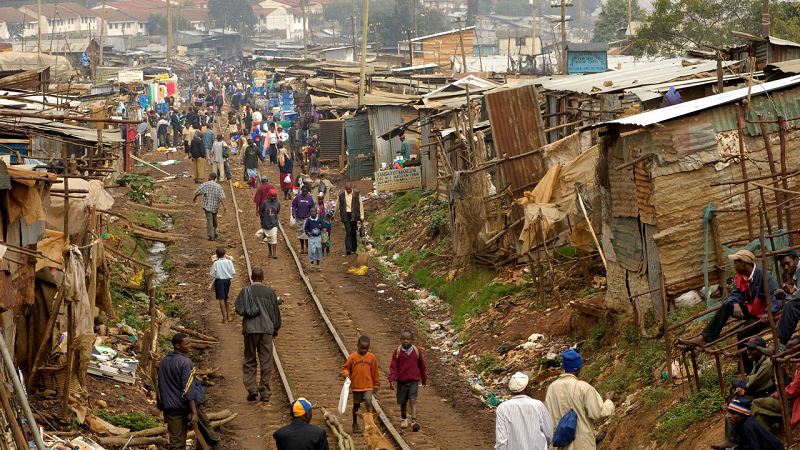
Then, my friend told me he met someone who couldn’t afford sachet water within the week or so. These and other examples, perhaps around you, underscore the ravaging poverty that pervades the length and breadth of the country. According to the World Poverty Clock, as of October 17, 2021, there are a whooping 86,847,507 Nigerians living in extreme poverty, using a threshold of $1.9 per day. Note, the figures above represent only those living in extreme poverty! I’m sure you can now appreciate the enormity of the challenge we have in our hands. There is hunger in the land. Granted, successive governments have failed woefully at bettering the lots of Nigerians, but some citizens are architects of their predicaments. Below are some of the causes and cures of poverty.

Uncontrolled Birth

Without looking to Harvard or the World Bank for data, one can easily see the correlation between uncontrolled birth and poverty or quality of life of a household by merely looking around one’s environment. On the average, low income families tend to have more kids than high income ones. For instance, how do a household of 7 (father, mother and 5 kids) with a monthly income of say N60,000 come out of poverty? House rent, cost of food, school fees, medical expenses, clothing, you name it. Couples must consciously adopt child spacing and carefully plan the number of kids in line with their income. I’m strongly in support of birth control through education but not depopulation through any other means.

Low Productivity

Though GDP per capita is abysmally low on the continent, which in my opinion is largely attributable to poor leadership and corruption, Nigeria has no business with a GDP per capita of $2,097.1 (World Bank’s 2020 GDP per capita data). This is especially when Gabon is on $7,005.9; Botswana, $6,711.0; South Africa, $5,090.7; Namibia, $4,211.1; Libya, $3,699.2; Egypt, $3,547.9; Djibouti, $3,425.5;  Tunisia, $3,319.8; Algeria, $3,310.4; Cape Verde, $3,064.3; Morocco, $3,009.1; Ghana, $2,328.5; Cote d’Ivoire, $2,325.7. Agriculture has to be made attractive, small and medium enterprises have to be revitalized, factories and warehouses have to spring up, and there must be value addition to any export product. For all these to happen, there must be well articulated policy thrust and a genuine will to see it through. This is the major missing link in Nigeria and Africa.

However, citizens must also pick themselves up to work. Instead of looking for easy money, people have to develop skills and work. Apart from teachers, doctors and other specialized service providers, a lot of core civil servants don’t contribute Jack to GDP.

Education

According to Nelson Mandela, ‘education is the most powerful weapon which you can use to change the world.’ No doubts, education has a great role to play in the fight against poverty but certainly not with the current curriculum. Some programmes no longer have relevance in today’s economy, let alone future ones. Schools have to reinvent themselves to remain in tune with current realities. Technical, vocational and entrepreneurship education must be accorded their rightful places if meaningful progress will be made regarding the war against hunger and poverty in Nigeria.

A friend also brought out a salient point in the course of our discussion. Girl child education. He opined that “When you educate the girl child, you avert early marriages and reduction of her child producing age. This will reduce number of kids. Hence, educating these kids are inevitable.” I totally agree with him. In addition, educating the girl child will not only ultimately increase her household income but also lead to more prudent management of available resources, thereby immensely contributing to the fight against poverty.

On its part, government has to provide the enabling environment for innovations, entrepreneurship and general productivity. Infrastructural development, on needs assessment basis, must take the front burner; and the oga kpata kpata of them all, insecurity must be tackled head-on.

The future is full of abundance. #Believe

1

Young People, let me wish everyone a great Sunday. No matter any challenge, remember this line: “The future is full of abundance”. In FUTO, many of us skipped meals and found the university canteen very expensive to eat; we patronized bukkas.  But one day, I began work in Diamond Bank, and they paid unbelievable digits for a village boy who just arrived in Lagos. Magically, the past became history.  Your future has a promise and tomorrow is certainly better. Unleash the energy to achieve and keep #moving.

“Investing in Africa’s Next Unicorns” – A Tekedia Capital Public Lecture [Video]

0

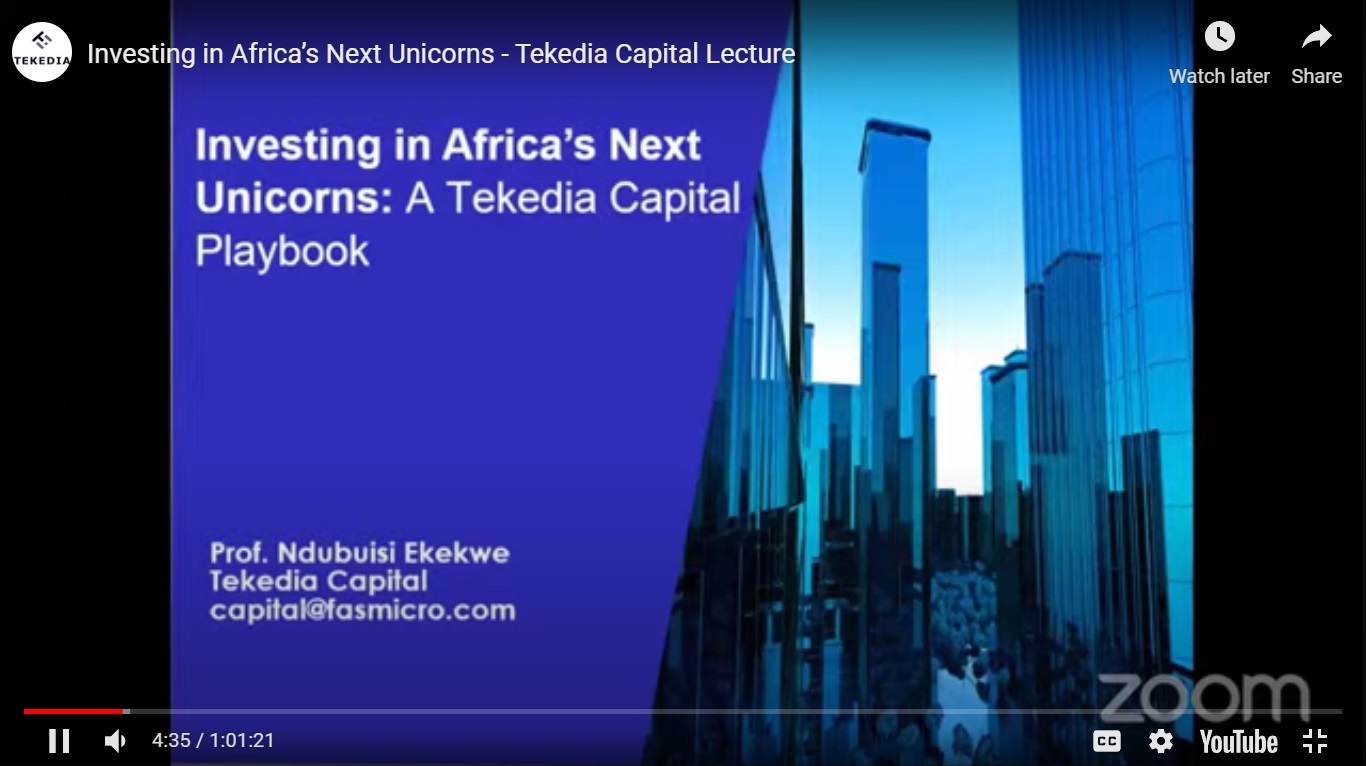
Tekedia Capital hosted a public lecture on Oct 16 titled “Investing in Africa’s Next Unicorns – A Tekedia Capital Playbook”. The video recording is provided below.

Tekedia Capital runs an investment syndicate. We pool resources from citizens, companies, investment clubs, etc and co-invest in tech-anchored startups. The next investment cycle begins on Monday Oct 18 2021 when our new deal flow will go live in our portal. Those who join Tekedia Capital will have access to the startups.

To join Tekedia Capital, go here ($1,000 or N550,000 naira). Once you join, we will share our deal flow with you; the next investment cycle begins tomorrow (Oct 18, 2021).

Reviewing Nigeria’s Executive Order 5

0
Nigerian leaders

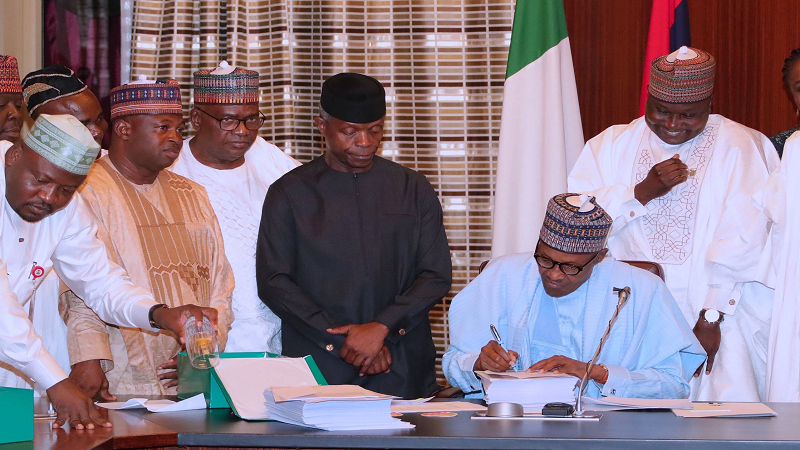
During his first term in office, President Muhammadu Buhari of Nigeria signed an executive order, prohibiting issuance of visas to foreign workers or experts whose skills are readily available in the country.

The proclamation tagged ‘Executive Order 5’, which was endorsed precisely on 5th February 2018, was targeted to improve local content in public procurement in regard to science, engineering and technology in general.

It was expected to promote the application of science and technology with a view to achieving the country’s development and innovation goals across all sectors of the economy.

The president, pursuant to the authority vested in him by the Nigeria’s 1999 Constitution, as amended, ordered that all procuring agencies shall give preference to Nigerian companies in the award of contracts in accordance with the Public Procurement Act 2007.

The order, however, stipulates that in a situation where the required expertise is lacking within the country, procuring entities shall grant preference to foreign firms with a “demonstrable and verifiable plan for indigenous development prior to the award of such contracts”.

The document entitled ‘Presidential Executive Order 5 for planning and execution of projects, promotion of Nigerian content in contracts concerning science, engineering and technology components’ further directs Ministries, Departments and Agencies (MDAs) to engage indigenous professionals in the onward planning, design and execution of national security projects.

It’s always wholesome and ideal to consider the feasibility study of any introduced policies or whatever policy that’s being awaited, hence that of Executive Order 5 wouldn’t be exceptional if the government is really prepared to achieve its goals.

It’s noteworthy that Nigerians as a people celebrated profusely in regard to the emergence of the said proclamation. However, over three years after the lofty pronouncement, the order is yet to be fully implemented.

Let’s dissect some key parameters that are likely to pose as limitations to the policy. It’s worth noting that the Executive Order 5 is silent regarding the foreign skills already domiciled in Nigeria. As I reacted when it came on board, an order of this kind requires additional clauses to make it more elaborate and understandable for thorough effective implementation.

Since the order is reportedly meant to promote local content, I’m keenly interested in knowing what becomes of the fate of the foreign firms established anywhere across the federation. The citizenry need to be intimated on how the new tech policy would affect foreign experts – either individuals or entities – that are already practising in the country.

Are they going to be segregated whenever any procurement process is ongoing or ought to be treated as equal to the indigenous professionals? If the former is to be the case, then it simply means the order is equally asking them to vacate their stay in Nigeria.

If the government is truly keen in improving as well as promoting the country’s local content, some clauses must be stated clearly in the Executive Order 5. I’m not anywhere advocating for outright sack of foreign content domiciled in the country but it’s pertinent to make any policy self-explanatory and transparent, hence the need for further review.

Another amazing part that caught my attention in the order was where it’s stipulated there must be a plan for indigenous development in a situation where the needed skills aren’t available “prior to the award of such contracts”.

That means, before any contract would be awarded to a foreign contractor as a result of lapse, there must be tangible plans put in place towards addressing such lapses or loopholes. The concerned authorities must take into cognizance that the actualization of such policy is far-fetched if the required mechanisms didn’t follow suit.

I won’t hesitate to enquire about the authority that’s expected to remedy the system when the aforementioned situation arises. We need to be told the entity that would be saddled with the responsibility of developing the lacking indigenous skills. I’m, therefore, asserting that if the government failed to set up a special agency strictly in this regard, such an order is already dead on arrival.

We have witnessed circumstances where a sitting government preferred to merely tender a certain policy without consequently coming up with the needed mechanism toward adequately implementing the document as well as actualizing every clause enshrined in it. It seems this is one of them.

The fact remains that Nigeria’s tech sector is severely bleeding, thus seriously in need of an overhaul. The country’s leadership must comprehend that for such a total turnaround to be realized, the leaders must wear the required political will like clothing.

As much as I invariably pick interest in such technologically-oriented policies like the Executive Order 5, I don’t find it difficult to analyze the prospects and encumbrances surrounding them.

I want to state categorically that the order in question is a welcome development and a step in the right direction considering how far and how well the country’s technology at large has fared thus far. But there’s a compelling need for its feasibility study to be drastically considered if it’s born out of genuine intention.

In view of this, the Buhari-led administration is urged to involve reliable and competent hands and also consult the cognoscenti with a view to ensuring apt implementation of the order.

It’s not anymore news that those who are well imbued with technology-related knowledge have for decades now been sidelined, hence leading to brain drain which is currently affecting Nigeria’s economy negatively. This aspect needs to be holistically addressed headlong.

It’s therefore inconsequential to enjoin Mr. President to ensure the needful is done towards making the policy effective as well as sustaining it in the long run. 

With $230 Billion Net Worth, Elon Musk Becomes Richer than Bill Gates and Warren Buffett Combined

0

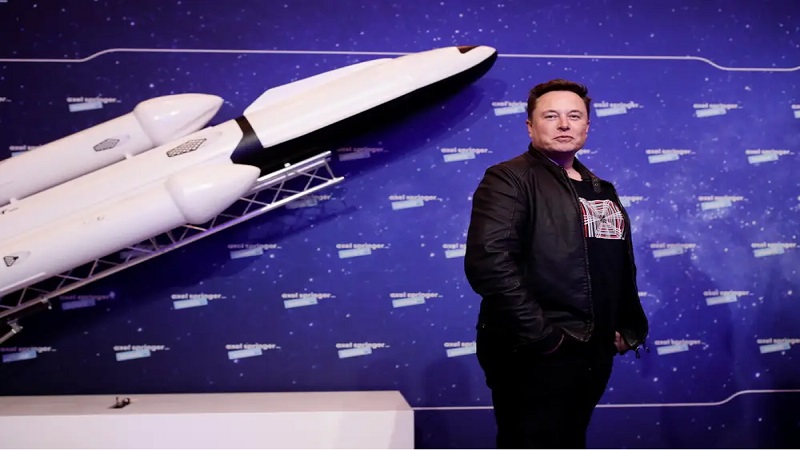
A few days after Elon Musk reclaimed his spot as the richest man on earth, the South African-born entrepreneur has added a new financial accolade to his name.

Per CNBC, Musk has entered rarified air in the world billionaire rankings as he is now worth as much as fellow billionaires Bill Gates and Warren Buffett combined.

As of Friday, Musk’s net worth was $230 billion, eclipsing Gates who sits in fourth place with $130 billion and Buffett who is at the 10th place with $102 billion, according to Bloomberg Billionaires Index.

Responding to a “Musk is now richer than Bill Gates and Warren Buffett combine” tweet on Friday by Matt Wallace, a Dogecoin enthusiast, Musk said “hopefully enough to extend life to Mars” (talking about his wealth.)

Musk and his co-billionaire, Jeff Bezos, are leading the evolution of commercial space travels in an epic rivalry with their various space companies. Bezos, who is now the chairman of Amazon, resigned his position as the CEO in July to concentrate on his dream space adventures using his company Blue Origin. Musk also owns SpaceX, the only space company now offering orbital services.

Bezos had held the first position in the world billionaires’ index since 2007 before Musk briefly overtook him for the first time in January when his net worth hit $185 billion. Musk’s fortune is largely tied to his electric car company Tesla that has become a top choice around the world, including China, which is the leading electric vehicle market.

Environmental concern has triggered a global push backed governments to curtail vehicles’ carbon footprint, thus igniting a shift to electric vehicles. Musk has added more than $60 billion to his fortune this year as EV preference buoys Tesla stock to strong performance augmented by a recent share sale at SpaceX which valued the company at $100 billion. The SpaceX deal added $11 billion to Musk’s net worth, according to Bloomberg.

The surge in Tesla and SpaceX shares saw Musk’s fortune rocket, eclipsing other billionaires like Gates and Buffett who had previously held the mantle of world’s richest persons.

Both Bezos and Gates saw their wealth reduced after their divorce, which took a significant part of their fortune, leaving a close gap between them and Musk who was ranking lower at a time. Bezos is still the second-wealthiest person on earth with a $191 billion net worth.

Gates and Buffett’s wealth decline has been largely attributed to their charitable works. With their philanthropic organizations, the duo has given out billions of dollars that would have guaranteed them top positions in the billionaire index, to charity.

Unlike Gates and Buffet, Musk has been criticized for being closefisted with his wealth, a criticism he countered by saying he prefers to remain anonymous when giving away money.

Musk has been vocal about his goal to create civilization on Mars, a cause he is currently pouring his fortune into. But as space exploration materializes, Musk gets richer. Tesla is leading a technology-driven electric vehicle revolution with massive growth potential, likewise Starlink, the satellite internet wing of SpaceX – which is expected to be largely embraced globally in the near future – all poised to slingshot Musk further ahead in the billionaire index.