DD
MM
YYYY

PAGES

DD
MM
YYYY

spot_img

PAGES

Home Blog Page 5523

Tekedia Capital Deal Flow Has Been Posted

0

Tekedia Capital Q4 2021 Investment Cycle is currently active; register for access to the deal flow – and join our members and invest in Africa’s future promising startups. A membership fee which covers four investment cycles is $1,000 or N550,000. The Startup Demo Day is Oct 30 and we have very great companies. One processes N4 billion per month (never raised money) in Nigeria and another is growth-defined. Join today for your login to access the deal flow.


To our members, just in case there is an email issue. Tekedia Capital deal flow for Oct 2021 cycle is out. My team sent this email to members and I am sharing it here in case you didn’t get it. We thank you for your partnership which has made it possible for the best startups in our continent to be converging around Tekedia Capital.

Dear Member,

Greetings. We are very happy to update that the deal flow is live in Tekedia Capital board once you log in. We made a special video for each startup and also attached their respective pitch decks. There is a Calendly for you to book time to speak with us if you have any questions.

Please keep all the startups confidential until we have invested. One has been accepted into the current YCombinator and another is undergoing the final interview. So, these are very hot companies.

Please remember the Demo Day is scheduled on Oct 30; Zoom link in the Board. All the startups will be live to present and take your questions.

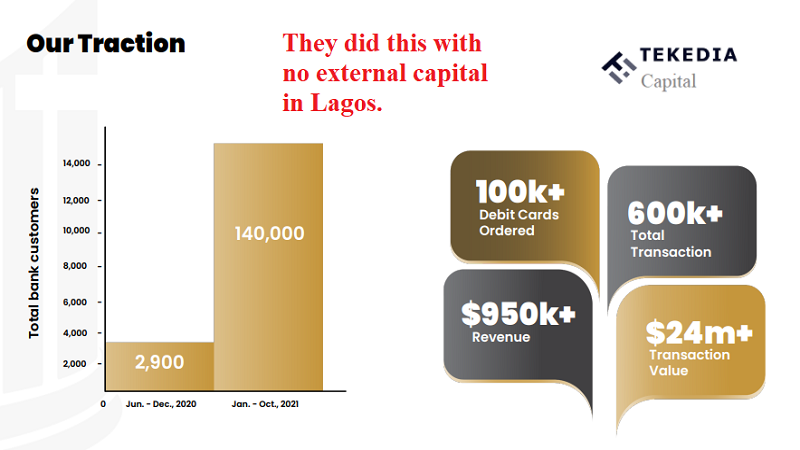
We do think we have great companies there; one processes more than $10 million transactions per month in Nigeria. And we share the traction of another in this email.

Have a great moment checking them.

Regards,

Tekedia Capital Team

China Records 4.9% GDP Growth in Q3, Falling Short of Expectation As Pressure Piles on Economy

0
Chinese leaders are pragmatic

China’s gross domestic product (GDP) grew a disappointing 4.9% in July-September from a year earlier, its slowest growth rate since the third quarter of 2020.

The 4.9% growth, which falls short of projections, was as a result of major infrastructural and logistics pitfalls that hit China from the end of the second quarter.

The economy was hit by power shortages, supply chain bottlenecks and major wobbles in the property market. There were also shocks from the government’s crackdown on the tech sector, which has wiped billions of dollars off China’s economy.

Compounded by the recent Evergrande Group debt crisis, current shipping crisis that has impacted its export, and the aftereffect of covid-19 restrictions, China is struggling to keep its economy blistering.

“The domestic economic recovery is still unstable and uneven,” said National Bureau of Statistics (NBS) spokesperson Fu Linghui at a briefing in Beijing on Monday.

The GDP number is not bad compared with other economies emerging from covid-19 strains, but China’s economy had staged an impressive rebound from last year’s pandemic slump, buoyed by effective virus containment and hot overseas demand for the country’s manufactured goods. In the first quarter of the year, China’s economy was bubbling on 18.3% growth, setting a pace other countries can only envy.

“In response to the ugly growth numbers we expect in coming months, we think policymakers will take more steps to shore up growth, including ensuring ample liquidity in the interbank market, accelerating infrastructure development and relaxing some aspects of overall credit and real estate policies,” said Louis Kuijs, head of Asia economics at Oxford Economics.

At 4.9%, China’s GDP is only 0.3% short of the 5.2% that Reuters Poll had predicted for the third quarter.

But Reuters also noted that the weak numbers, which have sent the yuan and Asian stocks lower, are largely as a result of the growing impact of Evergrande debt crisis, exacerbating investors’ concerns about world economic recovery.

Although an official of People’s Bank of China (PBOC) said on Friday that the spillover effect of Evergrande’s debt problems on the banking system were controllable and individual financial institutions’ risk exposures were not big, analysts believe that the Chinese authorities are trying to downplay the problems.

“The PBOC is downplaying the market impact of Evergrande’s default,” JPMorgan wrote, adding that it thinks Evegrande’s problems are not isolated but represent an industry-wide problem.

“The policymakers have the levers to contain the spillover risk; but if no policy action is taken, the risk of further deterioration should not be underestimated, which may lead to investment slowdown, weaker consumption, fiscal problems for local governments and broader financial sector pressure,” JPMorgan wrote.

The impact is gradually touching many sectors of the economy, posing new risks [such as Reuters’ highlight shows below] for China’s economic recovery.

New construction slumped for a sixth straight month in September, NBS data showed, the longest spate of monthly declines since 2015, as cash-strapped developers reined in investment and paused projects following tighter borrowing limits.

Meanwhile, the industrial sector has been hit by power rationing triggered by coal shortages, as well as environmental curbs on heavy polluters like steel plants and floods over the summer.

Overall industrial output rose just 3.1% in September from a year earlier, marking the slowest growth since March 2020, during the first wave of the pandemic.

Aluminium output declined for the fifth consecutive month and daily crude steel output hit the lowest level since 2018.

Bucking the negative trend, retail sales grew 4.4%, faster than forecasts and the 2.5% growth in August, and the surveyed nationwide jobless rate fell from 5.1% to 4.9%.

“Most of the (negative) factors are policy-driven… the economy is having a lot of pain points and these pain points are not going away soon because policies are here to stay, and therefore it will continue into 2022,” said Iris Pang, chief economist for Greater China at ING.

On a quarterly basis, growth eased to 0.2% in July-September from a downwardly revised 1.2% in the second quarter.

Premier Li Keqiang said last week that China has ample tools to cope with economic challenges despite slowing growth, and expressed confidence in hitting full-year development goals.

On Sunday, People’s Bank of China governor Yi Gang said the economy is expected to grow 8% this year.

“At present, China’s fiscal strength is continuously increasing, and there is still relatively big room for monetary policy,” said the NBS’s Fu.

Still, the central bank is expected to remain cautious about monetary easing due to worries about high debt and property risks.

Analysts polled by Reuters expect the People’s Bank of China to refrain from attempts to stimulate the economy by reducing the amount of cash banks must hold in reserve until the first quarter of 2022.

A Call to Mission for the Future of Nigeria

0

Good People,  I understand the optimistic exuberance for Nigeria to raise a new generation of leaders who can fix our national paralyses and take our nation to the mountaintop where our citizens will experience opportunities, shared prosperity and abundance for all. While I have engaged here on that call to mission, it is important that I make it clear that I am not running for any political post, yet.  Also, if anyone invites you to contribute money or whatever, be assured that I have not approved it.

We need to be real – running and winning elections in Nigeria must not be trivialized. The nation of LinkedIn and Facebook is not the Nigerian nation. As I wrote recently in the Harvard Business Review, we need to examine our One Oasis and see where the Double Plays will come. Possibly, social media is our gameplan’s One Oasis and we need to then capture political value (votes) in communities and wards. That must be developed for us to have any chance.

Keep your money and any fundraising so that we do not bring fudge factors into this. Let us continue the conversations. Nigeria is at a state where the citizens will want the best to win because many are at ground zero. That opens an opportunity.

But as we look at many playbooks, note this – I will be the best president in the history of Nigeria. Any expense above N5 million will be posted online for all to see. And I will reform EFCC to focus on prevention of corruption instead of just prosecution. I will bring velocity to our land assets and begin a new age of deepening property rights across communities. By the time we are done, GDP will be doubled and rural Nigeria will rise. It is just a 5-point pillar and a new dynamic, vibrant and hopeful nation will emerge.

But it would be easier if both APC and PDP endorse me. How about that?

Uber is Launching Pool Chance, A Co-share, Low-cost Feature in Africa to Win Market Shares

0

Uber is trialing a new business feature that may turn things around for its wobbling revenue, especially in low income countries.

TechCrunch reports that it discovered that Uber is testing Pool Chance, a feature that lets riders heading in the same direction share the cost of the journey, in Nairobi Kenya. And that an Uber spokesperson later confirmed it was part of a pilot of the service that it plans to roll out more widely, including to Ghana and Nigeria, pending the outcome of the smaller test.

“We are currently trialing a new Uber ride, Pool Chance, which will cut costs for riders in Nairobi (Kenya) when they share their ride with others heading in the same direction,” Uber’s head of communications for East & West Africa, Lorraine Ondoru, told TechCrunch.

“We use this approach when introducing something new and we want to ensure the marketplace remains healthy and balanced. We will share more details once this has been officially launched,” she added.

The Pool Chance trip option is available on the budget service, Chap Chap in Nairobi; in Nigeria’s commercial capital Lagos and Ghana’s capital Accra, it will be accessible on the UberX category, the report says.

A thread in an Uber drivers’ forum, shared by TechCrunch, describes the Pool Chance as a feature where you have a chance of getting a discounted ride if the driver picks up other riders; otherwise you pay the regular fees you’d pay for an individual ride. UberPool negotiates a specific carpool rate for the rider regardless of who else gets into the vehicle.

The Pool Chance presents a chance for Uber to win more market shares across Africa. Uber is available in eight markets across Africa including Egypt, South Africa, Uganda, Tanzania, and Morocco. The ride-hailing giant said on the app that Pool Chance will bring the cost of rides down by up to 30%, further making its trips more affordable to riders.

“Affordable shared rides can mean more riders using the app, which can lead to more trips, less downtime, and more overall earnings for you,” Uber said about the new service, in a message to its drivers, in the three African countries.

Pool Chance is similar to Uberpool, a low-cost ride-hailing service that was launched in the San Francisco Bay Area in 2014, and has been introduced to other cities around the world since then. But TechCrunch noted that the feature has been suspended in many regions in compliance with Covid-19 social distancing directive. But as vaccine roll out scores more success, and restrictions get eased, Uber is gradually bringing back the service, and introducing it in new markets.

Uber said Uberpool and Pool Chance share a similar concept but are not identical, without offering further detail.

However, Uber is widely introducing Pool Chance in other countries. In April, Uber launched Pool Chance in Auckland, New Zealand after introducing it in Kyiv, Ukraine in October last year. They also switched back on the low-cost rideshare service in Australia’s Sydney and Perth cities earlier in the year, and thereafter launched Pool Chance in Adelaide, according to TechCrunch.

As for Africa, there has been an uptick in products rolled out by Uber, buoyed by dwindling revenue and intense competition from rivals like Estonian-based ride hailing firm, Bolt and InDriver. As part of its African expansion, Uber earlier this month introduced its services to two additional cities in Nigeria – Ibadan and Port Harcourt.

Uber has foreseen a shift toward fare-splitting service in the transport ecosystem and it’s shaping its products around it across countries, especially in Africa. In a recent report quoted by TechCrunch, the California-based company said that “ride-sharing will likely play an increasingly important role within the public transportation mix in the next 3-5 years.”

The company explained that while bus and rail transportation will remain core to public transportation due to their ability to transport large numbers of people, they will be complemented by microtransit, ride-sharing and micro-mobility.

“The addition of new modes with a variable cost structure like ride-sharing and the proliferation of on-demand services will unlock new optimums of efficiency and lower cost structures for public transportation agencies,” said Uber.

This, it said, will go towards ensuring and improving “the equity, accessibility, resilience, and flexibility of their networks.”

However, apart from Bolt and InDriver, the Pool Chance will have to face another rival in Nigeria, Plentywaka, a ride-sharing bus service recently renamed Treepz. The startup is rapidly expanding to other cities across the country. A new player called Transtura just launched to join the fray. 

Big Numbers from Great Innovators

0

This is one of the finest startups in Nigeria today. They did this without any external funding. Double-exit operators, they know how to deliver alpha*. The target is clear: “Prof, we plan to hit 1 million users by December 2021”. Join us to meet the team on Oct 30 during Tekedia Capital Demo Day.

And meet another one that generates close to N4 billion value on transactions monthly in Nigeria. All the best startups converge here because they like us! They like the intensity and rigour we bring to their missions.

Tekedia Capital >> building the Next Africa with Africa’s finest entrepreneurs and innovators. Join us here 

*Data, as of Oct 2.