DD
MM
YYYY

PAGES

DD
MM
YYYY

spot_img

PAGES

Home Blog Page 5526

As Nigerians Await e-Voting System

0

E-voting is a kind of voting that involves using an electronic system to cast and count votes usually with the aid of an Electronic Voting Machine (EVM).

It is of two main types: the one physically supervised by representatives of the electoral umpire and the remote e-voting whereby votes are cast via the internet from any location. The former requires the EVM whilst the latter could be done with one’s personal computer.

The merits of e-voting cannot be overemphasized. It enables votes to be cast with ease. It increases the speed of voting. It is cost effective; in other words, it tremendously reduces the cost of conducting an election by engaging only a few electoral officials rather than in the case of a manual voting system that requires much manpower.

It can provide an improved accessibility for the electorate that are physically challenged, thereby enabling them to participate actively and massively at the polls. It’s transparent, because it can easily be observed by anyone present at the polling unit. It helps to reduce human error to a great extent. It makes the election results to be announced faster than expected, thus building trust.

Among all, e-voting is auditable with the assistance of Voter-Verified Paper Audit Trail (VVPAT). The EVM prints a paper receipt each time a vote is cast electronically. This makes it easy to perform recounts and audits, because one can compare the electronic count with the paper count. Owing to the overall gains and effects of electronic voting, it increases turnout and engagement among the electorate.

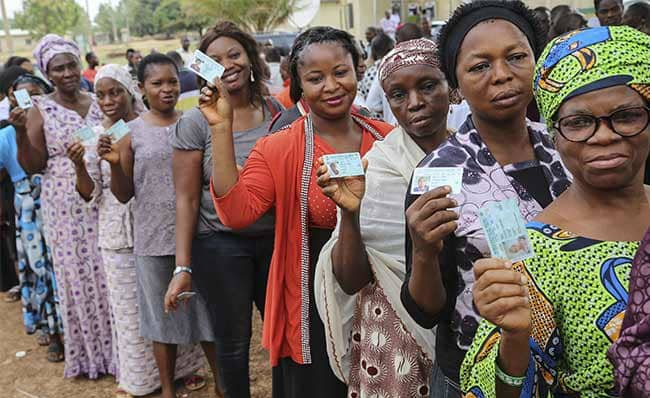
On Saturday, 12th May 2018, Kaduna State under the watch of Governor Nasir El-rufai made history by conducting its Local Government (LG) polls with the aid of e-voting system as planned by the Kaduna State Independent Electoral Commission (KADSIECOM).

It was, however, reported that some of the EVMs malfunctioned in some polling units while some were taken away by hoodlums to unknown destinations. The machine error was blamed on various factors such as power supply, technical hitches and ignorance on the part of the operators.

Gov. El-rufai testified that human error was recorded during the exercise, though claimed the EVMs performed perfectly as anticipated. In his statewide address while being interviewed by newsmen after the polls, he said “Only human error was recorded. All the electronic voting machines functioned perfectly. We shall investigate the cause of the human error.”

The outcome of the LG polls in their totality signified that Nigeria still has a long way to go as regards electronic voting. It was gathered that some of the EVMs malfunctioned even as the governor claimed that they all performed excellently. The diverse reactions that trailed the functionality of the EVMs used at the said polls were good reasons to note that the Nigerian system wasn’t yet ripe for the practice.

We have equally learnt that some of the EVMs were carted away by thugs in the process. This particular loophole implied that adequate security wasn’t on ground to safeguard the polling units and the sensitive materials, or perhaps the security personnel compromised their obligations.

The above revelation raises much room for great worry in respect of the quest for deployment of the e-voting pattern in Nigeria’s electoral system, hence the need to critically look into it.

It was further alleged that the returning officers in charge of the various LGAs vanished into thin air after concluding the elections. It’s imperative to acknowledge that the so-called returning officers have a thousand and one questions to answer if the required investigations must be carried out by the concerned authority as well as towards averting such embarrassment in the future.

As I appreciate Gov. El-rufai for giving us the prototype of how the e-voting would look like if the Independent National Electoral Commission (INEC) eventually adopts it for the Nigeria’s political sphere, it’s my pleasure to notify the commission that if well prepared, the country can really get it right.

Since we have observed lapses bordering on ignorance in the use of tech devices, thuggery and insecurity, there’s absolutely no need to suggest to the INEC on what needs to be done towards ensuring that the e-voting system is aptly implemented for future elections.

Taking into cognizance the innumerable benefits attached to the e-voting system, Nigeria as a country ought to headlong consider making use of its methodology during the 2023 general elections towards ushering in a better and greater political space in the country.

It’s worth noting that the Bill for Electronic Voting cum Result Transmission has eventually seen the light of the day at the National Assembly (NASS) having ‘torn’ the federal lawmakers apart. The truth is that, anyone who truly yearns for fairness and credibility during elections mustn’t hesitate in supporting this lofty cause.

As Nigerians anxiously await the e-voting pattern, INEC and other relevant stakeholders must hold the bull by the horn with a view to ensuring the needful is done without further procrastination.

Noting that the world is already engulfed in technologies and every facet of the global community gradually becoming digitally-inclined, the electoral umpire needn’t shy away from acknowledging it’s time the Nigerian State inculcated e-voting into its electoral mechanism.

Hence, the INEC needs to consequently set up a special unit to be manned by qualified and uncompromising tech experts that would see to the apt implementation cum sustenance of the awaited measure.

There is equally need for holistic sensitization among the concerned electorate on how they could participate in the e-voting pattern coupled with what is expected of them as long as the exercise lasts during each electioneering era.

Above all, it’s noteworthy that the proposed unit can’t perform as required if the commission fails to continually extend the hand of fellowship to the cognoscenti. 
Cost of Nigeria’s Trade is Too High to Attract Investors – Okonjo-Iweala

0

Concerned Nigerians have continued to voice out against fiscal policies and economic activities of the government, which is believed to be self-sabotaging. From high import and export levies to infrastructural deficiencies, Nigeria has been bedeviled with unprogressive policies and poor infrastructure that have stymied its economic growth for years.

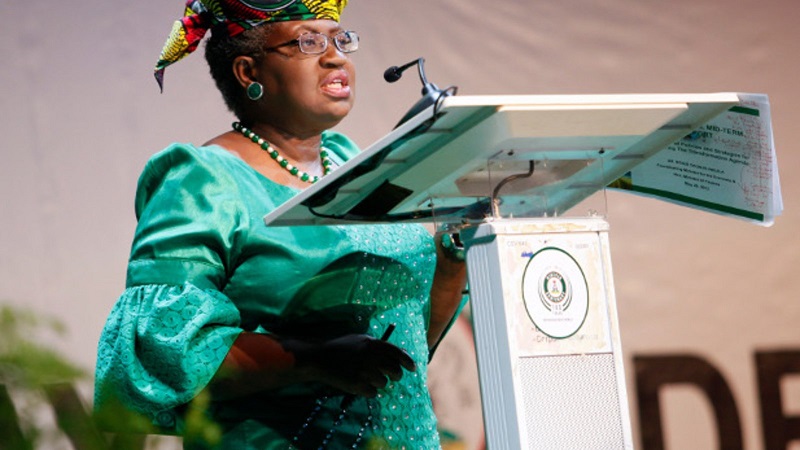
On Tuesday, the Director-General of the World Trade Organization (WTO), Dr. Ngozi Okonjo-Iweala, lamented that the cost of Nigeria’s trade is too high to attract foreign investors. This is besides calls by several other Nigerian experts demanding that the government take steps to address many of the pitfalls limiting Nigeria’s economic progress.

The former Minister of Finance and Coordinating Minister of Economy under the administration of former President Goodluck Jonathan stated this via a video link on day two of the Mid-term Ministerial Performance Review at the State House, Abuja.

Okonjo-Iweala, who was a strong advocate of ‘saving for the rainy days’ during her time as minister, also said the government needs to improve the nation’s security in order to attract foreign and domestic investments.

Apart from that, there is a huge vacuum in Nigeria’s infrastructural operations that the WTO DG said must be curtailed for the country to make progress. She said the country must cut down not only on trade cost but also infrastructure cost, linkage cost, regulatory cost, customs cost, and all costs associated with moving goods from the factory to the final consumer to complement investment facilitation.

To drive her point home, she said that Nigeria’s trade cost was equivalent to a 306 percent tariff, one and half times higher than the cost in high income countries. This, including congestion, capacity constraints and high costs at Nigerian ports, she said do not encourage investment as they make it difficult to build supply chain operations in the country.

“Improving security and lowering transaction cost for foreign investment, even for domestic investment, would be necessary. And Nigeria is part of a group of countries negotiating an agreement on investment facilitation at the WTO.

“Once this agreement is negotiated, ratified and is being implemented, it could be instrumental in attracting additional trade-oriented investment. To complement investment facilitation, Nigeria has to cut down on trade cost, infrastructure cost, linkage cost, regulatory cost, customs cost, basically, all costs associated with moving goods from tie factory or farm gate to the final consumer.

“Nigeria’s trade costs are too high. According to the World Bank-ESCAP trade costs for 2019, trade costs for African countries are on average equivalent of a 304% tariff and for Nigeria, it’s even slightly higher at 306%.

“These numbers are one and half times higher than trade cost in high income countries. Such high costs are not conducive to forming regional value chain. Congestion, capacity constraints and high costs in our ports make life difficult for anyone seeking to build supply chain operations in Nigeria and hence, expand trade from there,” she said.

Nigeria’s export has dipped from an average of $109 billion between 2010 and 2014 to just $35 billion in 2020, leaving a $74 billion gap. The dip is a result of high levies and high cost of operations in the country.

A recent report on Nigeria’s export growth revealed that Nigerian-bound cargo airlines are choosing to return back empty because it costs $35,000 in levies to move goods from Nigeria to other countries. Whereas in other Western African countries such as Ghana, cargo airlines only pay $4,000 in levies for outbound goods.

Access Bank Acquires African Banking Corporation of Botswana

0

Access Bank Plc has continued to build on its pan-Africa legacy. On Tuesday, the bank announced on the Nigerian Exchange Limited (NGX) that it has acquired 78.15% shareholding in African Banking Corporation of Botswana Limited (BancABC Botswana).

This is following other major investments that the Nigerian bank has made across Africa recently.

Speaking on the acquisition, Company Secretary, Access Bank, Sunday Ekwochi, said in a statement that BancABC Botswana is the fifth largest bank in Botswana with strong financial standing that will enhance growth in its local market.

“The new acquisition will form part of the Bank’s nexus for trade and payments in Southern Africa and the boarder COMESA trade region. BancABC Botswana’s achievements in the retail banking space will provide an opportunity for the bank to deploy its best-in-class digital platforms and product suites to the benefit of BancABC Botswana’s customers and enable it to complete strongly across its core business segments.”

The bank’s share price added N0.15 to close trading at N9.60 on Tuesday. Access Bank’s earnings have grown by 12.8% per year over the past five years, buoyed by major expansion to other African markets.

The CEO of Access Bank, Herbert Wigwe said such acquisition is gearing the bank up to become the most respected African bank.

“We are pleased with the successful conclusion of this transaction which will provide significant synergies by combining BancABC Botswana’s strong retail banking operation with Access Bank’s wholesale banking capabilities.

“It will also strengthen the quality of earnings through revenue diversification and growth in the corporate and SME banking segments for BancABC Botswana. The combination is another step towards out broader vision of becoming the World’s Most Respected African Bank,” he said.

June 2021 Half year financial report of Access Bank, shows the company’s asset value has hit N10.06 trillion, a 16% increase from its last quarter 2020 report, making it Nigeria’s largest bank by asset. The growth has been significantly spurred by investments outside Nigeria.

Access Bank has subsidiaries across Sub-Saharan Africa and Europe, providing financial and banking services. The bank’s subsidiaries include Access Bank (Gambia) Limited, Access Bank (Sierra Leone) Limited, Access Bank (Zambia) Limited, Access Bank (UK) Limited, Access Bank (Ghana) Limited, Access Bank (D.R. Congo), Access Bank (Rwanda) Limited, Access Bank (Guinea) Limited, Access Bank (Kenya) Limited and Access Bank (Mozambique) Limited.

Last year, Access Bank got the green light from the Central Bank of Nigeria (CBN) to become a HoldCo (holding company). It has ever since then, intensified its expansion in Sub-Saharan Africa through acquisition of banks and other financial services.

Wigwe said Access Bank is focused on building the scale needed to become a leading African bank, one that leverages experience, talent base and key stakeholder partnerships to drive sustainable impact and profitability.

Build Your Startup With Tekedia Capital – Begin Today

0

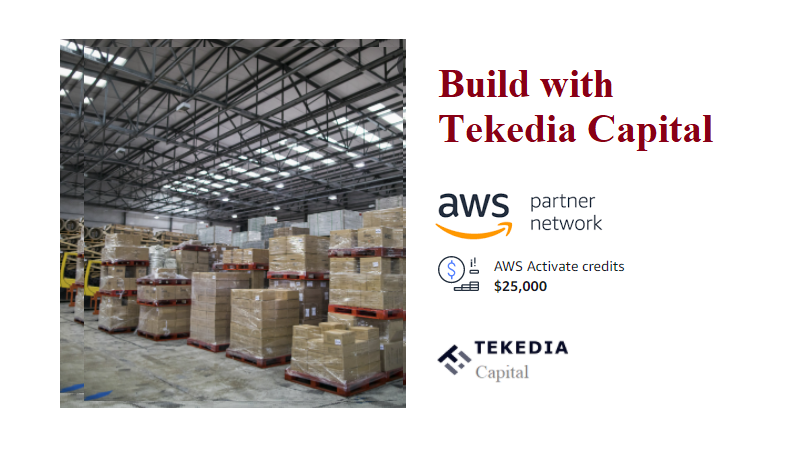
On Monday, Tekedia Capital’s next investment deal flow will go live in our portal. But as we conclude on this cycle, the search for the next unicorns begins immediately. When you join Tekedia Capital, you will have access to our team and myself, and we will provide guidance. Also, as we provide funding, we will also support you with Amazon AWS credit up to $25,000.

Go to our website and let us know what you are working on; our team will process the email and share with me. We know everyone in Africa and our network is legendary. You need those contacts as you build – and that is why you need to join us.

Go here and begin.

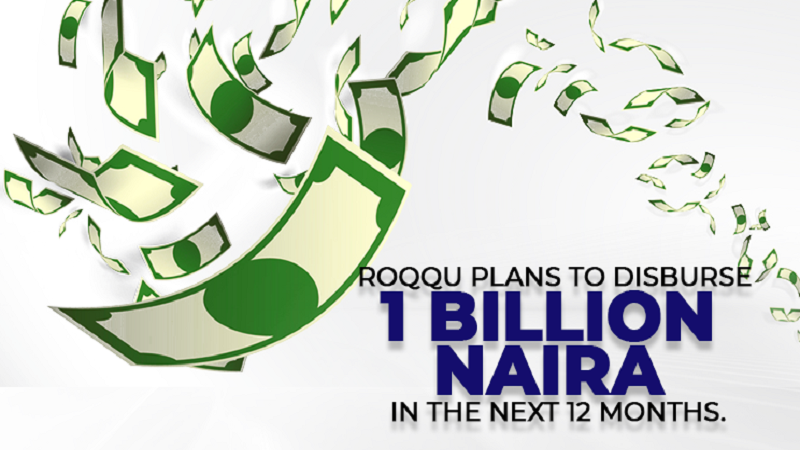
Roqqu disbursed 600 Million Naira in referral bonus and plans to disburse 1 billion naira in the next 12 months

0

Everyone learns in school that the sole purpose of business is to make money. This unfair story sits deeply in the minds of Nigerians and their economic system. It shapes the actions of most organizations. Furthermore, a glance at history shows how such beliefs narrow our point of view, limiting anyone that harbours it to unfavourable long term repercussions.

The Goal

One of Roqqu’s aims is to show, inexorably, that – at the heart of our most admired, top-rated, and enduring businesses – society and her people are not factors to be used as a means to an end. To Roqqu, the people are the ends themselves. They are the core reason for the entire adventure in the first place. Hence, society and human values drive our decision making process.

Roqqu has a goal to leave a mark on the financial lives of the people. For one thing, raising financial security requires the employment of actions that support families to move forward. Indeed, Finance, education, justice, health, and taxation are all factors that must be utilized. However, a financial system that focuses on the people and ensures access to fundamental financial goods, services, and goals, is playing its part.

Some companies do more to provide income or extra cash for customers once in a while. Roqqu, inturn, takes this commitment two steps further. We share our revenue from every cryptocurrency transaction with our users. In other words, Roqquians who refer people to the app become part of our revenue-pool, constantly earning extra cash on every transaction made by their referrals.

Under these circumstances, everyone can catch a glimpse of our priorities, seeing where we stand with respect to our customers. In the end, those businesses that put the people in front of their actions generally serve the longest. They are rewarded for being an evolutionary advantage.

Many Roqqu users know they can earn some easy extra cash by helping to spread the word; and they have done so. There’s a certain degree of responsibility attached when we refer a friend to a product or service we like, and seeing Roqquians appreciate the app enough to invite their friends, without the need of any incentive, is an adventure that drives incredible work and commitment from our team.

Nevertheless, Roqqu has spent Over 600 Million Naira giving bonuses to Roqquians who got their friends to sign up with their referral link. That’s not all. With respect to doing more for Roqquians, we plan to disburse over 1 billion naira for referral bonuses within the next 12 months.

How does the referral programme work?

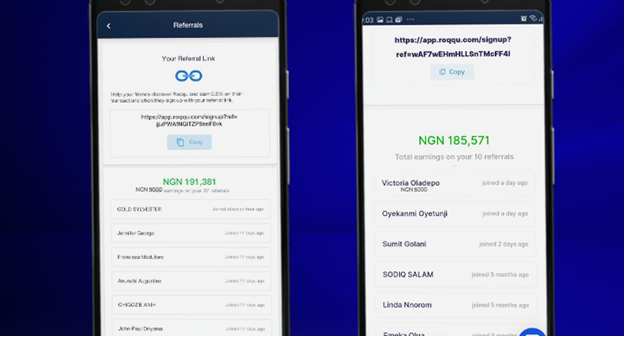
Help friends discover Roqqu by signing up with your link, and earn 0.5% on every transaction they make. It’s a very simple process, and costs nothing to participate in. Roqqu app is best served with friends and family, chilled.

Just login to your Roqqu app

  1. Click settings
  2. Click referrals
  3. Copy your referral link, you can’t miss it!
  4. Share it with friends.

For Roqquians who may not know about the referral bonus, those who may have forgotten, or do not use it because they are unaware of its massive advantage in extra cash, this is a quick way we have provided for Roqquians to earn without stress. Apart from Sharing your referral link, everything else is automatic. Everyweek, Roqquians gain additional funds, cashout, or use the compiled extra for any of our services, products, or listings. So what are you waiting for? Share Roqqu today and continually earn passively.

Click link to download the Roqqu App on Android Google Playstore and IOS Apple Store

Or

Get Started Here Sign up