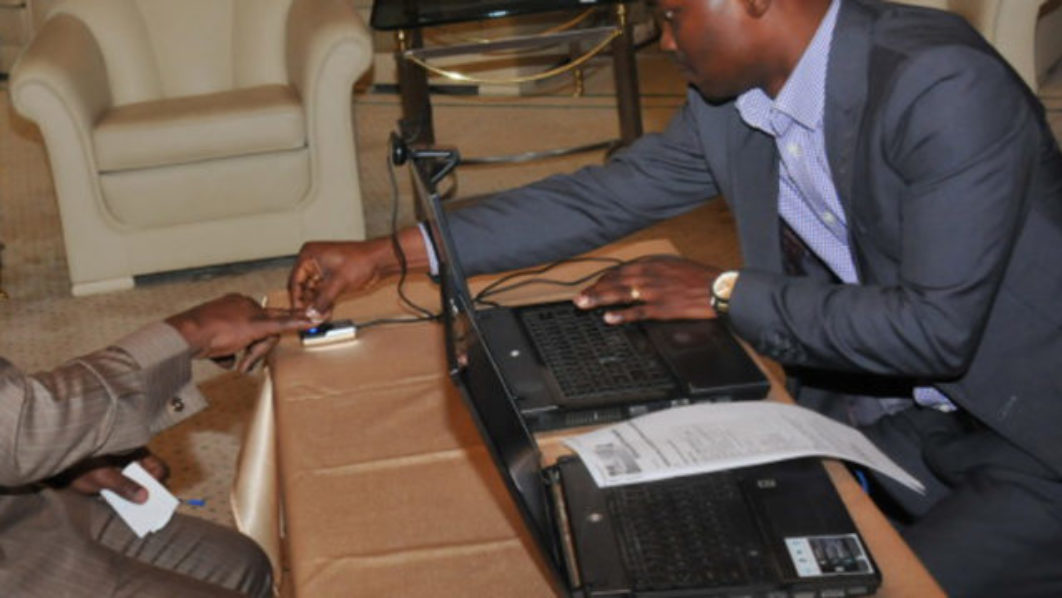
As the Nigerian government counts her gains over the recent introduction of the Integrated Payroll and Personnel Information System (IPPIS), virtually all the concerned workers count their losses and are engulfed in fear of the unknown.
The IPPIS is a project initiated by the Federal Government (FG) in Nigeria’s public service sector via the use of the Information and Communications Technology (ICT). It was introduced to adequately prove the effectiveness and efficiency of payroll administration in the government’s Ministries, Departments and Agencies (MDAs).
Prior to its implementation by the FG, it was outlined that the IPPIS would accurately and reliably provide the overall personnel information as required by the Office of the Accountant General of the Federation (OAGF).
Nigerians were further informed that the electronic platform, if fully implemented, would drastically and holistically reduce or completely eliminate all forms of corrupt and sharp practices as well as facilitate modern scientific and apt budgeting cum forecasting.
It’s noteworthy that the IPPIS could boast of a separate department under the OAGF. The department or unit is solely responsible for payment of salaries and wages directly to FG employees’ bank accounts.
It has equally been reported that apt deductions are instantly made, followed immediately by remittances to a team of third party beneficiaries such as the Federal Inland Revenue Service (FIRS), State Boards of Internal Revenue (BIR), National Health Insurance Scheme (NHIS), National Housing Fund (NHF), Pension Fund Administrator (PFA), Cooperative Societies, Trade Unions’ Dues, Association Dues, Bank Loans (if any) and what have you.
Recently, the IPPIS department boasted that since the inception of the tech-driven mechanism in April 2007, the unit had saved billions of naira for the FG via elimination of thousands of ghost workers and allied matters.
It’s worthy of note that the streamlined key functions or core mandate of the IPPIS department are, but not limited to: management of FG employees’ records, payment of salaries and wages to the employees, deductions of taxes and other third party payments, remittance of payroll deductions to the benefitting bodies, and enrolment of new employees into the IPPIS database.
The overall mission of the IPPIS is to pay the FG employees on-time and accurately within statutory and contractual obligations. Whilst its vision is to have a centralized payroll system that meets the needs of the said employees as well as help the government to plan and manage payroll budget by ensuring proper control of personnel cost.
It could be recalled that recently, sequel to the FG’s frantic move to ensure that all employees are duly enrolled into the IPPIS, the workers of the federal tertiary institutions of learning across the federation – particularly those of the universities – frantically rejected the plan, stating it was against the international extant law that permits the university autonomy.
Owing to the government’s insistence, the majority of the opposing university personnel succumbed to the pressure, hence reluctantly agreed to enroll into the tech-driven system having been conscientized that they would be happier while being paid via the IPPIS.
It’s worth noting that every existing varsity in the country is made up of four distinct workers’ unions, namely: the National Association of Academic Technologists (NAAT), the Academic Staff Union of Universities (ASUU), the Senior Staff Association of Nigerian Universities (SSANU), and the Non-Academic Staff Union of Universities (NASU).
So, during the struggle between the FG and the aforementioned unions over enrolment into the IPPIS, three out of the four – namely NAAT, SSANU and NASU – were outshined by the pressure as the ASUU stood its ground, insisting it would never be a party to such scheme, which was seen by its members as a means by the FG to ridicule their rights.
However, it was claimed by the OAGF that some members of the aggrieved ASUU, whom were regarded as saboteurs and cowards, were captured into the IPPIS in spite of the directive issued by the national leadership of the union instructing every member to steer clear of the exercise, which they said was shrouded in secrecy and pranks.
The members of the three unions, who were rigorously captured into the electronic system at the wake of 2020, reportedly received their first salaries via the IPPIS in February same year. Consequently, the salaries of the subsequent months till date have been paid through the platform.
The intriguing part of the payment made by the IPPIS department to the university staff was the claim by the latter that their respective salaries were heavily deducted coupled with the allegation that their expected consequential arrears of the newly approved National Minimum Wage was not included.
The affected personnel lamented that at the time they were expecting to receive higher income (wage), the IPPIS department rather short-paid them without their consent or knowledge. According to them, aside from the required arrears of the new minimum wage, their Earned and Peculiarity (Hazard) Allowances were obviously omitted from the payments, thereby impoverishing them. They, therefore, urged the OAGF to urgently look into the matter towards addressing the anomalies.
While this set of workers was still arguing and crying woefully over the perceived anomaly, the ASUU members who received the arrears of their withheld salaries, after they returned from their industrial action that lasted for several months, equally reportedly suffered from similar fate.
Intriguingly, reports following the payment of the ASUU members disclosed that the said workers were paid via the IPPIS as it was mentioned in their respective bank alerts. One might then wonder how they could be paid through the IPPIS without being captured into the digital platform through a biometric method as required by the scheme.
The OAGF had stated that the alleged deductions in the university workers’ salaries were as a result of the legitimate taxes accruable to their wages, which were initially overlooked or not properly captured by their various institutions during the era when they were paid autonomously.
Analysts and concerned observers have been compelled to believe that the FG is only focusing on taxing the workers hugely and ‘unreasonably’, citing it as the government’s main current source of income since other sources of revenue are apparently grounded at the moment.
The various affected unions in the universities and other federal tertiary institutions have hitherto insisted they would opt-out from the IPPIS, threatening a shutdown of their schools. They have unanimously agreed to embark on indefinite industrial action if the outlined issues weren’t sorted out.
These uncalled technicalities, peculiarities and intrigues emanating from the IPPIS platform have an unequivocally myriad of questions to be answered by the OAGF. Hence, questions concerning paying the university teachers via the digital platform without involving biometric capturing, over-deductions of their gross worth, and what have you, must be attended to by the concerned authorities.
These countless challenges must be holistically taken care of before the world starts seeing Nigeria as a point of laughter or a comic centre. It’s appalling that in a bid to resolve an existing corrupt-related practice, another form of corruption is being witnessed in return.
It’s even more baffling when realized that the said office had accused the universities’ management of forwarding the names of dead workers (lecturers) to be enrolled into the IPPIS. Isn’t it shameful and disgraceful for the office to make such a claim public, having earlier notified Nigerians that the IPPIS was targeted to eradicate any form of hitches, aberration and corruption from the system?
Inter alia, the OAGF had earlier enthused that the IPPIS would ensure prompt payment of workers’ salaries, yet we are currently notified by the concerned employees that their wages are invariably deposited after many days of each month end.
Whatever the realities might entail, the OAGF must take into cognizance that they are dealing with a set of individuals who are widely believed in the society to possess high degree of intelligence, knowledge as well as sense of ingenuity and technicalities, hence the need to do the needful henceforth.
Like this:
Like Loading...