DD
MM
YYYY

PAGES

DD
MM
YYYY

spot_img

PAGES

Home Blog Page 5532

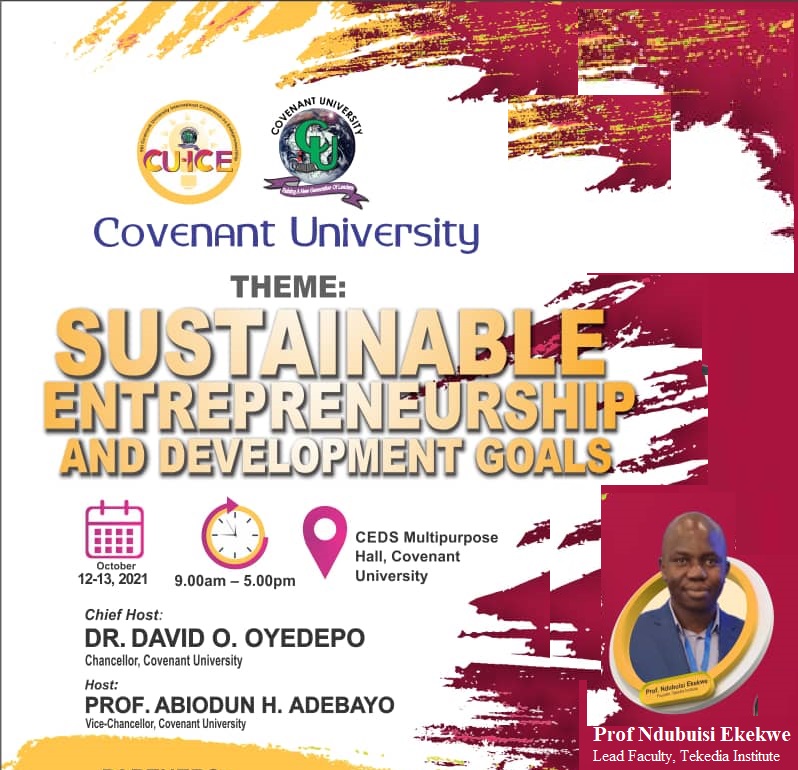
Ndubuisi Ekekwe To Keynote 2021 Covenant  University CU-ICE conference

0

It is one of the finest in the nation and I am honoured to keynote this year’s Covenant  University CU-ICE conference. The theme is Sustainable Entrepreneurship and Development Goals. To Vice Chancellor Prof Abiodun Adebayo and Chancellor Bishop Dr David Oyedepo, thank you.

Chiwetalu Agu’s offence viz a viz the lawlessness of the Nigerian Army

1

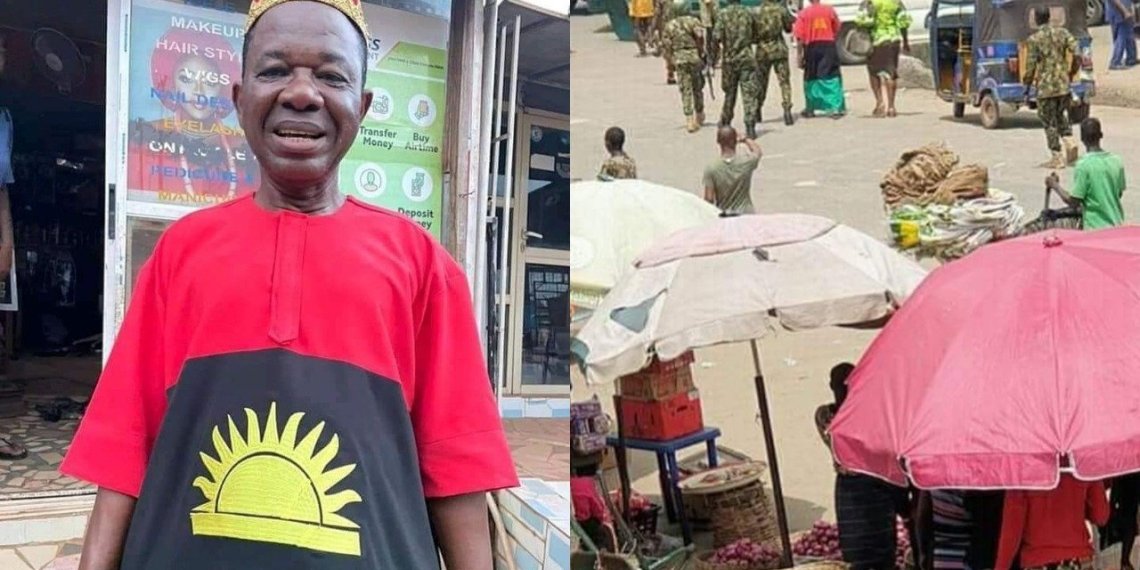
On Thursday’s been the 7th day of October, 2021 while the nation awaits in awe and dampen spirit the 2022 budget presentation of the Mr president to the National Assembly and the citizens being engrossed with the thought of the reality of the economic recession that’s closing down on Nigeria due to the ineptitude of the managers of the economy and the inabilities of the stakeholders of the nation, the military derailed (again) from their statutory assignments given to them by law, became power drunk and exhibited lawlessness which is their second nature and attacked a renown nollywood actor and elder statesman, Mr Chiwetalu Agu, berated him before his fans, lovers and passers by. They dragged him around the streets of Onitsha like a common thief who stole a pound of salt from the village market square. They also went ahead and groped him and threw him into their van like a condemned criminal who has been sentenced to death by firing squad and took him all the way to Enugu State from Anambra state where he was detained and tortured for over 30 hours.

What was his (alleged) offense?

According to the official statement released by the Nigerian Army which was signed by the Army Director of Public Relations, Brigadier General Onyema Nwachukwu, they alleged that Mr. Chiwetalu Agu was arrested while soliciting support for the Indigenous People of Biafra (IPOB) which is a proscribed sect. They also claimed that the renowned Nollywood actor who had worked his way to the top to become one of the most sought after filmmakers in Nigeria was inciting people to join the Ipob sect and garnering support for the Indigenous People of Biafra (IPOB). They pointed to that fact that Mr Chiwetalu Agu was putting on an attire and colours used in Identifying the Biafra separatists as an evidence that he was inciting other countrymen to join the Biafra cause and garnering support from his fans and supporters to align their interests with that of the Indigenous People of Biafra at Upper Iweka in Onitsha, the popular commercial city in the South Eastern Nigeria where the incident took place.

Is wearing a cloth or colour used in identifying a sect or group which is proscribed an offense known to law?

The answer is typical ‘No’.

There’s no law in Nigeria criminalizing or punishing anybody for wearing a color or clothe used in identifying a particular group. Therefore, wearing a clothe or colour used in identifying a particular group does not make one a criminal and shouldn’t be treated as such and according S.36(12) of the Constitution of the Federal Republic of Nigeria, 1999 (as amended) which was appreciated and stretched in detail in the landmark case of Aoko V. Fagbemi and the recent case of George V. Federal Republic of Nigeria, the law is succinct as it clearly provides that on no account should anybody be punished for any offense or purported offense which is not known to law or any offense which is not written down in any law.

Therefore, in that angle, the Nigerian army exhibited a high level of lawlessness in descending on the old man and they owe him a proper apology with due compensations for the hardship and trauma he suffered in their cold hands.

Be it noted that i for one as an astute legal practitioner and a minister in the temple of justice is advocating for violence neither am I in support of citizens taking laws into their hands in the cause of them seeking for their voice to be heard. I am not also ignorant of the law that says once a group or sect is proscribed, being a member of that group or inviting others to join that proscribed group becomes an offense which is punishable at law and proscription offenses carry up to 20 years of jail term as provided in the Terrorism (Prevention Amendment) Act, 2013 but wearing a clothe which can be linked to a particular group cannot automatic be translated to membership or support for that proscribed group which the clothe identifies. So, there was no known offense committed here.

The recent acts of the Nigerian Army is setting them up for ridicule and disrepute as the Nigerian Army has distinct functions as highlighted by the constitution and other statutes and arresting or detaining a citizen for wearing a clothe used in identifying a particular set Is not one of them and even if Mr. Chiwetalu Agu committed an offense known to law it is the job of the police and not the army to call him to order.

World Bank Projects 2.4% 2021 Economic Growth for Nigeria

0

The Nigerian economy has made progress as the impact of COVID-19 wanes and the outlook of the oil market appears brighter. Thus, the World Bank Group has reviewed its 2021 Gross Domestic Product (GDP) projection for Nigeria, raising it to 2.4 per cent, adjusting the 1. 8 per cent it earlier projected.

In the report it captioned: “Africa’s Pulse: Climate Change Adaptation and Economic Transformation in Sub-Saharan Africa,” the multilateral institution commended the growth recorded by Sub-Saharan Africa. It said the region was set to emerge from the 2020 recession sparked by the COVID-19 pandemic with growth expected to expand by 3.3 per cent in 2021.

Though the World Bank acknowledged in the twice-yearly economic update, a brighter look for Sub-Saharan Africa, it also noted that current speeds of economic recovery in the region was varied, with the three largest economies–Angola, Nigeria, and South Africa, expected to grow by 0.4 per cent, 2.4 per cent and 4.6 percent respectively.

Excluding South Africa and Nigeria, the rest of Sub-Saharan Africa was rebounding faster at a growth rate of 3.6 per cent in 2021, with non-resource-rich countries like Côte d’Ivoire and Kenya expected to recover strongly at 6.2 and 5.0 per cent, respectively, the report said.

The Washington-based financial institution also noted that due to prudent monetary and fiscal policies, the region’s fiscal deficit, at 5.4 percent of GDP in 2021, was expected to narrow to 4.5 per cent of GDP in 2022 and 3 percent of GDP in 2023

According to its report, the rebound in the region was being fueled by elevated commodity prices, a relaxation of stringent pandemic measures, and recovery in global trade, but remains vulnerable given the low rates of vaccination on the continent, protracted economic damage, and a slow pace of recovery.

It explained that the growth for 2022 and 2023, would also remain just below four per cent, continuing to lag the recovery in advanced economies and emerging markets, and reflecting subdued investment in Sub-Saharan Africa.

The Chief Economist for Africa at the World Bank, Albert Zeufack said the success of vaccine deployment will accelerate growth in the region.

“Fair and broad access to effective and safe COVID 19 vaccines is key to saving lives and strengthening Africa’s economic recovery,” he said. “Faster vaccine deployment would accelerate the region’s growth to 5.1 per cent in 2022 and 5.4 per cent in 2023—as more containment measures are lifted, boosting consumption and investment.”

The report pointed to developments that it dubbed “a positive trend,” which was that African countries have seized the opportunity of the crisis to foster structural and macroeconomic reforms, adding that several countries had embarked on difficult but necessary structural reforms, including the unification of exchange rates in Sudan, fuel subsidy reform in Nigeria, and the opening of the telecommunications sector to the private sector in Ethiopia.

“However fiscal discipline, combined with limited fiscal space, has prevented African countries from injecting the level of resources required to launch a vigorous policy response to COVID-19.

“Apart from mounting fiscal pressures and rising debt levels as they implement measures for a sustainable and inclusive economic recovery, Sub-Saharan African countries are also faced with worsening impacts of climate change,” the World Bank report said.

While the progress made so far was commended, the World Bank advised the countries to build on reform measures to tackle carbon emission. It said they should also harness this opportunity to make sustainable, resilient transitions toward low-carbon economies that can provide long-term benefits in the form of reduced environmental hazards as well as new economic development openings.

The report highlighted Africa’s unique context of low baseline development, pre-existing climate vulnerabilities, limited energy access, and high reliance on climate-sensitive sectors— as posing challenges but also providing opportunities to transform the economy and create jobs. It pointed out that private firms and governments in Africa were providing training for jobs in solar energy (Togo and South Africa).

Investments in climate-smart infrastructure could help cities create jobs, adding that de-carbonization was an opportunity to foster manufacturing activity in the region, including the production of components of the Internet of Things, value-addition to minerals that will power the green economy, and insertion into regional value chains, the report say.

With the increase in the number of solar-energy startups, supplying rural Africa with affordable electricity, clean energy economy is expected to increase in Sub-Saharan Africa by 2025.

Tata Group Acquires Air India

0

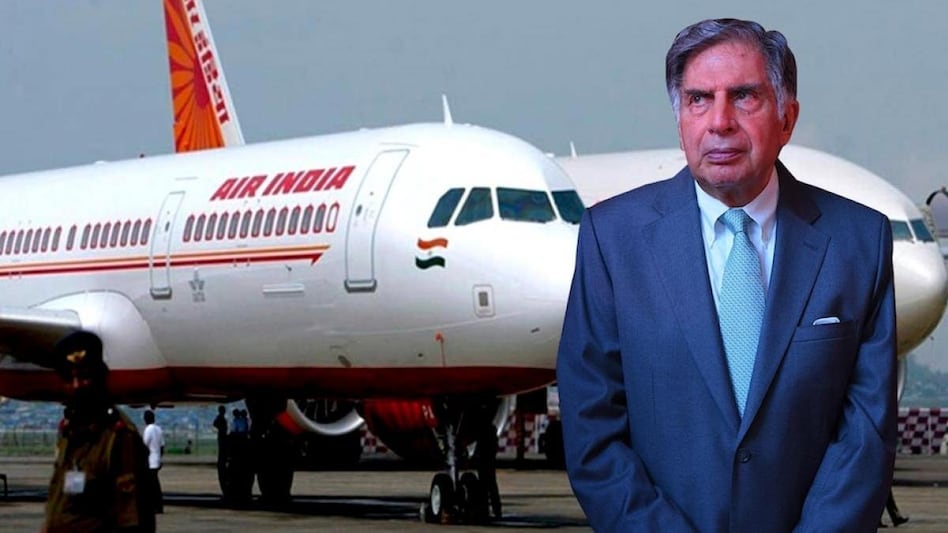
The Indian government has sold its national carrier, Air India, to the Tata Group, ending the long-wait for the divestment of the loss-making Airline.

The bidding was awarded to the country’s biggest conglomerate as the highest bidder at about $2.4bn. The deal includes a 100% stake in Air India and a low-fare unit in Air India Express as well as a 50% holding in ground-handling company AISATS.

“Talace Pvt Ltd won the bid to own 100% of government stake in Air India,” Tuhin Kant Pandey, secretary, Department of Investment and Public Asset Management (DIPAM) announced today.”

“Bidders have agreed to all terms and conditions. Five bidders were disqualified as they did not meet the criterion,” the Dipam Secy said. “The process was carried out in a transparent manner with due regard to confidentiality of bidders.

Air India has many assets, including prized slots at London’s Heathrow airport, a fleet of more than 130 planes and thousands of trained pilots and crew. Under the takeover deal, Tata Group will retain all AI employees for one year, and can offer VRS in the 2nd year, as per the Aviation Ministry.

Group of ministers known as the Air India Specific Alternative Mechanism, headed by home minister Amit Shah and included finance minister Nirmala Sitharaman, commerce minister Piyush Goyal and aviation minister Jyotiraditya Scindia, approved the bid winner.

The Tata group originally founded the airline in 1932 before it was taken over by the government in 1953. The government has failed to make the national carrier profitable, and overtime, it has racked up losses worth $9.5bn, leaving it with no option than to sell the airline.

The success of the takeover by Tata is a big boost to Prime Minister Narendra Modi’s government reforms, as the previous attempt to sell 75% of the airline in 2018 failed.

The deal was brokered after the government made it more attractive by simplifying the debt terms for buyers. The reserve price was fixed at Rs 12,906 crore, and the winning bidder will take Rs 15,300 crore debt, according to EconomicTimes. Bids for the carrier were sought at an enterprise value. Under the formula, a minimum 15% was to go to the government and the rest will be used to reduce existing debt.

Analysts say that Air India would bring in benefits for the Tatas, if the group plays it right.

“Air India has come full circle, back into the arms of its founders, the Tatas. Bold, brave move but will it be bountiful for the new owners? If they play it right, take advantage of the vacuum presented by a post-Covid landscape, they can carve a new future for the national airline,” said Shukor Yusof, founder of Endau Analytics, a Kuala Lumpur based consultant.

“India’s got a lot going for aviation – a rising middle class, likely growth in travel & tourism domestic & from abroad & it sits between the Gulf & Southeast Asia, an area of vast potential for air travel. Finally it fits nicely into (PM) Modi’s privatisation plans. Of course there will be lots of challenges, including riding fuel costs, intense competition from LCCs & if Tata has the staying power to manage heavy losses during the initial takeoff period,” he added.

Analysts believe Air India remains attractive due to profitable infrastructure at its disposal and passenger growth of around 20% per year.

BBC noted that in addition to its fleet of over 130 aircraft, Tata will now have control of the following: Airline’s 4,400 domestic and 1,800 international landing and parking slots at domestic airports, as well as 900 slots at airports overseas.

Air India also owns millions of dollars worth of prime real estate. According to the aviation ministry, its fixed assets – land, buildings, planes – in March last year were worth more than 450bn rupees ($6bn).

The airline also has more than 40,000 pieces of art and collectibles, including an ashtray designed and gifted by Spanish surrealist artist Salvador Dali. In return the airline had given Dali a baby elephant, which was flown to Spain.

The Lonely Industrialist – Why Aliko Dangote Needs Help From Modern Entrepreneurs

5

Extremely tough comments on the piece where I noted that Dangote Cement paid the most tax in Nigeria. People, Aliko Dangote is not the only connected big man in Nigeria. He is not the only one the government has supported. BUT he is the most successful in making products people like. Dangote’s biggest connection and support is that NIGERIANS like his products. Period! Governments do not force us to buy his products even when we have options and choices.

Dangote Capital lost $millions and folded because others were better there. Liberty Merchant Bank, his bank, wasted $millions and collapsed because Oba, Ovia, Elumelu, etc were better. Dangote Noodles burnt $millions and later was sold to Indomie noodles when it could not sell because Nigerians preferred Indomie. 

But Nigerians want me to believe that when he wins, it is because of the government. Sure, he taxes Nigeria as conglomerates do, but do not diminish his generation’s finest businessman, on the premise that he wins because of the government, and not that customers like his products.

As an entrepreneur, I am working hard to join Dangote so that he is not lonely there. Yes, you can have a new person to attack. My desire is that by 2023, Tekedia Capital will have at least two unicorns (one is likely next year). If that happens, very soon, governments will come and ask:  “Ndubuisi, we want you to fix Aba drainage, what are your terms?” Then, I will open this playbook:  Conglomerate Tax

That will help Dangote (diverting attention from him)  a lot as many will then say: see, the government gave him all the best drainages on the terms which it could not give me. Nigerians, time to work and build. No one keeps wealth for decades unless customers FUND him.

Dangote Conglomerate Taxes