


Tesla Sets Up Supercharger Stations in Morocco, Suggesting Move into African Market

The long-awaited Tesla entry into the African market may have become a reality as the leader in electric vehicles has deployed its first two Supercharger stations in Morocco.
African has been sidelined while Tesla expands production and sales to Asia and Europe, a situation that poor infrastructure is largely responsible for.
Electrek, which first reported development, noted that deployment of supercharger stations is generally the first step toward Tesla entering a new market. That’s why it’s interesting that Tesla is now opening its first Supercharger stations in Morocco and consequently, the first Supercharger stations in Africa.
It is not clear if the move involves opening a factory, but it sure shows that Tesla is moving toward registering its presence in Africa, which will boost the number of Tesla vehicles in the continent.
Africa is bedeviled by poor infrastructure that doesn’t support the electric vehicle market, which has kept it out of Tesla’s plan even as the automaker records an increase in production and sales globally.
Tesla produced a record-breaking 237,823 electric vehicles and delivered 241,300 in the third quarter of the year, beating expectations. But a few of this number made it to Africa.
Africa’s infrastructure deficit has hindered CEO Elon Musk’s dream to launch Tesla in his native Africa, and it is a concern shared by many in Africa, who wish to own a Tesla car.
Nevertheless, as Electrek noted, though there are plenty of Tesla cars in Africa, they have been privately imported by individuals who have to jump through hoops to make it happen.
These owners face huge challenges charging and maintaining their vehicles since Tesla doesn’t support the market with service centers, Supercharger stations, navigation updates, and connectivity. Tesla has solved these problems in its existing markets by firstly deploying Supercharger stations and service centers.
According to Electrek, there are only four Supercharger stalls at each station and they are only v2 150 kW, which is the previous generation of Tesla’s Supercharger technology.
However, while the gesture points to a desire by Tesla to venture into Africa, it could be a strategic move by the automakers to serve the needs of its nearby markets.
What Electrek thinks.
Based on those locations, those first Superchargers in Africa might be more about servicing vacationing European Tesla owners than the local market.
Nonetheless, it’s an important first step toward Tesla entering the African market. After opening those Supercharger stations, it will be easier for Tesla to open more.
There are already a decent number of Tesla owners in Morocco and a few other African markets.
Tesla has been known to look at the number of owners who imported their own cars into a market as a data point to consider officially entering the market.
In Morocco, Tesla is also doing more business after recently starting a supply agreement with semiconductor company STMicroelectronics based outside of Casablanca.
However, getting into the African market will require that Tesla sets up more than supercharger and service stations. With the epileptic situation of electricity in the continent, the major infrastructure that electric vehicles need to sell in Africa is largely lacking.
Addressing Nigeria’s Economy Via A Technology-Driven Approach
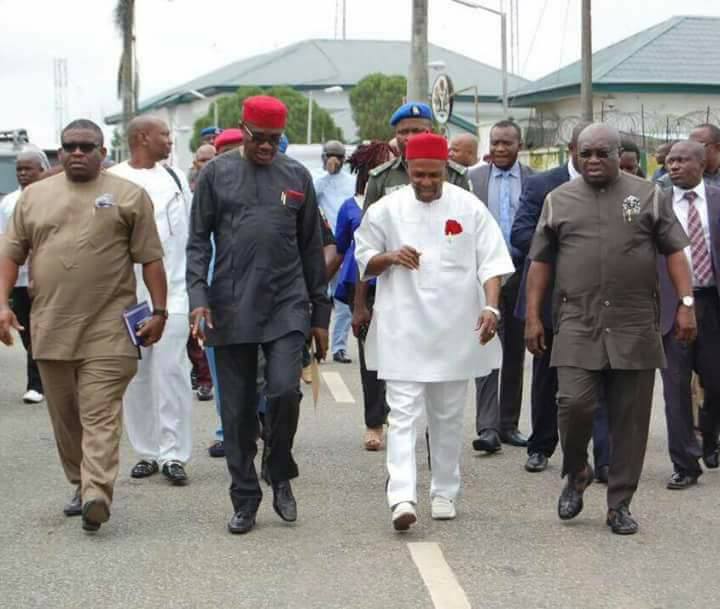
As Nigeria currently feels the ecstasy that accompanies her 61st Independence Anniversary, she equally needs to embrace a sober reflection with a view to addressing the epileptic physiognomy of the country’s economy.
One could boldly assert that the country’s current economic outlook is unequivocally synonymous with the medical anomaly popularly known as epilepsy.
Epilepsy is a severe neurological disorder marked by abrupt recurrent episodes of sensory disturbances, loss of consciousness, or convulsions, associated with unusual tremor in the brain.
It’s noteworthy that the aforementioned medical vice can be addressed through the application of lobotomy, a surgical operation in which some of the nerves in the human brain are cut.
The present Nigeria’s economy – likewise that of other apparently growing African nations – is arguably epileptic, thus requires such major surgery as lobotomy if the governments at all levels are genuinely prepared to deploy the needed political will towards salvaging it.
However, it’s pertinent to acknowledge that the recommended measure cannot be successfully applied if we fail to employ a tech-driven approach. This implies that technology remains inevitable towards salvaging the country’s economic posture that currently bears a pathetic look.
Development at any phase is always linked to technology and the latter takes place when there’s advancement in science. In other words, science, technology and development are all proportional to each other.
It’s imperative to acknowledge that development is required in every individual as well as nation, in all aspects. And for such effect to occur, science and technology must go hand-in-hand. Science is known as the study of knowledge, which is made into a system, and depends on analyzing and comprehending facts. Technology is the application of this scientific knowledge.
For any successful economy, particularly in present times, science and technology are the rudimentary requisites. If any nation fails to utilize these, then the chances of getting itself developed becomes minimal.
Technology is associated in all means with modernity, and it’s an essential tool for rapid development. Hence, any country that’s not able to prosper in this regard would never be able to sustain the lives within its jurisdiction and may have to solely depend on other countries for survival.
It was estimated by the World Bank that seven of the ten largest economies of the world by 2020 would be in Asia, including Japan, China, India, Indonesia, South-Korea, Thailand, and Taiwan. At the moment, the economic prophecy has conspicuously come to pass; this is because the countries in question were able to leverage the impact of technology on societal growth.
Just a few decades ago, most of these countries were known to have poor policies, low discipline and no advancement. But with an effective introduction of technology, they have succeeded in making waves all over the world.
Nigeria obviously needs to emulate them. Rather than begging them to come over and help us develop the country, let’s ascertain how they made it to the top, so we can apply the same techniques without seeking their assistance since we have all it takes to perform independently.
The truth is that the required manpower and resources abound in Nigeria. What the government needs to do is to recognize the needed labour-force and the available endowments, then consequently endeavour to do the needful.
They must be prepared to devote reasonable commitment, which is a product of time. This is where political will comes in. You must be willing to sacrifice your time and energy to a cause you believe in, if you really want it to become an absolute success.
Nigeria is ostensibly being taken aback by her leaders. If not, this country would have gone several steps ahead of where it is today. If the government must do the right thing as expected, it has to revive all moribund technical colleges across the country, resuscitate the ongoing Students Industrial Work Experience Scheme (SIWES), and adequately equip all the science-oriented departments in institutions of higher learning.
Furthermore, teachers’ wages must invariably be taken very seriously. These are the fundamental ways the country’s education sector can be strengthened. Similarly, the health sector, which is awash with outdated facilities, must equally be liberated by providing befitting structures and equipment that can stand the test of time. The country is already blessed with countless health experts, but they lack the needed environment to showcase their expertise.
Moreover, Nigeria lacks an industry where science and technology can thrive, thus she needs to create one by setting up an enabling environment that can accommodate every professional irrespective of their field or area of specialization.
Owing to the lack of such an anticipated environment, the country loses hundreds of talents and patents on a daily basis via brain drain. The government must be willing to assist anyone who has an idea, and not to abandon him or her to rot. A reliable agency that can listen to people’s ideas and channel them to apt quarters ought to be set up by the governments at all levels.
For urgency’s sake, we must embrace the agric sector through implementation of mechanized farming instead of the ongoing crude pattern. As regards the mining sector, the concerned authority must extend the hand of fellowship to the cognoscenti who must be indigenous, towards acquiring efficient output.
The power sector cannot be addressed if we fail to supplement the existing hydro pattern with other such available generation sources as solar, wind, biomass, and coal. The Tourism industry can equally be made more viable by inculcating tech measures in the system.
Security, on its part, cannot be left out while discussing technology. If the needed resources – both human and material – are eventually made available but aren’t well safeguarded, it would be an effort in futility in the long run.
Among all, tax evasion can only be properly tackled if we employ adequate forensic techniques. It’s not anymore news that countless establishments domiciled within the shores of the country have unabated dodged payment of taxes, yet nothing is being done about it, perhaps because the required mechanism to tackle the menace isn’t made available.
There’s no way we can solve Nigeria’s numerous economic crises without engaging technology. Even corruption, which remains the bane of the country’s democratic system, can’t be duly fought if we overlook tech techniques.
If someone is still skeptical that a tech approach can aptly and timely fix Nigeria’s epileptic economy, then he’s asleep and needs to be awake in earnest.
Decarbonizing African Business
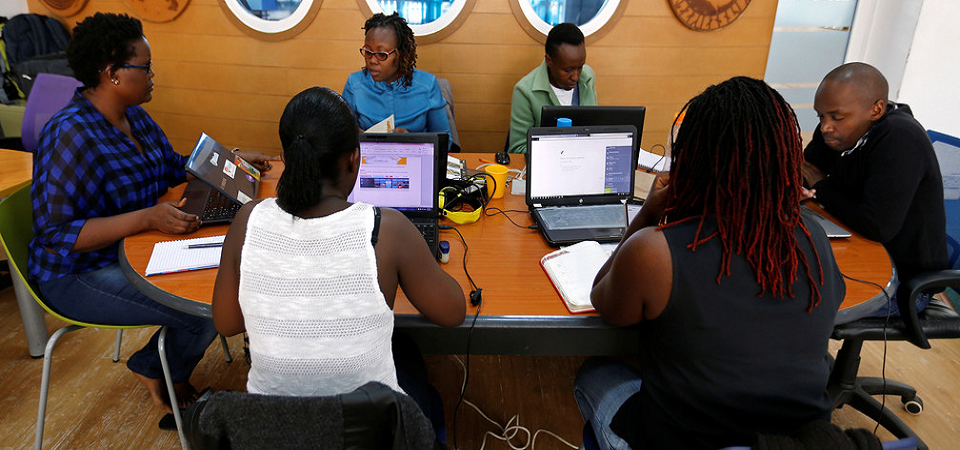
As the end of the fossil fuel ramps up, the battle for who will own the supply chain infrastructure of the net-zero energy age is gaining steam across the West and China. In this energy shift, we believe the West and China should bore all the huge costs of this transition. But then we contend with urgent local climate change issues also. If we are to make significant progress, we will need the costs of the energy transition to be distributed fairly. Yet African businesses must provide leadership into this net-zero age.
Because of the gradual shift in investment capital to green ventures, we should expect that citizens will take a chunk of the rise in energy costs; that’s because it is expected that fossil fuels will become more expensive in the years ahead. With lots of African nations living in energy poverty, it is even going to be tougher to drive in the message of clean energy. But we believe that energy-related behavioral change can help make an impact on energy transition strategy, which can only be possible with African businesses driving a consistent heightened energy awareness targeting Africans with well-aligned incentives.
Getting the African private sector to support this transition will demand a harmonized renewables sector. A sector fragmented and also having to contest against oil and gas projects with juicy yield remain challenging. To kick start this process, African private firms will have to join public sector investment. African government will have to work with its development partners to source long-term capital, while its private sector will fill in the balances, with a strong proposition of public good.
It is expected that this energy transition would cost Africa billions of dollars over the next decade yet African governments are faced with the paucity of funds and competitive modernization projects. A graduated, measured transition will help us navigate the net-zero age. African governments would have to work with development partners and private firms to share the cost. The increasing pace of the global energy transition means that each African nation would have to develop its national recovery plan to attract investments required for the transition. The bulk may be covered by private companies.
Fueling the transition
We expect that investment in the oil and gas sector will slow down, becoming very expensive. But we can forge new partnerships to develop storage and logistics projects toward hydrogen, ammonia, and renewable fuels. For countries like Nigeria that are looking for solutions to navigate volatile oil and gas revenue, they could join the Transhydrogen Alliance. This was set up for the production and import of green hydrogen and green ammonia into Europe. A strategic decarbonization effort, providing storage assets for the next generation of low carbon fuels. Africa should participate in this alliance or develop its alliance with key partners so we can all work together to meet the ambitious, and essential, Paris carbon reduction targets.
It is time for African firms to invest in the energy transition. We believe such investments should focus on local companies driving or benefiting from the emerging net zero-age pulling us from fossil fuels. The categories should include distributed energy, electrification, mobility, and resource efficiency.
Disruption is coming to a business near you
We anticipate that 500 multi-billion-dollar energy companies globally are going to be disrupted in this energy transition. Those companies operate in every area of our economy. We view the energy transition as a far-reaching shift in fuel sources (from fossil fuels to renewable, carbon-free sources) and fundamental changes in how energy is generated, distributed, and consumed
This means shifting from a centralized, highly regulated set of technologies and markets with passive consumers to much more distributed, intelligent, and networked technologies and markets, and more active consumers. African businesses must take advantage of this opportunity to invest across these multiple themes- electrification, distributed energy, mobility, and resource efficiency. COVID19 has taught us the essence of resilience. We need to support the evolution of ecosystem technologies and products which are necessary to drive the massive shift underway from gasoline-powered transportation to electric transportation.
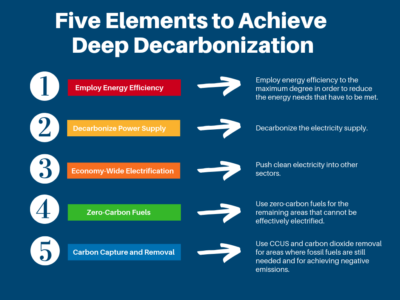
Many new business cases will require financing for low carbon energy solutions and transition finance to assist in making the shift. The focus should be on transitioning the whole value chain, rather than just the scope of the business. This will lead to significant climate impact and better returns. We can only do more if we measure our climate actions by participating in industry metrics, disclosures, ratings, carbon budgeting, and carbon pricing. We will need to build digital platforms where this can happen.
There are climate action financing opportunities for those who demonstrate the right combination of financial and climate returns in the context of a planned transition. Inaction also means missing out on the commercial opportunities from innovative propositions and business models, as offered by this energy transition.
In all, For African businesses to make significant progress on this energy transition, we will have to marry business and technologies as the transition depends on them. Each driving the other and sustaining the other. But R&D will be the lubricant while African businesses must innovate their business models as R&D provides cost-competitive technologies. African businesses must invest to decarbonize with a mindset of transition rather than cleansing, engineering out emissions in all scopes, or even building an oasis of green. We have to acquire the leadership know-how, align our corporate and community incentives and promote an internal experimental culture to excel in this energy transition.
When do you begin the Growth phase in your company?

When do you begin the Growth phase in your company? When you can retain customers and that demonstrates that you have a product-market-fit. If you ramp up growth when you cannot retain customers, you will burn money, and achieve nothing.
More so, retaining customers means that your next cohort of customers MUST have better experiences than the previous, demonstrating that you are closing the gap between the frictions in the markets and the solutions you have for them.
That gap must keep getting smaller as your product continues to mature. In further mathematics in secondary school, they call it an asymptote (closing the gap as the limit tends to infinity).
Do not scale a product that does not have a market fit yet. You will waste your resources. Have patience, get a market fit and then ramp-up.
I used to be super-academic here with bluntness and perspectives anchored on data, telling companies how I see it. But I have stopped those posts as they made many lose confidence in themselves. I recalled asking a company which raised more than $100m to sell itself. That ecommerce firm was using money to attain growth when the product had not attained any fit in the market.
In Tekedia Mini-MBA, many asked us to give them options to prepay for 5 years; Emmanuel S Akintunde first asked, and now we have dozens. Immediately, we knew that we had obtained the optimal state that members could pay for an online school 5 years ahead. With that validation, we began the growth phase.