DD
MM
YYYY

PAGES

DD
MM
YYYY

spot_img

PAGES

Home Blog Page 5539

The Age of Opportunity is Here As Facebook And Partners Continue To Expand Subsea Cable

0

Facebook and its partners continue to connect Africa. Very excited that south-east Nigeria is part of the big network: “Now connecting three continents, Africa, Europe and Asia terrestrially through Egypt, 2Africa creates unique connectivity by adding vital landing locations in Oman (Barka), UAE (Abu Dhabi and Kalba), Qatar (Doha), Bahrain (Manamah), Kuwait (Kuwait), Iraq (Al-Faw), Pakistan (Karachi), India (Mumbai), and a fourth landing in Saudi Arabia (Al Khobar). The new 2Africa branch joins recently announced extensions to the Canary Islands, the Seychelles, Comoros Islands, Angola, and a new landing to south-east Nigeria.”

This has a real impact on the immersive connectivity I have predicted to begin in 2022 in Africa. With SpaceX Starlink coming, and DStv Internet making itself an ISP, distribution channels and core infrastructure providers will abound. Whenever that happens, price drops and opportunities mushroom everywhere. People, this is the age of opportunity.  Yes, the African digitization era will be decades-long and it will create immense wealth like never before. 

I predicted that immersive internet connectivity will hit Africa by 2022. That prediction is just coming along as SpaceX Starlink begins beta testing of its satellite broadband program. The price as announced by SpaceX is high but after two generations of this product, I expect the price to normalize. Then, the redesign will begin as terrestrial-based broadband service providers like MTN and Airtel in Africa will have to take drastic actions on their services.

Begin to build. Well done Team Facebook.

Full press

The 2Africa consortium, comprised of China Mobile International, Facebook (www.Facebook.com), MTN GlobalConnect, Orange, stc, Telecom Egypt, Vodafone and WIOCC, announced today the addition of a new segment – the 2Africa PEARLS branch – extending to the Arabian Gulf, Pakistan and into India. This extension will bring the total length of the 2Africa cable system to over 45,000 kilometers, making it the longest subsea cable system ever deployed.

Now connecting three continents, Africa, Europe and Asia terrestrially through Egypt, 2Africa creates unique connectivity by adding vital landing locations in Oman (Barka), UAE (Abu Dhabi and Kalba), Qatar (Doha), Bahrain (Manamah), Kuwait (Kuwait), Iraq (Al-Faw), Pakistan (Karachi), India (Mumbai), and a fourth landing in Saudi Arabia (Al Khobar). The new 2Africa branch joins recently announced extensions to the Canary Islands, the Seychelles, Comoros Islands, Angola, and a new landing to south-east Nigeria.

As with other 2Africa cable landings, capacity will be available in PEARLS landings at carrier-neutral facilities or open-access cable landing stations on a fair and equitable basis, encouraging and supporting the development of a healthy internet ecosystem.

To further support a burgeoning global digital economy, the expanded system will serve an even wider range of communities that rely on the internet for services from education to healthcare, and businesses, providing economic and social benefits that come from increased connectivity. As announced in May 2020, 2Africa was planned to directly bring seamless international connectivity to 1.2 billion people. Today, with 2Africa PEARLS, 2Africa will be providing international connectivity to an additional 1.8 billion people–that’s 3 billion people, representing 36% of the global population.

Alcatel Submarine Networks (ASN) will deploy the new system utilizing new technologies such as SDM that allow the deployment of up to 16 fiber pairs, double that of older technologies and bringing greater and more cost-effective capacity.

Political Risk Ranking in Africa, Nigeria Is #5 – Allianz Risk Barometer 2021

0

We like this content which we received via email.

Businesses in South Africa experienced major losses in July from physical damage, business interruption, and loss of revenue, looting, vandalism caused by civil commotion, protests and riots which resulted in about $3.4 billion in lost output and placed 150,000 jobs at risk. Political risks and violence ranked as a number five business risk in South Africa as a new entrant in the Allianz Risk Barometer 2021 demonstrating the significant risk for companies in the current environment. Political risks and violence also ranked as a top 10 risk in Africa and the Middle East (#6), Ivory Coast (#1), Nigeria (#5) and Ghana (#8) in the Allianz Risk Barometer 2021. The survey has been running for the past 10 years globally and six years in South Africa.  Globally, political risks and violence returned to the top 10 risks for the first time since 2018. Allianz Global Corporate & Specialty (AGCS) has prepared a Q&A to guide businesses on this topic.

Do businesses have to be direct victims of civil unrest to suffer financial losses?

Businesses do not have to be direct victims of civil unrest to suffer financial losses. Revenues can suffer if the surrounding area is cordoned off for a prolonged time or while infrastructure is repaired to allow reentry of customers, vendors and suppliers.

What can businesses do to prepare for political violence?

Preparation is key – in particular for exposed sectors such as retail. Businesses need to review their business continuity plans (BCP) and should be aware of their surroundings and what is happening around them. Typically, these only focus on national catastrophes, but there is a need for BCP plans to address political disturbances and other types of business disruption like cyber. Having defined, and preferably tested, procedures in place is crucial – these should include staff, client and general communication and social media plans. It is imperative for companies operating in countries that have a high risk of political or social upheaval to think deeply about how they can best protect their assets and people.

Who are the key stakeholders that businesses could work with before, during and after political violence?

Businesses will need to work very closely with crisis management experts from government, insurance and civil society to ensure that they have highly comprehensive and agile strategies. The experts need to enable clients to carry out evacuations in high-risk situations at short notice and provide prevention, risk mitigation and on-the-ground response services for emergency incidents. In evacuation cases, it’s a question of providing the resources and staff for rapid evacuation from politically unstable areas.

What can businesses do in terms of Strike Riot and Civil Commotion (SRCC) insurance?

Companies should review their insurance policies. In South Africa, the South African Special Risk Insurance Association (Sasria) provides cover for damage to property caused by special risks such as politically motivated malicious acts, riots, strikes, terrorism and public disorders. Looting is not a stand-alone Sasria peril and will only be considered as a valid claim in terms of Sasria if it occurs during an active Sasria peril for which Sasria accepts liability. Commercial and personal insurance policies in South Africa do not provide cover for damage to assets as a result of these types of events as insurers are precluded from underwriting these risks. Sasria insurance is available for material damage, business interruption, money, goods in transit, motor and construction risk. For commercial clients, Sasria cover in terms of business interruption is limited to fixed expenses or standing charges and net profit, but not for the traditional contingent business interruption covers such as losses following damage to premises of customers and suppliers, and to the supply of public utilities like water and electricity.

What’s the implication for multinationals operating in South Africa?

Sasria’s loss limit is R1.5 billion. The Sasria loss limit is split into two, primary layer R500 million and excess of loss cover R1billion. For large corporates and multinational organizations with global insurance programs, these limits may however be insufficient and may require additional cover in the form of a ‘riot wrap’ policy. The riot wrap cover also provides cover for exclusions of war and civil war, which are not covered under Sasria. Essentially, where combined material damages and business interruption values exceed Sasria’s R500 million limit, the riot wrap policy will provide extended coverage in respect of the claim once the underlying Sasria (or primary limit) is eroded.

What about political violence coverage in other countries?

Covers differ from country to country. Covers can be purchased from the insurance market to ensure that your business is comprehensively covered. Insurance companies have offered SRCC cover, either as part of property insurance or a stand-alone cover via the specialty political violence market, for a long time.

What does political violence insurance cover?

Political violence insurance provides coverage for terrorist acts, acts of sabotage, riots, strikes, civil commotion, malicious damage, insurrection, revolution, rebellion, coup d’état, war, civil war or counter-insurgency. Covers vary by line of business or country, but business insurance covers damage to property and contents when the cause is fire, looting or vandalism caused by civil commotion, protests and riots. Additionally, common extensions include denial of access (businesses shuttered because authorities have closed the area, whether damaged or not), loss of attraction (being closed, businesses cannot attract customers), and other civil disturbances.

What’s the importance of understanding local laws when it comes to risk management?

It is critical for risk managers of multinational organizations to understand the local laws and regulations of the country when it comes to managing risk.  They carry a significant responsibility to safeguard the business operations across multiple jurisdictions and falling foul of any compliance or local regulations could incur significant penalties and fines, notwithstanding reputational damage.  It’s here where the tripartite alliance between the risk manager, insurer and broker becomes pivotal in ensuring that there are no gaps or inconsistencies in insurance coverage, and where having risk partners with global presence and local market expertise becomes crucial.  On managing multinational programs, we look at a four C’s approach’ – managing costs, control and compliance, and ensuring coverage is correctly scoped and consistent across all operations.

 Quick planning tips

  • Maintain ongoing close communications with local, provincial and national law enforcement agencies
  • Coordinate response plans across functional disciplines (police, fire, medical, and private sector)
  • If time permits, install coverings over windows, doors, or other potentially vulnerable entry points (plywood or other suitable material) and place physical barriers to limit access
  • Close business before high risk times (evenings/night hours, scheduled protests, etc.)
  • Consider adding additional security staff
  • Remove exterior materials that can be burned, thrown or otherwise used to damage people or property.
  • Ensure exterior lighting is turned on to increase visibility.
  • Remove/secure high value inventory (Electronics, medicine, cash, securities).
  • Consider how quickly staff can recover and get back to work following an incident
  • Investigate if your company is over-reliant on a particular supplier or customer; avoid aggregation of suppliers
  • Think about supply chain vulnerabilities and the possible impact of political violence on them and create a contingency plan; this can create a contingent BI (CBI) scenario
  • Combine physical damage (PD) BI all-risks product with terrorism to minimize coverage gaps

Tekedia Capital Invests in Insurpass, an Open Insurance API for Africa

0

Tekedia Capital is excited to announce investment in Insurpass.  Insurpass is an Open Insurance API that aggregates innovative and affordable insurance products from leading Insurers, and delivers them through a single API access, allowing fintechs, banks and other digital platforms, to easily embed insurance products into their apps, offering insurance services to their customers, many of whom are uninsured.

Insurpass enables companies across all sectors to build, embed and offer digital insurance products to their customers through a fully integrated experience embedded into their own front-end environment. By building on Insurpass’ insurance infrastructure-as-a-service platform, your company gets a wide range of insurance products and the backend component you need to build, launch and manage an insurance vertical all accessible through a single API integration

More so, in the next coming weeks, Insurpass will make it possible for pension service and retirement service providers to reach new customers via APIs. Yes, just as you can buy your insurance products from your bank app or ecommerce app, a pension/retirement company can deliver its products via the same ecosystems. With that, informal sector workers can enroll for pension services even when watching a movie online. Connect with our team to integrate your insurance firm, pension, retirement service, etc.

Tekedia Capital is funding critical digital infrastructures that will advance Africa. To learn more about how we can fund your business or join our investment syndicate, please click here. The next investment cycle begins in two weeks.

Grenada is named the world’s first ‘Culinary Capital’

0

Grenada and its sister islands Carriacou and Petite Martinique have become the first “Culinary Capital.” The decision was made by the World Food Travel Association (WFTA).

According to WIC News, “The islands showcase many unique culinary assets. These hold the tradition of ‘saraka’, the national dish ‘oil down’, handcrafted rums and nutmeg ice cream. Spices on the island are used for both food as well as medicinal & wellness purposes.”

The Culinary Capitals program focuses on different culinary cultures around the world. The very fact that Grenada has been designated such high status is highly important for those who have a travel business.  The tourism sector starts to recover after a long break caused by the COVID-19 pandemic. For now, Grenada has become a sweet spot.

The benefits of being a resident of this country

  • Enhanced global mobility – This second citizenship grants access to 144 destinations, including China, UK, Russia,  the Schengen Area, and other visa-free and visa-on-arrival countries.
  • Fast processing within a few months – Grenada’s Citizenship by Investment program is one of the quickest in the world. Your application can gain approval within 120 days in case of investing in real estate on the island.
  • Inclusion of dependent family members – Grenada investment citizenship is a profitable and cost-effective way to gain full family citizenship. It allows adding a spouse, dependent parents and grandparents of all ages, dependent children below the age of 30, and dependent unmarried siblings above 18.
  • No need to stay in the country during the application process
  • No physical residency requirements
  • No tax on worldwide income

Grenada Citizenship by Investment options

There are two investment options, which differ in price. These are investing in the National Transformation Fund (NTF) or purchasing real estate.

The first option is simple, and the required contribution is 150,000 per individual applicant. The second option would cost a minimum of USD 350,000. The essential point to remember is that a smaller contribution amount and processing, application, and due diligence fees are also required. However, an applicant can resell their property. Thus, this is a good choice for those who want to pay off their investments.

To obtain Grenada citizenship, it is essential to apply for the services of a licensed citizenship programs provider, such as Migronis. They will help you with the preparation of the documents and getting everything polished. Thus, you’ll be able to obtain the desired citizenship as fast as possible.

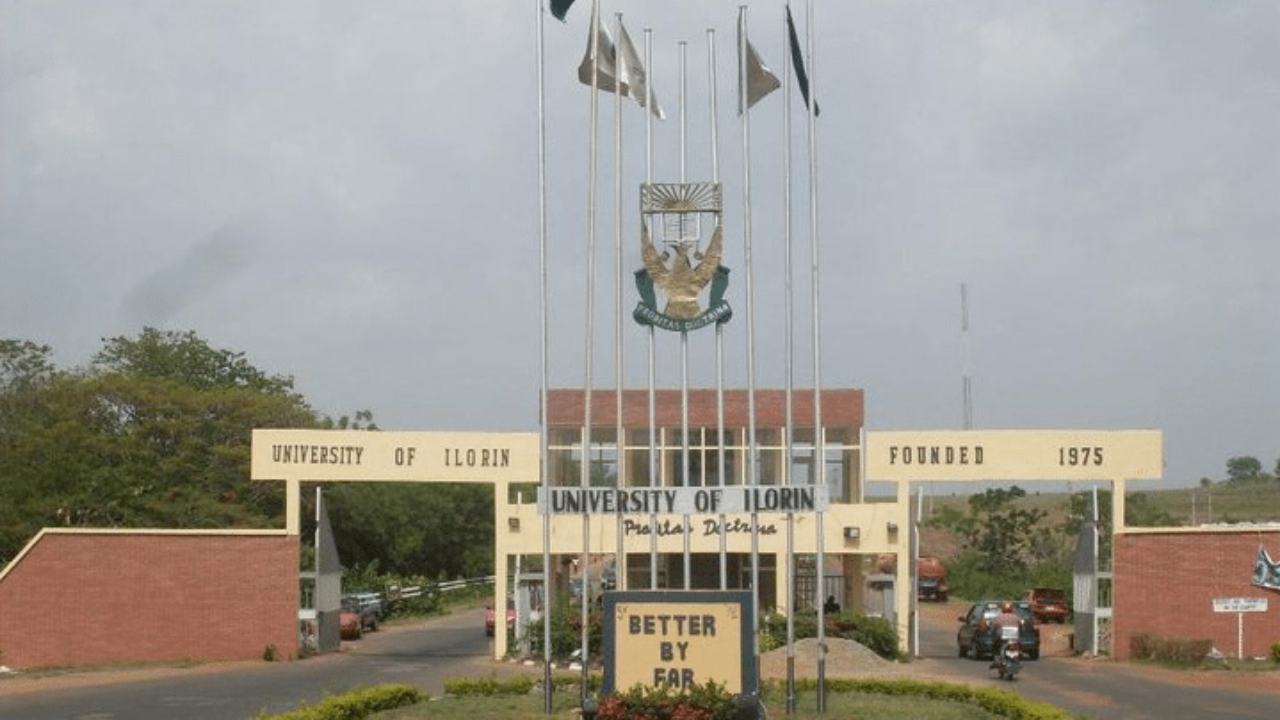
Welcome, University of Ilorin Students to Tekedia CollegeBoost

0

Tekedia CollegeBoost welcomes students from University of Ilorin under the First Lady of Kwara state, Amb Dr Mrs. Olufolake Abdulrahman, and  Ajike People Support Centre Scholarship scheme. CollegeBoost, a university student version of Tekedia Institute Mini-MBA, informally integrates into typical school programs, making it possible for students to master the mechanics of business, irrespective of their academic disciplines.

Students, your schools have prepared you already, Tekedia will simply expand your horizons in market systems. Welcome to our Institute.

To learn more about CollegeBoost, click here.