DD
MM
YYYY

PAGES

DD
MM
YYYY

spot_img

PAGES

Home Blog Page 5556

The Safety Tip And Why NYSC Should Be Spared

0

I know that many have  been sending high voltage verbal and textual abuse to the National Youth Service Corps (NYSC) over a pamphlet which it denied but has now acknowledged it created, according to Premium Times. The experts at NYSC felt the Service was doing the right thing. Good People, spare NYSC but focus on the law enforcement to make sure our roads are safe. While NYSC is asking its members to have phone numbers and get family members ready with cash in case a bad thing happens, some companies recommend loading a briefcase with cash.

In other words, this debate should not be waged on NYSC, rather on those who are paid to keep our roads safe – and I hope we stay focused and leave NYSC alone.

Of course, this is not to commend NYSC, but in  totality, if you do read the whole pamphlet, they wrote the tips purely to help the corps members, even though it was crazy in a non-failed nation (yes, you still pay tax to FIRS!)

In what appears to be a bold volte-face, the authorities at the National Youth Service Corps (NYSC) have admitted that copies of its pamphlets containing security tips for staff and corps members contain the “embarrassing” clause that advises corps members to prepare for ransom payment if abducted.

The organisation, however, noted that it realised that different copies of the pamphlets are in circulation with some containing the clause and others not.

The NYSC spokesperson, Adenike Adeyemi, in a terse message to PREMIUM TIMES on Friday noted that the organisation was already investigating the situation.

The reaction followed this newspaper’s insistence that copies in its possession contain the clause, and queries the rationale behind the hurried rebuttal earlier issued by the organisation on the matter.

Mrs Adeyemi, in a short response, simply wrote; “We realised different copies are in circulation. We are investigating.”

Comment on LinkedIn Feed

It’s an unwritten useful tip, the only hysteria here is that it was written. The NYSC cares and protects its own, it’s just doing what it thinks could help.

Keeping corps members safe is not the responsibility of the NYSC, because it’s not an armed organisation, same way it’s not the responsibility of INEC to keep voters safe. If our law enforcers are incapable of dislodging and neutralizing criminals, then we cannot vilify or chastise NYSC who tried to offer some known tips.

My only concern here for it not to have the unintended consequence of emboldened the criminals, who could become more daring, in the hope that payment of ransom is now a sure thing. We need to reverse this ugly trajectory.

The citizens look up to the police and military to keep them safe, if those saddled with this noble responsibility can no longer discharge their duties effectively, then it’s safe to democratise gun ownership here; you won’t worry so much about robbers or kidnappers when you are equally armed.

Most guns in use are in the hands of bad people, put guns in the hands of good people too, so that we can balance things out.

EU Proposes One Charger for All Devices Legislation, Putting Apple on the Spot

0
European Commission

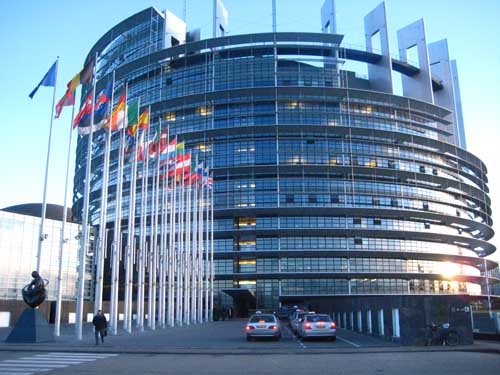
The European Union Commission is proposing legislation to establish a common charging solution for all relevant devices. The Commission said the legislation is key in curbing “e-waste and consumer inconvenience, caused by the prevalence of different, incompatible chargers for electronic devices.”

The proposed legislation will allow a harmonized charging port for electronic devices, making USB-C the common port. This will allow consumers to charge their devices with the same USB-C charger, regardless of the device brand, the Commission said.

The move is expected not only to curb e-waste, but ease consumers the burden of having separate chargers for their devices.

“European consumers were frustrated long enough about incompatible chargers piling up in their drawers,” Margrethe Vestager, Executive Vice-President for a Europe fit for the Digital Age, said. “We gave industry plenty of time to come up with their own solutions, now time is ripe for legislative action for a common charger. This is an important win for our consumers and environment and in line with our green and digital ambitions.”

Disposed of and unused chargers are estimated to pile up to 11,000 tonnes of e-waste every year.

As part of the legislation, producers will need to provide relevant information about charging performance, including information on the power required by the device and if it supports fast charging.

Following its facilitation of the voluntary agreement by the industry in 2009 that resulted in the adoption of the first Memorandum of Understanding (MoU), which has seen chargers reduced from 30 to 3, the Commission said it’s necessary to build on the progress through legislation as a new proposal by industry presented in March 2018 was not considered satisfactory.

USB-C will become the standard port for all devices including smartphones, tablets, cameras, headphones, portable speakers and handheld videogame consoles. The Commission also proposes to unbundle the sale of chargers from the sale of electronic devices.

Last year, around 420 million mobile phones and other portable electronic devices were sold in the EU. The Commission said 38% of consumers complained about their inability to charge their devices due to incompatibility. In addition, they spend €2.4 billion annually on standalone chargers that do not come with electronic devices.

The Commission will allow a transition period of 24 months from the date of adoption, to give industry ample time to adapt before the entry into application.

The proposed legislation means Apple will have a fresh challenge of altering its exclusivity once again to deal with. The American smart device maker has received a lot of criticism over its model of production, which does not accommodate products and services made outside Apple.

The recent ruling on Epic v. Apple legal tussle, which put new restrictions on Apple’s App Store rules that had prohibited developers from using third party links for payment, was a turning point. Apple’s exclusivity business model is seen as aiding its monopoly, intensifying calls to dismantle it.

The legislation will be another bold aim at Apple’s exclusive operations. However, as the rule will apply to Europe only, we have to wait and see if it will force Apple to change its chargers in all its markets.

The Nigeria’s Students Industrial Work Experience Scheme (SIWES) And Challenges Thereof

0

This page has hitherto been mainly interested in issues pertaining to technology or technical matters. This is the reason it would remain restless till Nigeria, and its likes, desist from misplacing priorities with frivolities.

Today, our focus is on the Students Industrial Work Experience Scheme (SIWES). It is a skill acquisition initiative designed by the Nigerian government to expose and prepare the undergraduates in universities, polytechnics, monotechnics as well as colleges of education for the industrial work situation they are likely to encounter after graduation.

The SIWES has conspicuously been on the decline for decades now that if drastic measures aren’t taken towards addressing the lingering anomaly, the scheme is liable to go into extinction in no distant time.

The Act establishing the Scheme made it to be a planned and supervised training programme based on specific learning and career objectives and geared toward developing the occupational competencies of the participants. It is generic, cutting across over 60 programmes in the universities, over 40 in the polytechnics/monotechnics, and about 10 in the colleges of education.

It isn’t meant for a particular course of study or discipline, though it was introduced mainly for the sake of technically-inclined ones.  Since inception, it has been reckoned to be an innovative phenomenon in human resources development in Nigeria.

While some institutions and disciplines permit SIWES’ duration for only three to six months, others go for up to one year. The programme, which permits the affected students to seek for Industrial Training (IT) or Teaching Practice (TP), as the case may be, in any establishment of their choice, has ab initio been a cause of concern to education and economic planners, particularly with respect to graduate employment and impact on the general societal development.

On the other hand, there are equally mixed feelings among education stakeholders concerning how much of the programme is actually helpful to students’ academic performance and job readiness after graduation.

Whatever positive impact the SIWES has thus far created on the students’ wellbeing and the society at large, the truth is that the primary purpose for which the programme was implemented has recently been relegated to the background.

The prevalence of the inability of SIWES’ participants to secure employment having undergone the Scheme, or even perform adequately if eventually employed, casts doubt on its continuing relevance to the contemporary industrial development drive in Nigerian society. This obvious lapse isn’t unconnected with negligence and/or apathy on the part of the trainees, trainers, concerned institutions, and the government.

It’s noteworthy that most of the undergraduates dodge the Scheme on a regular basis, thereby making mockery of its usefulness. They prefer indulging in activities that would fetch them money, to going for the technical knowledge. To this set of individuals, partaking in the industrial Scheme is simply a waste of time and energy.

In view of this misconception, when the programme is meant to take place, you would see them participating in all sorts of inconsequential menial jobs, or even gambling and what have you, just for the aim of raising some cash. This growing mentality of placing money before knowledge has contributed immensely in endangering the prospect of the laudable Scheme.

Those who bring out time to participate in the SIWES, are prone to one challenge or the other. It’s worth noting that a greater percentage of the trainees are not paid or remunerated by the establishments in which they are serving, not even stipend.

They would end up making use of their personal funds to service their transportation and accommodation fees while undergoing the Scheme. Pathetically, they are expected to be present at the workplace every day whilst the core staff are entitled to take some days off.

It’s more worrisome to realize that most of these trainees are overused by the firms. Rather than teaching the needful, the supposed trainers would engage them in unnecessary activities, hence making them lose interest in the actual training that necessitated their presence at the firm.

Worse still, most of the institutions involved don’t show any concern. They do not cough up time to supervise the students in their respective places of assignment. Ridiculously, in most cases, the schools would remain ignorant of where the students are undergoing the training till the duration of the programme elapses.

This particular loophole has over the years served as an advantage to those who never participated in the Scheme. In this case, during the SIWES defence at their institution, the affected student or anyone who dodged the programme would claim to have undergone the training in any establishment of his or her choice, and the supposed supervisor would never bother to ascertain the truth.

The unserious undergraduates would, in effort to substantiate their claims, make use of the stamp of a firm that does not exist anywhere on earth. Sometimes, the students go the extra mile of forging the stamp or seal of a known established company. The laxity of the concerned authorities would definitely give room for such illegality or malpractice to excel.

Inter alia, funding of the SIWES hasn’t been encouraging in recent times. The Industrial Training Fund (ITF) – the body responsible in the day-to-day funding of the initiative – currently appears incapacitated, probably owing to lack of adequate allocation of funds from the government and other financiers.

Most times, the students would be deprived of the statutory allowance they are entitled to after participating in the Scheme. Those who were lucky to receive theirs had to wait for a long time. This ugly phenomenon has overtime told on those who really participated in the programme.

The SIWES is obviously yearning for resuscitation, to assert the least. The present apparent moribund state experienced by the scheme can only be properly addressed by revisiting the extant Act that bind it with a view to making amends where need be. Such a step would enable every authority involved to start seeing the initiative as the needed tool towards the anticipated, or perhaps ongoing, economic diversification.

The policies surrounding the Scheme ought to categorically specify what is expected of the trainee, trainer, institution, as well as the governments at all levels, as regards the sustenance of the Scheme. Hence, there’s need for an exclusive viable law enforcement agency that would penalize or prosecute any defaulter from any of the concerned four parties as listed above.

It’s indeed high time we revived this technical-oriented initiative whose motive truly means well for nation building. This can only be holistically actualized by changing all the flat tyres that have succeeded in crippling the journey so far.

Nevertheless, for these bad tyres to be duly expunged, we as a people must be prepared and ready to tell ourselves nothing but the gospel truth.

What A Nation As Nigeria Records N2.293 Trillion Budget Deficit!

0

Nigeria’s whirlwind of revenue misfortune, compounded by COVID-19-induced economic strains and rising debt profile,  keeps taking toll on its financial status and increasingly downsizing the country’s budget implementation.

For the first quarter of the year, the federal government of Nigeria recorded a budget deficit of N2. 293 trillion, Minister of Finance, Budget and National Planning, Mrs. Zainab Ahmed said in the First Quarter (Q1) Budget Implementation Report (BIR). (source)

What a nation – and yet nothing is expected to change! It is physics, if you keep doing the same thing, expect the same outcome. Nigeria’s biggest problem is that everyone is a certified victim. The boy in Yobe who is denied access to education is a victim. The boy from Umuahia who rarely makes progress in the public sector because of his name is a victim.

The boy in Lagos who because rich men have no space to build more mansions but are filling lagoons with sands, and pushing his family house out of the way, is a victim.  The girl from Uyo who needs to explain that even though she is not part of the Big 3, her family pays the same tax rate and deserves all rights, is a victim. The girl in Kaduna who despite having all military institutions around her is not safe to attend school, is a victim.

So, when everyone is a victim, common sense dies.

People, the clear sign is that we have no money. But go to Abuja, you will be surprised that everyone thinks that we have tons. They are still opening more bureaucracies when in the real sense we should be streamlining things, cutting waste. For me, I do not think anyone believes that any small effort will change anything because everyone is a victim of Nigeria. And that is a big problem.

Now, who can reverse this trajectory – to make Nigerians become believers?

Nigeria Records N2.293 Trillion Budget Deficit, As Debt Servicing Takes Toll

Nigeria Records N2.293 Trillion Budget Deficit, As Debt Servicing Takes Toll

2
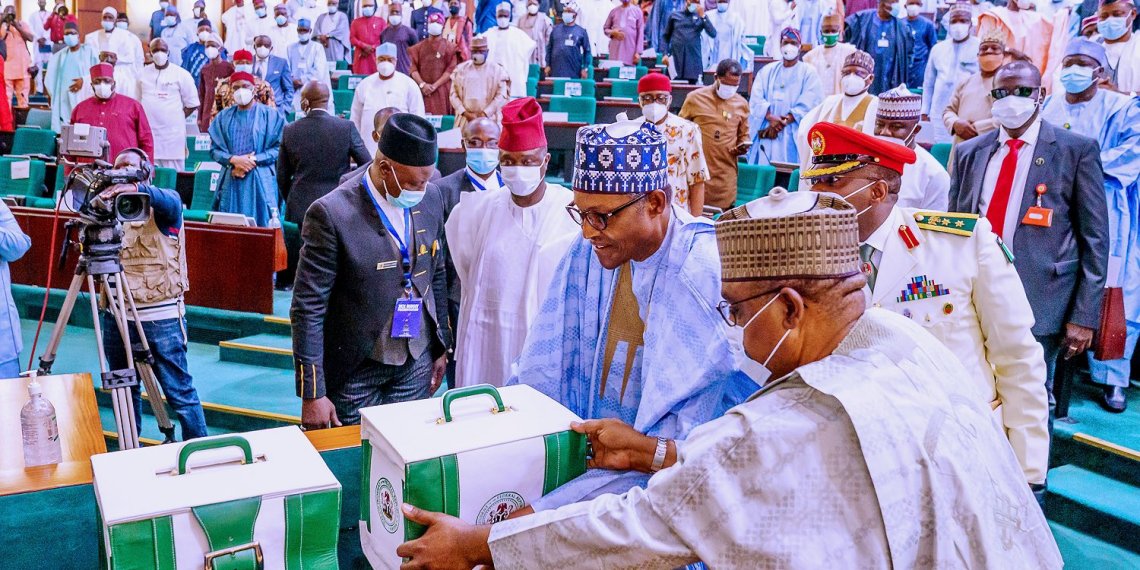
Presenting the budget proposal

Nigeria’s whirlwind of revenue misfortune, compounded by COVID-19-induced economic strains and rising debt profile,  keeps taking toll on its financial status and increasingly downsizing the country’s budget implementation.

For the first quarter of the year, the federal government of Nigeria recorded a budget deficit of N2. 293 trillion, Minister of Finance, Budget and National Planning, Mrs. Zainab Ahmed said in the First Quarter (Q1) Budget Implementation Report (BIR).

The BIR said: “The revenue and expenditure outturn of the Federal Government resulted in a fiscal deficit of N2.293 trillion during the quarter (6.43 percent of the 2021 quarterly GDP).

“The first quarter deficit was N1.070 trillion (87.51 percent) higher than the projected quarterly fiscal deficit of N1.222 trillion. The 2021 fiscal deficit was also higher than the N1.377 trillion deficit recorded in the first quarter of 2020. The deficit was partly-financed through domestic borrowing of N550.0 billion.”

N1.1 trn revenue

Vanguard highlighted the figures contained in the BIR as follows: The federal government total revenue stood at N1.091 trillion in the period under review.

This comprises N299.33 billion (27.43 percent) oil revenue and N792.09 billion (72.57 percent) non-oil revenue.

The amount received was N905.19 billion (45.34 percent) below the quarterly budget projection but N99.17 billion (9.99 percent) above the N992.25 billion reported in the first quarter of 2020

N3.4 trn expenditure

On the expenditure side,  the government  spent the sum of at N3.384 trillion, representing N502.29 billion (17.43 percent) and N1.014 trillion (42.80 percent) above the N2.882 trillion quarterly projection and N2.370 trillion reported in the corresponding quarter of 2020, respectively.

A breakdown of the expenditure indicated that a total of N1.096 trillion was spent on non-debt recurrent expenditure in the first quarter of 2021. This represents a decrease of N313.99 billion (22.26 percent) and N50.79 billion (4.43 percent) below the quarterly estimate of N1.410 trillion and N1.147 trillion recorded in the first quarter of 2020 respectively. Statutory Transfers was N124.13 billion during the review period.

A total of N384.52 billion was released and cash backed in the first quarter of 2021 for the implementation of 2021 capital projects and programmes of MDAs.

N813b Debt Service

Total Debt Service in the first quarter of 2021 stood at N813.10 billion, indicating an increase of N32.01 billion (4.10 percent) above the N781.10 billion projected for the quarter.

The sum of N581.27 billion was used for domestic debt servicing, while N231.83 billion was used for external debt service during the period under review.

The amount used for domestic debt servicing was N35.40 billion (6.48 percent) above the projection for the quarter.

Oil production

The BIR showed that average oil production and lifting (including Condensates) in the first quarter of 2021 was 1.72mbpd and 1.51mbpd respectively.

It said, “Oil production was 0.14mbpd (7.53 percent) below the 1.86mbpd benchmark for the 2021 Budget. The volume of oil production in the period was also 0.12mbpd (7.69 percent) above the 1.56m bpd reported in the fourth quarter of 2020 and 0.38mbpd (18.45 percent) below the 2.06mbpd recorded in the first quarter of 2020.”

N3.9b trade deficit

Nigeria’s total merchandise trade in the first quarter of 2021 stood at N9.757 trillion, representing 6.99 percent and 14.13 percent increase when compared to the values recorded in fourth and first quarters of 2020 respectively.

The export component of this trade stood at N2.907 trillion, representing 29.79 percent of the total trade, while import was valued at N6.850 trillion, representing 70.21 percent. The higher level of imports over exports resulted in a trade deficit (in goods) of N3.943 trillion.

Oil accounts for 66.38 % export

The value of crude oil export stood at N1.929 trillion (66.38 percent) of the total export while non–crude oil export accounted for 33.62 percent of the total export recorded in the review period.

Paying off Nigeria’s Public Debt Stock of N33.107 trillion has a price that infrastructural projects captured in annual budgets will have to pay. To cap it, the federal government is still making a move for fresh loan of $5.2 billion. Mrs. Ahmed said that the federal government spent 98% (N1.8 trillion) of the total revenue generated in the first five months of 2021 on debt servicing.

Going by this, a fresh loan will mean that Nigeria will need more revenue than it’s generating to service loans – that will guarantee higher deficit in future budgets.