DD
MM
YYYY

PAGES

DD
MM
YYYY

spot_img

PAGES

Home Blog Page 5556

Nigerians’ Endless Wait For Pencil Production

1

It wouldn’t be mistaken for anyone who knows Nigeria too well to boldly assert that the country is being taken aback by her leaders as regards science and technology as well as allied matters.

As a tech expert, I’ve personally been bedevilled by the lingering soured and pathetic physiognomy of Nigeria’s science industry or tech sector. The situation has unendingly been so pitiable that any discerning mind is required to ascertain where exactly Nigerians as a people have gone wrong.

Little wonder, on assumption of duty in 2015, the current Nigeria’s Minister of Science and Technology, Dr. Ogbonnaya Onu was apparently piqued by the lamentable situation, hence consequently pledged that the country would soon start manufacturing some technologically-oriented goods locally.

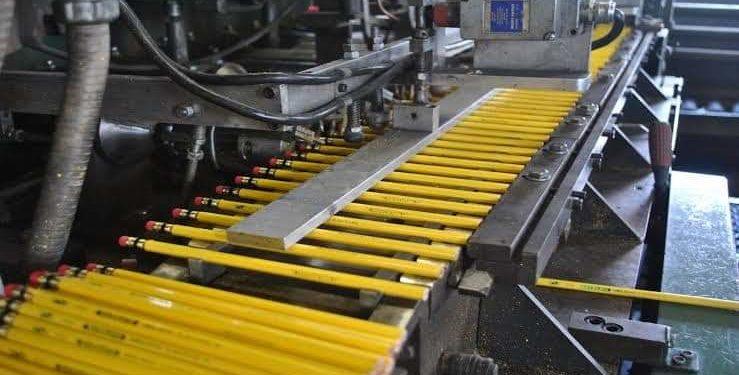
In view of the quest, in the first quarter of 2016, Dr. Onu who is a graduate of Chemical Engineering disclosed that Nigeria would start producing its own pencil in the year 2018. Based on his perception, local production of such a product was long overdue.

The said boss expressed hope that the plan, if duly implemented, would have a “meaningful impact” on the economy because the wide aim of the ministry was to “commercialize developed ideas and research findings to principal levels”.

He further boasted that Nigerians would be amazed at the multiplier effects, which according to him, would include the creation of at least 400,000 jobs. This avowal, which seemed candid, was indeed an ‘immune’ booster for the concerned and well-meaning Nigerians.

When asked the reason his ministry had chosen to begin with such a ‘minor’ device, Dr. Onu proudly responded “Yes, I have heard questions on why pencils? We chose pencils to symbolize the problems that we have and our commitment to local production”.

The science minister went ahead to stress that his ministry had already urged the Projects Development Agency (PRODA) to ensure Nigeria starts producing the device in question “in two years time” by embarking on the required holistic research.

One may then begin to wonder why at this point, five years down the line, nothing has absolutely been heard about the proposed pencil production. The teeming Nigerians have since then put their ears down to receive the awaited ‘good news’.

It’s appalling that after sixty-six months of tendering such frantic promise, the ministry in question is presently mute over the purported quest. Could it be that the required raw-materials were nowhere to be found across the federation, or the needed manpower has been missing?

Lest I forget, it’s imperative for us to take into cognizance the materials needed towards setting up the pencil production industry. To manufacture a pencil, items such as wood, graphite, paint, possibly rubber and aluminium in some cases, are required. Aside from rubber that’s mainly found in the Southern part of Nigeria, wood, graphite and aluminium could be obtained from virtually all the parts of the country.

It’s noteworthy that Nigeria abounds with these items. What else needs to be done than to harness them? The government ought to create the enabling environment and ensure that the necessary taxes surrounding the awaited industry are reduced to the barest minimum toward encouraging the prospective investors?

The government might have the plan to establish and manage such an anticipated industry by itself. But the day-to-day management of such firms doesn’t necessarily need to be carried out by the government. What it rather needs to do is to create the rudimentary platform on which the prospective private investors would thrive.

It’s apparent that the prime bane of Nigeria’s democratic system is lack of political will. Sometimes, a certain government might be made up of sound and exemplary brains but once the political will is missing, it would certainly appear as if there’s no available knowledge and experience to perform or put the thoughts into plans, let alone actions.

But if the needed political will is available, even in the absence of sound brains within the system, the government will definitely extend the hand of fellowship to the cognoscenti. In a nutshell, if one has a lofty idea or goal but there’s no will or zeal to drive it, such a conceived plan would arguably die on arrival.

It’s very saddening that a government would promise to carry out a particular initiative but in the long run, would pretend as if nothing was actually said in the first place. Funnily enough, in some cases, the government may even deny that it ever tendered such a pledge when confronted by the citizenry.

When most Nigerians were bitter that among all the products in the world, it was a ‘mere’ pencil that Dr. Onu’s ministry decided to give an attention, my joy knew no bounds because as a tech professional, I was aware such a step would go a long way in conscientizing and awakening the country’s science and technology sector. But at the moment, it seems every hope is lost.

Brain drain has caused untold harm to Nigeria’s economy. It’s worthy of note that such an endless phenomenon usually takes place as a result of the government’s inability to utilize the available patents cum talents domiciled in the country.

In his speech, Dr. Onu also disclosed that the Federal Institute of Industrial Research (FIIR) had developed “more than 250 research studies up to the point of commercialization”. Furthermore, he stated “and in incubation, we have an agency in charge that has done up to 1000 products”.

This revelation indicates that we invariably find it very difficult to strive beyond ‘research studies’ and ‘incubation’ stage. It’s even mind-boggling that the research work itself isn’t aptly funded by the concerned authorities.

It’s, therefore, high time Dr. Onu and his team implemented the pencil production policy before they unleash the wrath of technology upon themselves. They ought to make the country’s progenitors proud of their existence.

Nigeria needs to start walking the talk in respect of tech-driven issues if she’s truly ready to climb the digital mountain. 

Twitch is in Trouble After a Massive Breach

0

Earlier this week, hackers got a hold of a huge cache of source code repositories, creator payouts and other internal data from Twitch, and published them online following a data breach.

The hack compromised accounts of many users, with the hacker sharing their personal information online. On Tuesday, a leaker shared a post claiming to take Twitch’s source code, proprietary SDKs, of software development kits that developers use to integrate Twitch into their apps and services.

Twitch confirmed the breach in a tweet on Wednesday. “We can confirm a breach has taken place. Our teams are working with urgency to understand the extent of this. We will update the community as soon as additional information is available,” the tweet read.

To confirm their fears, Twitch users began seeing their personal information online. The data contains payouts for each Twitch user, some of which reach into the six-figures and more.

“I looked at a line from June 2019 and literally 100% match to the information showing on my analytics on my dashboard,” said one user.

The leak, which now exposes a vast number of streamers of the game giant, may represent a security risk, since it practically allows practically anyone to search for security vulnerabilities in the code. But it does not end there.

The leaker says the released cache is “part one,” which means there will be more data leaks. Now, hackers are exploiting the loophole, (frontend logic of the platform) to entertain themselves.

On Friday, hackers were able to deface the platform for a few hours, replacing many background game images with photos of Amazon founder, Jeff Bezos. Amazon bought Twitch for about $1 billion in 2014.

Users who jumped on the Amazon-owned service were greeted by closeup images of Jeff Bezos when searching. So games like GTA V, Dota 2, Apex Legends, Minecraft, Smite, Overwatch, Dead by Daylight, Final Fantasy XIV, and several others, were replaced by closeup images of Bezos.

The escalation of the hacks has left Twitch in unprecedented trouble, with the Amazon-owned company struggling to get a hold on it.

Though Twitch has been investigating the matter, it has only confirmed that a “malicious third party” had exploited an error in a server configuration change to perform the hack, and that sensitive information like credit card information wasn’t exposed. However, per Verge, several former employees said the situation is a lot more complicated than the company is willing to admit.

The breach has been attributed to the lax security architecture of the company. In September, Twitch streamers protested the company’s lack of action against “hate raids,” where bots are used to flood other streamers with hate and harassment.

One source claimed that the company had ignored all security warnings because it was scrambling to launch new features and grow the platform as quickly as possible. Right now, Twitch remains vulnerable, with information and code about its inner workings in the hands of a fun-catching third party, the exploitation is likely going to escalate soon as with every leak. This may just be the beginning.

Ndubuisi Ekekwe To Keynote 2021 Covenant  University CU-ICE conference

0

It is one of the finest in the nation and I am honoured to keynote this year’s Covenant  University CU-ICE conference. The theme is Sustainable Entrepreneurship and Development Goals. To Vice Chancellor Prof Abiodun Adebayo and Chancellor Bishop Dr David Oyedepo, thank you.

Chiwetalu Agu’s offence viz a viz the lawlessness of the Nigerian Army

1

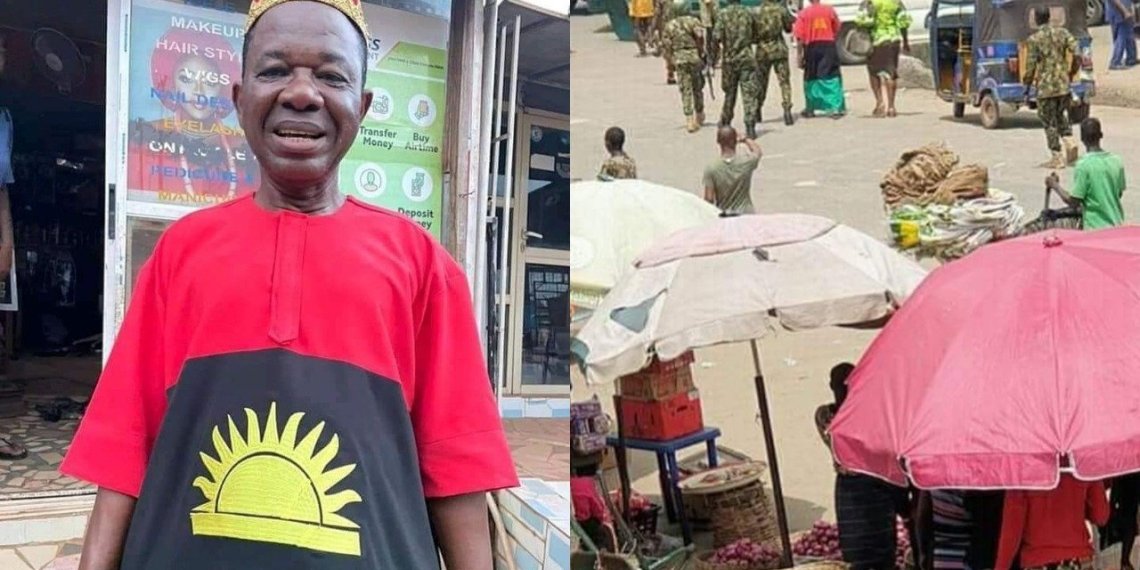
On Thursday’s been the 7th day of October, 2021 while the nation awaits in awe and dampen spirit the 2022 budget presentation of the Mr president to the National Assembly and the citizens being engrossed with the thought of the reality of the economic recession that’s closing down on Nigeria due to the ineptitude of the managers of the economy and the inabilities of the stakeholders of the nation, the military derailed (again) from their statutory assignments given to them by law, became power drunk and exhibited lawlessness which is their second nature and attacked a renown nollywood actor and elder statesman, Mr Chiwetalu Agu, berated him before his fans, lovers and passers by. They dragged him around the streets of Onitsha like a common thief who stole a pound of salt from the village market square. They also went ahead and groped him and threw him into their van like a condemned criminal who has been sentenced to death by firing squad and took him all the way to Enugu State from Anambra state where he was detained and tortured for over 30 hours.

What was his (alleged) offense?

According to the official statement released by the Nigerian Army which was signed by the Army Director of Public Relations, Brigadier General Onyema Nwachukwu, they alleged that Mr. Chiwetalu Agu was arrested while soliciting support for the Indigenous People of Biafra (IPOB) which is a proscribed sect. They also claimed that the renowned Nollywood actor who had worked his way to the top to become one of the most sought after filmmakers in Nigeria was inciting people to join the Ipob sect and garnering support for the Indigenous People of Biafra (IPOB). They pointed to that fact that Mr Chiwetalu Agu was putting on an attire and colours used in Identifying the Biafra separatists as an evidence that he was inciting other countrymen to join the Biafra cause and garnering support from his fans and supporters to align their interests with that of the Indigenous People of Biafra at Upper Iweka in Onitsha, the popular commercial city in the South Eastern Nigeria where the incident took place.

Is wearing a cloth or colour used in identifying a sect or group which is proscribed an offense known to law?

The answer is typical ‘No’.

There’s no law in Nigeria criminalizing or punishing anybody for wearing a color or clothe used in identifying a particular group. Therefore, wearing a clothe or colour used in identifying a particular group does not make one a criminal and shouldn’t be treated as such and according S.36(12) of the Constitution of the Federal Republic of Nigeria, 1999 (as amended) which was appreciated and stretched in detail in the landmark case of Aoko V. Fagbemi and the recent case of George V. Federal Republic of Nigeria, the law is succinct as it clearly provides that on no account should anybody be punished for any offense or purported offense which is not known to law or any offense which is not written down in any law.

Therefore, in that angle, the Nigerian army exhibited a high level of lawlessness in descending on the old man and they owe him a proper apology with due compensations for the hardship and trauma he suffered in their cold hands.

Be it noted that i for one as an astute legal practitioner and a minister in the temple of justice is advocating for violence neither am I in support of citizens taking laws into their hands in the cause of them seeking for their voice to be heard. I am not also ignorant of the law that says once a group or sect is proscribed, being a member of that group or inviting others to join that proscribed group becomes an offense which is punishable at law and proscription offenses carry up to 20 years of jail term as provided in the Terrorism (Prevention Amendment) Act, 2013 but wearing a clothe which can be linked to a particular group cannot automatic be translated to membership or support for that proscribed group which the clothe identifies. So, there was no known offense committed here.

The recent acts of the Nigerian Army is setting them up for ridicule and disrepute as the Nigerian Army has distinct functions as highlighted by the constitution and other statutes and arresting or detaining a citizen for wearing a clothe used in identifying a particular set Is not one of them and even if Mr. Chiwetalu Agu committed an offense known to law it is the job of the police and not the army to call him to order.

World Bank Projects 2.4% 2021 Economic Growth for Nigeria

0

The Nigerian economy has made progress as the impact of COVID-19 wanes and the outlook of the oil market appears brighter. Thus, the World Bank Group has reviewed its 2021 Gross Domestic Product (GDP) projection for Nigeria, raising it to 2.4 per cent, adjusting the 1. 8 per cent it earlier projected.

In the report it captioned: “Africa’s Pulse: Climate Change Adaptation and Economic Transformation in Sub-Saharan Africa,” the multilateral institution commended the growth recorded by Sub-Saharan Africa. It said the region was set to emerge from the 2020 recession sparked by the COVID-19 pandemic with growth expected to expand by 3.3 per cent in 2021.

Though the World Bank acknowledged in the twice-yearly economic update, a brighter look for Sub-Saharan Africa, it also noted that current speeds of economic recovery in the region was varied, with the three largest economies–Angola, Nigeria, and South Africa, expected to grow by 0.4 per cent, 2.4 per cent and 4.6 percent respectively.

Excluding South Africa and Nigeria, the rest of Sub-Saharan Africa was rebounding faster at a growth rate of 3.6 per cent in 2021, with non-resource-rich countries like Côte d’Ivoire and Kenya expected to recover strongly at 6.2 and 5.0 per cent, respectively, the report said.

The Washington-based financial institution also noted that due to prudent monetary and fiscal policies, the region’s fiscal deficit, at 5.4 percent of GDP in 2021, was expected to narrow to 4.5 per cent of GDP in 2022 and 3 percent of GDP in 2023

According to its report, the rebound in the region was being fueled by elevated commodity prices, a relaxation of stringent pandemic measures, and recovery in global trade, but remains vulnerable given the low rates of vaccination on the continent, protracted economic damage, and a slow pace of recovery.

It explained that the growth for 2022 and 2023, would also remain just below four per cent, continuing to lag the recovery in advanced economies and emerging markets, and reflecting subdued investment in Sub-Saharan Africa.

The Chief Economist for Africa at the World Bank, Albert Zeufack said the success of vaccine deployment will accelerate growth in the region.

“Fair and broad access to effective and safe COVID 19 vaccines is key to saving lives and strengthening Africa’s economic recovery,” he said. “Faster vaccine deployment would accelerate the region’s growth to 5.1 per cent in 2022 and 5.4 per cent in 2023—as more containment measures are lifted, boosting consumption and investment.”

The report pointed to developments that it dubbed “a positive trend,” which was that African countries have seized the opportunity of the crisis to foster structural and macroeconomic reforms, adding that several countries had embarked on difficult but necessary structural reforms, including the unification of exchange rates in Sudan, fuel subsidy reform in Nigeria, and the opening of the telecommunications sector to the private sector in Ethiopia.

“However fiscal discipline, combined with limited fiscal space, has prevented African countries from injecting the level of resources required to launch a vigorous policy response to COVID-19.

“Apart from mounting fiscal pressures and rising debt levels as they implement measures for a sustainable and inclusive economic recovery, Sub-Saharan African countries are also faced with worsening impacts of climate change,” the World Bank report said.

While the progress made so far was commended, the World Bank advised the countries to build on reform measures to tackle carbon emission. It said they should also harness this opportunity to make sustainable, resilient transitions toward low-carbon economies that can provide long-term benefits in the form of reduced environmental hazards as well as new economic development openings.

The report highlighted Africa’s unique context of low baseline development, pre-existing climate vulnerabilities, limited energy access, and high reliance on climate-sensitive sectors— as posing challenges but also providing opportunities to transform the economy and create jobs. It pointed out that private firms and governments in Africa were providing training for jobs in solar energy (Togo and South Africa).

Investments in climate-smart infrastructure could help cities create jobs, adding that de-carbonization was an opportunity to foster manufacturing activity in the region, including the production of components of the Internet of Things, value-addition to minerals that will power the green economy, and insertion into regional value chains, the report say.

With the increase in the number of solar-energy startups, supplying rural Africa with affordable electricity, clean energy economy is expected to increase in Sub-Saharan Africa by 2025.