DD
MM
YYYY

PAGES

DD
MM
YYYY

spot_img

PAGES

Home Blog Page 5558

Dissecting The Social Media Technicalities And Intricacies

0

It’s not anymore news that the electronic media sector has graciously welcomed another section in its day-to-day operations known as the social media otherwise referred to as the “new media”.

In recent times, social media have seemingly dominated the information world. It is conspicuously distinct from other existing media networks – including the print and broadcasting – in various ways.

It operates in a dialogic transmission mode – many sources to many receivers – in contrast to print and electronic media that operate under a monologic transmission mode, one source to many receivers. It can simultaneously connect as many sources and receivers as possible.

There are numerous positive roles of social media networking in nation building. Though it’s a relatively new advancement in technology, it has made the world seem like just a minute clan owing to its ability to simultaneously connect millions of people from different localities across the globe as well as spread news within a shortest time frame.

Hence, it makes information go viral that it could be assessed from any locality. It enables one to reconnect with his or her old time friend or schoolmate. In addition, it helps people to stay connected to each other at all times.

Social networking is a great way to meet entirely new individuals and entities. One can easily discover persons or groups that are into his social/business interests. Online dating is currently more common than the traditional pattern of dating, and it’s worthy of note that many happily married couples today met online.

On the other hand, social media is at the moment the fastest and easiest way to promote goods and services; and it gives such products a different dazzling look, thereby encouraging the audience to patronize them.

Entertainers these days don’t need to be on television or radio before they can be heard. They can globally market their brands online with ease. The most fascinating part of it remains that the brand in question would be known by countless countries within a twinkle of an eye.

Social media equally helps to catch and convict criminals. People are usually ignorant of the consequences of what they post online. Oftentimes they post, albeit ignorantly, pictures or videos of themselves doing illicit things. In the same vein, they also place bragging posts regarding various ‘minor’ crimes they have committed.

The law enforcement agencies invariably visit these sites towards fishing out the bad eggs as well as to trace a suspected culprit. The sites also assist the agencies while prosecuting any suspect in their custody.

However, it’s imperative to note that there are equally negative impacts of social media on mankind and the society at large. There are several falsehoods on various social media platforms; such information or propaganda can stir up panic and severe misinformation in the affected area.

For instance, in the 2019 general elections conducted in Nigeria, the social media were deeply involved in misinforming the people as regards collation cum announcement of election results, which remains the statutory obligation of the electoral umpire, thereby overheating the polity.

Although they help to start new relationships, they have on the contrary succeeded in ruining or terminating various other existing relationships. The ability to easily share people’s privacy, such as nude pictures and videos, on social sites has constituted several nuisances in people’s real life. It suffices to say that it puts trust to a limit.

Cyber bullying is not left out. Having access to people’s lives at all times is not encouraging, because such avenues help many online fraudsters to lure their potential victims into their net, hence taking advantage of their vulnerability.

Sometime in Nigeria in 2012, one Miss Cynthia Osokogu was reportedly cajoled to a hotel room via social media. At the said venue, she was brutally gang raped and thereafter murdered by the fraudsters. Similar ugly and untold stories had been heard countless times in various localities across the globe. In the same vein, people are duped through social networking under the guise of ‘buying and selling’. The fact that you are not seeing who you are conversing with is enough reason to worry.

Prospective employers use social media to scrutinize, and consequently discriminate against their intending employees. They would delve into the profile of the jobseeker and by doing so, would acquire all the needed private information about him or her. Employers always use this mechanism to their advantage and in most cases, to the detriment of the applicant.

One of the greatest plights attached to social media remains that people are fast becoming addicted to it. This kind of craze causes a lot of distractions for people in their respective fields of endeavour. Many people invariably sleep on the platform on a daily basis.

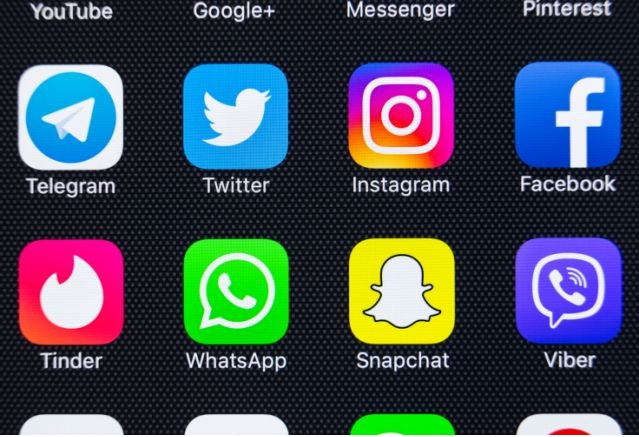
More so, social media is not always reliable as regards availability. This may be due to temporary failure from the network providers. Sometimes, it could be a worldwide phenomenon emanating from the central server, as it was witnessed a few days ago when there was an outage of some of the platforms including Facebook, WhatsApp and Instagram. Any of these experiences may occur when the platform is mostly needed, hence the need for the teeming users to always have an alternative means of communication within their reach.

On the other hand, most people while conveying messages on social media prefer using symbols, smileys, abbreviations or what have you, to writing words in full. This syndrome, which is an aberration, has gone a long way in causing a great decline in the people’s grammatical ability.

Hacking is another worrisome factor that can’t be overlooked while discussing social media. Internet hackers can intercept your account under a certain guise or by gaining access to your password. Considering that most users of social media aren’t professionals indicates that people are liable to constantly fall victim.

It would be ideal to regulate the day-to-day usage of social media with a view to sustaining decency and legality. All stakeholders to include families, communities, schools and religious bodies are required in implementing the proposed regulation.

The leadership of the above key institutions can institute a law binding the users of social media within their respective jurisdictions. The parents/guardians, for instance, can determine when and where cell phones should be used by their wards. Self-control will also help to avert several misfortunes that could befall the users of the platform.

Above all, individuals, groups and corporate organizations are advised to maintain a complicated password on their various accounts and endeavour to change it regularly, to avoid hacking.

Social media is undoubtedly a viable and remarkable platform for all forms of communication and information dissemination, hence its existence needs to be upheld. However, the intrigues, intricacies, technicalities as well as technologies of the platform call for holistic caution and wisdom while deploying its use.

Though the merits of social media cannot be overemphasized, it’s worth noting that their wrong usage can result in colossal loss. 

Bitcoin Has Left China and Doubters Behind, Pushing Towards $60k

0

Bitcoin has left China and doubters behind, pushing toward its all-time high of above $64,000 as institutional investment rises.

The cryptocurrency rose as high as $55,499 on Wednesday, a 13% up this week alone and 87% for the year. Other cryptocurrencies also jumped the train. Ether rose 2.8% to $3,575.73, maintaining the rally that started last week.

The rally has been attributed to events taking place in Washington, D.C. that have, to great extent, boosted the confidence of institutional investors to bet on cryptocurrencies.

“Regulatory uncertainty is what’s still keeping investors out of the market and every time we get a step closer to regulatory clarity, you see this kind of reaction,” Bitwise Asset Management chief investment officer Matt Hougan said. “It’s the primary driver of next great bull market in crypto.”

Volatility and regulatory concerns have held investors back from putting their money in cryptocurrency recently. In the past months, the cryptocurrency market has witnessed a wrecking plunge, triggering massive selloffs that plummeted the market’s capitalization by more than a half. But things are taking a new turn.

CNBC quoted the result of financial advisors surveyed by Bitwise, which noted that the number one thing preventing them from making allocations to crypto is regulatory uncertainty. Hougan said the majority result has been the same three years in a row.

But on Tuesday, Securities and Exchange Commission Chairman Gary Gensler said in a hearing of the House Financial Services Committee that he has no plans to ban cryptocurrency, and that a ban would be up to Congress.

That was in response to Congressman Budd’s question: “Chairman, do you support what China has done, and is the SEC planning on implementing similar bans”?

“It’s a matter of how do we get this field within the investor and consumer protection that we have, and also working with bank regulators and others,” Gensler answered, stressing the need to ensure that the Treasury Department has crypto within anti-money laundering (AML) and tax compliance.

Federal Reserve Chairman Jerome Powell has made similar comments. He said on Friday he has no plans to ban cryptocurrencies. While these statements have created uncertainties for investors, they cleared the concern that the US may tow the path of China.

“You had every major regulatory agency in the U.S. this summer declaring that they needed to create a new regulatory regime around crypto,” Hougan added. “That created a great deal of uncertainty in investors minds, they were hesitant to allocate not knowing what the range of possibilities would be. The reason we’re rallying this week is that most extreme left tail of following the path of China was wiped from the market by both Jerome Powell and Gary Gensler.”

Institutional interest has also been fingered as another reason for the recent rally. Genesis head of market insights Noelle Acheson said Wednesday’s price action is different from previous ones this year and that all signs point to it being institutionally driven.

“Institutional investors move as a herd, they are momentum chasers,” she said. “When they see this kind of momentum, they start to think, what am I going to miss? Is my performance going to be weaker than those of my competitors? Maybe I should pile into that.”

She explained that Bitcoin has maintained its rank in the top five performing digital assets over the past 24 hours. That’s something Acheson had never ever seen before, as top performers are usually smaller altcoins and DeFi assets. Bitcoin is the institutional onramp to crypto, and when it’s one of the top performers, it’s a sign the institutions are coming, Acheson said.

She added that with a sharp price jump, there tend to be several short positions that get liquidated, but that wasn’t the case Wednesday.

“At one stage that price jumped 3.5% in a five-minute window, and without the liquidations, that says that that is big spot buying,” Acheson said.

While there may have been many pointers for the rally, investors are glad that the cryptocurrency market has broken off the Chinese shackles. There is growing optimism that Bitcoin will meet the $100,000 projection before the year ends.

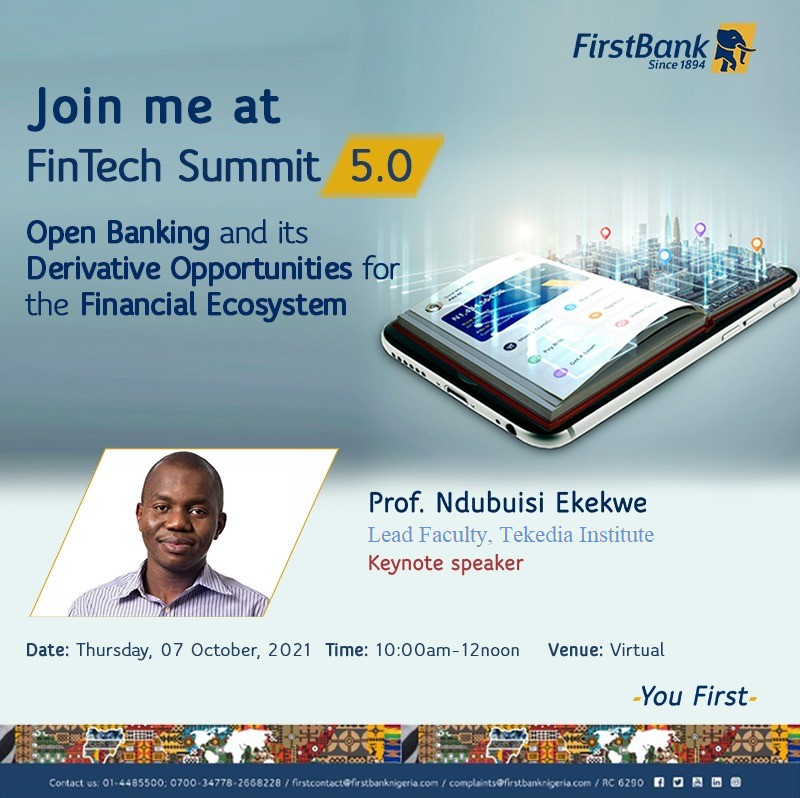
Join Ndubuisi Ekekwe As He Keynotes First Bank Fintech Summit 5.0

0
Tomorrow (Thursday) at 10am WAT, join me at First Bank Fintech Summit 5.0 as I keynote this year’s event. After my keynote, I will also take questions from delegates. This is going to be a conversation on the future of financial services and how innovation through open banking can bring new ordinance in market systems.
Come and cheer this village boy from Ovim Abia state as he speaks before the leaders of our economy, in this event, hosted by The First. Go here and register free.

Sure, Insurance Infrastructure Startup, Raises $100m in Series C to Expand Services

6

Sure, an insurance infrastructure startup, announced on Tuesday it has raised $100 million in Series C funding that puts its valuation at $550 million.

The funding was co-led by New York-based Declaration Partners and European growth investor Kinnevik, with participation from WndrCo and existing backers W. R. Berkley and Menlo Ventures. The round brings the Santa Monica-based startup’s total raised to $123.1 million since its 2015 inception, TechCrunch reports.

Sure has been pioneering digital insurance since the past five years, the new financing indicates that idea is widely being embraced.

Per TechCrunch, the company launched its first (enterprise SaaS) product in early 2016, and has since expanded its customer-base to include both traditional financial services and fintech companies. Customers include Farmers Insurance, Chubb, Intuit, Betterment, Revolut, Carvana, several automotive manufacturers and a leading global credit card network. All offer insurance programs built on Sure’s infrastructure.

In a conversation with TechCrunch, Sure’s CEO and cofounder Wayne Slavin explained how far the company has come, and what it intends to achieve using the newly raised fund.

While Sure would not disclose hard revenue figures, it does claim to have been profitable since 2019. Slavin says its annual recurring revenue (ARR) has grown “by more than 3X every year over the past several years.”

In a nutshell, Sure says it has created technology infrastructure that modernizes the entire insurance process and “allows it to be embedded into consumer experiences.” In other words, using Sure’s infrastructure, companies can sell insurance directly to consumers “in a matter of milliseconds,” the company claims, through an entirely digital experience that does not involve paper or humans.

The company is at the “forefront” of embedded insurance, according to Slavin.

That embedded insurance, he said, is “insurance that is integrated into the brand’s existing digital products across all industries,” he said.

“This can range from car insurance included in the online purchase of a new electric car or buying a used car on Carvana to purchasing business insurance when you start your company’s new bank account,” Slavin added.

The benefits of using its APIs allow companies to go to market with new insurance product offerings faster, simpler and cheaper compared to other methods, Slavin says.

“Sure differentiates in the three pillars that matter to our customers: tried and tested technology infrastructure, fastest speed to market and the ability to offer fully embedded customer experiences,” Slavin told TechCrunch. “Like any legacy industry being disrupted there are many players trying to ride the wave of ‘embedded’ by rebranding their 1.0 experiences with a fancy new name. True embedded insurance experiences are unique and pioneered by Sure because they’re built from the ground up to fulfill an end-to-end transaction in the embedded channel.”

The company plans to use its new capital from its growth round to accelerate its global expansion, speed up new product launches and continue to “streamline embedded insurance customer experiences.”

International expansion will come in the form of new customers — and offices — in Europe, Latin America and Asia, as well as existing customers with successful domestic programs that plan to expand their insurance solutions to international customers, according to Slavin.

Alas, by omitting Africa in its target territories of expansion, Sure misses a huge opportunity of partnership for traditional insurance companies across countries in the continent.

In the age of fintech boom, the African insurance sector has been dragging its feet, walking shyly as the world of payments undergoes bountiful digital transformation – especially in countries like Nigeria, Kenya and South Africa.

The untapped insurance market in the region presents an irresistible growth opportunity that the digital company needs only partnership with conventional insurance brokers to tap.

For instance, Nigeria, the largest economy in Africa, has only 0.5 percent insurance penetration. The Nigerian Bureau of Statistics reported that the insurance sector recorded a negative 15.3 percent growth in 2020. The slow growth of the sector has been attributed largely to apathy, which is fueled by insurance policies considered un-enticing to potential customers.

While there has been an uptick in the number of players using the digital evolution to change the narrative in the African insurance sector, there is still a wide vacuum to be filled. And partnership with existing digital-based insurance services will provide a shortcut for traditional companies yet to get on board the fintech market. It will also provide immense growth opportunities for digital insurance service providers.

Facebook Responds to Data-Leak Allegations (full text)

1

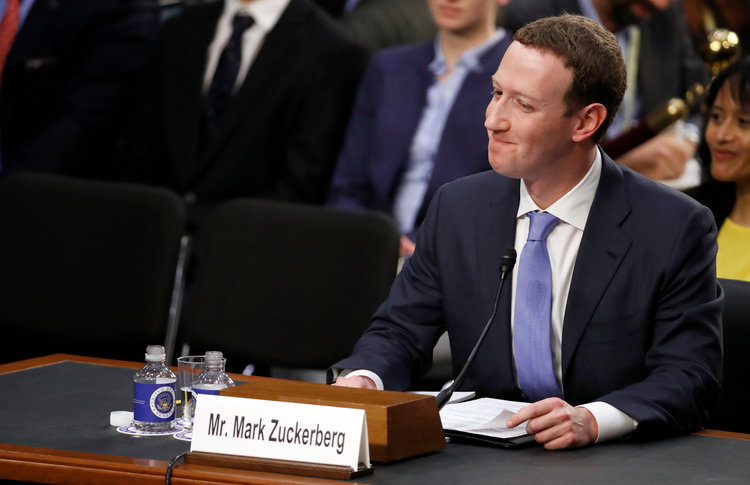
Facebook founder and CEO, Mark Zuckerberg, on Tuesday addressed the issues ranging from the platform and its subsidiaries’ outage that lasted for six hours on Monday, and the recent data leak that alleges that Facebook knows that its platforms are harmful, but chooses to ignore it because the social media platform prefers profit over safety.

The allegation has opened Facebook to a fresh senate probe. After the testimony of the whistleblower, Frances Haugen, a former Facebook product manager, the senate said the company has questions to answer.

In a statement titled, “I wanted to share a note I wrote to everyone at our company”, Zuckerberg explained what happened to Facebook services on Tuesday, and in a detailed counter-argument, refuted the allegation that his company chooses profit over public good.

Read his full statement below.

Hey everyone: it’s been quite a week, and I wanted to share some thoughts with all of you.

First, the SEV that took down all our services yesterday was the worst outage we’ve had in years. We’ve spent the past 24 hours debriefing how we can strengthen our systems against this kind of failure. This was also a reminder of how much our work matters to people. The deeper concern with an outage like this isn’t how many people switch to competitive services or how much money we lose, but what it means for the people who rely on our services to communicate with loved ones, run their businesses, or support their communities.

Second, now that today’s testimony is over, I wanted to reflect on the public debate we’re in. I’m sure many of you have found the recent coverage hard to read because it just doesn’t reflect the company we know. We care deeply about issues like safety, well-being and mental health. It’s difficult to see coverage that misrepresents our work and our motives. At the most basic level, I think most of us just don’t recognize the false picture of the company that is being painted.

Many of the claims don’t make any sense. If we wanted to ignore research, why would we create an industry-leading research program to understand these important issues in the first place? If we didn’t care about fighting harmful content, then why would we employ so many more people dedicated to this than any other company in our space — even ones larger than us? If we wanted to hide our results, why would we have established an industry-leading standard for transparency and reporting on what we’re doing? And if social media were as responsible for polarizing society as some people claim, then why are we seeing polarization increase in the US while it stays flat or declines in many countries with just as heavy use of social media around the world?

At the heart of these accusations is this idea that we prioritize profit over safety and well-being. That’s just not true. For example, one move that has been called into question is when we introduced the Meaningful Social Interactions change to News Feed. This change showed fewer viral videos and more content from friends and family — which we did knowing it would mean people spent less time on Facebook, but that research suggested it was the right thing for people’s well-being. Is that something a company focused on profits over people would do?

The argument that we deliberately push content that makes people angry for profit is deeply illogical. We make money from ads, and advertisers consistently tell us they don’t want their ads next to harmful or angry content. And I don’t know any tech company that sets out to build products that make people angry or depressed. The moral, business and product incentives all point in the opposite direction.

But of everything published, I’m particularly focused on the questions raised about our work with kids. I’ve spent a lot of time reflecting on the kinds of experiences I want my kids and others to have online, and it’s very important to me that everything we build is safe and good for kids.

The reality is that young people use technology. Think about how many school-age kids have phones. Rather than ignoring this, technology companies should build experiences that meet their needs while also keeping them safe. We’re deeply committed to doing industry-leading work in this area. A good example of this work is Messenger Kids, which is widely recognized as better and safer than alternatives.

We’ve also worked on bringing this kind of age-appropriate experience with parental controls for Instagram too. But given all the questions about whether this would actually be better for kids, we’ve paused that project to take more time to engage with experts and make sure anything we do would be helpful.

Like many of you, I found it difficult to read the mischaracterization of the research into how Instagram affects young people. As we wrote in our Newsroom post explaining this: “The research actually demonstrated that many teens we heard from feel that using Instagram helps them when they are struggling with the kinds of hard moments and issues teenagers have always faced. In fact, in 11 of 12 areas on the slide referenced by the Journal — including serious areas like loneliness, anxiety, sadness and eating issues — more teenage girls who said they struggled with that issue also said Instagram made those difficult times better rather than worse.”

But when it comes to young people’s health or well-being, every negative experience matters. It is incredibly sad to think of a young person in a moment of distress who, instead of being comforted, has their experience made worse. We have worked for years on industry-leading efforts to help people in these moments and I’m proud of the work we’ve done. We constantly use our research to improve this work further.

Similar to balancing other social issues, I don’t believe private companies should make all of the decisions on their own. That’s why we have advocated for updated internet regulations for several years now. I have testified in Congress multiple times and asked them to update these regulations. I’ve written op-eds outlining the areas of regulation we think are most important related to elections, harmful content, privacy, and competition.

We’re committed to doing the best work we can, but at some level the right body to assess tradeoffs between social equities is our democratically elected Congress. For example, what is the right age for teens to be able to use internet services? How should internet services verify people’s ages? And how should companies balance teens’ privacy while giving parents visibility into their activity?

If we’re going to have an informed conversation about the effects of social media on young people, it’s important to start with a full picture. We’re committed to doing more research ourselves and making more research publicly available.

That said, I’m worried about the incentives that are being set here. We have an industry-leading research program so that we can identify important issues and work on them. It’s disheartening to see that work taken out of context and used to construct a false narrative that we don’t care. If we attack organizations making an effort to study their impact on the world, we’re effectively sending the message that it’s safer not to look at all, in case you find something that could be held against you. That’s the conclusion other companies seem to have reached, and I think that leads to a place that would be far worse for society. Even though it might be easier for us to follow that path, we’re going to keep doing research because it’s the right thing to do.

I know it’s frustrating to see the good work we do get mischaracterized, especially for those of you who are making important contributions across safety, integrity, research and product. But I believe that over the long term if we keep trying to do what’s right and delivering experiences that improve people’s lives, it will be better for our community and our business. I’ve asked leaders across the company to do deep dives on our work across many areas over the next few days so you can see everything that we’re doing to get there.

When I reflect on our work, I think about the real impact we have on the world — the people who can now stay in touch with their loved ones, create opportunities to support themselves, and find community. This is why billions of people love our products. I’m proud of everything we do to keep building the best social products in the world and grateful to all of you for the work you do here every day.