DD
MM
YYYY

PAGES

DD
MM
YYYY

spot_img

PAGES

Home Blog Page 5561

EU Unveils “European Chip Act” to Tackle the Bloc’s Semiconductor Deficiency

0
European Commission

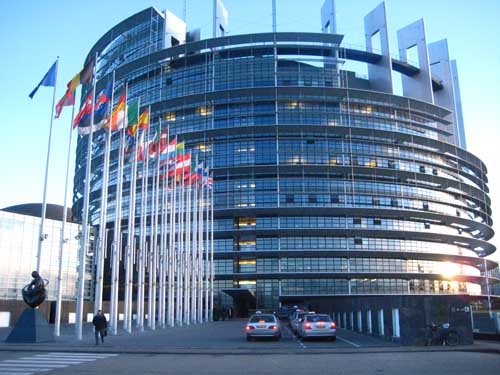
As chip shortage continues to hold the tech world in a tight grip, limiting production and spiking product prices, the EU is seeking to use legislation to push for greater resilience and sovereignty in regional semiconductor supply chains.

Compared to other regions, the EU is the most disadvantaged when it comes to semiconductor production, apart from Africa. Now the bloc sees legislation as a way to augment existing plans to increase chip production in Europe.

“But while global demand has exploded, Europe’s share across the entire value chain, from design to manufacturing capacity has shrunk. We depend on state-of-the-art chips manufactured in Asia,” the EU president, Ursula von der Leyen said Tuesday during a state of the union speech.

She explained that gaining greater autonomy in chipmaking is now a key component of the EU’s overarching digital strategy. Presenting the “European Chips Act”, she explained that the EU should harp on a strategy backed by legislation to ease production bottlenecks and protect the bloc’s interests.

“There is no digital without chips,” said von der Leyen. “While we speak, whole production lines are already working at reduced speed — despite growing demand — because of a shortage of semiconductors.

“So this is not just a matter of our competitiveness. This is also a matter of tech sovereignty. So let’s put all of our focus on it.”

Ursula called on the bloc to build on existing collaboration that has seen Europe contain covid-19, in tackling the bloc’s chip dependency.

The Chips Act will aim to link together the EU’s semiconductor research, design and testing capacities, she said, calling for “coordination” between EU and national investments in this area to help boost the bloc’s self-sufficiency.

“The aim is to jointly create a state-of-the-art European chip ecosystem, including production. That ensures our security of supply and will develop new markets for ground-breaking European tech,” she added.

Besides covid, Ursula pointed at the Galileo satellite navigation the EU launched 20 years ago, in a bid to stir the belief that the bloc can attain chip self-sufficiency if it bands together. Though she admitted the task ahead would be daunting.

“Today European satellites provide the navigation system for more than 2 billion smartphones worldwide. We are world leaders. So let’s be bold again, this time with semiconductors.”

The EU had in March unveiled the Digital Compass plan, designed to help the bloc produce 20% of the world’s cutting-edge and sustainable semiconductors by 2030%. The proposed European Chip Act is meant to elaborate and accelerate the plan.

Per TechCrunch, the EU’s internal market commissioner, Thierry Breton, explained in his that the legislation will help the Commission to integrate Member State efforts into a “coherent” pan-EU semiconductor strategy and also create a framework “to avoid a race to national public subsidies fragmenting the single market”.

The aim will be to “set conditions to protect European interests and place Europe firmly in the global geopolitical landscape”, he explained.

According to Breton, the Chip Act will comprise three elements: Firstly, a semiconductor research strategy that will aim to build on work being done by institutions such as IMEC in Belgium, LETI/CEA in France and Fraunhofer in Germany.

“Building on the existing research partnership (the KDT Joint Undertaking), we need to up our game, and design a strategy to push the research ambitions of Europe to the next level while preserving our strategic interests,” he noted.

The second component will consist of a collective plan to boost European chipmaking capacity.

He said the planned legislation will aim to support chip supply chain monitoring and resilience across design, production, packaging, equipment and suppliers (e.g. producers of wafers).

The goal will be to support the development of European “mega fabs” that are able to produce high volumes of the most advanced (towards 2nm and below) and energy-efficient semiconductors.

However, the EU isn’t planning for a future when it can make all the chips it needs itself.

The last plank of the European Chip Act will set out a framework for international co-operation and partnership.

“The idea is not to produce everything on our own here in Europe. In addition to making our local production more resilient, we need to design a strategy to diversify our supply chains in order to decrease over-dependence on a single country or region,” Breton went on. “And while the EU aims to remain the top global destination of foreign investment and we welcome foreign investment to help increase our production capacity especially in high-end technology, through the European Chips Act we will also put the right conditions in place to preserve Europe’s security of supply.”

“The US are now discussing a massive investment under the American Chips Act designed to finance the creation of an American research centre and to help open up advanced production factories. The objective is clear: to increase the resilience of US semiconductor supply chains,” he added.

“Taiwan is positioning itself to ensure its primacy on semiconductor manufacturing. China, too, is trying to close the technological gap as it is constrained by export control rules to avoid technological transfers. Europe cannot and will not lag behind.”

Femi Fani-Kayode Joins APC As the Big Exodus Continues

1

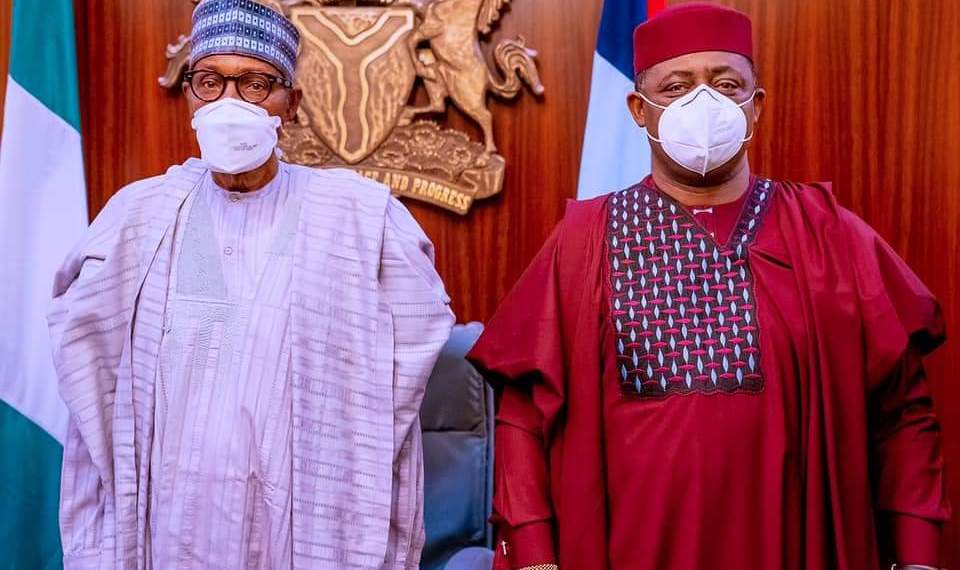
Politics in Nigeria – only fools and simpletons risk their lives to defend the words and ambitions of politicians. Today, former Aviation Minister, Femi Fani-Kayode, has officially dumped the Peoples Democratic Party (PDP) for the ruling All Progressives Congress (APC), Premium Times reports.

For FFK, if politics is an industry in Nigeria, APC holds the largest market share and the positioning is better therein. In the next 8 months,  expect many more to move. Mr. President welcomes the new convert.

We’re still waiting for the big masquerade to come out.


Buhari’s Legacy And Great Unification of Southern Nigerian Governors

2

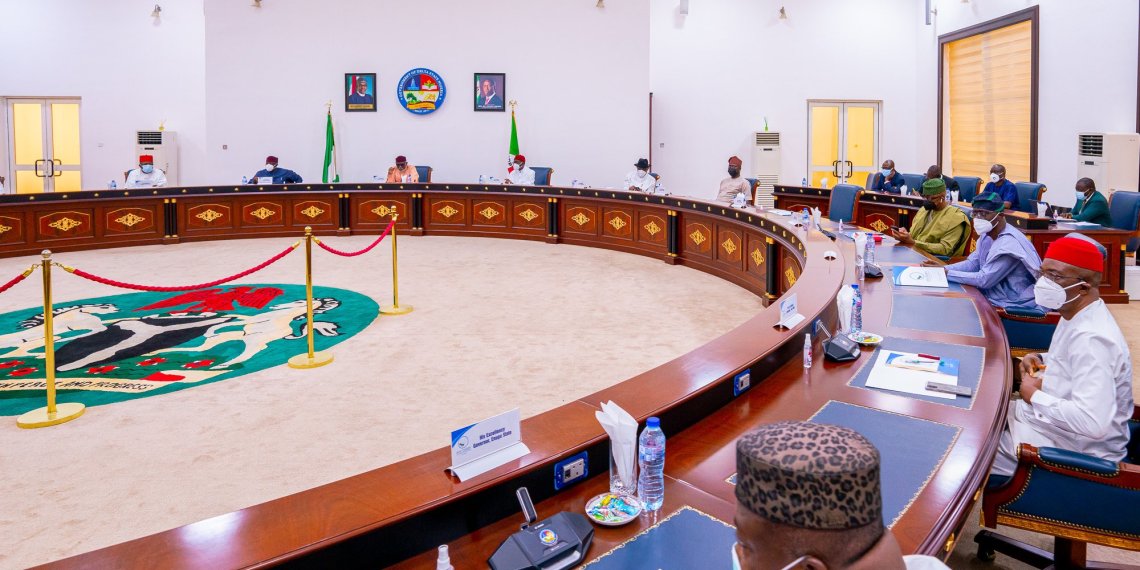
President Buhari has an unusual legacy: his policies or lack thereof have accomplished the unthinkable – unification of Southern Nigeria on some generation-shaping issues. As I read through the lines of the communique issued by the governors of Southern Nigeria, I could not believe the words: 

“Expressed satisfaction with the rate at which the States in the Southern Nigeria are enacting or amending the Anti- Open Grazing Laws which align with the uniform template and aspiration of Southern Governors and encouraged the States that are yet to enact this law to do so expeditiously.”

… the meeting resolved to support the position that the collection of VAT falls within the powers of the States.”

Buhari is intriguing: it took only his efforts to get these things done! Sure, I am not sure he would appreciate the outcomes. Yes, he made open-grazing to become an issue, due to his siddon-look on conflicts in farming communities, pushing the matter all the way to enter into state laws. What happens next in Nigeria?

COMMUNIQUE ISSUED AT THE CONCLUSION OF THE MEETING OF THE GOVERNORS OF SOUTHERN NIGERIA IN THE GOVERNMENT HOUSE, ENUGU, ENUGU STATE, ON THURSDAY, 16TH SEPTEMBER 2021.

READ ALSO:  How we handled $227,000 Nigeria Women Journalists NAWOJ fund – President

The Nigerian Southern Governors’ Forum at its meeting of today, Thursday, 16th September 2021 held in the Government House, Enugu, Enugu State reviewed the state of the nation and the progress of implementation of the decisions reached in her previous meetings and further resolved as follows:

  1. Expressed satisfaction with the rate at which the States in the Southern Nigeria are enacting or amending the Anti- Open Grazing Laws which align with the uniform template and aspiration of Southern Governors and encouraged the States that are yet to enact this law to do so expeditiously.

  2. Encouraged the full operationalization of already agreed regional security outfits; which would meet, share intelligence and collaborate, to ensure the security and safety of the region.

  3. Reaffirmed its earlier commitment to fiscal federalism as resolved at the inaugural meeting of the Forum held on Tuesday, 11th May 2021 at Asaba, Delta State and emphasized the need for the Southern States to leverage the legislative competence of their respective State Houses of Assembly as well as representation in the National assembly to pursue its inclusion in the Nigerian Constitution through the ongoing constitutional amendment.

4. Following from paragraph “3” above, the meeting resolved to support the position that the collection of VAT falls within the powers of the States.
  1. Expressed satisfaction with the handling of issues around the Petroleum Industry Act (PIA) and ownership of Nigerian National Petroleum Corporation (NNPC) by the larger Nigerian Governors’ Forum.

6. Reiterated their earlier position that the next President of Nigeria must come from the Southern part of Nigeria in line with politics of equity, justice and fairness.

7. The Forum thanked the host Governor, Rt. Hon. Ifeanyi Ugwuanyi, and chose Rivers State as the next host for the Southern Governors’ Forum meeting in November 2021.

Arakunrin Oluwarotimi O. Akeredolu, SAN
Governor, Ondo State and Chairman, Southern Governors’ Forum

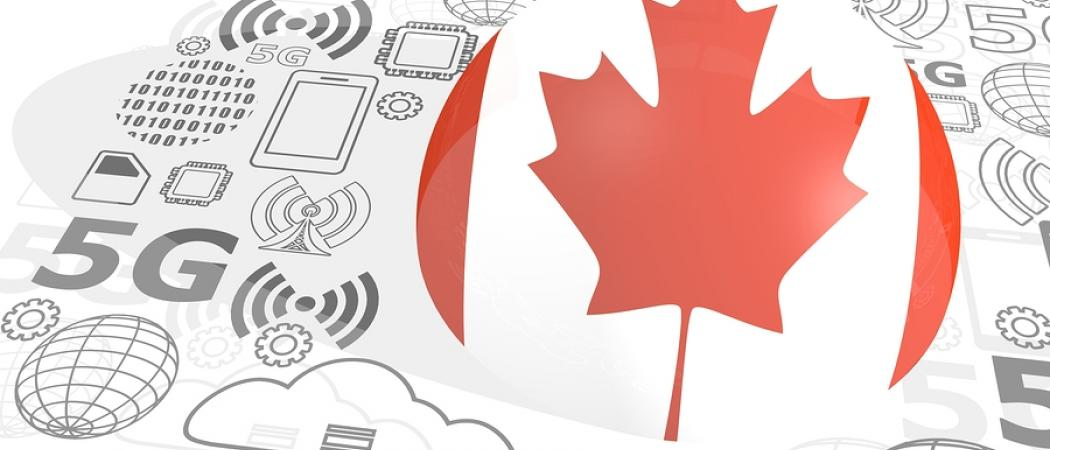
A Tekedia Capital portfolio firm will begin its global expansion via Canada

0

We got great news: a Tekedia Capital portfolio firm will begin its global expansion via Canada. One of the world’s finest builders of digital companies picked our firm. As the official news arrives next month, I want to congratulate the team for continuing to deepen the nativity of African business values within the tenets of global entrepreneurial capitalism. With those, we will win more markets and territories.

I love Canada – it is a very generous nation and it is rising. We’re truly honoured for the opportunity to be in the land of the red maple leaf.

Tekedia Capital – next cycle begins next month here.

Early stage investing in technology-anchored startups and companies. Our opportunity antenna and grassroot connections with innovators enable us to see patterns as they develop.  We invite you to partner with us as we nurture and build category-king companies in Africa and beyond, and in the process advance citizens, communities and nations. At Tekedia Capital, we fund the foundations of the NEXT African economy.

As Retail Credit Reshapes, Goldman Sachs Acquires Buy Now Pay Later GreenSky for $2.2 billion

3

In America, when you swipe your credit card, your bank has given you a loan which if you do not pay off at the end of the month, will attract an interest. Yes, that process of issuing a rolling loan via a credit card simplified what typically would have required going to a bank, filling a form, getting approval, etc.

The banks made tons of money through this business model. Until a generation of young people came. Yes, the millennials hate paying for interests: they are value seekers. And because of that, a new generation of innovators invented a new product which is called Buy Now, Pay Later. 

What this does is magical: you can buy most things and spread the payment over months and pay absolutely zero interest! Of course, the merchants do pay those interests, by playing on volume, through discounting with the startups. The Buy Now, Pay Later competes with credit cards.

Goldman Sachs understands this disintermediation as you can have those cards and no one will care to get them or if they do get them, use them, since someone is offering them zero-interests over 4 months. Without adoption and usage of the cards, interest revenue nosedives.

That is why GS is paying GreenSky to buy $2.2 billion. I will be explaining this more on Saturday during Tekedia Business Growth Playbook session.

This could work in Nigeria and Africa with a little flavouring.

The Goldman Sachs Group, Inc. (“Goldman Sachs”) and GreenSky, Inc. (“GreenSky”; NASDAQ: GSKY) today announced that they have entered into a definitive agreement pursuant to which Goldman Sachs will acquire GreenSky, the largest fintech platform for home improvement consumer loan originations, in an all-stock transaction valued at approximately $2.24 billion. GreenSky’s differentiated lending capabilities and market-leading merchant and consumer ecosystem will help accelerate the efforts of Goldman Sachs to create the consumer banking platform of the future, help tens of millions of customers take control of their financial lives and drive higher, more durable returns.

  • Goldman Sachs is acquiring fintech lender GreenSky for $2.24 billion as the investment bank pushes further into consumer finance.
  • The all-stock deal for GreenSky, called the biggest fintech platform for home improvement loans in a release announcing the deal, is expected to close by the first quarter of 2022, the companies said on Wednesday.
  • GreenSky shares jumped 44% in premarket trading before they were halted.