DD
MM
YYYY

PAGES

DD
MM
YYYY

spot_img

PAGES

Home Blog Page 5563

Innovators and Project Champions, You’ve Found Your School At Tekedia Institute

0

If you are looking for a school for innovators and project champions, stop looking because you have found one! Yes, Tekedia Institute is here. We have courses in business education, renewable energy business, agribusiness, digital business, and more.

These courses come in many ways – mini-MBA, advanced diploma programs (7 tracks), certificate programs (12 tracks), live-only  session Zoom, etc.

By next month, we will launch Tekedia Startup Masterclass: from start-up to scale-up. Visit our website and see our courses and programs.

Innovative Response to Crisis Towards Sustainable Growth – A Case Study of 7UP Bottling Company Plc

1

With the permission of  Timothy Gbadeyan, I am happy to share the introduction of his Capstone for the award of Tekedia Certificate in Business Innovation, Growth and Sustainability. Our capstone is a research paper and it is one way we are co-learning with our learners to develop deeper capabilities on business communication, and writing investment briefs, proposals, etc.

We have a library of dozens of these works but unlike typical university projects and theses, our learners are examining core business matters with IPs. So, we do not make them public and have no plans to do so because some of them have become startups, and critical elements in companies.

Now, read Tim’s work:

Introduction

By an equation formula, Prof Ndubuisi Ekekwe[1] has described Innovation as a combination of invention and commercialization. He postulated that invention does not necessary translate to innovation, as invention in its raw form is limited in breadth as an idea. However, for an invention to translate to innovation, it must meet a societal need. By this, invention must be implemented and whisked away from its form as an idea with potential to fix a friction into homes, offices and hands of humans to actually fix the identified friction. In doing this, invention is essentially commercialized.

While innovation is critical to building the wealth of nations, it is actually the lifeblood of firms. For businesses, innovation is not desirable, it is mandatory. First, the mission of firms is to fix frictions in the society and/or societal units and in order to fix frictions, firms must innovate. Secondly, when sustainability is viewed from economic lens and not the lens of social impact or environment, one cannot but come to the conclusion that innovation and/or continuous innovation is the main factor of sustainability for businesses. Beneath this is the fact that “consumer loyalty” is a farce. In reality, what exist is “consumer satisfaction.”

Actually, consumer loyalty is a construct which Companies use to describe a group or “repeat customers” for the purpose of reward, feedback, product review, defining product base and such other data purposes. However, customers are neither to loyal to products or companies; they only continue to patronize either because they remain satisfied or because of the absence of better alternatives. In the wake of the emergence of better alternative, a company can lose 95% of its market share within one to three months. It’s simple- wholesalers will buy only the products which in Nigeria market parlance are “moving”.

In effect, wholesalers buy the goods which retailers want to quickly buy and retailers will buy the products which consumers will quickly buy- because no matter how profitable a business, the periodic profitability boils down to “turnover”. From the foregoing, it is obvious that the basis of consumer loyalty is continuous customer satisfaction and to keep customer satisfied, firms must meet emerging needs and perceptions and to do so, firms must innovate.

When firms innovate, one of the expected outcome is sustainable growth. By this we mean that firms continue to experience year-on-year, quarter-on-quarter and month-on-month profitability. This is because the market will always reward innovation. But the question is this- what guarantees that the trajectory of growth being experienced by a company will continue. Rapid growth will not attract Investors like Sustainable growth.

For a business to be healthy and sustainable, it must demonstrate that the rate of growth can be maintained. Innovation is a key influencer for maintenance of growth. Sometimes, consumers want the taste of a particular food product to remain the same over time as a mark of quality, but producers can innovate with access to product, ease of payment, ease of opening product carton, sachetization of product and so on. One thing is clear in the digital age, innovation and continuous innovation are keys to growth and sustainability.

[1] N. Ekekwe Ph.D, “The Innovation and Growth of Firms; P. 10 TEKEDIA INSTITUTE 2021

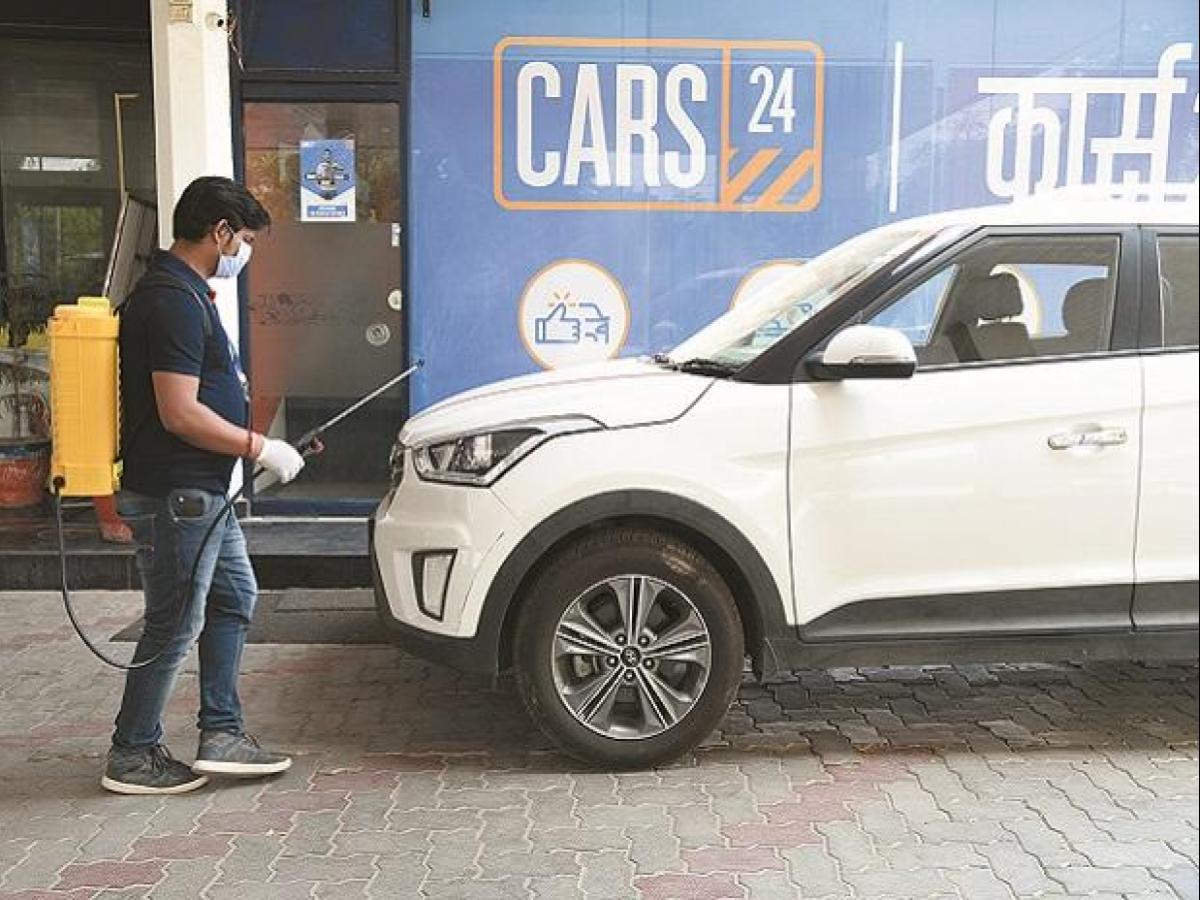
Cars24 Raises $450 Million to Hit $1.84 Billion Valuation

0

When consumers do make a purchase, they can keep and try out a vehicle for up to seven days “and return it if you don’t like it.”

This business play has helped Cars24, a site and app used vehicle selling company, to stay ahead of the game in the used car market, attracting mouthwatering investments shooting its value up.

The Indian startup announced it has raised $450 million, a Series F of $340 million and $110 million in debt, putting its value at $1.84 billion post-money. The newly raised funds makes cars24 one of the more valuable privately-held used car startups globally, TechCrunch tells the story.

DST Global, Falcon Edge and SoftBank Vision Fund 2 co-led the Series F, with Tencent and existing investors Moore Strategic Ventures and Exor Seeds also participating. The debt round came from a mix of financial institutions.

Vikram Chopra, the CEO who co-founded the company in Gurugram with Mehul Agrawal, Ruchit Agarwal and Gajendra Jangid, said that the plan will be to use the funds across a range of areas.

They include national and international expansion (it’s already operating in India, Australia and UAE, and has its eyes on more markets); technology (specifically areas like further expanding its virtual appraisal process, as well as more data science around pricing and other details related to sales and after-sales); and financing both to buy in vehicles, as well as to help consumers make purchasing a vehicle a viable economic option.

Cars24 is active more than 200 cities in India, and it has sold 400,000 vehicles to date (both cars and motorbikes) with upwards of 13 million monthly visitors on its site. All this gives it claim to being the largest platform of its kind in India. But its ambition is to improve the inefficiencies of selling a car, or buying a used car, in many parts of the globe, not just its home market.

“Buying or selling a car is hard anywhere in the world,” Chopra said in an interview. “It’s just a broken experience everywhere, so we are trying to solve for this.”

This is also where the financing and technology figure significantly. When Cars24 first started out in 2015 in India, Chopra said, it faced the added issue (or opportunity?) of a tricky economic landscape with very low car ownership penetration overall — just 2%, or 2 cars per 100 people, compared to typically between 50 and 80 cars per 100 people in Europe.

“But buying a used car in India is a way for a person to own any car,” Chopra said. In a country like India, “we want to take the penetration to 10 or 15.” He added that the car resale market today in India is around $25 billion, but is on track to soon get to $100 billion.

Cars24 has been built around a “buying-in, fixing up, and then reselling” model similar to that of the real-estate juggernaut Opendoor: it appraises vehicles from individuals looking to sell them; buys them up if an agreed price can be reached; reconditions them; and then re-sells and delivers them to new owners. This model, Chopra said, gives Cars24 an edge over some of the shortcomings that exist with traditional players (both on and offline).

First, it provides a centralized platform, cars24.com and its corresponding app, where users can browse a one-stop-shop inventory that goes beyond their local areas (and local dealers). That inventory is curated and made discoverable using a number of algorithms, and pricing is also determined by Cars24’s technology.

“Cars24 is building a data-enabled tech platform that is organizing the fragmented used car market in India,” said Munish Varma, managing partner, SoftBank Investment Advisers, in a statement. “We have been closely tracking its approach and efforts that have disrupted the used car retailing in India.”

“We believe Cars24 is enhancing the customer experience in the used car industry with its sharp focus on technology,” said Sumer Juneja, partner, SoftBank Investment Advisers, in a statement. “We will continue to support this growth given our expertise in e-commerce businesses across markets”.

Second, when consumers do make a purchase, they can keep and try out a vehicle for up to seven days “and return it if you don’t like it.”

This, Chopra continued, is in contrast to other used-car sales sites, as well as physical dealers: either they don’t offer trial runs, or (in the case of physical dealers or individual offline sellers), they might give a driver 10 or 15 minutes tops, with someone attending you as you drive the vehicle around: not a great way to discover what you like or don’t like about a vehicle.

It’s also a model that investors believe will give Cars24 an edge over competitors.

“We have studied used car platforms globally and are struck by the similarities we see between Cars24 and analogous businesses that have scaled successfully,” said Navroz D. Udwadia, co-founder of Falcon Edge Capital, in a statement. “Cars24 has cemented its first-mover advantage by building wide-ranging supply side moats, which in turn drive demand liquidity on the platform. In positioning itself as a buying and selling solution for consumers, Cars24 drives immense top-of-mind recall. It is rare to find a business as focused on the consumer experience and as driven to ensure it is outstanding via the use of data science and technology. Finally, we are deeply impressed by the founders’ leadership, and are thrilled to back them as they transform the used car industry in India and scale internationally across MENA and SE Asia.”

In an era of ride-hailing apps, where a growing number of car owners are ditching their cars for digitalized cabs, many have doubted there will be a prosperous future for the emerging market.

But using Uber can get pricey and is not the same as having your own wheels, and the desire to have your own vehicle is perhaps at a high-point right now because of Covid-19 and people concerned about spreading or catching the virus, Chopra said.

“It’s definitely not the case in India that less people want to own cars,” he said. “During the pandemic, we have seen a lot of demand, in India specifically.” On new, greener vehicle technology, this is also interesting and will simply present another class of vehicles on Cars24 as adoption of electric vehicles increases, he added. But it’s not all quite there, yet.

The strength of the current opportunity is partly why it seems that we’ve found ourselves crowded with startups and scale-ups hoping to define the new generation of used-car-sale platforms.

Others in the same space that have recently raised money include close competitors like Spinny, also out of India; Cazoo in the UK, which has now gone public; InstaCarro out of Brazil; Kavak out of Mexico; and Carsome from Malaysia, among many others. Carvana, one of the biggest used-car platforms, is also publicly listed and is now valued at nearly $28 billion.

“Cars24 is at the forefront of transforming the way consumers buy and sell cars by providing a unique end-to-end digital shopping and transaction experience,” said Rahul Mehta, managing partner at DST Global, in a statement. “They have emerged as the undisputed leader in the used car space in India and early traction in international markets is exceeding expectations. We love backing founders who are bold and ambitious thinkers and couldn’t be more excited to enter the second innings of our long-lasting partnership with Cars24.”

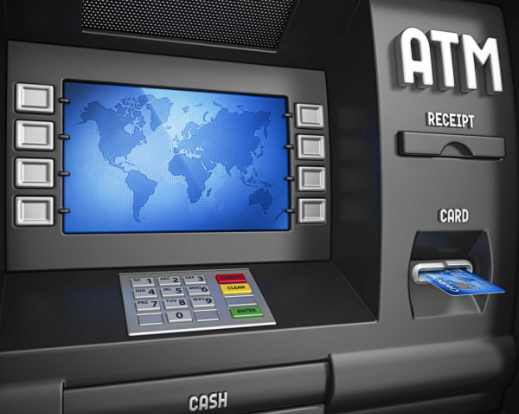
Nigeria’s FinTech And The Untold Story of ATM

0

In Nigeria coupled with other developing nations, the Automated Teller Machine (ATM) has hitherto been conspicuously giving its teeming users a nightmare, that, a drastic approach is seriously required by the apt authorities towards tactically addressing the quagmire.

Without equivocations, the conundrum – pertaining to Financial Technology (FinTech) – possesses the tendency of constituting a colossal economic mayhem to the totality of contemporary Nigerian society, particularly the banking sector.

Tremendous effort needs to be put in place regarding the existing use of ATMs in the acclaimed giant of Africa. There’s a compelling need for greater accurate and efficient technical know-how in the country’s banking industry as regards the operation of the said device.

Technical irregularities or hitches such as out of service, temporarily unable to dispense cash, issuer or switch inoperative, and unreasonable seizing/withholding of transaction cards, among others, which are often encountered while using the machine, must be addressed headlong.

The ridiculous technical anomalies to include debiting an account without any withdrawal made by the owner, is the most devastating aspect of the ongoing ATM lapses in Nigeria and her likes. This implies the country is yet to fully key into FinTech.

The Central Bank of Nigeria (CBN), which serves as the mother-bank of all commercial banks in the country, is expected to intervene especially at this period we are suffering from an enormous economic crisis. Hence, enabling policies ought to be aptly implemented into the sector for healthier banking practices.

The teeming bank account owners have suffered greatly, thus are in need of the onward intervention of the apex bank towards ensuring the country’s dream of seeing an arena filled with thorough cashless banking is duly actualized in the nearest future.

Among all, the routine of loading torn or mutilated currency notes in the ATMs must be put to stop by the CBN. How could notes meant to be burnt or replaced be loaded in the machines? This unethical practice invariably create an avenue for frequent circulation of eyesores?

The anomaly has ostensibly informed the general public that the Nigeria’s Mint and Printing section is incapacitated. This sums up the fact that her technology is unarguably in a sorry state.

The remedy to Nigeria’s tech issues lies in her hand, hence has all it takes to fix the hitch. The concerned authorities, therefore, must wake up to the realities rather than chasing shadows.

The various branches that are currently making use of only one ATM must as a matter of urgency install at least two or more ones in order to decongest the banking premises with a view to curtailing the chances of being invaded or attacked by armed robbers. Armed robbery is an unlawful activity that has remained the biggest challenge faced by the banking industry, thus ought to be checked at all cost.

The banks ought to equally, from time to time, update the softwares used for the said machines as well as their central server. It is appalling to realize that most of them are still making use of outdated or trivial softwares. It’s unequivocally high time this mediocre practice is jettisoned.

Against this backdrop, every bank is expected to see its Information Technology (IT) unit as one of the most needed units in the firm, so its viability would be sustained by all means. Such a step would enable the bank to at all times ensure that employing or engaging competent and reliable IT professionals, either as full staff or consultants, as the case may be, isn’t compromised.

It’s pertinent to note that most of these challenges are usually occasioned by ignorance on the part of the bearers of the ATM cards. Most users of the card in question are yet to acknowledge that the card is not meant to be kept close to electronic devices or any device that possesses a magnetic field such as the radio set, television, handset, computers, laptop, home theatre, speakers, VCD/DVD, or what have you, especially when they are on or in use. A practice of such is liable to permanently stop the activeness of the affected card.

Similarly, the users are meant to comprehend that the cards are meant to be safeguarded from any iota of scratch or drop of water, particularly on its silver-coated part. Hence, it must be consistently kept away from any metal element, or related materials, that could hurt their surfaces. They should also be kept away from rainfall and allied natural substances.

Inter alia, if any part of the card bends, the bearer or owner may not be able to have access to his or her account via the ATM. If anyone eventually succeeded in doing so, he or she might not be able to retrieve the card from the machine after the transaction. This is a phenomenon the bearers must be meant to acknowledge.

To this end, the banks’ Customer Service units are required to duly orientate their clients the moment they pick the cards as well as ensure they are regularly sensitized in this regard. They ought to be meant to understand that the debit/credit cards are to be thoroughly pampered in order to keep them away from any possible harm.

The IT department of every bank, therefore, ought to invariably take this coaching aspect as priority. The orientation session concerning the use of the ATM cards is required to be organized by every bank branch on a regular basis toward averting any possible embarrassment that might befall the users.

The CBN, or the mother bank of any concerned country, really needs to take an urgent and severe step with a view to ending the various lingering irregularities faced or practised by the commercial banks in regard to the use of the ATM.

It’s noteworthy that failure to do the needful would give the lingering technical menace a chance to constitute an unbearable setback in the nearest future in the country’s financial industry at large.

Those days, FinTech – which is primarily the use of technology across all financial functions – was mainly used for back-office activities by leveraging software to help bank personnel handle accounts, execute transactions, and manage client databases, among others.

But nowadays, the said tech measure has transformed how banks operate. It’s not anymore relegated to the gloomy corners of back offices. It has, therefore, taken centre stage by making itself indispensable to client-facing processes. Now, every needed digital transaction is possible.

So, rather than being mere onlookers of this haven, we as a people need to key in towards enjoying the innumerable benefits attached therein. It’s high time we did the needful.

Lest I forget; aside from inculcating the required tech measures, the government or relevant authority must create formidable and apt policies to facilitate the proposed move. The needed policies shall serve as the wheel while the required tech approach would be the vehicle to convey the passengers to the destination. Mind you, a vehicle with a bad wheel can’t move an inch.

The role of mobility in the FinTech revolution cannot be overemphasized. Hence, the financial institutions needn’t be reminded of the need to, in earnest, key into the proposed measure.

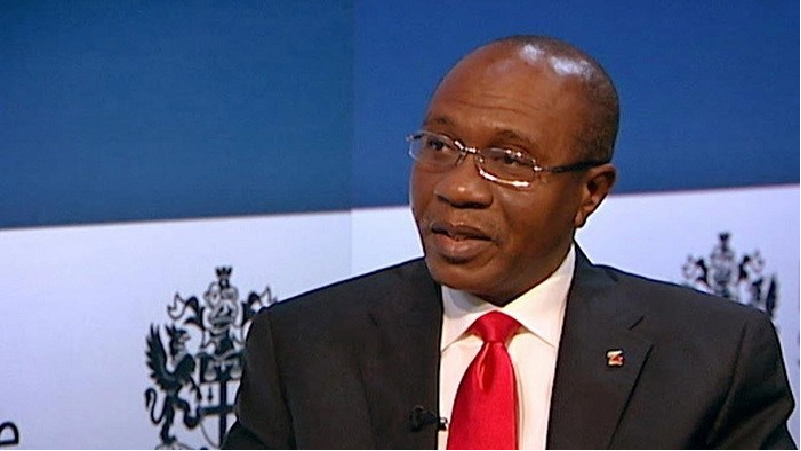
“The only exchange rate market is the I/E window… I do not recognise any other market” – Godwin Emefiele, CBN Governor

2

The message from the Governor:

“The only exchange rate market is the Investors and Exporters window, which is the market that we expect everybody that wants to buy or sell dollars to use.

“I am sorry to say: I do not recognise any other market. We’ve asked ourselves at the CBN, why did we have to wait so long?

“CBN remained the only central bank in the world to dip its hands into our commonwealth mad pack dollars to BDCs all in an effort to stabilise the exchange rate,”

  • CBN Governor, Godwin Emefiele during the Monetary Policy Council meeting which was held today, Friday, September 17, 2021.