DD
MM
YYYY

PAGES

DD
MM
YYYY

spot_img

PAGES

Home Blog Page 5566

X-raying Nigeria’s Epileptic Power Sector

0

A close observer can boldly attest to the assertion that the Nigeria’s lingering epileptic power supply remains the bane of the country’s socio-economic prospect.

On 22nd May 2018, President Muhammadu Buhari during a meeting with a concerned group in Abuja, stated that the erstwhile president, Olusegun Obasanjo expended about $16 billion on the power project without anything to show for it.

Earlier, in 2007 precisely, piqued by the epileptic power situation, President Umaru Yar’Adua – of the blessed memory – upon assumption of office, lamented that the government under Obasanjo squandered about $10 billion on the National Integrated Power Project (NIPP) with little or no effect. He alleged that, on power sector alone, the administration of his predecessor spent a total of $16bn.

However, it was gathered that the Late Yar’Adua’s administration expended $5.375 billion on power, whilst his immediate successor Dr. Goodluck Jonathan spent $8.26 billion. In a nutshell, the country within the years in review, reportedly spent about a whopping sum of $29.635 billion only on a quest for steady power supply.

The bitter truth remains that Nigeria has expended funds amounting to trillions of naira on the power sector within the last twenty-one years. But rather than dwelling on our failure, or apportioning blames, it’s imperative for the country to henceforth concentrate on the way forward in a bid to getting it right.

The Nigeria’s power sector is presently yearning for rescue that if drastic measure isn’t taken, soonest the country won’t only reckoned to be synonymous with blackout but a place invariably used as a case study whenever non-electricity supply is being discussed or researched.

It’s indeed worrisome to acknowledge that in spite of the intimidating size of the acclaimed giant of Africa, both in landmass and population, she’s currently struggling toward boasting of steady seven thousand Megawatts (7,000MW) of electricity supply, whereas nations like Ghana, South-Africa, Iran, and South-Korea, among others alike, that aren’t up to 60 million people on the average, presently boast of over fifty thousand Megawatts (50,000MW). Such a shocking phenomenon calls for thorough and candid examination in the Nigeria’s power sector.

During the past administrations, Obasanjo’s particularly, the Power Reform Act was introduced, which was aimed at boosting electricity supply. In addition, the then existing National Electric Power Authority (NEPA) was changed to Power Holding Company of Nigeria (PHCN) via concession. In furtherance of the motive, the NIPP was equally initiated.

It would be recalled that during Dr. Jonathan’s reign, the distribution section/phase of the power sector was totally deregulated, thereby leading to Public-Private Partnership (PPP); a measure that Nigerians thought would salvage the country’s power industry.

It’s worth noting that the power sector comprises three major sections (phases) namely: the generation, transmission, and distribution sections. These three phases collectively contribute to the production of the two hundred and twenty Alternating Current Voltage (AC220V) required by electricity consumers in Nigeria.

Despite all these measures, rather than improving, the country’s power sector remains in a comatose state, or even deteriorates on a daily basis. Worse still, the various distribution firms, instead of concentrating on how to serve the teeming consumers, end up compounding the already existing plight.

At the moment, an electricity consumer in Nigeria, regardless of locality, would be faced with a utility bill even though he never enjoyed any power supply in the recent past. One might then wonder where such bill was fabricated.

The problem with the Nigerian power sector unequivocally cannot be unconnected with inadequate policies, political instability, corruption, insecurity as well as decay in maintenance culture.

Most times, the personnel at the generation phase would inform Nigerians that the supply of gasoline has depreciated due to pipeline vandalism. This very factor could be attributed to insecurity and lack of maintenance culture. The government (public) owned assets in countries like Nigeria cannot be aptly safeguarded; this is why it’s advisable to allow private investors to fully take over such critical sector.

However, such a report concerning vandalism is so ridiculous and laughable in a country like Nigeria that could boast of so many sources of electricity generation, which are in abundance. Frankly, over-dependence on mono-source is really telling on the Nigerian economy at large, not just in the power sector.

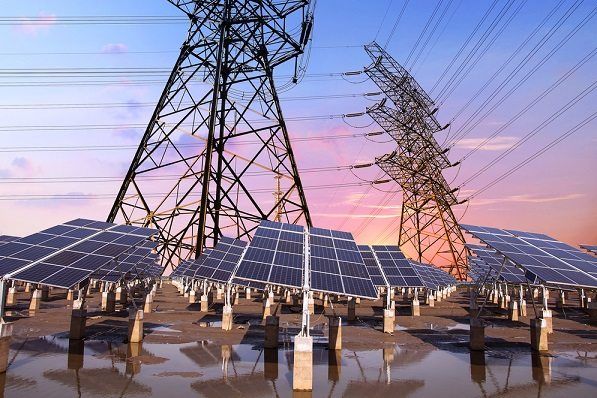
A few of the country’s mineral resources alone, such as coal or what have you, can generate enormous electricity required by the overall Nigerians. Similarly, energy sources like biomass and solar, which are renewable and reliable – if properly harnessed – can generate electricity that can serve the entire Nigerian population and beyond.

Biomass can either be used directly via combustion to produce heat, or indirectly after converting it to various forms of biofuel. Its conversion to biofuel can be achieved by different methods broadly classified into chemical, thermal, and biochemical methods.

Besides, why is solar energy (photovoltaic) still in abeyance within the shores of Nigeria despite its obvious impact on the global society? Most Western countries that cannot boast of a steady fifteen degree Celsius (15C) currently depend mainly on solar as regards power supply, let alone Nigeria that can steadily boast of over thirty degree Celsius (30C).

The country abounds with the aforementioned three energy sources. But pathetically, the resources are lying fallow. The government needs to create an industry that would produce the required facilities. The proposed approach cannot be actualized without allowing the private investors to totally key into the sector.

In the ongoing power generation via turbine or hydro-plants, there’s compelling need for the government to decentralize the transmission grid. Rather than sustaining the national grid, since it’s obvious that such sustenance is cumbersome, each region or zone ought to be entitled to a transmission grid, thereby easing the maintenance cost. This can be aptly actualized by involving the private sector.

The aforementioned approach won’t only reduce cost, but will equally boost adequate and uninterruptible power supply across the federation. Hence, the various established private transmission grids, such as the Power Geometrics situated in Aba the commercial hub of Abia State, needs to be encouraged effectively.

Just a few weeks back, the President sacked the country’s Power Minister and his replacement was effected immediately. We cannot continue to hire and fire on a regular basis. It’s time we discovered the fundamental causes of our common predicament towards addressing them headlong.

The required remedy to the Nigeria’s electricity crisis does not lie in the ability of the serving power minister, but in the adequacy of the extant policies. This cannot be achieved if the glaring corruption continues to stare our faces.

The country’s generation sub-sector comprises about 23 grid-connected generating plants. These plants are in operation round the country with a total installed capacity of 10,396MW, with available capacity of 6,056MW.

The thermal-based generation has an installed capacity of 8,457.6MW, with available capacity of 4,996MW. The hydro-based generation possesses a total installed capacity of barely 1,938.4MW, with available capacity of 1,060MW.

It’s noteworthy that the thermal segment has been sold to the private sector, except the Sapele Power Plc – generating about 414MW – that is 51% sold. Similarly, the hydro segment is under long-term concession.

In its effort to increase the level of power generation in the country, the Federal Government (FG) in 2004 under the leadership of Olusegun Obasanjo, incorporated the Niger-Delta Power Holding Company (NDPHC) as a public sector funded emergency intervention scheme.

The NDPHC was imbued with the mandate to manage the NIPP, which essentially involved the construction of identified critical infrastructures in the generation, transmission, and distribution as well as the natural gas supply sub-sectors of the electric power value chain.

In total, the NIPP power stations were targeted to add about 4,774MW of electricity to the national grid network. Some of these stations have been privatized while plans are underway to sell the remaining ones to interested investors towards increasing private-sector participation in the power sector, thereby improving the ongoing reform programme of the FG.

In furtherance of the reform policy direction, the Nigerian Electricity Regulatory Commission (NERC) has in the past licensed many private Independent Power Producers (IPPs). Some of the IPPs are reportedly at various stages of project development.

The above analysis implies that the generation sub-sector is currently operating under the PPP arrangement, with almost 97% participation of the private investors. But the transmission segment is completely managed by the government, whilst the distribution sub-sector is being operated and managed by private investors.

It’s imperative to acknowledge that, even if all these generating plants are in good form, or functioning as expected, their total installed capacity will still not generate the needed Megawatts (MW) of electricity across the federation, taking into cognizance the overall population of Nigeria.

Taking note of the abridged survey or review, we would understand that the country’s lingering power crisis ought to be blamed on the epileptic policies guiding the sector, not the ability of the minister as being perceived. The fact is that, even if the best brain and most active technocrat is in charge of the Power Ministry, the sector will continue to wail and bleed.

More so, aside the policies needed to encourage the utilization of other energy sources as highlighted herein and full private sector participation, formidable policies must equally be formulated by the government to discourage the endless rampant importation of conventional power generating sets (devices) whose operations depend solely on fuel, diesel, or gas, as the case may be.

The importers of the said equipment won’t live to see a functional power sector in Nigeria, hence the need for a policy or legislation to tame their unwholesome activities in the country, coupled with the political will to ensure holistic implementation of the proposed policies.

As I enjoin the Nigerian government to extend hand of fellowship to the cognoscenti towards doing the needful, we must take into cognizance that there ought to be a holistic probe into the dwindling power sector.
Deeper Life YPF : “The Search for Generational Leaders” by Ndubuisi Ekekwe [Video]

0

If you missed the live presentation yesterday at Deeper Life Bible Church, Gbagada Lagos, you can watch it below. My presentation begins at the 20:20 time slot in the video below. I spoke on “The Search for Generational Leaders”. God bless you.

I extracted the session of my presentation on video above; the complete program below

South Korea Announces Regulation Requiring Crypto Exchanges Partnering with Banks

0

South Korea has been making regulatory policies geared toward sanitizing its tech and financial sectors. In a new rule targeting the crypto industry, the financial regulator has mandated more than 60 cryptocurrency exchanges in South Korea to notify customers of a partial or full suspension of trading by Friday midnight.

This is to allow the exchanges to embrace a new regulation that will come into effect in a week’s time.

Under the new regulation, exchanges must register with the Financial Intelligence Unit by Sept. 24, providing a security certificate from the internet security agency. They must also partner with banks to ensure real-name accounts or cease operation.

Reuters reported that exchanges that have not registered must shut down services after Sept. 24, while those that have registered but failed to secure partnerships with banks will be prohibited from trading in won.

“Should some or all services need to be closed, (exchanges) should notify customers of the expected closing date and procedures to withdraw money by at least seven days before the closure,” the Financial Services Commission said earlier this week. It said this should be completed no later than Sept. 17.

The new regulation means many of the South Korean exchanges will cease to exist as they are caught between registering with the Financial Intelligence Unit and securing bank partnership.

Nearly 40 exchanges are set to suspend all services while there is other 28 who have security certificates but are yet to secure bank partnerships. Only four out among the exchanges – Upbit, Bithumb, Coinone and Korbit – have registered and secured partnerships and so will be allowed to make won settlements.

The choice to remain in operation rests on avoiding won trading, so some small exchanges like ProBit, Cashierest and Flybit are opting to stick to digital coins trading until they secure partnerships with banks.

Meanwhile in the U.S., investigations into Binance Holdings Ltd. have expanded, with authorities now examining possible insider trading and market manipulation, Bloomberg reports citing sources.

The latest probe of the world’s largest crypto exchange shows the heightening interest in its activities around the world. As part of the inquiry, U.S. officials have been looking into whether Binance or its staff profited by taking advantage of its customers, said people with knowledge of the matter who asked not to be identified because the probe is confidential. The review involves Commodity Futures Trading Commission (CFTC) investigators, who in recent weeks have been reaching out to potential witnesses, one of the people said.

The question is whether Binance is in a way, abusing its access to the multibillion dollar customers’ fund. Binance runs a massive trading operation where everyday clients buy and sell digital tokens worth tens of billions of dollars outside the oversight of government watchdogs. That gives the exchange a view into millions of transactions, and U.S. authorities are questioning whether the firm exploited that access, including by trading on customer orders before executing them, the report say.

But in response to the development, a Binance spokesperson said in a statement that the firm has a “zero-tolerance” policy for insider trading and a “strict ethical code” to prevent any misconduct that could hurt its customers or the crypto industry. Binance’s security team has long-standing guidelines for investigating wrongdoing and holding workers accountable, with termination being the minimal repercussion, the spokesperson added.

The report said Binance hasn’t been accused of wrongdoing and the investigations may not lead to any official action. The CFTC and the Justice Department have been examining the firm for months and it could be some time before the agencies decide whether to pursue enforcement actions.

The CFTC was already probing whether Binance let U.S. residents buy and sell derivatives linked to Bitcoin and other virtual tokens, and the regulator is continuing to seek information as part of that line of inquiry.

The watchdog, which routinely shares its findings with other federal agencies, has sought internal Binance data and communications that could indicate the firm may have tried to sign up U.S. customers, one of the people said. Binance isn’t registered with U.S. authorities, meaning it’s supposed to bar Americans from trading derivatives, which the CFTC regulates.

A Simple Way To Stabilize and Strengthen The Naira

8

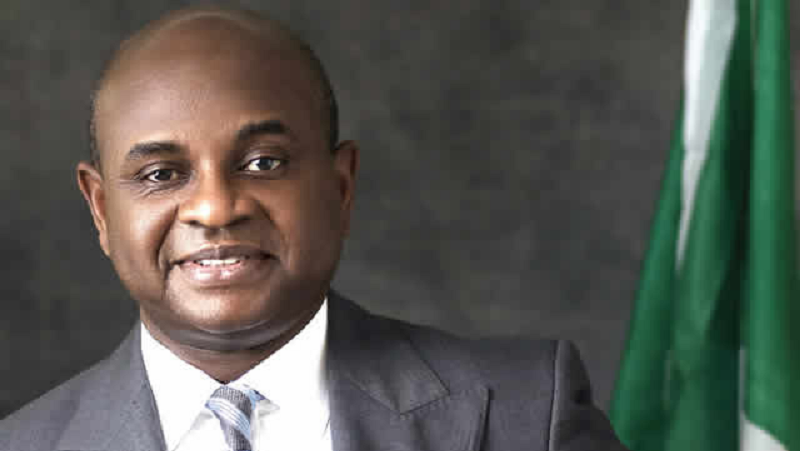
If you want to lead Nigeria come 2023, I want to make it clear that saving the Naira would be the #2 priority job, after insecurity. Former deputy governor of the Central Bank of Nigeria (CBN), Kingsley Moghalu, who I assume is already running for the high office has many proposals. But one is noticeable: “we can consider dollarization of the Nigerian economy.”

Now Senator Tinubu, Vice President Atiku, Governor Wike, Governor Tambuwal and all of you – what do you suggest? To avoid people saying that I have removed myself, my proposal has been constant: you make the parallel market to become indeed a black market instead of the current alternative FX market it is now, through massive import substitution via modern factories and warehouses.

  1. Pick two anchor key cities in each of the 6 geopolitical zones, deploy via local renewable energy companies to provide 27/4 power. I will budget $1 billion for this project. The focus is to support SMEs, startups and small manufacturers who do not need a lot of energy. Using renewable energy startups will make the implementation faster. Part of the funds will also expand commercial shops and real estate.
  2. Encourage local manufacturers and SMEs to converge in those areas knowing that they have constant power. The goal here is to offer cities in Nigeria where people are sure that there would be energy for them. 
  3. #2 #3 would be enabling anchors to kickstart a loop with my understanding that once those areas begin to function, the initial energy budget will run out of capacity. So, I need to plan ahead. The plan ahead is to waive taxes on profits on any investment in renewable energy in Nigeria over the next ten years from private equity funds, venture capital, family offices with minimum of $500k invested in the companies providing power across Nigeria.
  4. Get those funds to begin to expand and invest on energy projects in other cities. If we do this, Naira will begin to stabilize because we will substitute many imports, pushing for a favorable balance of payment. 
  5. Once we improve our balance of payment, all the parallel markets like AbokiFX rates will become black markets instead of the alternative FX window they are today.

.May the best idea win!

FX Crisis: Nigeria Should Consider ‘Dollarization’ of Its Economy – Kingsley Moghalu, ex-Deputy CBN Governor

FX Crisis: Nigeria Should Consider ‘Dollarization’ of Its Economy – Kingsley Moghalu, ex-Deputy CBN Governor

5

Former deputy governor of the Central Bank of Nigeria (CBN), Kingsley Moghalu, has weighed in on the current FX crisis that has pitied the CBN against Bureau de Change operators, and most recently, FX rates aggregator, AbokiFX.

The CBN Governor Godwin Emefiele, had on Friday, accused AbokiFX, which publishes parallel market exchange rates using its online platform, of sabotaging the naira by its actions. The controversy ignited by the development forced AbokiFX to suspend publishing of FX rates until further notice.

Weighing in on the matter, Moghalu, who was a presidential candidate in 2019, highlighted many factors responsible for the naira’s free-fall, including the plunge in oil prices, rising government debt and speculation. He also suggested steps Nigeria could take to save itself from the FX crisis, including ‘dollarization’ of its economy.

Moghalu, who was the deputy governor of CBN from 2009 to 2014, urged the apex bank to stop subsidizing the naira and allow market forces to determine the currency’s fate.

Read his postulation below:

The most important determinant of the value of the Naira is whether or not the Nigerian economy is productive and competitive in international trade. That is to say, whether it has a diversified base of complex, value added products it exports and earns forex from those exports. I am not talking about diversification to cashew nuts and yam tubers. No. Those are primary commodities, not complex, value added ones that are the product of serious engineering and innovation. Since we obviously don’t have such an economy, our main FX earner is crude oil, which gives us 90% of our FX.

Unfortunately, we don’t control the price of crude. Its pricing is volatile and unstable as a result of various international political and economic factors. This means that because we are essentially a one- product country, a one-trick pony, we are exposed to instability in our main income source. When the price of oil drops, and as the world innovates toward alternative energy sources, the amount of external reserves we have to back up the international value of our legal tender (our reserves) frequently comes under pressure. It’s those reserves, our main defense in a soccer analogy, that determines the value of the Naira.

This is why, among the five main objectives of the central bank we have: “issue the legal tender currency in Nigeria”, and “maintain external reserves to safeguard the international value of the legal tender currency”. So if we don’t diversify but continue to rely on crude oil as a mono -product economy, the Naira crisis will get worse, not better.

Unfortunately, achieving a diversified, complex economy, especially in a resource dependent economy, is not easy. It requires a high level of knowledge, political will and consistency in economic policy and takes decades to achieve. This was the subject of my lecture a few months ago to the 2021Annual Conference of the Nigerian Economics Students Association (NESA) held at the University of Port Harcourt, and will feature in my forthcoming book in 2022, The Pundit’s Mind.

There are other facts as well that affect the value of the Naira. These include the basic factor of supply and demand (if too much Naira is chasing scarce dollars, the dollar gets stronger relative to the Naira, and vice versa). Others are inflation (a high inflation economy such as Nigeria’s weakens the value of the legal tender), high government indebtedness ( again, our case especially relative to our revenues and ability to pay which will be stretched the more we borrow on poor revenues, and 90 kobo out of every N1 goes to debt servicing). Speculation also affects the naira value, as there are currency traders around the world for whom the weakness of a currency is their very good fortune. Such traders “attack” such currencies for profit, especially where the currency is using a fixed, official exchange rate determined by the central bank instead of the market.

As the Naira is effectively pegged officially to a “reserve” currency (dollars, euros, pound sterling), speculators can attack such a currency for profit if the country (Nigeria  in this case) is perceived to have insufficient foreign reserves to meet demand. Because our inflation rates at 17% are way higher than those “reserve-currency” countries, again we are exposed to possible currency attacks. If reserves are weak, and demand for dollars massively outstrips supply, currency devaluation is inevitable, and currency traders who mount speculative attacks profit from this devaluation. Such traders will borrow the Naira from Nigerian banks, convert it to, say, dollars, then buy short-interest paying Nigerian bonds. If, as the speculators anticipate, the central bank devalues the naira, the traders sell the bonds in the foreign currency, convert them into naira, and repay their original loan. The steeper the devaluation the higher the speculator’s profit.

What should we do about all of this?

As I have said before, and say again, we have two options. One is to let the Naira find its level in the market. In order, words, the central bank should stop subsidizing the currency. While there will likely be an immediate spike in the price of the dollar, this move will have two advantages. The first is that, because Nigeria has a big, profitable economy and market, dollars will likely swamp the market seeking profits for investors. When this happens, the laws of demand and supply will work in favor of the Naira. Alongside this, maintaining different exchange rates for different kinds of transactions must end. This is called rate convergence.

The second, and more important benefit is that, since the current practice of the CBN pumping dollars in the FX market (from the reserves, which also depleted them) is essentially a subsidy for imports, which has made Nigeria more and more import dependent, letting go of the subsidy on the Naira will refocus the economy towards exports.

This will create an incentive for complex production of a quality that can be competitive in the international market. Accompanying this must be the right trade policies to support and create such incentives for massive exports of finished, value added goods from Nigeria.

If we don’t want to go this way, perhaps because of the political risk of an immediate further drop in the Naira value (which will recover in the medium to longer term  if the right policies are pursued), we can consider dollarization of the Nigerian economy.

Here the dollar officially becomes a legal tender in Nigeria, either replacing the Naira or alongside it. Countries such as Panama, Liberia, Ecuador, Zimbabwe have done this. This’ll lower interest rates and help deepen the financial sector because we are a high inflation country. But this carries serious consequences too. Nigeria will lose monetary autonomy (our central bank will no longer be able to take independent decisions on interest rates for example). The CBN will lose seigniorage, the revenues it earns from issuing currency from the difference between the face value of the Naira and its production cost. And of course, this will involve a loss of national prestige and independence. You could argue, of course, that what value is your prestige when your national economy is in tatters? So, there we are, the simplified A-Z of our FX crisis. Either way, tough decisions have to be made. Politics is easy. Real leadership is not.