DD
MM
YYYY

PAGES

DD
MM
YYYY

spot_img

PAGES

Home Blog Page 557

Spartans, Pinnacle & Sportingbet Compete for Best Live Odds Crypto Sportsbook in 2025

0

Live betting in 2025 is no longer limited to pre-match picks. Bettors expect real-time odds, instant betslip updates, and payout previews that reflect what’s happening in the game at that very moment. Yet, not all sportsbooks are built to handle this demand. Even slight delays can mean missing profitable odds or locking in outdated lines.

This is why the race for the best live odds crypto sportsbook has intensified. Here’s how Spartans, Pinnacle, and Sportingbet compare in delivering speed, accuracy, and crypto-ready payouts.

 Spartans: Live Odds Synced to Every Play

Spartans has quickly positioned itself as one of the fastest, most precise sportsbooks for live betting. Its technology ensures odds refresh automatically without users needing to reload pages, a critical edge in high-speed matches like football, MMA, or tennis.

One of its standout features is the live betslip calculator. Bettors can see payout previews instantly across multi-bets and parlays as odds shift in real time. This transparency allows players to adjust strategies mid-game rather than reacting after the fact.

Spartans also ties this precision to blockchain efficiency. Deposits and withdrawals work seamlessly with Bitcoin, Ethereum, Tether, and other cryptos, with payouts often landing in wallets within seconds. For Latin American bettors, Spartans even supports fiat transactions, offering a rare bridge between local access and global blockchain speed.

By combining real-time accuracy with instant crypto payouts, Spartans makes a strong case as the best live odds crypto sportsbook in 2025.

Pinnacle: The Benchmark for Market Accuracy

Pinnacle has earned its reputation as one of the most accurate sportsbooks worldwide. Known for sharp lines and thin margins, it remains the go-to platform for professional bettors who prioritize pricing precision. During high-stakes matches like Grand Slam tennis or Champions League fixtures, Pinnacle’s reliability is hard to beat.

Where it falls short, however, is player rewards. Pinnacle rarely focuses on promotions or bonuses, preferring to let its odds speak for themselves. This appeals to serious bettors, but casual players may find the lack of incentives underwhelming.

Technically, Pinnacle performs strongly in live markets, though it lacks user-friendly tools such as instant payout calculators found at Spartans. For those who want market accuracy above all else, it delivers. But for bettors seeking a broader mix of precision, crypto integration, and rewards, it doesn’t fully measure up as the best live odds crypto sportsbook.

Sportingbet: Variety with Slower Reactions

Sportingbet remains a widely recognized brand in global betting. It offers strong coverage of football, basketball, tennis, and MMA, supported by frequent promotions designed for casual players.

However, its live betting technology shows weaknesses during high-demand events. Odds can lag significantly during Champions League knockouts or international qualifiers, often forcing users to refresh manually. This can lead to bets being placed at outdated lines, reducing profitability for serious in-play bettors.

While Sportingbet provides breadth and promotions, it cannot match Spartans’ instant syncing or Pinnacle’s razor-sharp accuracy. It works for casual gaming, but those focused on live odds precision may find it limiting.

Key Takeaways

The future of in-play betting is defined by speed and accuracy, not just coverage. Players demand real-time syncing, instant payout previews, and trustworthy odds.

  • Spartans leads with dynamic odds, a real-time betslip calculator, and instant crypto payouts, making it the most balanced option.
  • Pinnacle remains the gold standard for sharp pricing, though its lack of promos and tools may turn away casual players.
  • Sportingbet offers wide coverage and promotions but falls behind when live odds lag during peak matches.

For bettors seeking the best live odds crypto sportsbook in 2025, Spartans sets the pace with unmatched precision, payout speed, and accessibility.


Find Out More About Spartans:


Website: https://spartans.com/

Instagram: https://www.instagram.com/spartans/

Twitter/X: https://x.com/SpartansBet

YouTube: https://www.youtube.com/@SpartansBet

9 Best Cryptos to Buy in September 2025 – Why Arctic Pablo’s Presale Finale Could Be the Biggest ROI Play of the Year

0

In September 2025, the crypto market is buzzing with a mix of meme culture, AI innovation, community-driven hype, and tokens that whales are eyeing for massive ROI. From Arctic Pablo Coin, Purple Pepe, Gamestop Token, Fartboy, Myro, Artificial Liquid Intelligence, Non-Playable Coin, Dogwifhat, to the evergreen Shiba Inu, this lineup covers everything from viral meme energy to serious growth potential.

If you’re searching for the Best cryptos to buy in September 2025, this breakdown highlights nine projects that stand out not only for their momentum but also for their capacity to deliver outsized returns. Each has a distinct flavor, but together they reflect the direction the market frenzy is headed.

1. Arctic Pablo Coin ($APC): The Best Crypto to Buy in September 2025

Deep in the icy wilderness, Arctic Pablo powers across frozen terrain on his snowmobile, uncovering mythical locations filled with shimmering $APC tokens. Every stop on this journey is a new “location” in the presale, and the world is now at the Frozen Finale. This isn’t just a presale; it’s a travelogue of wealth where Pablo invites everyone to join him in a once-in-a-lifetime hunt for riches.

Right now, Arctic Pablo Coin is at Location 40 (Frozen Finale | 400% Bonus Activated), with tokens priced at just $0.0012. Over $3.8 million has already been raised. Those who joined in Location 1 paid just $0.000015, meaning their investment has already surged by more than 7,900%. Analysts peg a listing target at $0.10, giving current entrants the chance at 8,233% ROI.

With every unsold coin burned weekly, scarcity is hardwired into the DNA of $APC. Burns are permanently recorded on Binance Smart Chain, giving holders transparency and confidence. On top of that, the presale offers a massive 400% bonus on all purchases with code FINAL400—a final chance to multiply entry tokens before the DEX (PancakeSwap) and CEX (Coinstore) listings.

For example, a $75,000 investment today yields 312,498,750 APCs, and at the projected listing price of $0.008, that translates to $2,499,990.00. The math is clear: this presale finale is FOMO-fueled.

Arctic Pablo isn’t only about adventure—it’s structured to sustain growth. Total supply is capped at 221.2 billion APC, with allocations to liquidity (25%), ecosystem growth (20%), and staking (15%). Community competitions add another layer of excitement, rewarding top performers with APC tokens and even USD. The presale finale is where myth meets market frenzy, and Pablo’s cult-like following is growing daily.

Why Did This Coin Make It to This List? Arctic Pablo made the cut because it fuses meme coin culture with a gamified presale model that’s unlike anything else in 2025. With huge ROI potential, burn mechanics, and massive bonuses, it represents the Best crypto presales to buy in September 2025 for anyone chasing viral hype and serious upside.

2. Purple Pepe ($PPE): Meme Frenzy with Whale Attention

Purple Pepe takes the familiar frog meme and adds a twist of rarity and exclusivity. Communities love meme coins, and Purple Pepe has been riding viral energy across TikTok and Twitter. With whales piling in, Purple Pepe’s volume spikes have been eye-catching. Analysts note short-term rallies of over 300% in August, and September could see more fireworks.

Why Did This Coin Make It to This List? Purple Pepe made the list because meme coins thrive on hype, and Purple Pepe is one of the most discussed tokens this fall.

3. Gamestop Token ($GME): Nostalgia Meets Crypto

Gamestop Token brings the nostalgia of the stock saga into crypto. Backed by a loyal gamer and trader community, it mixes meme culture with retail investor passion. Analysts suggest Gamestop Token could see strong returns during bull runs, as meme nostalgia drives engagement and price spikes.

Why Did This Coin Make It to This List? It earns a spot here because the Gamestop brand still has cult-like power, and its crypto extension taps directly into that energy.

4. Fartboy ($FART): Meme Chaos at Its Peak

Fartboy leans all-in on ridiculous humor, and meme culture eats that up. Viral memes can move markets, and this token thrives on absurdity. Fartboy’s trading patterns have been unpredictable but rewarding, with multiple 5x rallies over short spans. Community-driven humor often translates to strong price swings.

Why Did This Coin Make It to This List? Fartboy earns its spot for sheer viral power and its ability to attract attention in a crowded market.

5. Myro ($MYRO): Riding the Solana Wave

Myro sits on the Solana blockchain, offering high-speed transactions and low fees. That scalability makes it attractive for traders. With Solana gaining traction again in 2025, Myro has posted consistent growth. Early investors have seen multi-bag returns, and analysts expect the momentum to continue.

Why Did This Coin Make It to This List? Myro makes it because it merges the technical strength of Solana with meme coin energy, appealing to both traders and speculators.

6. Artificial Liquid Intelligence ($ALI): The AI Utility Play

Artificial Liquid Intelligence brings AI tools and blockchain together, powering decentralized applications that push the limits of what AI can do. As AI-driven projects gain mainstream adoption, ALI could be a long-term winner. Its steady adoption curve and utility in real-world applications give it staying power.

Why Did This Coin Make It to This List? It made the list because AI tokens are the new trend, and ALI stands out for its actual utility beyond memes.


7. Non-Playable Coin ($NPC): Gaming Meme Crossover

NPC tokens thrive on the joke of “non-playable characters,” resonating with gaming and crypto memes. Its humor-laced branding makes it sticky, while its trading activity has been strong in 2025.

Why Did This Coin Make It to This List? NPC makes it here because of its blend of meme and gaming energy—two communities that fuel viral adoption.

8. Dogwifhat ($WIF): Solana’s Viral Meme Darling

Dogwifhat exploded in late 2024 and continues to be one of Solana’s top meme projects. Its name alone is meme gold. It’s already posted massive returns for early buyers, and whales continue to trade heavily, keeping volatility—and opportunity—alive.

Why Did This Coin Make It to This List? Dogwifhat is included because it’s one of the most viral Solana meme tokens, with staying power going into September 2025.

9. Shiba Inu ($SHIB): The Meme Titan Still Standing

Shiba Inu continues to evolve beyond just being a meme, with staking, DeFi products, and metaverse plans. It’s one of the few meme coins that has held long-term value. Analysts see renewed upside if the next bull wave hits.

Why Did This Coin Make It to This List? Shiba Inu is here because it remains a titan in the meme coin world, showing both staying power and upside potential.

Final Thoughts

Based on our research and market trends, Arctic Pablo, Purple Pepe, Gamestop, Fartboy, Myro, Artificial Liquid Intelligence, Non-Playable Coin, Dogwifhat, and Shiba Inu are the Best cryptos to buy in September 2025. Each carries viral energy, ROI potential, and community strength, but Arctic Pablo stands apart with its Frozen Finale presale and 400% bonus coins with code FINAL400. The presale finale offers both urgency and massive upside. Join the Arctic Pablo meme coin presale now and be part of crypto’s most exciting journey.

For More Information:

Visit the Official APC Website

Join the APC Telegram Channel

Follow APC on X (Formerly Twitter)

Frequently Asked Questions for Best Cryptos to Buy in September 2025

What makes Arctic Pablo Coin unique compared to other meme coins?

Its location-based presale journey, weekly token burns, and massive 400% bonus make it stand out.

Which of these coins offers the highest ROI potential in September 2025?

Arctic Pablo tops the ROI list due to its presale finale, followed by Dogwifhat and Purple Pepe.

Are meme coins like Fartboy and Purple Pepe risky investments?

Yes, meme coins are highly volatile, but they thrive on viral community energy that can deliver huge returns.

Is Shiba Inu still worth buying in 2025?

Yes, Shiba Inu remains relevant thanks to its growing ecosystem and long-term community strength.

Where can I buy Arctic Pablo Coin?

You can join the presale directly, using BNB, ETH, USDT, BTC, Solana, XRP, and more.

Summary

Arctic Pablo Coin is quickly emerging as one of the Best cryptos to buy in September 2025. With its unique location-based presale model, current price of $0.0012 (Frozen Finale), and a projected ROI of over 8,000%, it blends meme culture with real staking utility and burn mechanics. The 400% bonus stage (code FINAL400) makes it a once-in-a-lifetime presale. Its travel-themed rollout and strong community backing give Arctic Pablo both viral appeal and serious long-term potential.

Take Command of Time, Ignite Action, Win Your Future

0

My message is clear: You are more prepared than you give yourself credit for. The doubt that holds you back is not reality—it is the prison shaped by inaction. Break free.

Launch that venture. Apply for that graduate program. Unlock that promotion. Reveal that innovation. Forward movement—no matter how small—starts momentum. Remember: great achievements are born not from perfect readiness, but from the courage to act. Action begins history. History is time. Yes, the ant-hills are not built by elephants but by the collective efforts of little ants.

Take ACTION on something productive. Conquer your seconds, and you will dominate your future. If you cannot steer your seconds, you will drift in the abyss of unfulfilled potential. Time may appear boundless, but it slips away—quietly, irreversibly.

#TakeAction. Plant that productive seed today and watch how it compounds into future victories. Seize your future. It begins now. BEGIN…and build your personal economy.

Intel Reshapes Leadership and Strategy as Lip-Bu Tan Pushes for Transformation

0

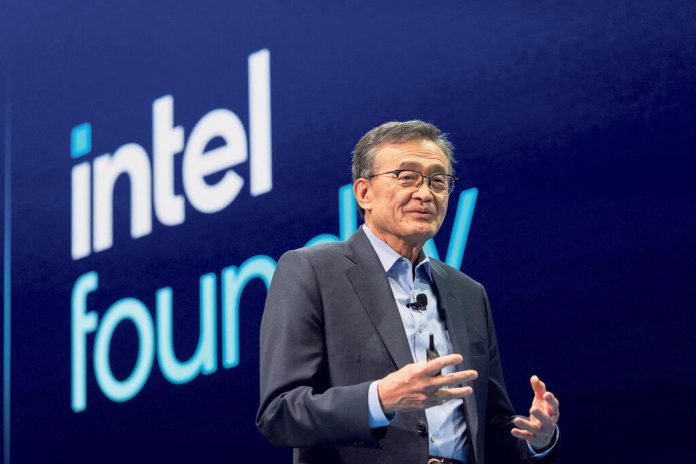
Semiconductor giant Intel is undergoing one of its most significant leadership shakeups in years as new CEO Lip-Bu Tan accelerates efforts to reposition the company in the face of mounting competition.

Since taking the helm in March, Tan has moved swiftly to bring in fresh talent, reorganize core operations, and signal to investors that Intel intends to reclaim its place at the center of the semiconductor industry.

On Monday, Intel announced that Michelle Johnston Holthaus, a three-decade veteran and most recently CEO of Intel products, will step down. She will stay on as a strategic adviser. The departure of Holthaus, one of Intel’s longest-serving leaders, underscores Tan’s willingness to make bold changes to a company once defined by stability and continuity at the top.

As part of its restructuring, Intel also unveiled a new central engineering group tasked with building custom silicon for outside clients. This move marks a notable pivot as Intel intensifies its push into foundry services—a space traditionally dominated by Taiwan’s TSMC and South Korea’s Samsung. The division will be led by Srinivasan “Srini” Iyengar, who joined Intel from Cadence Design Systems in July.

Further appointments were also announced. Kevork Kechichian, formerly of ARM, will now head Intel’s data center group, while Jim Johnson has been elevated to senior vice president and general manager of Intel’s client computing group. Naga Chandrasekaran, currently chief technology and operations officer of Intel Foundry, will see his responsibilities expand as the company ramps up investments in custom chip manufacturing.

“With Srini leading Central Engineering, we’re aligning innovation and execution more tightly in service to customers,” Tan said in a press release. “We are laser-focused on delivering world-class products and empowering our engineering teams to move faster and execute with excellence. Kevork, Jim, and Srini are exceptional leaders whose deep technical acumen and industry relationships will be instrumental as we continue building a new Intel.”

These leadership moves follow other changes earlier this year. In July, Intel brought in four new executives in sales and engineering roles, including Greg Ernst as chief revenue officer. And, of course, Tan’s own appointment in March was a pivotal moment, signaling the board’s desire for a transformative leader to chart a new path forward.

The reshuffle comes at a time of heightened scrutiny. Just weeks ago, the U.S. government announced a plan to convert $11.1 billion in existing Chips Act grants into a 10% equity stake in Intel. The deal, one of the largest of its kind, also includes a provision penalizing Intel if its ownership of the foundry unit falls below 50%. Washington’s unprecedented intervention highlights the strategic importance of Intel’s turnaround not just to its shareholders but to U.S. national security interests as America races to reduce reliance on Asian chipmakers.

In a comparative context, Intel’s aggressive leadership changes stand in contrast with rivals. TSMC, despite leadership transitions, has largely maintained continuity while pushing technological boundaries in chip miniaturization. Nvidia, meanwhile, continues to thrive under the long-standing leadership of Jensen Huang, cementing its dominance in AI accelerators. Intel’s challenge is therefore unique: it must simultaneously restructure its leadership, modernize its technology base, and prove that it can compete in foundry services—all while under the watchful eye of the U.S. government.

Yet Intel is far from alone in its leadership shakeup. Across the industry, rivals and peers are making similar moves. Microsoft, for instance, saw the surprise departure of Panos Panay, its longtime hardware chief, as it restructured its Windows and devices group. Apple has recently reshuffled its senior hardware engineering leadership as it pivots more aggressively into mixed-reality headsets. Even Google has undergone senior-level changes within its AI division, most notably merging Google Brain and DeepMind under a single umbrella last year to accelerate its race against OpenAI.

In this context, Intel’s reshuffle is less an anomaly than part of a broader recalibration across the tech sector, where rapid innovation in AI, cloud, and semiconductors is forcing long-standing incumbents to rethink both strategy and leadership.

The challenge for Intel, however, remains acute. While rivals like Nvidia thrive under the continuity of Jensen Huang’s leadership and TSMC maintains stability despite succession planning at the top, Intel is trying to pull off a turnaround in the midst of internal flux and government oversight.

Looking ahead, Tan’s strategy seems designed to position Intel as both a product powerhouse and a trusted foundry partner. If successful, Intel could reclaim lost ground against Asian rivals and re-establish itself as the linchpin of U.S. semiconductor independence.

The best-case scenario would see Intel leveraging new leadership and government backing to secure major external contracts, scale foundry operations, and re-enter the race in advanced process nodes. The worst-case, however, is that the company’s cultural upheaval and competitive lag prove too much to overcome, leaving Intel vulnerable to losing further ground in both data center and consumer markets.

Nvidia Unveils Rubin CPX GPU, Targeting Ultra-Long Context AI Models

0
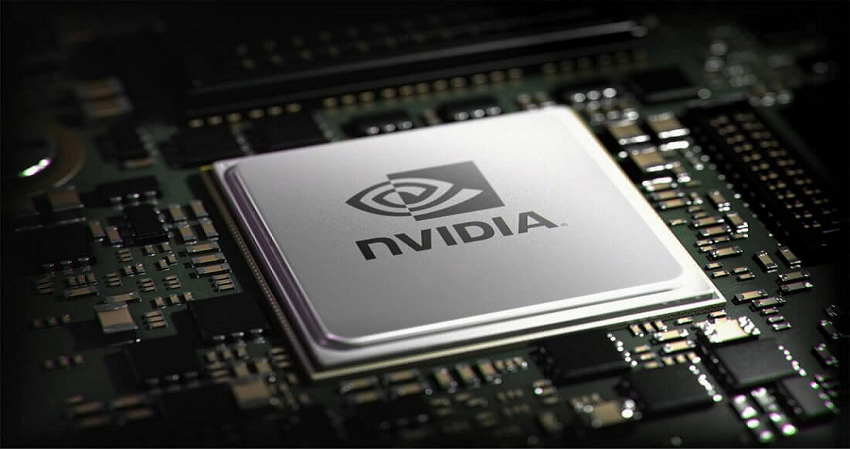
Nvidia chip

At the AI Infrastructure Summit on Tuesday, Nvidia announced a new GPU called the Rubin CPX, a chip designed to handle context windows larger than 1 million tokens — a leap in capability that directly addresses the computational bottlenecks faced by next-generation AI systems.

The Rubin CPX is part of Nvidia’s forthcoming Rubin series, which represents the company’s next wave of data center GPUs. Unlike general-purpose chips, the CPX is optimized for processing massive sequences of context, allowing AI systems to recall and analyze far larger inputs than before. For developers and enterprises, the hardware could unlock breakthroughs in long-context tasks such as video generation, large-scale document analysis, and advanced software development workflows.

Nvidia emphasized that the chip was designed with its “disaggregated inference” infrastructure strategy in mind — an approach that distributes AI workloads across specialized GPUs tailored to different aspects of model inference. Nvidia aims to maximize efficiency and reduce costs for its enterprise clients running multimodal and large-context AI workloads by splitting tasks such as memory management, computation, and retrieval across distinct chips.

Financial Strength Fuels Rapid Product Cycles

The announcement underscores Nvidia’s rapid pace of innovation, which has been fueled by record-breaking financial results. The company recently reported $41.1 billion in data center sales in a single quarter, a figure that dwarfs competitors and highlights Nvidia’s dominance as the backbone of the AI boom.

This relentless development cycle — releasing new chips in quick succession, each designed for increasingly specialized workloads — has helped Nvidia stay ahead of both traditional chipmakers like Intel and AMD and newer challengers building AI accelerators, such as Google’s TPUs or startups like Cerebras and SambaNova.

The Rubin CPX is expected to ship at the end of 2026, giving enterprises a runway to prepare for adoption. Nvidia executives said the delay reflects the chip’s highly specialized design and the company’s broader rollout of the Rubin GPU family, which is expected to power the next wave of generative AI systems.

Analysts note that Nvidia’s move comes amid growing demand for long-context AI models, particularly as large language models evolve from handling short conversations or text snippets to reasoning across entire books, long videos, or sprawling software codebases.

Here, Nvidia’s hardware push dovetails with parallel efforts by major AI labs. OpenAI, for instance, has been extending the context window of its GPT-4 Turbo and GPT-5 models, with demonstrations of handling over a million tokens in practical use cases. Similarly, Anthropic has made context length a cornerstone of its Claude series, emphasizing its ability to ingest and process entire documents or codebases without losing coherence.

The contrast is thus glaring. While OpenAI and Anthropic are stretching the boundaries of software architecture and model design to handle ultra-long contexts, Nvidia is building the infrastructure layer — specialized GPUs like the Rubin CPX — to ensure these models can run at scale with efficiency and reliability. Analysts say the combination of hardware and software innovation is what will ultimately make long-context AI commercially viable, particularly for industries that depend on retaining and reasoning across vast datasets.

For enterprises, the Rubin CPX is expected to prove critical in industries like media, finance, healthcare, and software engineering, where the ability to retain and process context over vast stretches of data is increasingly essential. For Nvidia, the chip not only cements its grip on the AI infrastructure market but also signals its commitment to tailoring products for specific AI workloads rather than pursuing a one-size-fits-all approach.