At 12 noon WAT tomorrow (Monday, Sept 13), the 6th edition of Tekedia Mini-MBA will begin. It will run for 12 weeks, ending on Dec 6, 2021. I want to welcome our co-learners to this academic excursion into the mechanics of market systems. If for any reason you have not received your login, please contact Admin. This applies to members who paid via BusinessDay, AYS, FinQuest, partners in Kenya, Ghana, Cameroon and other countries.
I specifically welcome Sierra Leone members and the amazing scholars sponsored by a First Lady in a Nigerian state (more in the week). Thank you First Lady for providing knowledge besides other things for empowerment.
We’re Tekedia Institute, we know the physics of business, and we’re truly honoured for the opportunity to co-learn with you. WELCOME!
To join this academic festival, click and register here before we close registration soon
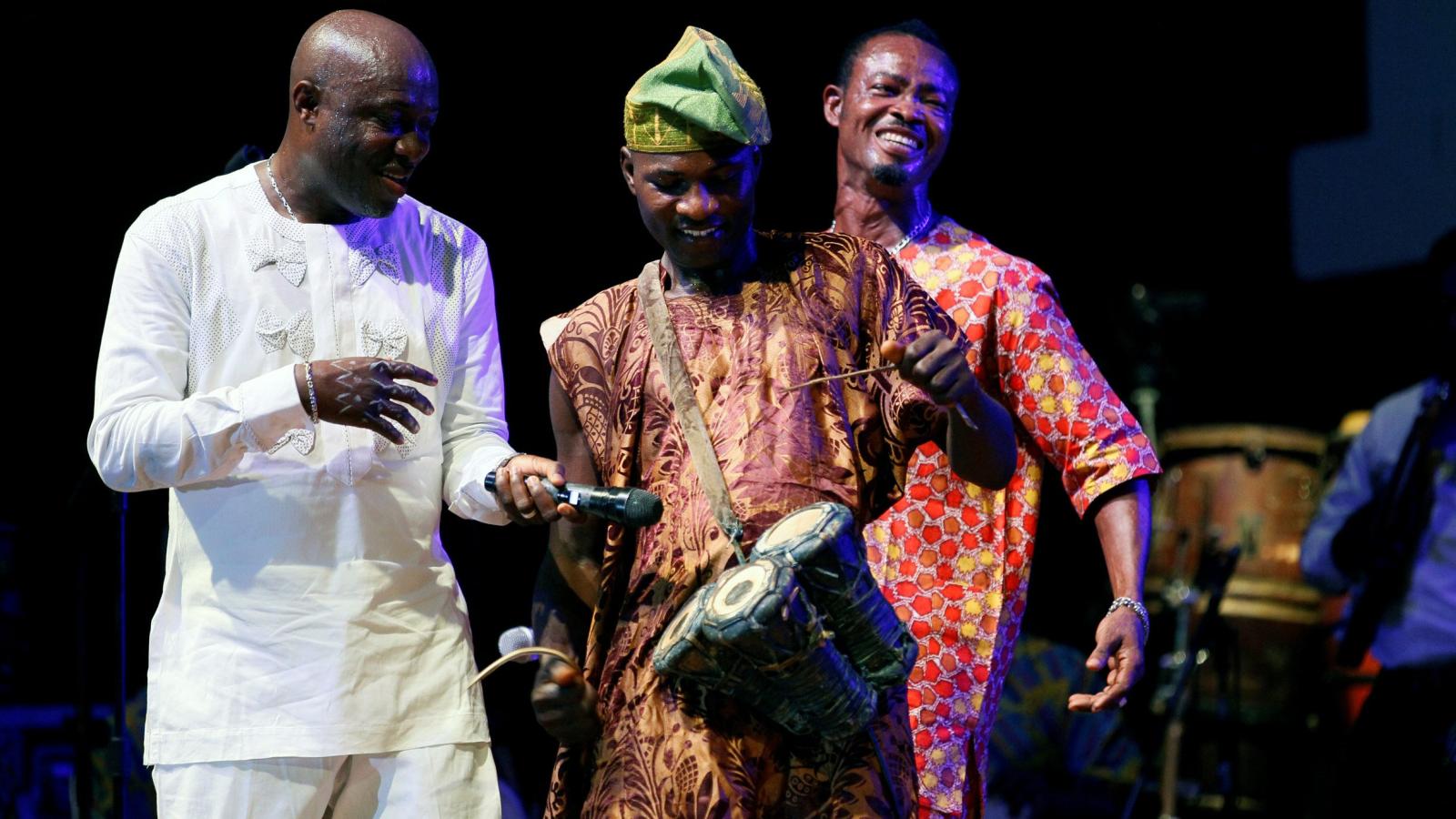
This article starts off with some insights into Pidgin English as a medium of communication in Africa notably Anglophone West Africa Cameroon, Ghana and Nigeria. It then moves on to the subject of code-switching with additional insights from Urban Grooves in Zimbabwe to the South. The central message is to grasp how, and to what extent code-switching as both a style or linguistic choice impacts upon audience engagement and ultimately success of artistes. There are both theoretical and social implications especially as music of African origin has crossed international boundaries in recent years.
In their 2007 article in a journal with an interesting nomenclature “World Englishes” Peter & Wolf undertook acomparison of the varieties of West African Pidgin English.
Their work highlighted national varieties of West African Standard English in a comparative perspective, mostly dealing with phonetics and lexicon. Similar efforts with respect to the national varieties of Pidgin English spoken in West Africa. i.e. Ghanaian, Nigerian, and Cameroon Pidgin English, have been lacking so far. These authors consequently sought to provide a “descriptive and systematic account of features that distinguish these varieties from one another. Considering differences on the phonetic, grammatical, and lexical level [and] based on dozens of interviews with speakers of West African Pidgin English.”
Six years later in 2013, Akinmade Akande talks aboutCode-switching in Nigerian hip-hop lyrics in another journal with an interesting name, i.e., Language Matters. The article examined multilingualism in relation to hip-hop lyrics in Nigeria. It focuses on the sociolinguistics of English and its contact with other Nigerian languages in hip-hop music. Akande argued that:
“…because Nigerian Pidgin English (NPE) has the highest number of speakers as compared to other indigenous languages in the country […] its speakers are found across the country and its usage given prominence in Nigerian hip-hop, it ought to be treated as a super central language.”
Another interesting commentary from his article reads:
“…in addition to being one hyper central language (English), there are two sets of super central languages in Nigeria; namely, the three national languages (Hausa, Igbo and Yoruba) and Nigerian Pidgin English. The paper also reports that Nigerian rappers can be classified into four major categories, based on their language use.”
Language Matters Moving South
Just like Akinmade Akande talks aboutCode-switching in Nigerian hip-hop lyrics,Victor Mugari interrogatedCode-switching in Zimbabwean urban grooves music. In that article he argued that: “…code-switching as exhibited in Zimbabwean urban grooves music […] is both a music style and a linguistic style. […] based on the former, artistes code-switch as a style that defines their urban music genre; it is a stylistic device that isolates the genre from other contemporary genres.”
As a linguistic style, “the argument is that artistes code-switch as evidence of the existence of a language style, a language choice, which, though made up of two different varieties, can be acceptable as a variety itself.”
“The article further argues that even though code-switching in song lyrics is not spontaneous, it can still be analysed within the existing code-switching frameworks such as Audience Design. The artistes adjust their language style to suit their audience, mainly the youths who unreservedly code-switch. The analysis in the article contributes to the understanding of functions of code-switching within premeditated contexts.”
Rather interestingly, another study in the same year “Attitudes towards code-switching among adult mono- and multilingual language users,” had a different set of results, “…participants in their teens and twenties appreciated CS less than older participants. The findings thus show that the attitudes towards CS are linked to personality, language learning history and current linguistic practices, as well as some sociobiographical variables.”
In that study Jean-Marc Dewaele & Li Wei (2014) investigated “inter-individual variation (linked to personality traits, multilingualism and sociobiographical variables) in attitudes towards code-switching among 2070 multilinguals” and reported that “Participants who grew up in a bilingual family and in an ethnically diverse environment, and currently worked in an ethnically diverse environment had significantly more positive attitudes towards CS.”
In summing up, despite the differences of opinion, the argument of Jean-Marc Dewaele & Li Wei does make a great deal of sense:
“Language attitudes permeate our everyday lives: people often judge our social status, group membership, intelligence, competence by the way we use language (…). People hold attitudes to language at all its levels, e.g. accent, choice of words, speed of speech, grammar, language variety.”
Another statement equally captures the attribution of Pidgin to “broken” English thus, “The vast majority of the existing studies on language attitudes are done on particular languages, language varieties, or certain aspects, such as pronunciation or spelling, of particular languages, usually in sociolinguistic situations where there is a troubled history of language contact and a sharp differentiation of the symbolic values of the languages involved. For example, there are studies of language attitudes towards English and other local languages in Hong Kong, India, sub-Saharan Africa and Wales…”
Going forward language is key to audience engagement especially where music production and consumption are concerned. This is even more imperative in contexts where there are “super central languages” spoken by a majority of the population. In the case of Nigeria, Pidgin has been labelled the unofficial second language. I would let readers decide on the connection between code-switching and how we make and enjoy music.
In August 2019, the Nigerian government closed land borders with neighbouring Benin, Cameroon, Chad and Niger. Because the justification was for improved security, many gave the policy a “fair pass” that it could solve the insecurity which is essentially bankrupting the nation.
Within weeks, some manufacturers which essentially served these secondary markets, beyond Nigeria, started complaining. What happened? They have lost access to their markets. A kinsman who produces wine in Aba for exclusive export to Southern Cameroon saw his business severely economically wounded because he lost access to his major market. Pockets of Lagos manufacturers suffered the same fate.
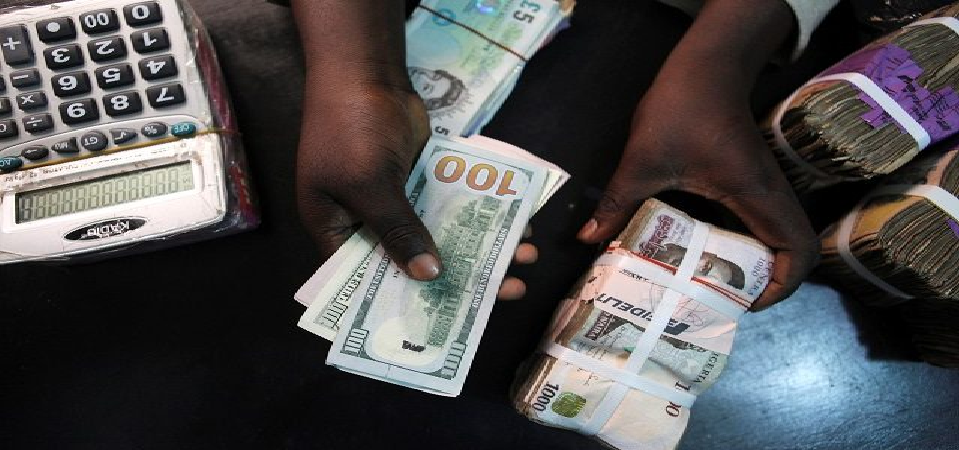
There is an implication there: Nigeria was losing pockets of foreign earnings as all these countries always pay in US dollars. Sure, not many are formalized as some load items from Lagos and drive across the border to supply, and return with US dollars. But those were dollars and they helped supply on the streets of Lagos!
Besides, some MNCs have always served some smaller neighbouring countries from Nigeria through their distributors as they anchor from Nigeria.
But when the land borders were closed, that source of foreign currencies dried up and magically other countries came and picked our positions in these markets. Morocco developed better linkages and Nigerian manufacturers saw massive redesign. A friend left this message.
Unfortunately, since we re-opened the border, we are still struggling to readjust the equilibrium point. Some of those traders that used to come to Onitsha, the largest market in Africa, for years do not come anymore. They used to arrive in Nigeria from other West African countries with foreign currencies; today, not many are coming.
Across many dimensions, with insecurity still ravaging the nation, the land border policy could be the economic policy nuclear reaction, in a fission state, messing up the Nigerian Naira. You can call it an own-goal, scored against the Naira.
In this piece, I quoted an email from a friend in Senegal:
“Ndubuisi – your country Nigeria is losing its position in West Africa. As a government worker here in Senegal, I have been involved in four meetings where most other West African countries gathered with no Nigerian representative. The land border closure is the root cause of the decisions. Nigeria has imagined that any West African country has the magic wand to smuggling and can help protect its borders. Our big brother failed to understand that we are all victims at different levels.
The post-Nigerian era in West Africa has started and everyone is looking for alternatives. It is painful that unlike before where meetings began with Nigeria, no one cares anymore. My uncle’s seven trucks are trapped in Nigeria for months, for going there to bring in legal goods, purchased from a Nigerian factory. Nigeria will not allow the trucks to return even empty. Because the goods were prepaid, and the consignments since gone bad, the man is now depressed. He wished he bought from China, not from his friend of 30 years in Nigeria.” From a friend in Senegal.
Yes, Nigeria scored an own-goal against the Naira and Naira’s team is losing badly.
Fighting for Naira
After this policy, Nigeria has been battling how to protect the Naira like a ravaging wildfire as the currency loses value: “Economic and Financial Crimes Commission (EFCC) has stated that bankers who collude with criminal elements to collect foreign exchange should be reported. The agency also directed that banks should not provide foreign exchange to consumers who do not intend to travel outside Nigeria.” This is a follow-up to the big shaming which was also introduced as a policy instrument.
“Always report Bank officials who collude with criminal elements to collect foreign exchange. There are very strong indications that it is happening; go back and sensitise your staff, to ensure that they always do the right thing because ‘doing the right thing’ has become the new normal; therefore, proper verification of documents presented by customers for forex must be done. Again, the Commission will not entertain excuses, and will no longer look away when Banks fail to do their due diligence.”
Accordingly, commercial banks are informing their customers on the need for compliance. Below was sent by a commercial bank to its customers.
Kindly be informed that customers who contravene the guidelines on FX purchase for Personal/Business Travel Allowance will have their names and Bank Verification number (BVN) published on our website . This is in line with the Central Bank of Nigeria (CBN)’s mandate and takes immediate effect.
The directive affects customers who purchase FX via fraudulent means such as presenting fake travel documents or cancellation of flights after buying PTA/BTA and failing to return same within 2 weeks, as stated in the customer declaration form signed by them.
Beyond having their names published on the website, such customers may also be liable to criminal prosecution.
We are committed to partnering with the CBN to ensure a transparent, efficient and stable FX Market that meets the needs of all legitimate users.
The banks have to be super-diligent as they can lose their license for the lucrative FX market, and many will not want that to happen. The apex bank made the threat on the license in a circular on Sept 10, 2021 titled, “Observations of due diligence in the processing of foreign exchange translations” signed by Dr. O.S. NNAJI, Director of Trade and Exchange Department of the CBN.
“In line with the continuing close surveillance of our financial market in general and the FX market in particular, the CBN wishes to remind all banks that it is their responsibility to not only Know their customers but know their customer business.
“Given these responsibilities and in view of recent occurrences in the market, the CBN would like to remind banks to desist from all and any form of forex malpractice.
“We wish to reiterate that the FX operations licence of any bank or banks that are found culpable with the ongoing investigation would be suspended at least for one year.“
Facebook has teamed up with Ray-Ban to create smart glasses that can take photos, record video, answer phone calls and play podcasts, extending where Google glasses failed.
“Today we’re excited to launch Ray-Ban Stories: Smart glasses that give you an authentic way to capture photos and video, share your adventures, and listen to music or take phone calls — so you can stay present with friends, family, and the world around you. Starting at $299 USD and available in 20 style combinations, the smart glasses are available for purchase online and in select retail stores in the US as well as Australia, Canada, Ireland, Italy, and the UK”, with that Facebook unveiled a new generation of smart glasses which may actually work!
Facebook is hoping that our glasses will replace our smartphones in the near future.
But instead of reaching into my pocket for my iPhone, I tapped the side of my Ray-Ban sunglasses until I heard the click of a shutter. Later, I downloaded the photos that my sunglasses had just taken to my phone.
The process was instant, simple, unobtrusive — and it was powered by Facebook, which has teamed up with Ray-Ban. Their new line of eyewear, called Ray-Ban Stories and unveiled on Thursday, can take photos, record video, answer phone calls and play music and podcasts.
Many in the community have asked me to comment on the decision of the military to establish a naval base in Kano, Nigeria. But before I comment, let me explain what a naval base is. According to Wikipedia, a “ naval base, navy base, or military port is a military base, where warships and naval ships are docked when they have no mission at sea or need to restock.” Largely, a naval base needs to have water bodies that must “host” warships.
Now – why is Kano a location when we have many locations in Bayelsa, Rivers, Cross River, etc? Simply, it is the fruit of centralized government and the national demon of converging all wealth in Abuja. That is the national demon!
No warship will make it to Kano but with Kano being classified as the official base, all the associated CSRs for communities that host these warships will be executed in Kano. We are all adults in Nigeria now, and it is very offensive for us as a people to say it does not matter. The ships will be docked in Rivers, Bayelsa, etc but the Navy will spend community developments in Kano!
If that is not the case, the military can explain! Decisions like this weaken the national spirit of comparative advantages, creating unhealthy relationships. We love Kano, Owerri, Jos, Osogbo, and all cities in our nation. Each must be chosen for national “posts” on pure technical merits; Kano on this one is a WRONG choice – and I want to tell Mr President that he will confuse primary school kids when they write that ‘Kano shares borders with the Atlantic Ocean because it has a naval base”.
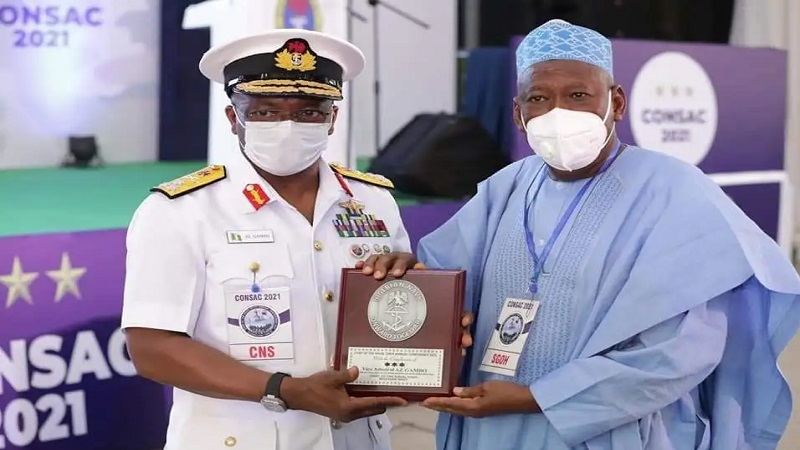
As a response to the Kano State Governor, Abdullahi Umar Ganduje’s request for the presence of Nigerian Navy in the state, to strengthen the security of the state, the Nigerian Navy has approved the establishment of Kano State Naval Base.
The Chief of Naval Staff (CNS), Vice Admiral Awwal Zubairu Gambo, disclosed this yesterday in Kano when he paid a courtesy call to the governor at his office.
The CNS is in the state for the Chief of Naval Staff Annual Conference 2021, between September 1 and 4, 2021.
This is a pure offensive poor policy which diminishes a professional institution like the military. As Afghanistan has shown us that military gears alone do not win wars: hearts do. That explains why Taliban overran fellow Afghans, on the “government” side, within days. Nigeria needs to show in deeds and actions of a nation of justice, fairness and equity.