DD
MM
YYYY

PAGES

DD
MM
YYYY

spot_img

PAGES

Home Blog Page 5585

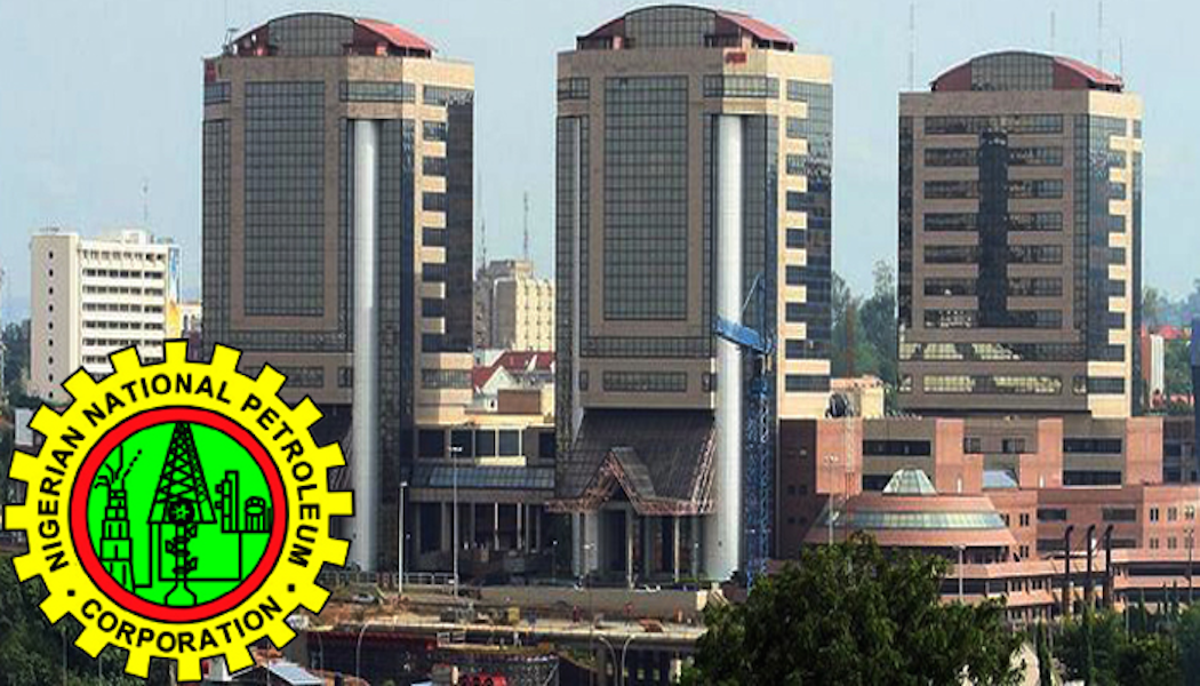
NNPC Will Sell Shares in 2024 to The Public – Will You Buy?

8

I was a student and had some free funds. I read about the promises of Transcorp Plc initial public offer (IPO), from the president of the nation, and the director general of the securities and exchange commission; I joined the IPO party . Because I felt that those  duo would never allow the company to crash, I went in and bought the shares of Transcorp. They had sold Transcorp as Nigeria’s equivalent of China’s state enterprises all combined in one.

That investment has underperformed across all domains. Honestly, I do not want to remember that mistake. 

Now, the news is that the Nigerian National Petroleum Corporation (NNPC) will sell shares to the public in 2024. That was according to the GMD of NNPC, Mele Kyari, in a conservation on Bloomberg: “The Nigerian National Petroleum Corporation (NNPC) will sell its shares for the first time to the public in three years, a path to raising the fund needed to sustain it as a going concern after managing to break a loss-making spell that has run it aground for roughly four decades and a half. Mele Kyari, the corporation’s head, told Bloomberg in a video chat on Tuesday the Initial Public Offering (IPO) will help Nigeria keep pace with the global energy transition in a bid to unlock its benefits.”

“IPO already means this company is going to be profitable,” Mr Kyari said.

“It has a long projectory, it has short term view of how things can be done better to align with best practices in the industry, trying to see how we can latch on the existing framework for energy transition that is ongoing all the world.”

Looking at what happened in Transcorp, will you buy NNPC shares? 

Meanwhile, this announcement validates my call in 2017 when I wrote thus: “NNPC Plc – Nigeria Should Take NNPC Public To Boost Transparency”. I listed some benefits for NNPC Plc.

NNPC Plc – Nigeria Should Take NNPC Public To Boost Transparency

Towards A Greater Abia State

0

Umu Abia, I accepted the invitation of our Governor, Dr Okezie Ikpeazu, to deliver the keynote of a special development programme which the state is organizing. I send a message to all Abians, that despite everything, we must continue to have tough love for God’s Own State. Aba has to rise. Umuahia has to evolve. Ohafia, Arochukwu, Bende, Isuikwuato, Ukwa, Ngwa, etc must rise. How do we do that? We need to join the action.

Umu Abia, udo diri unu. Obi dim mma ikele unu. Onye isi obodo ala ayi, Governor Okezie Ikpeazu, si mu bia kwuo okwo maka imepe ala Abia. Chineke gozie uno. Ka aku ruo ulo, ndi oma. Bia ka anyi mezie obodo Abia.

The Government has to do better, strategically, and we the people have to show up and do our part. The Aba free trade zone is a promise. But across all domains, Abia is missing a new dawn of entrepreneurial capitalism.

The businesses which Nnanna Kalu and co pioneered in Aba cannot take Abia to the next level. But how can Aba attract the new species of companies? How can Abia become indeed a God’s Own State of opportunities? It turns out when we engage!

What can you do for Abia state?

A Consequential Ruling On The Path to Nigeria’s Fiscal Federalism

0

This is a very consequential outcome and if the Supreme Court aligns, Nigeria would be completely different in years: “The suit filed by the Federal Inland Revenue Service (FIRS) seeking to stop the Rivers State Government from commencing collection of Value Added Tax (VAT) has been dismissed Federal High Court sitting in Port Harcourt, Rivers State.”

Now if Lagos state follows along, the Nigerian design will begin to happen. I think fiscal federalism would be good for the competitiveness of Nigeria where comparative advantages begin to play. But it all depends on how the Supreme Court, after the Court, sees this big legal battle for the future of Nigeria.

FIRS should withdraw its appeal: it is time for Nigeria to have internal competition. By the time Abia state does not get money from Abuja, we will be forced to fix Aba.

The suit filed by the Federal Inland Revenue Service (FIRS) seeking to stop the Rivers State Government from commencing collection of Value Added Tax (VAT) has been dismissed Federal High Court sitting in Port Harcourt, Rivers State.

Last month, a Federal High Court had declared the collection of VAT by federal government in states, unconstitutional. The tax agency had approached the court praying a Stay of Execution on the judgment.

According to Vanguard, Justice Stephen Dalyop Pam, in his ruling, said granting the application would negate the principle of equity. He noted that in as much as the state government and the state legislature has enacted a law in respect of the VAT that courts were bound to obey laws.

He noted that the Rivers State Government and the State Assembly, have duly enacted Rivers State Value Added Tax No. 4, 2021, which makes it a legitimate right of the state to collect VAT.

Meanwhile, despite the inability of FIRS to get the prayer sought, it is not giving up, asking taxpayers to continue to pay VAT to it.

Despite the latest development in court, Johannes Wojuola, the special assistant to the chairman of the FIRS on Media and Communications, in a statement Monday urged taxpayers to “remain calm” and maintain the “status quo”.

“The FIRS having lodged, in the Court of Appeal, both an appeal against the decision of the Federal High Court sitting in Rivers State in Suit No. FHC/PH/CS/149/2020, Attorney General of Rivers State Vs Federal Inland Revenue Service, and an injunction pending appeal of the said judgement, assures taxpayers that there is no cause for alarm.

“The Federal High Court ruling should not breed any confusion as to the obligations of taxpayers. Taxpayers must continue to comply with the Value Added Tax Act pending the final determination of appeal,” the statement said.

He said taxpayers “must” continue to pay their tax to the FIRS to avoid paying penalties for failure to do so.

“For the avoidance of doubt, records of appeal have been transmitted to the appellate court. The Service is confident that, given the extant laws, the arguments and case put forward, it will earn a favoured judgment at the appellate court,” the statement concluded.

Court Dismisses Prayer of Nigeria’s Tax Agency (FIRS) for Stay of Execution on VAT

4

The suit filed by the Federal Inland Revenue Service (FIRS) seeking to stop the Rivers State Government from commencing collection of Value Added Tax (VAT) has been dismissed Federal High Court sitting in Port Harcourt, Rivers State.

Last month, a Federal High Court had declared the collection of VAT by federal government in states, unconstitutional. The tax agency had approached the court praying a Stay of Execution on the judgment.

According to Vanguard, Justice Stephen Dalyop Pam, in his ruling, said granting the application would negate the principle of equity. He noted that in as much as the state government and the state legislature has enacted a law in respect of the VAT that courts were bound to obey laws.

He noted that the Rivers State Government and the State Assembly, have duly enacted Rivers State Value Added Tax No. 4, 2021, which makes it a legitimate right of the state to collect VAT.

The judge said law remained valid until it has been set aside by a court of competent jurisdiction, adding that the law enacted by the Rivers State legislature remained valid

Pam, also said granting the prayers of FIRS would amount to committing murder, adding that the prayers cannot stand and dismissed same.

Earlier, Justice Pam had read a letter that FIRS lawyers had served the court seeking for stay of any ruling on their application.

But, in the absence of any requisite document that ought to have been attached to the letter, the Judge dismissed the letter.

Meanwhile, the Counsel for Rivers State Government, Mark Agu, commended the court for standing for justice, noting that the state assembly had already made a standing law on VAT.

Agu disclosed that FIRS had approached the court with two prayers but that they withdrew the first prayer seeking for injunction and wanted the court to stay the execution of that judgment.

According to him, “the first Defendant, FIRS, sent their appeal against the judgment of the Honourable court delivered wherein the court allowed the Rivers State Government to collect their VAT.

“Subsequently after the judgment Rivers State has its own law on that, the Rivers State Law on VAT No. 4, 2021. Having appealed, they were asking for an injunction and secondly asking for stay on the judgment.

“Today, the court has delivered its ruling dismissing the said application for stay, though, without cost.

“The court’s reasoning is that if it should grant stay it is more or less like overruling itself and the court is empowered to recognize all laws enacted by the national assembly or the state house of assembly, therefore the law stands as substantive.

“Therefore the issues of collection of VAT as it stands today Rivers State is still entitled to still collect.”

But, counsel for FIRS, Reuben Wanogho, expressed displeasure with the stand of the court, noting that FIRS would not hesitate to appeal the ruling.

Wanogho said: “The court has delivered its ruling on the bases of how it saw the facts of the case. We do not agree with the ruling and we will take all necessary steps to challenge it. That is why the appellate System is there.

“The appellate System is there to enable us ventilate out grievances if for any reasons the court makes a pronouncement me we do not agree with it.

“For sure we feel that the ruling should have gone in our favour but, the court has taken a position against us, so we will do the needful by taking it up immediately before the court of appeal.

“We will challenge it. And we are hopeful that at the court of appeal we should be able to find our way. The appeal system is there to correct errors.

“The natural consequences of the ruling is that the Rivers State Government will be collecting the VAT, but we will take steps to ensure that we amelioration situation as quickly as possible,” he said.

Upholding the judgment means other states now have the freedom to follow the step of Rivers State. Already, the Lagos State government said last week, it has commenced collection of VAT, following last month’s judgment. The original judgement was hailed as a bold step forward in the push for fiscal federalism, the states’ lawmakers only need to enact laws to give it a legal backing.

State Broadcast

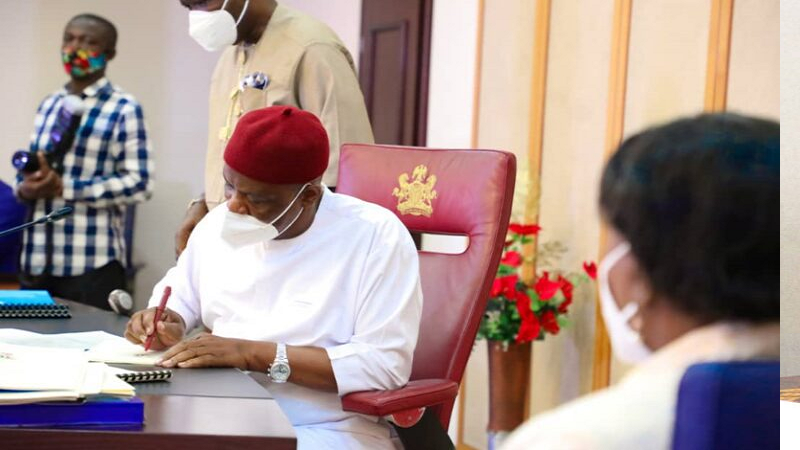
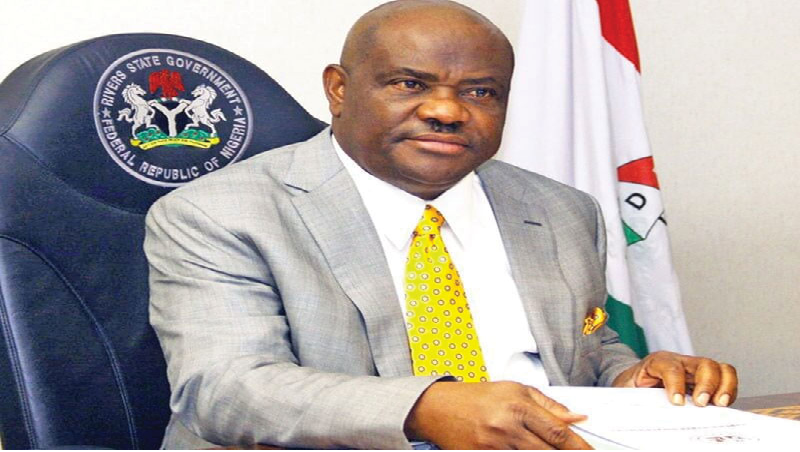
Governor Wike, in a state wide broadcast asserted that with Monday’s judgement, the state can enforce  the Rivers State Value Added Tax Law 2021, until otherwise set aside by a superior Courts.

“Consequently, I hereby direct the Rivers State Internal Revenue Service (RIRS) to ensure the full and total implementation and enforcement of this law against all corporate bodies, business entities and individuals with immediate effect.

“All corporate bodies, business entities and individuals are advised to willingly, truthfully and promptly comply with their tax obligations under this law to avoid the full weight of the stipulated sanctions, including having their business premises sealed-up. “I wish to further assure every resident that we shall as usual make effective use of the expected proceeds from this tax to accelerate the development of our State and improve the wellbeing of everyone.”

Senegal Hosts A Unicorn As Wave Raises $200M At Valuation of $1.7 Billion

2

It is unbelievable: Senegal has created a fintech startup which has a higher valuation than Flutterwave (valued at $1 billion) or any financial institution in Nigeria except OPay. Yes, Wave, a U.S. and Senegal-based mobile money provider, has raised $200 million in a Series A round of funding, according to TechCrunch. This deal is the largest-ever Series A round in Francophone Africa, making Wave a unicorn at $1.7 billion. 

GTBank* market cap today is N820 billion in the Nigerian Stock Exchange and if you use N500/$, this company has eclipsed it. Sure, China’s OPay but operating in Nigeria has a market value of $2 billion.

As this plays out, one may say that Paystack sold for cheap at $200 million, considering that its parent company, Stripe, joined Sequoia and Founders Fund to invest in Wave at this huge valuation.

Durbin tells TechCrunch that unlike M-Pesa, the mobile payment provider led by Safaricom, and other products of telecom operators like Orange and Tigo, Wave is building a mobile money service that is “radically affordable.”

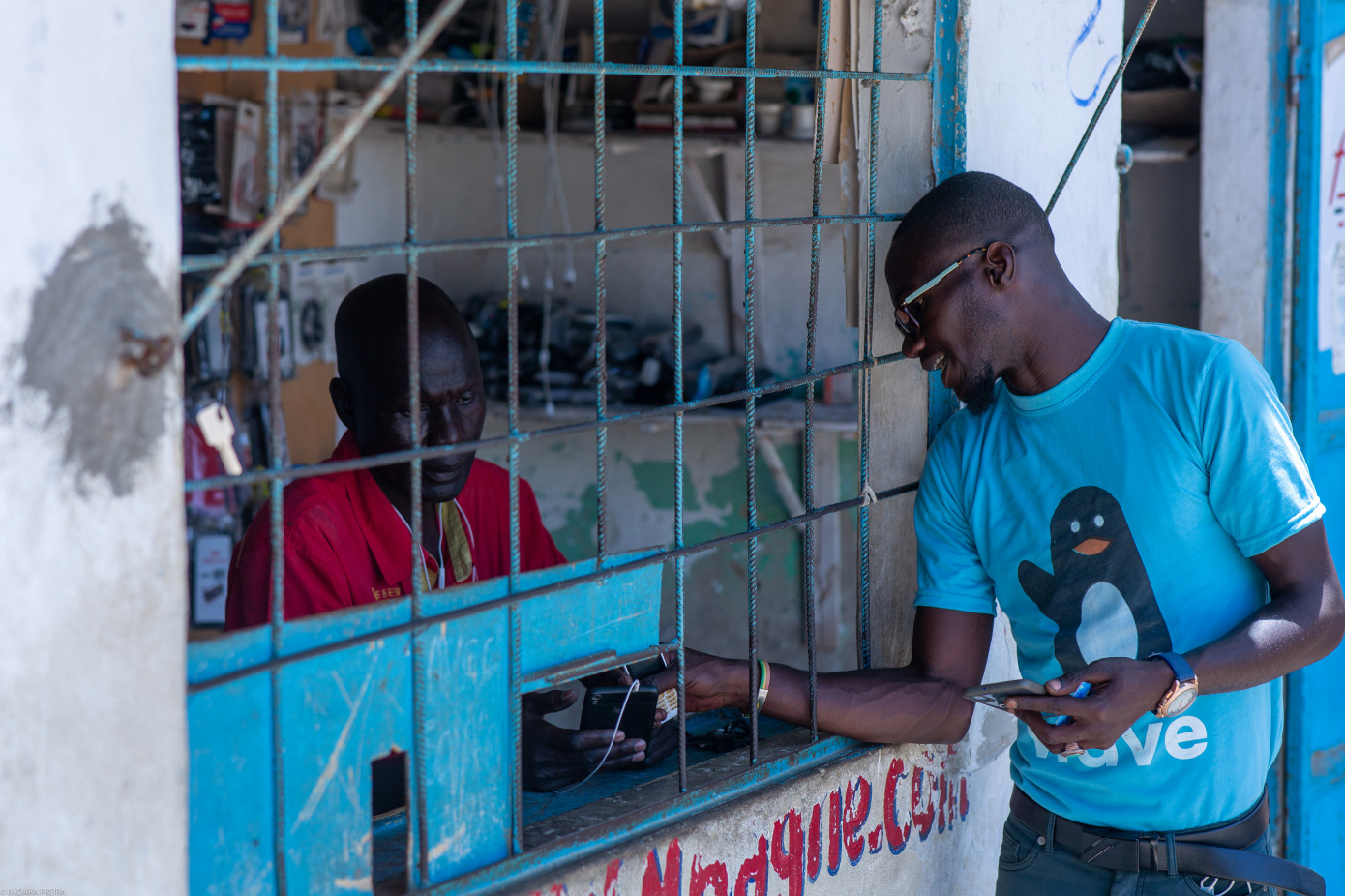
The Dakar-based platform is akin to PayPal (with mobile money accounts, not bank accounts) and runs an agent network that uses their cash on hand to service Wave users. According to the company, users can make free deposits and withdrawals and charge a 1% fee whenever they send money.

Durbin says this is 70% cheaper than telecom-led mobile money and whenever there is a transfer problem, refunds are made instantly, unlike with incumbents where users might need to wait for some days.

Wave’s technology also differs from telecom-led mobile money. Whereas the incumbents mostly focus on USSD (although there are provisions to use applications), Wave is solely app-based. For users without a smartphone, Wave also provides a free QR-card to transact with an agent.

Comment on LinkedIn Feed

Comment: Honestly speaking if you’ve given Kenya’s MPESA a good look, you’ll definitely want to hop on the first good Mobile Money Fintech you can find.

Valuations are largely subjective, Mobile money startups have the tendency to attract more hefty valuations (think OPay and now Wave), primarily because they’re able to tap into Africa’s real value proposition and promote financial inclusion. There are more people in Africa that are off-grid than those who are on-grid.

Most Fintechs focus on on-grid customers who are relatively easier and cheaper to serve, off-grid Mobile money players have the capacity to command larger valuations because of who their target markets are – both on-grid and off-grid users.

It also seems like Wave knows what it is doing – product quality, user experience etc. At US$200 million, Wave’s Series A is larger than both Facebook and Google’s Series A combined (US$12.7 million + US$25 million).

The biggest companies in Africa (MTN, Multichoice, Airtel, Dangote) have one thing in common – they’re able to serve both off-grid and on-grid customers. The biggest Fintech and technology players in Africa will need to properly serve both on-grid and off-grid users to prosper.

My thoughts.

My Response: Good point but note that because MPESA worked in Kenya and Wave worked in Francophone does not mean the business model can work anywhere. MPESA failed in South Africa because there was no need for it. I think the lesson here is this: find a product fit for the right market. It goes beyond technology or just the category, you need to be in the right market.  Wave has no chance in Nigeria because Nigeria’s banking sector is so good that its value proposition is marginal.