DD
MM
YYYY

PAGES

DD
MM
YYYY

spot_img

PAGES

Home Blog Page 5590

A Consequential Ruling On The Path to Nigeria’s Fiscal Federalism

0

This is a very consequential outcome and if the Supreme Court aligns, Nigeria would be completely different in years: “The suit filed by the Federal Inland Revenue Service (FIRS) seeking to stop the Rivers State Government from commencing collection of Value Added Tax (VAT) has been dismissed Federal High Court sitting in Port Harcourt, Rivers State.”

Now if Lagos state follows along, the Nigerian design will begin to happen. I think fiscal federalism would be good for the competitiveness of Nigeria where comparative advantages begin to play. But it all depends on how the Supreme Court, after the Court, sees this big legal battle for the future of Nigeria.

FIRS should withdraw its appeal: it is time for Nigeria to have internal competition. By the time Abia state does not get money from Abuja, we will be forced to fix Aba.

The suit filed by the Federal Inland Revenue Service (FIRS) seeking to stop the Rivers State Government from commencing collection of Value Added Tax (VAT) has been dismissed Federal High Court sitting in Port Harcourt, Rivers State.

Last month, a Federal High Court had declared the collection of VAT by federal government in states, unconstitutional. The tax agency had approached the court praying a Stay of Execution on the judgment.

According to Vanguard, Justice Stephen Dalyop Pam, in his ruling, said granting the application would negate the principle of equity. He noted that in as much as the state government and the state legislature has enacted a law in respect of the VAT that courts were bound to obey laws.

He noted that the Rivers State Government and the State Assembly, have duly enacted Rivers State Value Added Tax No. 4, 2021, which makes it a legitimate right of the state to collect VAT.

Meanwhile, despite the inability of FIRS to get the prayer sought, it is not giving up, asking taxpayers to continue to pay VAT to it.

Despite the latest development in court, Johannes Wojuola, the special assistant to the chairman of the FIRS on Media and Communications, in a statement Monday urged taxpayers to “remain calm” and maintain the “status quo”.

“The FIRS having lodged, in the Court of Appeal, both an appeal against the decision of the Federal High Court sitting in Rivers State in Suit No. FHC/PH/CS/149/2020, Attorney General of Rivers State Vs Federal Inland Revenue Service, and an injunction pending appeal of the said judgement, assures taxpayers that there is no cause for alarm.

“The Federal High Court ruling should not breed any confusion as to the obligations of taxpayers. Taxpayers must continue to comply with the Value Added Tax Act pending the final determination of appeal,” the statement said.

He said taxpayers “must” continue to pay their tax to the FIRS to avoid paying penalties for failure to do so.

“For the avoidance of doubt, records of appeal have been transmitted to the appellate court. The Service is confident that, given the extant laws, the arguments and case put forward, it will earn a favoured judgment at the appellate court,” the statement concluded.

Court Dismisses Prayer of Nigeria’s Tax Agency (FIRS) for Stay of Execution on VAT

4

The suit filed by the Federal Inland Revenue Service (FIRS) seeking to stop the Rivers State Government from commencing collection of Value Added Tax (VAT) has been dismissed Federal High Court sitting in Port Harcourt, Rivers State.

Last month, a Federal High Court had declared the collection of VAT by federal government in states, unconstitutional. The tax agency had approached the court praying a Stay of Execution on the judgment.

According to Vanguard, Justice Stephen Dalyop Pam, in his ruling, said granting the application would negate the principle of equity. He noted that in as much as the state government and the state legislature has enacted a law in respect of the VAT that courts were bound to obey laws.

He noted that the Rivers State Government and the State Assembly, have duly enacted Rivers State Value Added Tax No. 4, 2021, which makes it a legitimate right of the state to collect VAT.

The judge said law remained valid until it has been set aside by a court of competent jurisdiction, adding that the law enacted by the Rivers State legislature remained valid

Pam, also said granting the prayers of FIRS would amount to committing murder, adding that the prayers cannot stand and dismissed same.

Earlier, Justice Pam had read a letter that FIRS lawyers had served the court seeking for stay of any ruling on their application.

But, in the absence of any requisite document that ought to have been attached to the letter, the Judge dismissed the letter.

Meanwhile, the Counsel for Rivers State Government, Mark Agu, commended the court for standing for justice, noting that the state assembly had already made a standing law on VAT.

Agu disclosed that FIRS had approached the court with two prayers but that they withdrew the first prayer seeking for injunction and wanted the court to stay the execution of that judgment.

According to him, “the first Defendant, FIRS, sent their appeal against the judgment of the Honourable court delivered wherein the court allowed the Rivers State Government to collect their VAT.

“Subsequently after the judgment Rivers State has its own law on that, the Rivers State Law on VAT No. 4, 2021. Having appealed, they were asking for an injunction and secondly asking for stay on the judgment.

“Today, the court has delivered its ruling dismissing the said application for stay, though, without cost.

“The court’s reasoning is that if it should grant stay it is more or less like overruling itself and the court is empowered to recognize all laws enacted by the national assembly or the state house of assembly, therefore the law stands as substantive.

“Therefore the issues of collection of VAT as it stands today Rivers State is still entitled to still collect.”

But, counsel for FIRS, Reuben Wanogho, expressed displeasure with the stand of the court, noting that FIRS would not hesitate to appeal the ruling.

Wanogho said: “The court has delivered its ruling on the bases of how it saw the facts of the case. We do not agree with the ruling and we will take all necessary steps to challenge it. That is why the appellate System is there.

“The appellate System is there to enable us ventilate out grievances if for any reasons the court makes a pronouncement me we do not agree with it.

“For sure we feel that the ruling should have gone in our favour but, the court has taken a position against us, so we will do the needful by taking it up immediately before the court of appeal.

“We will challenge it. And we are hopeful that at the court of appeal we should be able to find our way. The appeal system is there to correct errors.

“The natural consequences of the ruling is that the Rivers State Government will be collecting the VAT, but we will take steps to ensure that we amelioration situation as quickly as possible,” he said.

Upholding the judgment means other states now have the freedom to follow the step of Rivers State. Already, the Lagos State government said last week, it has commenced collection of VAT, following last month’s judgment. The original judgement was hailed as a bold step forward in the push for fiscal federalism, the states’ lawmakers only need to enact laws to give it a legal backing.

State Broadcast

Governor Wike, in a state wide broadcast asserted that with Monday’s judgement, the state can enforce  the Rivers State Value Added Tax Law 2021, until otherwise set aside by a superior Courts.

“Consequently, I hereby direct the Rivers State Internal Revenue Service (RIRS) to ensure the full and total implementation and enforcement of this law against all corporate bodies, business entities and individuals with immediate effect.

“All corporate bodies, business entities and individuals are advised to willingly, truthfully and promptly comply with their tax obligations under this law to avoid the full weight of the stipulated sanctions, including having their business premises sealed-up. “I wish to further assure every resident that we shall as usual make effective use of the expected proceeds from this tax to accelerate the development of our State and improve the wellbeing of everyone.”

Senegal Hosts A Unicorn As Wave Raises $200M At Valuation of $1.7 Billion

2

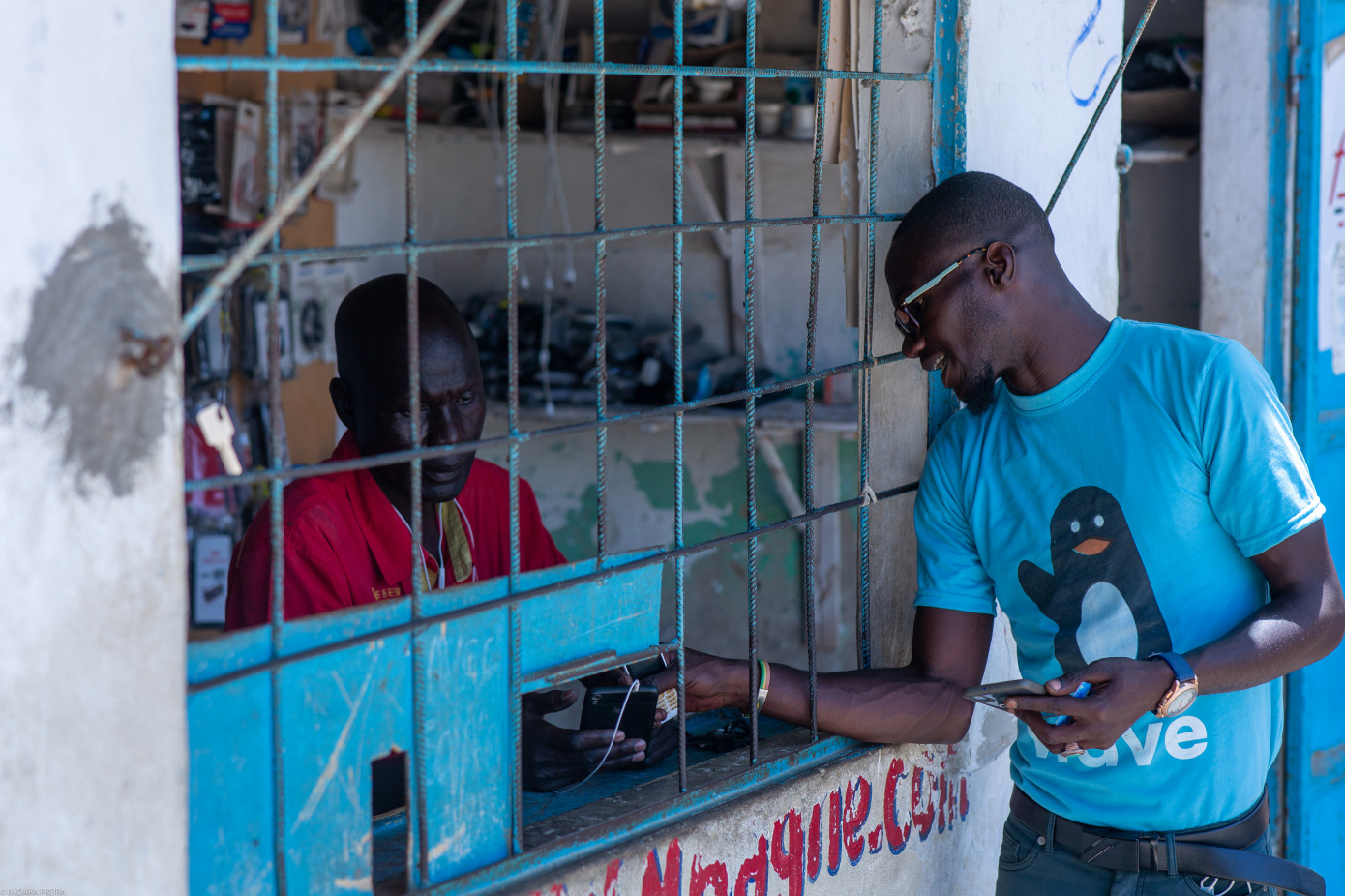
It is unbelievable: Senegal has created a fintech startup which has a higher valuation than Flutterwave (valued at $1 billion) or any financial institution in Nigeria except OPay. Yes, Wave, a U.S. and Senegal-based mobile money provider, has raised $200 million in a Series A round of funding, according to TechCrunch. This deal is the largest-ever Series A round in Francophone Africa, making Wave a unicorn at $1.7 billion. 

GTBank* market cap today is N820 billion in the Nigerian Stock Exchange and if you use N500/$, this company has eclipsed it. Sure, China’s OPay but operating in Nigeria has a market value of $2 billion.

As this plays out, one may say that Paystack sold for cheap at $200 million, considering that its parent company, Stripe, joined Sequoia and Founders Fund to invest in Wave at this huge valuation.

Durbin tells TechCrunch that unlike M-Pesa, the mobile payment provider led by Safaricom, and other products of telecom operators like Orange and Tigo, Wave is building a mobile money service that is “radically affordable.”

The Dakar-based platform is akin to PayPal (with mobile money accounts, not bank accounts) and runs an agent network that uses their cash on hand to service Wave users. According to the company, users can make free deposits and withdrawals and charge a 1% fee whenever they send money.

Durbin says this is 70% cheaper than telecom-led mobile money and whenever there is a transfer problem, refunds are made instantly, unlike with incumbents where users might need to wait for some days.

Wave’s technology also differs from telecom-led mobile money. Whereas the incumbents mostly focus on USSD (although there are provisions to use applications), Wave is solely app-based. For users without a smartphone, Wave also provides a free QR-card to transact with an agent.

Comment on LinkedIn Feed

Comment: Honestly speaking if you’ve given Kenya’s MPESA a good look, you’ll definitely want to hop on the first good Mobile Money Fintech you can find.

Valuations are largely subjective, Mobile money startups have the tendency to attract more hefty valuations (think OPay and now Wave), primarily because they’re able to tap into Africa’s real value proposition and promote financial inclusion. There are more people in Africa that are off-grid than those who are on-grid.

Most Fintechs focus on on-grid customers who are relatively easier and cheaper to serve, off-grid Mobile money players have the capacity to command larger valuations because of who their target markets are – both on-grid and off-grid users.

It also seems like Wave knows what it is doing – product quality, user experience etc. At US$200 million, Wave’s Series A is larger than both Facebook and Google’s Series A combined (US$12.7 million + US$25 million).

The biggest companies in Africa (MTN, Multichoice, Airtel, Dangote) have one thing in common – they’re able to serve both off-grid and on-grid customers. The biggest Fintech and technology players in Africa will need to properly serve both on-grid and off-grid users to prosper.

My thoughts.

My Response: Good point but note that because MPESA worked in Kenya and Wave worked in Francophone does not mean the business model can work anywhere. MPESA failed in South Africa because there was no need for it. I think the lesson here is this: find a product fit for the right market. It goes beyond technology or just the category, you need to be in the right market.  Wave has no chance in Nigeria because Nigeria’s banking sector is so good that its value proposition is marginal.

Post-Petroleum Industry Bill (PIB), AI and the Future of Dept of Petroleum Resources, Nigeria

0

Globally, oil and gas regulators are stumbling over themselves to address energy transition and the spiraling consequences of climate change. They are concerned their teams may not be prepared to meet the challenges of the next decade – to piloting the energy transition, to improve the ‘governance’ in ESG- Environment Social Governance and thereby delivering on best-in-class on ESG performance. More so, to facilitate innovation and seize opportunities for economic growth in a circular economy.

A Post-PIB era will demand that our energy leaders must develop and maintain a long-term view and strategic mindset. A mindset that should inculcate “ripple intelligence,” which is like visualizing stones thrown into a pond and watching the ripples in the distance, will be critical to the future of Nigeria’s oil and gas industry.  

In moving into this new space, DPR-mutants (Petroleum Upstream Regulatory Commission and Petroleum Midstream and Downstream Regulatory Authority) will need to keep their eyes on the long-range ripples and use them as an early-warning alarm system of what lie ahead-unraveling our oil and gas disruptions. It must be prepared to engage like an ambassador with all stakeholders. It must imbue its team with the skill of agility and contingency planning even more critical in light of the increasingly challenging regulatory operating environment (e.g., JV shortfalls, creating a compelling social license to operate, or exploring new revenue lines such as capturing carbon and sequestration, bitcoin mining via stranded gas, etc.).

Just like it evolved some decades ago, by leading with electronic revenue collection platforms, and geospatial data, it will need a new mindset which must also include skilled entrepreneurial and managerial dispositions in articulating the evolution of Nigeria’s oil and gas future. Revenue collection and e-platform services built by its technology partners have transformed the way it does business. It has deepened transparency, convenience and augmented government revenues.

Nigeria has struggled and remains challenged by the cyclical nature of the oil and gas business for decades. This is the time for DPR-mutants to lead with its history of resilience and pioneering of digitalization in hand. It is worthy of note that oil price volatility, requires not only greater resiliency but the incorporation of innovation programs which DPR has shown competence in over decades. It is time to bring in its transformational skills, by leveraging big data and artificial intelligence (AI) to further enhance regulatory efficiency and industry discipline. This is possible because it (DPR) seats on a massive data pool.

As we witness rapid energy transition, DPR’s achievements as a champion of industry safety for decades must be handed over to new regulatory entities as they must start the process of championing ESG performance. It will have to build its ESG digital tool while charging the industry to subscribe to it and this will provide a real and long-lasting industry competitive advantage.

More so, the oil and gas industry may be a latecomer to the AI age but everything is changing. Lots of digital-savvy industries are profiting from AI. It will behoove new regulators to encourage the industry to digitalize by utilizing advanced digital technologies. As we move into a post-PIB future, we need entrepreneurial leadership and savvy ecosystem management by DPR-mutants. Something new regulators must provide.

With it, techno-infrastructure DPR has helped the oil and gas industry players enjoy improved ease of doing business. A laurel worthy of note. As emerging technologies transform business models and create new outcomes, DPR-mutants will have to balance letting innovation and businesses flourish while ensuring public safety and lately data privacy.

Whatever form DPR evolves into, it must be guided by adaptive regulation, which is a shift from “regulate and forget” to a responsive, iterative approach. It must build regulatory sandboxes through prototypes and test new approaches by creating sandboxes and accelerators. It must take in the handle of outcome-based regulation, which is a focus on results and performance rather than form. It must embrace risk-weighted regulation, which is a move from one-size-fits-all regulation to a data-driven, segmented approach. 

However, it must lead collaborative regulation. This is an alignment of regulation nationally and internationally by engaging a broader set of players across the oil and gas ecosystem. Although Nigeria’s heavy reliance on oil and gas exports has proven to be a major Achilles heel, the energy transition and divestment by oil majors holds great potential to accrue revenues of the 70’s era and mostly especially deepen local refining capacity and spread innovation across industries. It will demand of the new regulatory entities to provide leadership to tackle the likely low commodity prices and the possible surge in massive revenues and clear management of the chaos and new oil windfalls, as the global energy industry transits.

In a world going green, Nigeria will need to court investors who are a strategic driver of decarbonization actions while she makes key changes. This is the new market. Globally, investors are growing increasingly adjusting to the demand horizon for hydrocarbons and shifting attention to the environmental impact of oil and gas production through ESG-focused investing.

Incorporating CCUS

Let’s move into carbon capture, use, and storage (CCUS) technologies. This technology is expected to play a smaller role in the oil sector’s general decarbonization. Yet we can demand that industry players adopt it and pursue its development. Industry report said that there are 19 large-scale CCUS facilities in commercial operation; four more are under construction and another 28 in development. There are also several demonstration and pilot projects happening globally.

Mckinsey reported that plants under construction and in operation can capture and store about 40 MtCO2e a year. It puts the total CCUS capacity in strong relief and that could increase by as much as 200 times by 2050. In this market, the oil industry is well placed to lead because it already uses carbon captured via CCUS for use in enhanced oil recovery (EOR). That oil is also less emissions-intensive than the conventionally extracted variety.

Also, the number of countries are looking to accelerate CCUS development is growing with the US Congress has passed a provision (45Q) to increase the tax credit that power plants and industries can take for either storing or using captured carbon. Policy tools and a bill is in Congress to support the construction of CCUS facilities and CO2 pipelines and to finance research on direct-air capture. For us, we can start with some kind of regulatory framework to support the industry in its decarbonization efforts with tax relief or the imposition of a carbon price. With CCUS, we can create value for the industry’s overall progress along this line. We can support oil and gas companies in building gas infrastructure with full CCUS capacity backed by tax incentives.

Legacy asset regulation

Without mincing words, Nigeria’s energy transition to a new energy age will be very difficult. But we could point the regulatory touch towards actively reducing the emissions of Nigeria’s oil and gas legacy assets which undeniably will remain crucial in the global energy mix.

I think that the regulatory shift should be ensuring that Health, safety, and the environment become the epicenter of the collective response of the whole oil industry going smart. DPR-mutants should focus regulation on greenhouse-gas mitigation, pushing out the narrative of the age-long philosophy from making more oil and gas into nudging the sector to reduce GHG emissions through smart technologies. The arrival of IoT in the oil and gas space will certainly give the regulator access to shared data, real-time, across the petroleum ecosystem. This will more than improve reserves or boost production but also offer DPR-mutants embedded data schemes to drive mitigation smartly.

More so, as the present government pushes to harness the huge potential of gas through building gas infrastructure across Nigeria, it will be important to mention the role of edge computing as it can assist in addressing the reduction of GHG emissions. Edge computing means bringing massive computing power closer to the devices/infrastructure, a reduced latency miracle. It happens near the source of the data compared to cloud-based data centers that take on all the workload. The most important derivable benefit of this is that it reduces system latency because data is processed at source, a less of a time lag between event occurrence and response to it. This will be very helpful to us as we lay our gas infrastructure across Nigeria. As in the case of gas leakage, DPR-mutants’ monitoring team will be aware of the release almost instantly and would be able to respond right away rather than waiting for long hours of calculations to happen in remote computing surrounding before the system alerts them about this incident.

It is time for the regulator to nudge the industry into a global data standard known as Open Footprint Forum, This is a broad coalition of members who subscribe to a shared data architecture for emission reduction across the entire value chain, enabling extreme transparency and collaboration by our industry stakeholders to work together in reducing GHG emissions.

An industry guide to the efficiency of digital infrastructure can help in nudging the industry towards employing a procurement process that highlights deploying computing technologies that are more efficient and vendors that are committed to carbon footprint reduction. This will nudge us closer to a zero-carbon energy future.  

Forging partnership in the emerging hydrogen energy world

In February 2021, Saudi Aramco announced that its hydrogen business will be world-scale by 2030 and that Japan and South Korea will likely be where the first hydrogen trading markets happen, beginning at the end of the 2020s or early 2030s. Its strategic partner in Japan. Japan is already a leading player in the space of hydrogen technology. Its Fukushima Hydrogen Energy Research Field—the world’s largest facility for producing hydrogen derived from renewable energy, supported by the Ministry of Economy, Trade, and Industry (Meti) and the New Energy and Industrial Technology Development Organization (Nedo).

This leading project is situated on a 180,000m2 site and uses 20MW of solar power generation facilities and power from the grid to conduct electrolysis of water in a renewable energy-powered 10MW-class hydrogen production unit. It can produce and store up to 1,200 normal m3/h of hydrogen (rated power operation). Production and storage are based on demand and supply forecasting, and hydrogen is then transported to users mainly in the Fukushima Prefecture and the Tokyo Metropolitan Area in hydrogen tube trailers and hydrogen bundles to be used to power stationary hydrogen fuel-cell systems and to provide for fuel-cell cars and buses. A technology miracle.

Saudi Arabia, a consortium of Acwa Power, Air Products, and Neom they all intend to build the world’s largest green hydrogen-based ammonia production plant to be powered by wind and solar power, which should produce 650t of green hydrogen daily for export to global markets. Nigeria must join other O & G countries like the UAE to become a major global hydrogen supplier, taking advantage of its abundant hydrocarbon and renewable energy resources.

In all, we will have to be wary of stranded asset risk which is a significant concern for oil and gas shareholders as the future energy mix becomes nuanced. Employing regulatory technologies will enable us benefits from health, safety, security, and environmental (HSSE) performance. With abundant data at DPR and its mutants’ disposal, the time is ripe for us to harness them to drive market efficiency and better monitoring of HSSE performance and compliance. With this massive data pool, if well utilized through AI-driven data analytics tool(s), it will help our new regulators create more effective regulation and market monitoring. Most inspiringly, we could lead energy transition innovations.


Written by Caesar Keluro, Co-Founder/CEO, Nanocentric Technologies Limited. He leads ‘Make In West Africa’, a regional Think-tank. He tweets https://twitter.com/KCaesar,  https://www.linkedin.com/in/caesarkeluro/

Nigeria, UNDP Open Fellowship Application for Post-NYSC Graduates Looking for Jobs

13
The Nigerian government has opened the application portal for the Nigeria Jubilee fellow programme, a post–NYSC work placement programme for Nigerians under 30 years. The application will run from September 6 and October 20, 2021. Go here and apply.

Thank you for your interest in the Jubilee Fellows Programme. Please register below to start the application process. Applications are open from 6 September 2021 to 20 October 2021.

This is a paid fellowship through an initiative between the Federal Republic of Nigeria, European Union and UNDP.

  1. Must be a Nigerian citizen.
  2. Be a fresh graduate (Bachelor’s Degree) from any discipline and graduated not earlier than 2017.
  3. Graduate with at least a Second Class Lower (2.2) and above.
  4. Be at most 30 years old.
  5. Not currently engaged in any employment.
  6. Have completed the mandatory National Youth Service Corps (NYSC) OR have a certificate of exemption from the NYSC.