Intel on Monday unveiled Panther Lake, its new artificial intelligence-focused laptop chip, using the CES trade show in Las Vegas to put a public marker down on a manufacturing gamble that sits at the heart of its turnaround strategy.
The launch is Intel’s first major attempt to convince investors and customers that its next-generation manufacturing process, known as 18A, is ready for prime time. Panther Lake is the first high-volume product built on that process, and its success is closely tied to Intel’s effort to claw back market share it has lost in recent years to rivals, particularly Advanced Micro Devices.
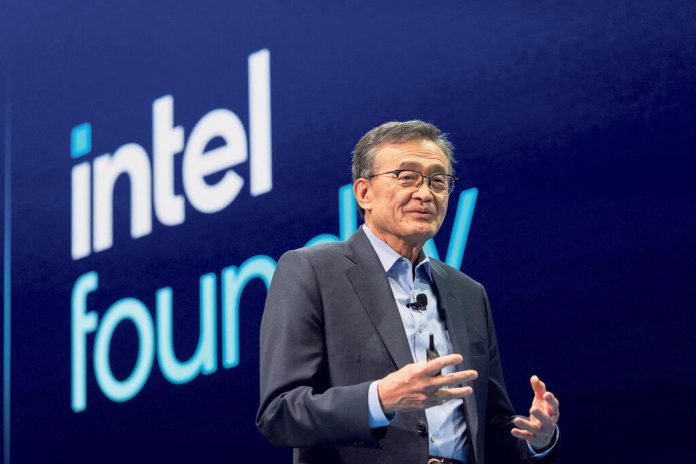
Speaking at CES, Intel chief executive Lip-Bu Tan said the company had delivered on its promise to ship its first products made on the 18A process in 2025, pointing directly to the Panther Lake lineup.
“We said we would do it, and we’re doing it,” Tan told the audience, framing the launch as a milestone for Intel’s manufacturing comeback.
Jim Johnson, senior vice president and general manager of Intel’s PC group, provided technical details of the first Panther Lake family, branded Intel Core Ultra Series 3. He said the chips use a new transistor architecture and a redesigned power delivery method made possible by the 18A process, changes Intel says are central to improving performance and efficiency for AI workloads on personal computers.
According to Intel, the Core Ultra Series 3 chips deliver 60% better performance than the prior-generation Lunar Lake Series 2. Lunar Lake marked a strategic retreat for Intel on manufacturing, with much of that chip line produced by Taiwan Semiconductor Manufacturing Company, underscoring how far Intel had fallen behind in process technology.
Panther Lake is intended to signal a reversal of that dependence. The stakes are high because it represents Intel’s first attempt to manufacture a complex, high-volume processor in-house after years of delays and missteps in bringing new process nodes to market.
Johnson said Intel has adopted a chiplet-based design for Panther Lake, including a separate graphics chiplet that is stitched together with other components to form the full processor. The modular approach mirrors strategies used successfully by competitors and allows Intel to mix and match components more efficiently while improving yields over time.
Intel also said it plans to extend the Panther Lake architecture beyond traditional laptops. Johnson confirmed that the company will launch a platform for handheld gaming devices based on Panther Lake designs later this year, targeting a fast-growing niche where portable PCs from multiple manufacturers have gained traction among gamers.
Behind the scenes, however, the road to Panther Lake has been rigorous. Reuters reported last year that Intel had struggled with yields for the new processors, meaning too many defective chips per silicon wafer. Intel executives have since said yields are improving month by month and that progress is sufficient to support the 2025 launch, though investors remain alert to any signs of further manufacturing hiccups.
The CES unveiling comes amid intense competition across the AI chip landscape. AMD, which has steadily taken share from Intel in PCs and servers, is set to deliver a keynote address at CES later on Monday. Chief executive Lisa Su is expected to introduce new PC processors focused on AI and graphics, reinforcing AMD’s push into areas where Intel once dominated.
AMD has also been gaining momentum beyond PCs. The company recently announced a multibillion-dollar deal with OpenAI for its next-generation MI400 accelerators, some of which are expected to be deployed this year. The agreement is projected to generate tens of billions of dollars in revenue, highlighting AMD’s growing role in large-scale AI infrastructure.
Nvidia, the dominant force in AI accelerators, also used CES to underline its lead. Chief executive Jensen Huang said the company’s next generation of chips is already in full production and can deliver five times the AI computing performance of its previous products when running chatbots and other AI applications.
Against that backdrop, Intel’s Panther Lake launch is less about claiming leadership today and more about restoring confidence. The company is asking customers and investors to believe that its long-delayed manufacturing reset is finally taking hold, and that it can once again compete on performance, efficiency, and scale.