DD
MM
YYYY

PAGES

DD
MM
YYYY

spot_img

PAGES

Home Blog Page 56

Palantir Unveils Neurodivergent Fellowship After Alex Karp’s Viral DealBook Appearance

0

Palantir is rolling out a new fellowship designed for neurodivergent individuals, a move that grew out of a viral moment involving CEO Alex Karp and has quickly evolved into a broader statement about how the company sees the future of talent, creativity, and national problem-solving.

The idea was announced on Sunday in a post on X, where Palantir said it wants to hear from people who recognize themselves in Karp’s own mannerisms — people who struggle to stay still, think far faster than they can talk, or communicate in ways that sit outside traditional corporate polish. Applicants will eventually go through a final interview round conducted by Karp himself, a decision that signals how personally he is tying his identity to the fellowship.

Karp offered a sweeping statement alongside the announcement, calling the “neurally divergent” — his own wording — a group that will play an outsized role in shaping America’s future. He argued that those who process information in unconventional ways often see past what he described as shallow ideological posturing and notice beauty and meaning that others overlook, something he believes both art and technology are uniquely built to reveal. He also said today’s large-scale AI landscape is naturally aligned with people who possess neurodivergent traits.

The decision comes after a week in which Karp became an unlikely trending topic across social platforms. During a long onstage conversation with The New York Times’ Andrew Ross Sorkin at the DealBook Summit, Karp spoke at a rapid clip, frequently shifting in his chair, and moved with restless, looping energy that instantly caught the internet’s attention. The clip gathered millions of views within days. Katherine Boyle, a general partner at a16z, joked on X that pre-school teachers nationwide should watch the video because Karp’s inability to sit still is such a familiar sight.

Rather than distance itself from the online chatter, Palantir embraced it. In the fellowship announcement, the company wrote that the idea occurred to Karp that very morning while he was out cross-country skiing. The tone of the post signaled the company’s intention to flip a viral meme into a moment about inclusion and untapped talent.

Karp did not mention any specific diagnosis in his new statement, though he has been open about being dyslexic. In an interview with Wired that ran last month, he said everyday expectations that seem simple for many people often require extra effort from him. He added that he is fully aware he isn’t universally adored but likes who he is “on most days.” His candor has since drawn interest from those who have spent years pushing for broader recognition of cognitive differences in high-pressure fields like technology and national security.

Neurodiversity covers a wide range of conditions that influence learning, concentration, and communication. The spectrum includes ADHD, autism, Tourette’s syndrome, dyslexia, and dyspraxia, among others. Many in that community have long argued that the pressure to conform in corporate environments pushes talented people out, especially those whose skills flourish in non-linear, creative, or high-intensity cognitive settings.

The new fellowship has generated early buzz because it appears to acknowledge that argument directly. Palantir framed the program as an opportunity for people with unconventional mental frameworks to contribute to what it described as the most urgent problems facing Western democracies. The company added that more information — including the application link — will be released soon.

The move also dovetails with Palantir’s growing public campaign to position its software as critical infrastructure for governments and major institutions. Karp’s high-energy interview at DealBook included a vocal defense of Palantir’s work with US agencies, as well as praise for immigration policies under President Donald Trump. The appearance itself was meant to spotlight Palantir’s influence in Washington, but it was the CEO’s unique presence onstage that unexpectedly widened the spotlight to include a cultural discussion about neurodiversity.

With the fellowship now underway, Palantir appears intent on turning that conversation into a recruitment pipeline built around people who rarely see themselves centered in Silicon Valley programs. The company said applicants should expect details “soon,” and Karp will personally lead the final round — a sign that this initiative is more than just a quick response to a viral clip.


China’s Export Defies Trump Tariffs, Posting a 5.9% YoY Growth

0

China’s exports posted a robust and unexpected surge in November, driven by manufacturers successfully deepening trade ties with the rest of the world to counter the severe headwinds created by President Donald Trump’s prohibitively high tariffs.

The customs data, released Monday, confirms that the world’s second-largest economy is executing a major strategic pivot to diversify its export markets and utilize its global supply chain footprint.

China’s exports grew a significant 5.9% year-on-year, sharply reversing the 1.1% contraction recorded in October, and sailing past the 3.8% growth forecast in a Reuters poll. This performance is a direct result of trade rerouting—a tactic where Chinese firms leverage their global manufacturing capacity to establish new, low-tariff production hubs in countries like Vietnam, Mexico, and Indonesia, effectively using third countries as processing and shipment intermediaries.

This practice is successfully offsetting the drag from US tariffs, which currently average 47.5% on Chinese goods, well above the 40% threshold that economists say erodes exporter profit margins.

The Collapse of US Trade and the Rise of New Markets

The key takeaway from the data is the stark divergence between the US market and the rest of the world. Despite news of a tentative US-China trade truce and agreed-upon tariff scale-backs following the October 30 meeting between Trump and Xi Jinping in South Korea, Chinese shipments to the US plummeted a massive 29% in November year-on-year.

This sustained collapse underscores the immediate and punitive impact of the current tariff regime. Economists estimate that diminished access to the U.S. market since Trump’s return to the White House has already reduced China’s export growth by roughly 2 percentage points, equivalent to around 0.3% of GDP.

The shortfall was more than compensated for by strong demand from new partners. Exports to the European Union grew by an annual 14.8%, shipments to Australia surged 35.8%, and fast-growing Southeast Asian economies took in 8.2% more goods over the same period. Zichun Huang, China economist at Capital Economics, noted that the agreed-upon tariff cuts failed to lift US-bound shipments, but “overall export growth rebounded nonetheless,” adding that “The role of trade rerouting in offsetting the drag from U.S. tariffs still appears to be increasing.”

Trade Surplus and Sectoral Drivers

The strong outbound performance boosted China’s trade surplus to $111.68 billion in November—the highest since June—and the trade surplus for the first 11 months of the year topped $1 trillion for the first time ever.

“Electronic machinery and semiconductors seem to be key,” said Dan Wang, China director at Eurasia Group.

She noted a shortage in lower-grade chips and other electronics, which caused prices to jump, while Chinese companies going global have been importing various machinery and inputs from China itself. In a sign of a slight easing of trade tensions, rare earth exports jumped 26.5% month-on-month in November, the first full month after Xi and Trump agreed to speed up shipment of the critical minerals. Furthermore, the nation’s soybean imports are poised for their best-ever year as Chinese buyers stepped up purchases from American growers alongside large purchases from Latin America.

Soft Domestic Demand and Policy Focus

The import figures indicated continued weakness in China’s domestic economy. Imports were up 1.9% in November, compared to a 1.0% uptick in October, but still fell short of the 3.0% increase expected by economists. This suggests that domestic demand remains soft due to a prolonged property downturn, evidenced by a decline in imports of unwrought copper, a key material in construction.

The strong export data helped the Chinese yuan firm on Monday, with the spot yuan trading at 7.07 per dollar. The People’s Bank of China (PBOC) set the midpoint rate at 7.0764 per dollar, using the daily fixing to act as a stabilizer for the currency.

Meanwhile, policy signals are expected from key year-end meetings as officials look to manage the economic shift. The Politburo pledged on Monday to take steps to expand domestic demand—a move analysts consider crucial for weaning the $19 trillion economy away from reliance on exports.

Officials are also convening for the annual Central Economic Work Conference to set key targets for the next year. Goldman Sachs analysts expect policymakers to emphasize easing measures aimed at boosting domestic consumption.

Lynn Song, ING’s chief economist for Greater China, concluded that China’s pivot to establishing domestic demand as a key driver of growth “will take time, but it’s essential for China to move into the next phase in its economic development.”

Bessent Says U.S. Economy on Track for Strong Year-End Finish, Even as Economists Remain Unconvinced

0

Treasury Secretary Scott Bessent says the U.S. economy is finishing the year with unexpected strength, a narrative that has grown louder as fresh data shows American growth holding firm even after months of gloomy forecasts from economists.

His comments on Sunday came as part of a broader attempt by the administration to push back against frustration over the cost of living and to assert that the worst of the inflation wave may be easing.

Speaking on CBS News’ Face the Nation, Bessent said holiday shopping so far has been “very strong” and argued that momentum has been building for months.

“The economy has been better than we thought. We’ve had 4% GDP growth in a couple of quarters,” he said.

He projected that the year would close with “3% real GDP growth,” noting that the pace remained intact even with the “Schumer shutdown” disrupting federal operations and delaying key reports.

His confidence rests partly on the contrast between real-world data and the predictions many analysts made earlier this year. For much of 2025, economists warned that inflation would flare again toward the end of the year, driven by a mix of global supply tensions, higher energy prices, and Trump’s escalating tariff battles with China and several other trading partners. Many predicted a visible surge in prices by November and December.

So far, the feared year-end spike has not materialized. The latest inflation report — postponed during the shutdown — still showed prices rising at 3% year-over-year in September, with food-at-home costs up 3.1%. Those increases remain stubborn but have not accelerated in the way analysts once believed they would.

But economists warn that the threat is not gone. The tariff confrontations themselves are unresolved, and trade experts say that further escalation between Washington and Beijing could reignite cost pressures across major consumer categories. This is part of why many analysts remain cautious: inflation has cooled, but the underlying risks have not. Bessent did not address those concerns directly in the interview, but his upbeat tone suggests he sees the numbers as evidence that the economy is weathering tariff-related turbulence better than earlier forecasts suggested.

The broader growth picture has also been more resilient than expected. The year opened on shaky ground, with GDP contracting 0.6% year-over-year in the first quarter. But the second quarter delivered a sharp rebound at 3.8%. Now, the Federal Reserve Bank of Atlanta’s early estimate pegs third-quarter growth at about 3.5%, with the official Bureau of Economic Analysis numbers coming on December 23. If that estimate holds, the U.S. will have logged a solid three-quarter recovery arc that few predicted during the harsher months of inflation.

Still, American households have not felt much relief. Consumer sentiment remains severely depressed. The University of Michigan’s December reading came in at 53.3 — an improvement from November but far below last year, underscoring how disconnected consumers feel from the headline numbers. Food, rent, insurance, and basic goods continue to absorb a larger share of monthly budgets. With households responsible for nearly 70% of U.S. GDP, the mood on Main Street has become a central pillar of the political debate.

President Donald Trump has rejected the idea that affordability has become a source of hardship. During a cabinet meeting on Tuesday, he dismissed the topic outright.

“The word ‘affordability’ is a con job by the Democrats,” he said. “The word ‘affordability’ is a Democrat scam.”

But recent polling tells a different story. NBC News found that about two-thirds of registered voters believe the administration has fallen short on the cost of living and the broader economy.

When asked about the public’s dissatisfaction, Bessent attributed the price pressures to problems carried over from the Biden era. He argued that earlier Democratic policies created the supply constraints and regulatory friction that are still haunting households.

“The American people don’t know how good they have it,” he said. “Now, Democrats created scarcity, whether it was in energy or over-regulation, that we are now seeing this affordability problem, and I think next year we’re going to move on to prosperity.”

The administration is currently using the current run of GDP numbers to reinforce its case that the economy is stronger than its critics claim. But analysts counter that everything depends on what happens next: whether inflation continues to ease or whether the unresolved tariff confrontations push prices back up. The coming BEA report on December 23 is expected to offer the clearest picture yet, revealing whether the year truly ended on solid ground — and whether Bessent’s optimism is built on an enduring turn in the economic tide or a temporary burst of good numbers.

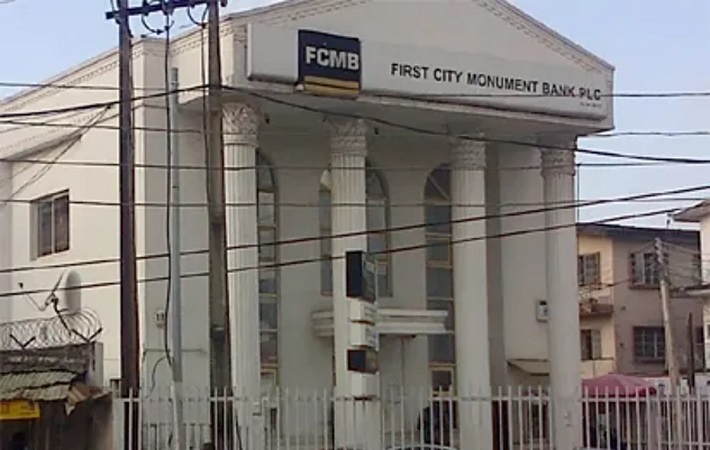
FCMB Group Reports Solid Nine Months 2025 Performance Driven by Digital Growth

0

First City Monument Bank (FCMB Group) Plc has delivered a strong financial performance for the first nine months of 2025, buoyed by rapid expansion across its digital businesses and sustained improvements in core banking operations.

The group recorded significant growth in revenue, profitability, and margins, underscoring the success of its digital transformation strategy and its continued ability to navigate a challenging macroeconomic environment.

Financial Performance Highlights

FCMB reported gross revenue of N828.1 billion, representing a 40.9% increase from N587.7 billion in the same period last year. This growth was largely supported by a 64.7% rise in interest income, although non-interest income fell by 33.8% due to a N54.6 billion decline in currency revaluation gains.

Net interest income surged by 101.9% to N350.8 billion, buoyed by an improved yield on earning assets at 21.1%. This lifted the Group’s net interest margin to 10.1%, up from 6.3% recorded in FY 2024.

Operating expenses rose by 41.3% year-on-year to N238.9 billion, driven by higher personnel expenses, regulatory costs, technology investments, and business expansion efforts. Despite this, the cost-to-income ratio improved to 55.5%, compared to 59.9% in FY 2024.

Net impairment losses also increased by 28.6% to N57.1 billion, following the exit of the CBN loan forbearance, which raised the cost of risk to 2.8% from 1.8%.

The bank’s digital business spanning Lending, Payments, and Wealth continued its strong upward trajectory, contributing 13.7% to gross earnings.

Digital Lending

Digital revenues grew by 54% year-on-year, rising from N73.6 billion in September 2024 to N113.6 billion in September 2025.

In October, the group noted that it recorded loan disbursements of over N357 billion and over 1.6 million individual loans granted in 2024 through the digital channels. FCMB, through digital lending, offers FastCash loans, Salary-plus loans for salary account holders, SME digital loans, and Nano loans. 

Payments

Payments recorded a 23% (N26.1 billion) contribution to the group’s Digital Business, signalling a positive customer response to increased use of digital payments. The digital payment segment includes services available through the FCMB mobile app and FCMBOnline Business platforms, allowing for transfers, bill payments, and bulk payments.

The bank also offers specific collection platforms like FCMBCollect to help businesses manage multiple payment inflows and inventory. Other digital payment features are POS transactions, card payments, online merchant payments, USSD, and app payments. 

Wealth Management

At a 2.6% (3 billion) contribution to Digital Business, the group has witnessed growth in its Asset Under Management (AUM), supported by digital innovation. 

The digital wealth propositions on the FCMB app include mutual funds, digital savings, investment advisories, and asset management tools.

In its continued push for digital banking innovation, the group recently launched a digital cross-border global banking and payments platform, www.getrova.com, in the U.K. and Nigeria. 

The initiative aims to enhance remittance, trade flows, and the cross-border payments platform, known as the Rova App. The group seeks to support remittances and inbound and outbound payments to and from Africa for SMEs and individuals.

Overall, the Group delivered PBT of N134.5 billion and PAT of N125.4 billion, marking year-on-year growth of 46% and 52%, respectively. Return on average equity strengthened significantly from 12.7% in FY 2024 to 22.4%, while EPS improved from N2.46 to N3.91.

Performance across divisions included:

Consumer Finance: +78.5% PBT growth

Banking Group: +68.8%

Investment Management: +27.6%

Investment Banking: -34.6% (due to an exceptional gain in FY 2024)

FCMB Group’s total assets increased to N7.23 trillion, up 2.5% from December 2024. Loans and advances declined by 2.9% to N2.29 trillion due to currency impacts, write-offs, and concentrated paydowns. The Group closed the period with an NPL ratio of 5.2% and a capital adequacy ratio of 17.8%.

The Group noted that its digital banking initiatives have significantly enhanced operational efficiency by automating key processes, reducing manual workload and costs, and supporting improved margins.

Customer deposits rose by 2.3% to N4.40 trillion, with low-cost deposits increasing by 17.6% while term deposits declined by 18.4%. The mix of low-cost deposits improved to 66.1%, up from 57.5% in FY 2024.

Assets Under Management grew by 15.9% to N1.59 trillion, while Investment Banking transaction value surged by 285%, reaching N3.4 trillion compared to ?877 billion in the prior-year period.

Outlook

With expanding margins, increasing customer activity, scalable digital growth, and solid risk fundamentals, the FCMB expects to maintain strong profitability and a resilient capital position as it heads into 2026.

AI Infrastructure Buildout Is Pushing Costs Higher Than Its Market Can Guarantee

0

The recent controversy surrounding the $300 billion OpenAI deal between Oracle and Microsoft highlights a paradox within the AI economy: despite the tech industry’s massive investment in computing infrastructure, the financial risks and structural weaknesses may be building up even faster than the promised gains.

Oracle’s significant investment in OpenAI — through its Stargate data center partnership — has led to strong market skepticism. The credit rating agency, Moody’s, deemed that deal especially risky and has pointed out the “significant counterparty risk”. The main reason is Oracle’s heavy reliance on just a few companies to generate the majority of its future revenue.

According to Bloomberg, Oracle is assisting OpenAI in circumventing the export restrictions imposed on AI chips, thereby strategically positioning itself as a “one-stop shop” for OpenAI’s global expansion and assuming a crucial supplier role in its development.

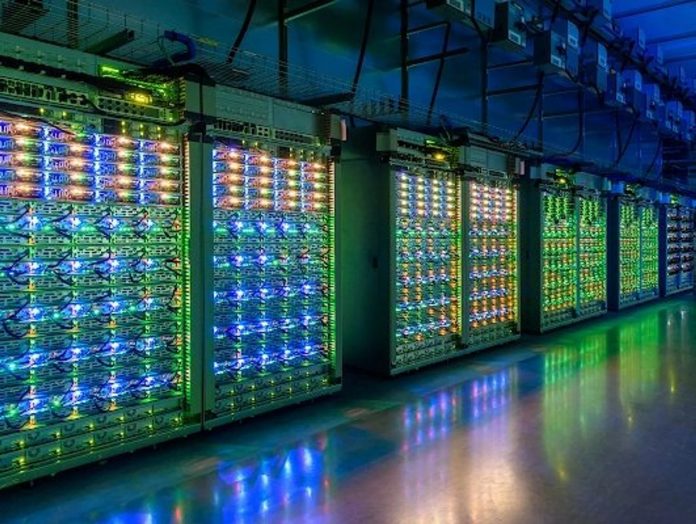
Such a situation is indicative of a larger trend: debt is the primary source of funding in the AI infrastructure boom. According to The Economic Times, the amount of debt for data centers in 2025 has increased by 112% and surpassed the $25 billion mark. Quite a few of these projects depend on risky financing, asset-backed securities (ABS), and intricate arrangements that predict continual demand.

According to JPMorgan, global data center and AI infrastructure spending is expected to exceed $5 trillion in five years, driven by “astronomical” demand for computing power. McKinsey, on the other hand, projects that AI workloads will drive a $6.7 trillion investment in data centers by 2030, with most of the new demand coming from generative AI.

However, the enormous amount of capital being utilized raises significant doubts. A large part of the infrastructure investments would face the capital expenditure-to-revenue mismatch issue: today’s construction of 10 GW+ computing power will only be profitable if AI companies can convert that capacity into revenue for an extended period and provide the expected value to investors, potentially achieving the status of high dividend stocks. Market analysis reveals that some of the largest AI companies are still incurring losses at a level significantly higher than their current revenue.

One more critical weakness is the concentration risk. The AI Now Institute’s landscape report predicts that only four cloud providers — Google, Microsoft, Amazon, and Meta — will cover 60 to 65 percent of all AI workloads by 2030, resulting in these companies having extraordinary power over the entire computing infrastructure stack. This may also significantly impact the performance of the SPX chart, as the companies represent some of the most prominent players.

Furthermore, research from the ground warns that such a concentration around computers, data, talent, capital, and energy may engender systemic fragility in the AI value chain. Additionally, power is coming up as a major limitation. The use of large GPU clusters consumes a significant amount of energy, and the associated costs may ultimately lead to very slim margins.

Regions with low electricity costs have been identified by analysts as particularly appealing for the location of data centers; however, grid limitations, rising electricity prices, or regulatory developments (such as carbon pricing and usage restrictions) may compromise the economic viability of AI infrastructure.