DD
MM
YYYY

PAGES

DD
MM
YYYY

spot_img

PAGES

Home Blog Page 561

77 Institutions Express Intent to Apply For Hong Kong Monetary Authority (HKMA) Stablecoin Licenses

0

Hong Kong’s new stablecoin regulatory framework, effective August 1, 2025, has attracted significant interest, with 77 institutions expressing intent to apply for licenses to issue fiat-referenced stablecoins, as reported by the Hong Kong Monetary Authority (HKMA).

These applicants include major banks like Industrial and Commercial Bank of China (ICBC) via its Hong Kong arm, Bank of China (Hong Kong), and potentially HSBC and Standard Chartered, alongside tech firms, e-commerce platforms, payment providers, and Web3 startups. However, the HKMA plans to issue only a limited number of licenses in the initial phase, with estimates suggesting just one or two approvals by early 2026, emphasizing strict criteria such as full reserve backing, robust compliance, and anti-money laundering (AML) protocols.

The competitive landscape reflects Hong Kong’s ambition to become a global hub for regulated digital assets, balancing innovation with financial stability.

The stringent requirements, including a minimum capital of HK$25 million and comprehensive risk management, favor well-capitalized institutions like major banks, potentially sidelining smaller players. Industry insiders suggest frontrunners like Bank of China (Hong Kong) and Standard Chartered, which have tested stablecoin use cases, may secure early licenses.

The HKMA’s cautious approach aims to ensure market credibility and avoid risks seen in past crypto failures like FTX, while fostering adoption for cross-border payments and tokenized assets. With 77 institutions vying for a limited number of licenses (potentially 1-2 in the initial phase), competition is intense.

This could lead to market consolidation, favoring established players like major banks (e.g., ICBC, Bank of China (Hong Kong), HSBC, Standard Chartered) with robust financial backing and compliance infrastructure. Smaller Web3 startups or less capitalized firms may struggle to meet the stringent criteria, potentially stifling innovation among smaller players.

Hong Kong’s selective licensing aims to position it as a credible global hub for regulated digital assets. By prioritizing stability and compliance, the city seeks to attract international investment and distinguish itself from less-regulated crypto markets, potentially drawing business from jurisdictions with stricter or unclear regulations.

The limited licenses and rigorous requirements (e.g., full reserve backing, AML compliance) aim to mitigate risks seen in past crypto failures like FTX or Terra-Luna. This could enhance consumer trust in stablecoins but may limit market entry, potentially reducing consumer choice in the short term.

Licensed stablecoins are expected to facilitate cross-border payments, tokenized asset settlements, and integration with Hong Kong’s digital asset ecosystem (e.g., tokenized bonds). Early adopters like banks with existing pilots (e.g., Standard Chartered’s cross-border payment tests) may gain a first-mover advantage, shaping use cases and market standards.

Hong Kong’s framework could influence regional competitors like Singapore or Dubai, pushing them to refine their own stablecoin regulations. Globally, it may set a benchmark for stablecoin oversight, especially as jurisdictions like the EU (with MiCA) and the US grapple with regulatory clarity.

The high capital requirements and compliance costs could exclude smaller fintechs and Web3 startups, potentially limiting diversity in the stablecoin market. This may drive some applicants to seek partnerships with larger institutions or pivot to unregulated markets.

Licensing Criteria for Stablecoin Issuers in Hong Kong

Only licensed institutions can issue fiat-referenced stablecoins. Applicants must obtain a license from the HKMA, with the process prioritizing entities demonstrating robust financial and operational capabilities.

Stablecoins must be fully backed by high-quality, liquid reserve assets (e.g., cash or cash equivalents) held in segregated accounts. Reserves must be maintained at a value at least equal to the stablecoin’s circulating supply to ensure 1:1 redeemability.

Applicants must maintain a minimum paid-up capital of HK$25 million to demonstrate financial stability and capacity to absorb operational risks. Robust anti-money laundering (AML) and counter-terrorism financing (CTF) measures are mandatory, aligning with Financial Action Task Force (FATF) standards.

Issuers must have comprehensive governance frameworks, including clear policies for risk management, cybersecurity, and operational resilience. Applicants must be incorporated in Hong Kong and maintain a physical office with senior management based locally to ensure regulatory oversight and accountability.

Stablecoin holders must have the right to redeem tokens at par value (1:1 with the referenced fiat currency, e.g., HKD or USD) at any time, with clear redemption processes. Issuers must implement mechanisms to ensure price stability, such as regular audits of reserve assets and transparent reporting.

Issuers must provide clear disclosures on risks, redemption policies, and reserve management to protect users. Regular audits by independent third parties are required to verify reserve backing and compliance. Issuers must demonstrate secure technological infrastructure to prevent hacks, fraud, or system failures, with stringent cybersecurity protocols in place.

Senior management and key personnel must meet “fit-and-proper” criteria, ensuring they have the expertise, integrity, and track record to operate a stablecoin business. The HKMA offers a regulatory sandbox for applicants to test stablecoin issuance under controlled conditions before full licensing. This allows innovation while ensuring compliance with regulatory standards.

The stringent criteria reflect Hong Kong’s focus on financial stability, consumer protection, and regulatory credibility, but they create a high barrier to entry. Major banks with existing infrastructure and compliance expertise are likely to dominate early licensing, potentially limiting market diversity.


U.S. Senate Banking Committee Updated Draft of “The Crypto Market Structure Bill”

0

The U.S. Senate Banking Committee’s updated draft of the Crypto Market Structure Bill, part of the Responsible Financial Innovation Act of 2025, includes provisions that exempt staking, airdrops, and Decentralized Physical Infrastructure Networks (DePIN) from securities laws, provided no fraud is involved.

Specifically, Section 101 clarifies that staking, airdrops, and pre-existing tokens are not classified as securities, aiming to reduce regulatory uncertainty for crypto activities. Section 504 explicitly exempts DePIN projects, such as those supporting decentralized wireless networks or cloud storage, from securities regulations, as long as no single entity owns more than 20% of the tokens, ensuring decentralization.

The bill also introduces protections for DeFi developers and self-custody rights under Sections 501, 505, and 506, and establishes a Joint Advisory Committee between the SEC and CFTC (Sections 701-702) to harmonize regulatory oversight.

By explicitly exempting staking and airdrops from securities laws, the bill removes ambiguity around whether these activities fall under the SEC’s jurisdiction. This reduces the risk of enforcement actions against projects and participants, encouraging broader adoption of staking and airdrop mechanisms.

Decentralized Physical Infrastructure Networks (DePIN), such as decentralized wireless or storage networks, are not treated as securities if no single entity controls over 20% of tokens. This fosters innovation in DePIN projects by lowering regulatory hurdles, allowing developers to focus on building decentralized infrastructure without fear of securities violations.

The exemptions signal a more crypto-friendly regulatory environment, particularly for DeFi developers (protected under Sections 501, 505, and 506). This could attract more developers and capital to U.S.-based DeFi and Web3 projects, as they face fewer legal risks.

By carving out DePIN from securities laws, the bill supports emerging use cases like decentralized cloud storage, IoT networks, and wireless connectivity, potentially positioning the U.S. as a leader in these technologies.

Codifying self-custody rights ensures users can securely hold their own crypto assets without relying on intermediaries, promoting decentralization and user empowerment. The establishment of a Joint Advisory Committee between the SEC and CFTC (Sections 701-702) aims to streamline crypto regulation.

This could shift some oversight from the SEC’s stringent securities framework to the CFTC’s lighter commodities-based approach, creating a more balanced regulatory landscape. Projects engaging in staking, airdrops, or DePIN activities will face less scrutiny from the SEC, reducing compliance costs and legal risks, though they must still avoid fraudulent practices.

With clearer rules, retail and institutional investors may feel more confident participating in staking and airdrops, potentially increasing liquidity and engagement in crypto markets. While the exemptions reduce regulatory burdens, the “no fraud” condition means projects must maintain transparency to avoid enforcement under other laws.

The exemptions could drive growth in token-based ecosystems, particularly for DePIN projects, as developers and businesses face fewer barriers to launching and scaling. The bill positions the U.S. as a more attractive hub for crypto innovation compared to jurisdictions with stricter regulations.

This could draw talent, capital, and projects to the U.S., countering the trend of companies moving offshore to avoid regulatory uncertainty. However, the 20% token ownership cap for DePIN projects may require careful structuring to ensure compliance, potentially complicating some business models.

The bill is still a draft, and its passage is not guaranteed. Political disagreements or amendments could alter its scope or delay adoption. Excluding staking, airdrops, and DePIN from securities laws may create gaps in investor protection, as these activities will face less stringent oversight.

This could lead to increased fraud or mismanagement if not paired with robust anti-fraud measures. Projects will need to ensure compliance with the “no single entity over 20% control” rule for DePIN and maintain transparency to avoid fraud accusations, which may require new governance or token distribution models.

Tokens tied to staking, airdrops, or DePIN projects may see increased demand due to reduced regulatory risks, potentially boosting their market value. With legal clarity, more traditional businesses may explore DeFi and DePIN integrations, accelerating mainstream adoption of decentralized technologies.

The bill could set a precedent for other jurisdictions, influencing global crypto regulation and encouraging similar exemptions elsewhere, these exemptions create a more favorable environment for crypto innovation, particularly for staking, airdrops, and DePIN, while reducing SEC oversight and promoting user autonomy.

Can SHIB Repeat Its 2021 Rally and Hit $0.001? Analysts Say A More Likely Scenario is This New Coin Crushing Shiba Inu and Dogecoin

0

The crypto market has been buzzing again, but the talk is less about Shiba Inu and more about a newer contender, Little Pepe. The presale is almost sold out; early buyers have already made over 110% gains. Many analysts believe this project can generate returns that grow up to 100 times those of other projects, surpassing those of other projects. During 2021, Shiba Inu recorded its most significant leap. That was the time period when meme coins started to gain significant traction, and SHIB gained altitude alongside them. But today, as we step deeper into 2025, investors are asking: can SHIB repeat that magic and climb to $0.001?

Shiba Inu Price Today And Market Position

As of September 2, 2025, Shiba Inu (SHIB) is trading at around $0.00001224 with a market capitalization of nearly $7.2 billion. Its massive circulating supply of approximately 589 trillion tokens makes a dramatic price surge far more challenging now than during the 2021 bull market. The charts paint a cautious picture. Over the past few weeks, SHIB has been stuck between $0.0000119 and $0.0000139. Analysts note weak momentum, with bearish indicators prevailing in the technical setup.

Recent reports indicate that SHIB’s momentum has slowed. The RSI is weak, with more tokens being traded and people holding them for shorter periods. This usually means that traders are cashing out their profits instead of holding their coins for the long run. The price stays above $0.0000125 for now, but heavy resistance lies just above this level, making it hard for SHIB to break out.

Could SHIB Hit $0.001?

The dream of SHIB reaching $0.001 is not impossible, but the path to get there is steep. Analysts from Disrupt Africa note that it would take an 80 to 90 times price increase to achieve this, requiring trillions of dollars in new capital and the rapid adoption of Shibarium and other utilities. Some projections, such as The Crypto Basic, suggest that despite consistent 100% annual growth, SHIB will not reach $0.001 until 2031. Others argue that such levels may never materialize without a massive reduction in supply and explosive demand.

Little Pepe Is Quietly Building Momentum

While SHIB tries to reclaim its former glory, Little Pepe (LILPEPE) is building an entirely new path. Unlike many meme coins that rely solely on community hype, Little Pepe is combining cultural appeal with actual blockchain utility. The project operates on its own Layer 2 network, specifically designed for meme tokens, offering faster transaction speeds and lower fees. It is also sniper-bot resistant, ensuring that early trading is fair for regular investors, rather than being dominated by whales. With the credibility of a Certik audit and a CoinMarketCap listing, it is clear why Little Pepe is gaining the attention of both retail and institutional investors.

Price, Technical Context, and Bullish Projections for LILPEPE

Right now, the presale is in Stage 12, with tokens priced at $0.0021. That represents a 110% gain from the initial stage price, and early investors from Stage 1 have seen their positions more than double in value. The presale is nearly complete, having raised over $24.2 million and sold over 15.1 billion tokens. Analysts expect the token to list at $0.003, meaning investors entering during Stage 12 could still see around 42% gains upon launch.

Technically, LILPEPE is setting itself apart. Its Layer 2 foundation makes it fast and scalable, while its zero tax structure appeals to traders. Analysts are looking beyond the presale point to the possibility of 50x to 100x growth over time, citing the combination of cultural momentum and solid infrastructure. This positions Little Pepe as a smarter speculative play than older meme coins like SHIB.

Cultural Momentum and Market Sentiment

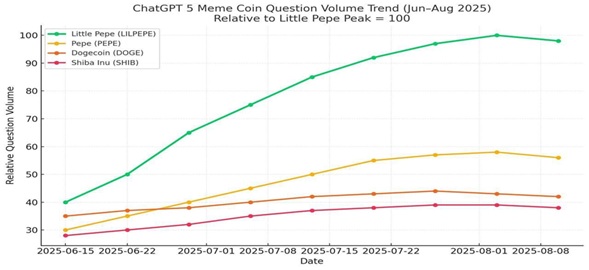
One of the most compelling signals for Little Pepe has been cultural momentum. Between June and August, search interest for LILPEPE surged higher than PEPE, DOGE, and SHIB in meme coin-related queries. This shift from curiosity to conviction suggests that retail investors are increasingly seeing Little Pepe as the next big opportunity in the space.

Conclusion

SHIB’s 2021 rally was historic, but history rarely repeats itself exactly. Without significant token burns, groundbreaking utility, or a surge in demand, SHIB’s path to $0.001 looks unlikely in the near term. On the other hand, Little Pepe is showing real traction, combining meme energy with a foundation built for scalability, security, and fair trading. With the presale nearly sold out at $0.0021 and projections indicating a potential 10,000% gain over time, it is clear why analysts view LILPEPE as the stronger bet for the next wave of crypto growth.


For more information about Little Pepe (LILPEPE) visit the links below:

Website: https://littlepepe.com

Whitepaper: https://littlepepe.com/whitepaper.pdf

Telegram: https://t.me/littlepepetoken

Twitter/X: https://x.com/littlepepetoken


Players Demand Speed: Which Instant Crypto Withdrawal Casino Is the Fastest in 2025?

0

For players in online betting, the true test of a platform isn’t how exciting the games are but how quickly winnings arrive in your account. Speed of payout defines trust in casinos con Curazao license. Too often, players find themselves stuck in a queue of approvals, KYC checks, or unexpected bank delays, even when they’ve won fair and square. That’s why the demand for an instant crypto withdrawal casino is higher than ever. Blockchain technology should make payouts immediate, yet not every operator has streamlined its systems.

This article compares three major platforms, Spartans, Stake.com, and Rollbit, to see who actually delivers on the promise of instant withdrawals.

Spartans: Instant Withdrawals Across Multiple Chains

Spartans stands out for its commitment to genuine instant payouts. During testing, both USDT and ETH withdrawals were completed in under 30 seconds. The system works by connecting directly to players’ wallets, bypassing the delays of third-party verification or KYC bottlenecks. Once a withdrawal is requested, the funds move almost immediately to the user’s wallet, regardless of whether it’s MetaMask, Trust Wallet, or Coinbase Wallet.

This consistency extends across multiple networks. Spartans handles Bitcoin, Ethereum, Avalanche, Cardano, and stablecoins with the same efficiency. Players aren’t forced to wait for approval emails or manual intervention. Instead, its blockchain-native infrastructure ensures that once wagering conditions are met, the money is yours to move instantly. By prioritizing speed without sacrificing reliability, Spartans earns its spot as one of the top instant crypto withdrawals casino platforms on the market.

An added advantage is the Spartans’ approach in Latin America. Unlike most crypto-only platforms, Spartans integrates fiat support in Chile, Peru, and Colombia. This hybrid model allows players to move seamlessly between local currencies and crypto without added friction. It not only makes withdrawals faster but also more accessible for players across the region.

Stake.com: Fast Withdrawals with Chain-Dependent Delays

Stake.com has built its reputation as one of the most recognized crypto betting platforms worldwide. Its withdrawal process is generally quick and efficient, especially when using popular cryptocurrencies like Bitcoin and Ethereum. Many players report near-instant transactions under normal conditions, making Stake a solid choice for those who prioritize payout speed.

However, Stake’s performance is not always consistent. During periods of high network congestion, such as when gas fees spike on Ethereum or Bitcoin transaction volumes surge, withdrawal times can slow noticeably. Some users also note that approval steps may be added when transaction volumes are heavy, creating unpredictable wait times. While Stake is far from slow compared to traditional operators, these occasional lags mean it cannot always guarantee the speed expected from an instant crypto withdrawals casino.

That said, Stake remains a strong performer in the category. For players who prefer a platform with massive visibility, global reach, and large liquidity pools, Stake offers a balance between reliability and speed. Just be prepared for occasional delays during peak hours.

Rollbit: Quick Payouts with Inconsistent Results

Rollbit is another platform that markets itself as a fast-paying operator, and in many cases, it does deliver. Withdrawals for smaller amounts in popular cryptocurrencies often process quickly, giving users confidence in its systems. For players testing its performance, quick payouts are achievable under the right conditions.

The challenge arises with consistency. Multiple user reports highlight occasional approval lags, particularly for larger withdrawals. Unlike the Spartans’ wallet-native setup, Rollbit appears to use additional checks that can cause wait times to vary. While these delays aren’t as severe as those found in traditional online casinos, they take away from the expectation of a true instant crypto withdrawal casino experience.

Despite these shortcomings, Rollbit still appeals to players who value its unique features, such as integrated trading and gamified systems. For those focused strictly on fast and reliable cashouts, however, it falls behind the more polished processes offered by Spartans and Stake.

Concluding Thoughts

Withdrawal speed defines the credibility of any online betting platform. Players want more than entertainment; they want to know that their money moves instantly when it matters most. In testing, Spartans delivered the most consistent performance, with payouts in under 30 seconds across multiple cryptocurrencies and even fiat support in parts of LATAM.

Stake.com also performs well, though its speed depends on network congestion and transaction volume. Rollbit provides quick payouts under certain conditions but lacks the consistency of its rivals. For players searching for an instant crypto withdrawals casino, Spartans takes the top spot by offering immediacy, transparency, and reliability without compromise.

Find Out More About Spartans:


Website: https://spartans.com/

Instagram: https://www.instagram.com/spartans/

Twitter/X: https://x.com/SpartansBet

YouTube: https://www.youtube.com/@SpartansBet

BlockDAG Dominates Top Crypto Presales to Invest in With $395M Raised, Leaving MAXI, HYPER & T6900 in the Dust

10

The energy around presales has only grown stronger in 2025. With more retail investors and institutions searching for high-upside opportunities before tokens hit the open market, presales are now one of the most talked-about entry points. Some projects have already hit eye-popping funding numbers, while others are still warming up with small but loyal communities. Picking the right one isn’t easy, but tracking real adoption, presale growth, and exchange readiness can help separate strong picks from those likely to fade.

In this article, we look at four projects making headlines: BlockDAG, MAXI, HYPER, and T6900. They each bring different stories, from technical scale-ups to meme-style tokens. Out of these, BlockDAG has stolen the spotlight with unmatched scale, adoption, and global branding. Let’s break down why it’s the frontrunner and how the others stack up in today’s market of Top Crypto Presales to Invest in.

1. BlockDAG — The Presale Titan

BlockDAG has pulled off one of the most explosive presales in recent memory, raising over $395 million. More than 25.8 billion BDAG coins are already sold, with the price fixed at $0.0013 until the Singapore Deployment Event with Coinstore. Early buyers at $0.001 are already sitting on 2,900% gains on paper. With a $600M presale target and upcoming CEX listings, the clock is ticking for anyone still waiting on the sidelines.

The hardware angle is where BlockDAG creates serious FOMO. More than 19,600 miners have been sold across the X10, X30, and X100 models. Deliveries are live, with DHL shipping 2,000 units weekly and social media filling up with unboxing videos and user reviews. Proof of adoption is already visible worldwide, from 3 million X1 mobile miners to 320,000 coin holders.

Add in partnerships with Inter Milan and billboard campaigns across global capitals, and you have a project with unmatched visibility. With hybrid DAG + PoW technology, EVM compatibility, and more than 4,500 developers active, BlockDAG isn’t just selling a dream. It’s shipping miners, filling apps, and locking in global community growth in real time. This is why it leads any list of Top Crypto Presales to Invest in.

2. MAXI — The Low-Cap Experiment

MAXI sits on the opposite end of the scale compared to BlockDAG. This token trades at around $0.0024, with Coinbase data showing an all-time high matching its current level. Its market cap is tiny at roughly $20,000, and daily volume is barely breaking $200. On paper, it looks like a coin that could vanish into obscurity.

Yet for some investors, that’s the appeal. MAXI is a micro-cap with plenty of room to grow if it can land traction. Its massive supply of 1 trillion tokens means entry prices are low, but supply overhang also makes serious price jumps more challenging. At this stage, MAXI looks more like a speculative bet than a structured presale, but for risk-takers, it could be worth keeping on watch. Still, compared to the giants on this list of Top Crypto Presales to Invest in, MAXI is an underdog.

3. HYPER — Bitcoin’s Layer-2 Ambition

HYPER, also known as Bitcoin Hyper, is in presale and has already raised around $14–15 million. Priced at roughly $0.295, the project is aiming to extend Bitcoin’s utility through a Layer-2 network that integrates the Solana Virtual Machine (SVM). This setup means faster transactions, lower fees, and the ability to deploy smart contracts and dApps with Bitcoin security as the base layer.

Investors are also drawn to its staking model, which at launch promoted unusually high APY rates. While those numbers are likely to come down as more tokens are staked, the early buzz has been enough to spark media coverage from outlets like The Economic Times. With a DAO roadmap, strong presale interest, and comparisons to meme-fueled runs like Shiba Inu’s, HYPER is riding a clear wave of excitement. On the list of Top Crypto Presales to Invest in, it stands as a high-potential Layer-2 gamble.

4. T6900 — Meme Energy Goes Live

T6900, or TOKEN6900, is one of the latest meme-style presales to launch. It raised more than $3.5 million in its early stage and quickly listed with a market cap between $5.7M and $10M. The token has embraced a viral and chaotic branding strategy, leaning fully into its meme identity. That strategy has worked for now, fueling rapid growth in community interest and speculative buying.

By September 2025, its trading volume hovered around $3.9K, far smaller than the giants in the space, but enough to keep its community active. T6900 also offers staking rewards, though its long-term utility remains minimal. This makes it more of a cultural bet than a technical one. Meme energy has created millionaires before, and T6900 is trying to recreate that path. While risky, it’s still finding a place on lists like Top Crypto Presales to Invest in, thanks to its strong start.

Conclusion

Presales in 2025 are showing two sides of the market: established, well-funded networks like BlockDAG that are proving adoption before listing, and smaller tokens like MAXI and T6900 that rely on speculative momentum. HYPER sits somewhere in the middle, blending Bitcoin security with Solana’s flexibility to attract fresh investment. Each has a story worth noting, but only one is putting out proof at scale.

BlockDAG stands ahead with $395M raised, 19,600 miners shipped, 3M+ mobile miners active, and global partnerships that stretch from sports arenas to billboard campaigns. It has already outpaced past presale giants like Filecoin and Tezos before listing. If the Singapore Deployment Event locks in its exchange presence, BlockDAG could go down as the defining presale of 2025. For investors weighing the Top Crypto Presales to Invest in, this one is simply too big to ignore.