

We are just starting. Go to the Board and join. Let’s discuss this evolving paralysis in the tech sector in Nigeria . Tekedia Mini-MBA >> always current
Alerzo, Nigerian B2B E-commerce Startup, Raises $10.5m in Series A Round
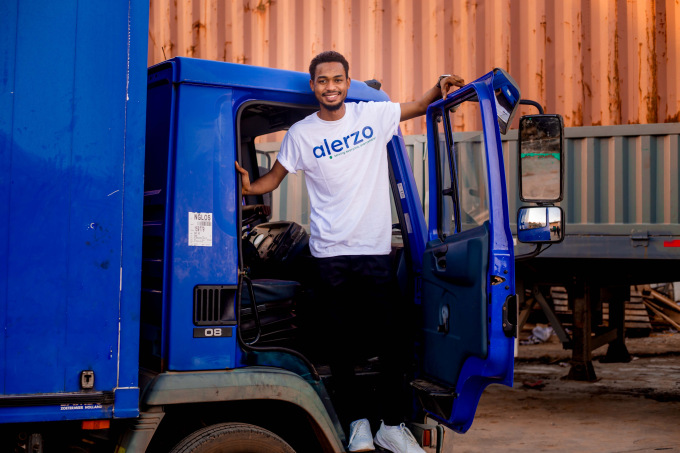
Alerzo, a little-known B2B e-commerce retail startup based in Ibadan, Nigeria, has announced a $10.5 million Series A round led by London-based Nosara Capital. FJ Labs and several family offices from the U.S., Europe and Asia, including Michael Novogratz, participated in the round.
Founded in 2018 by Adewale Opaleye, Alerzo has raised more than $20 million since its launch. Early investors include the Baobab Network, an Africa-focused accelerator based in London, and Signal Hill, a Singapore-based fund manager that participated in its $5.5 million seed round last year. The company also said it closed a $2.5 million working capital facility to serve its customers. TechCrunch has the report.
Alerzo is a last-mile distribution platform that helps retailers stock inventory directly from manufacturers. Its business, officially launched in 2019, is centered on helping street-side vendors and shops in Nigeria’s south-western cities access household supplies quicker and efficiently.
Speaking with TechCrunch, Opaleye said he started Alerzo to empower the millions of women who are the backbone of consumer commerce in Nigeria’s $100 billion informal retail sector.
The need to solve this problem stemmed from observing firsthand the challenges his mom faced while operating two mom-and-pop stores.
“Growing up in Ibadan, I watched my mother operate two informal retail stores to raise my three siblings and me. Seeing the many challenges she faced running her stores, and I decided to start a business that uniquely catered to the needs of retailers just like her,” he told TechCrunch in an interview.
These retailers are beholden to an inefficient distribution system that results in inconsistent inventory availability, opaque pricing and limited access to formal financial and banking services.
The founder says Ibadan was the ideal market to establish its headquarters because informal retailers in the region experience these challenges more than those in Lagos.
Alerzo’s core business distributes FMCG goods using a first-party relationship platform which allows suppliers to clear inventory faster and lets Alerzo control the supply chain and delivery.
Given the lack of trust in the marketplace and the requirement to pay on delivery, Opaleye says this was the most inclusive business model where the economics made sense for the company.
Alerzo claims to have built up a network of up to 100,000 small businesses, 90% of which are women-led. The company exclusively serves the country’s tier-2 to tier-4 cities in Southwest Nigeria — Ibadan, Ekiti and Abeokuta, to name a few. It connects retailers to local and multinational distributors of consumer brands, like Unilever, Nestlé, Procter & Gamble, Dangote, and PZ.
“Without Alerzo, these retailers need to take a day off from the store to visit a central market, pay for transportation and haul a large amount of inventory back to the store. Alerzo replaces this stressful experience by not only reducing costs and time spent running a retail shop but also improving the livelihood of these working women,” said the founder about the company’s growth.
About one-third of the total retailers on Alerzo use the platform monthly. According to its website, retailers can order products via SMS, voice and WhatsApp and deliver them to their stores in less than 10 hours. The company claims to have processed over 1 million orders this past year.
Alerzo owns and operates its full-stack tech-driven supply chain and logistics to process these orders. The company provides warehousing and fulfillment solutions to suppliers and storefront delivery to informal retailers. It currently owns over 200 vehicles and 20 warehouses to serve its thousands of customers.
The last couple of years have seen a rise in last-mile delivery and distribution companies with a large increase in on-demand services across many sectors. While most players in Nigeria tend to focus on Lagos and Nigeria’s capital city Abuja, Alerzo’s approach to covering other cities has seemingly paid off so far.
But though Alerzo has enjoyed almost a first-mover advantage in less crowded markets, stiff competition will play out as other key players look to come in. Omnibiz, for instance, has Ibadan in its sights, and TradeDepot is setting up a presence in 10 to 15 cities, aiming to cover all major cities in the country by the end of the year.
Nevertheless, Alerzo’s investors remain bullish on the company’s potential.
“We’ve studied informal retail marketplaces globally over the last couple of years and Alerzo really stood out to us due to a strong management team led by a founder with a unique understanding of his customer and an attractive business model with exceptional unit economics,” said Ian Loizeaux, the managing partner at Nosara Capital, in a statement. “The company is at the beginning of a compelling multi-decade opportunity to streamline and digitize Nigeria’s retail supply chain.”
Seed investor Kevin Jung of Signal Hill cites Alerzo’s focus on the informal retail market outside Lagos as one of the reasons why he backed Alerzo earlier on. He also referred to the company’s orientation toward Asia (a playbook Opaleye adopted when he went to China for studies in 2016), as the best reference point for the emerging business model of digitizing informal retail markets.
Alerzo has an office in Singapore that the CEO says serves as a regional hub to identify best practices among similar high-growth businesses operating across Southeast Asia and India and adapt them to the Nigerian market. Likewise, to expand its digital footprint, the company recently launched an office in Lagos.
The proceeds from this Series A round will be used to expand geographically to northern Nigeria. Alerzo also plans to launch AlerzoPay, the company’s cashless payments and lending platform, as well as a portfolio of new business support services.
Tekedia Practice, An advanced Diploma Program Guarantees Internship for Learners
Tekedia Institute is excited to announce that we guarantee a 4-month internship in our Tekedia Practice, an advanced diploma program. We have 4 tracks now – Practice of Agribusiness, Practice of Renewable Energy Business, Practice of Digital Business, and Practice of Automotive Business. Learners spend two months in the Institute mastering business systems, and then 4 months in a partner company as an intern.
- Practice of Agribusiness: delivered with many partners including Soilless Farm Lab, TAFS, etc with internships guaranteed.
- Practice of Renewable Energy Business: delivered in partnership with OneWattSolar which recently raised a $4.9 million green bond. OneWattSolar guarantees internships for participants.
- Practice of Digital Business: delivered in partnership with many fintech, healthtech, logistics and digital-anchored companies with internships guaranteed.
- Practice of Automotive Business: delivered in partnership with Mecho Autotech under NADDC protocol to ensure vehicle maintenance, repair and service professionals deliver consistent, dependable and high quality technical and business services. Internship guaranteed.
New members are enrolled on the first Monday of every month. Learn more here.
Ways Nigeria’s Fintechs And Digital Challenger Banks Can Comply With CBN Latest Directive on Microfinance Banks
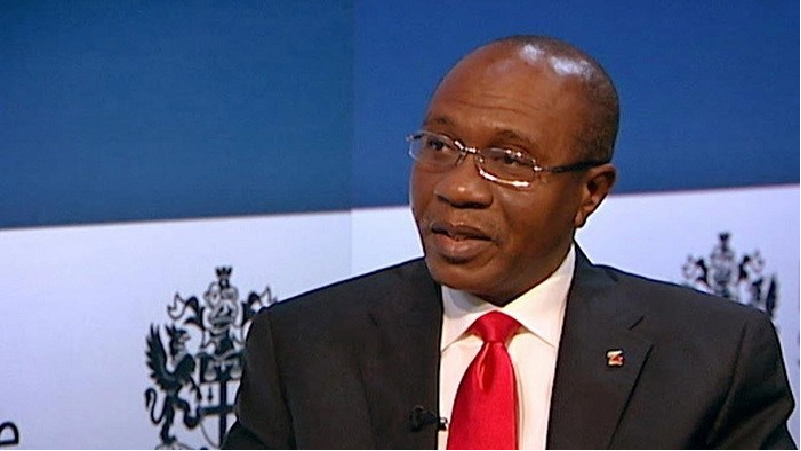
The Central Bank of Nigeria has a new directive on the size of deals microfinance banks can do in the nation. Largely, the apex bank does not want any credit or transaction that exceeds a total amount of N1 million. Largely, as we already know, the microfinance banks of today are fintechs and digital challenger banks. So, this directive is really going to impact these fintechs.
As I write, more than 90% of fintechs would be affected because N1 million transaction size is small money in Nigeria. Yet, there are ways they can overcome this challenge.
In this post, I shared some ways fintechs and digital challenger banks can update their operations to be in compliance.
I will discuss this deeper during Tekedia Live today. Largely, there is no reason to panic. The central bank has not dropped a hammer here. Innovators must adjust and continue to fix market frictions. I see many ways to be in compliance and I just listed a few on the link. I also expect our members in the compliance world to provide guidance during Tekedia Live.
Comment on LinkedIn Feed
Comment #1: Why can’t the CBN come up with a digital banking license like Singapore if they really do care about financial inclusion. These archaic licenses and regulations do more harm than the impact they are trying to make.
My Response: Actually what everyone is saying. But one thing is clear here: digital banks cannot advance real financial inclusions since fintechs/digital banks are not allowed by law to issue bank verification numbers (BVN). So, customers of the digital banks must first be customers of the traditional banks. Yet, CBN is a victim here because Nigeria does not have what other nations have: national identity number. Digital banks’ customers are subsets of traditional banks because they cannot bring full new customers into the fold.
Comment #2: CBN is a very smart institution. The goal is not to run against innovation but to protect the traditional banks from running out of business. I think this is an important thing to do. Traditional banks are still very instrumental to the progress of the nation even for a long time to come, hence the need for some protection through, crafting ways to indirectly force collaboration… We can call it a “pseudo-merger” at play.
The result: the fintechs can leverage the physical infrastructure of the traditional banks to reach new customers and provide a holistic value to existing ones. The traditional ones can leverage the digital prowess of fintechs to scale operational efficiency and make things better for their mostly, non-digital customers.
From my point of view: It’s a win-win.
My Response: “the goal is not to run against innovation but to protect the traditional banks from running out of business.” – I made the point that CBN expects that deeper partnership. Now, I expect Kuda which has tons of money to explore actually buying a traditional bank to justify the $500 million tag.
Central Bank of Nigeria Sends Warning Shot to Microfinance Banks and Digital Challenger Banks
Join The Festival And Register for Tekedia Mini-MBA
Do not miss this festival – it is the best business education program in town. Learn from the best and enter the future with confidence. Registration is ongoing for Tekedia Institute Mini-MBA, and classes begin Sept 13. Beat the Aug 22 early registration deadline to unlock many benefits.