

Do not miss this festival – it is the best business education program in town. Learn from the best and enter the future with confidence. Registration is ongoing for Tekedia Institute Mini-MBA, and classes begin Sept 13. Beat the Aug 22 early registration deadline to unlock many benefits.
Central Bank of Nigeria Sends Warning Shot to Microfinance Banks and Digital Challenger Banks
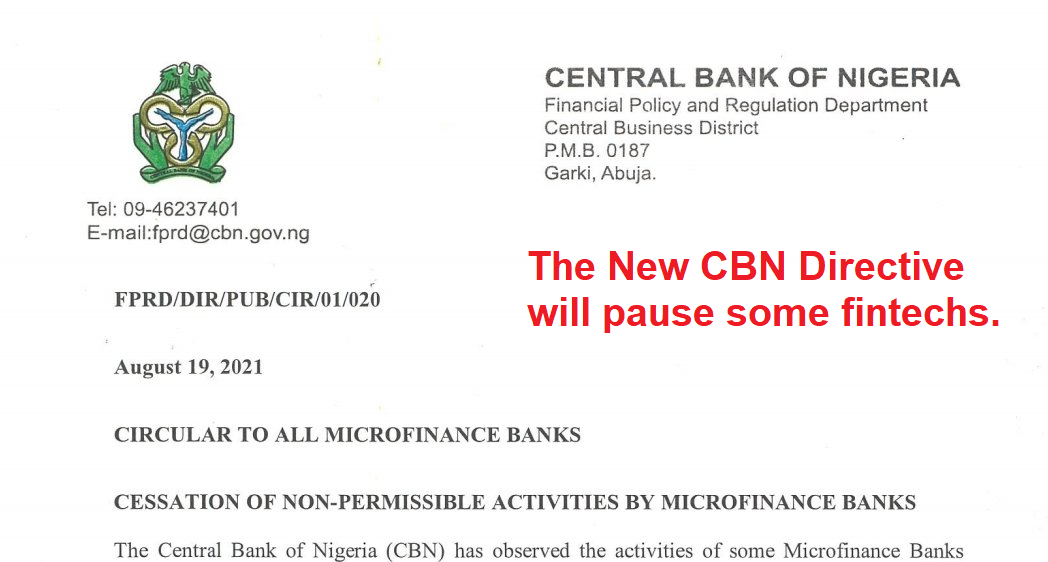
This is the season of regulatory searchlights around the world. China has redesigned its tech sector with an avalanche of new regulations. America is going after Facebook to break it while it looks at Apple, Amazon and Google. Certainly, Nigeria cannot be left behind in this circus. So, today, we are learning that the Central Bank of Nigeria has fired a warning shot to microfinance banks: you are not allowed to handle micro-credit and retail transactions with value more than N1 million per deal!
People, this singular decision will change multiples in the investor cap table.
Innovators, the government also wants you to focus on micro with 80% of loan portfolios to be micro-credits. As you already know: this warning is not for the traditional microfinance banks but rather the fintechs which get the microfinance licenses to run a largely full fledged retail banking services. Most of those fintechs /digital challenger banks must restructure their operations immediately to avoid the CBN shocks.
Yet, looking at this circular, I can see how one can comply 100% without material impact on the current fintech business. CBN is very agile and smart on how it has worded this directive. I do not see a reason to panic. Fintechs/ digital challenger banks need to do a few things and they will be fine. Where they fail, expect a big PAUSE.
What To Expect
First, we could be seeing automatic breaking of transactions by fintechs so that what hits their general ledgers will not exceed N1 million. So, if you want to transfer N2 million, the software will break it into two transactions of N1 million each making sure you stay below the threshold of the N1 million.
Secondly, the way credits are allotted will change. If you approve a loan portfolio of N5 million for a merchant customer as a fintech, you may structure it to be issued over five different transactions, making sure you do not pay out more than N1 million at a time. (Note: the splitting of transactions may contravene other financial regulations depending on the intention. The key thing here is the intention, not necessarily the splitting.)
Besides these two options, I also expect many fintechs to have a relationship with retail banks. Through the relationship, the retail banks could run the back-office making sure that all compliance on sizes of transactions are complied with. In other words, you can have a system where tickets above N1 million are immediately warehoused via a retail bank partner while the small ones stay with you as a digital challenger bank.
More so, I expect tools like Venmo which has a way of breaking transactions to become popular in Nigeria as fintechs work to ensure transactions stay within compliance. As they do this, product pricing will evolve. If you get a loan of N1 million, you can ask for the same loan under the same terms in another 24 hours, if you have in mind to get N2 million in total.
All Together
Software can help fintech companies implement this compliance without material impact on their operations. Yet, I will not necessarily suggest that alone. The best would be to partner with a retail bank as a “holding hand company” to make sure it covers you. While many of these fintechs may not like that option, I do think it is what CBN has in mind: only the traditional banks will run the big transaction tickets in Nigeria. That is the reality based on this directive.
So innovators, you may not like it and it may likely cost you money, but a deal with a traditional bank will protect you from any regulatory shock from the apex bank.
At least, this time, CBN did not do the usual: ban, suspend or freeze. Innovators, recalibrate. Tomorrow at Tekedia Mini-MBA Live, I will be discussing regulatory elements and this new directive has just been added.

Beeptool TV Whitespace Broadband Internet in Action
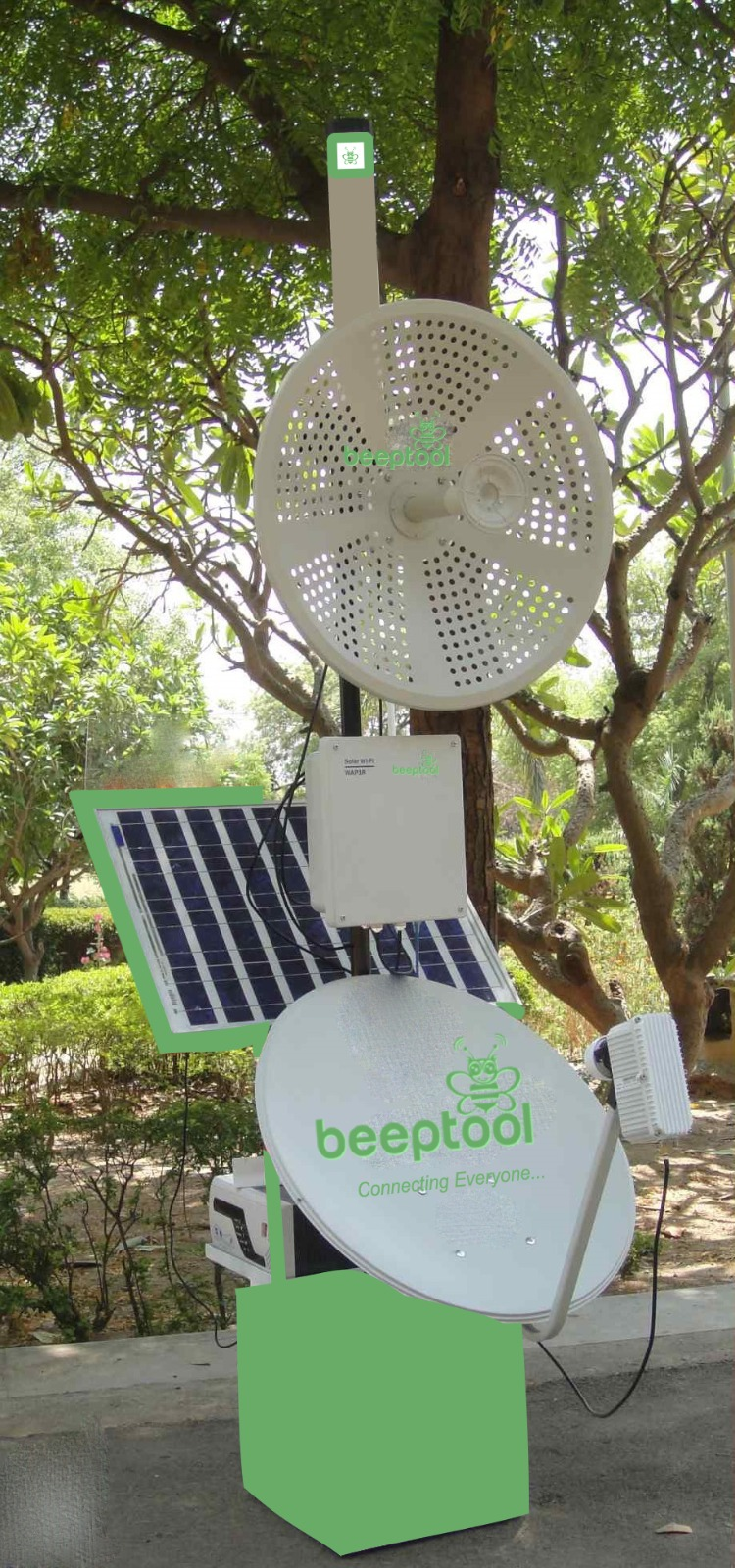
You do not need GSM to have broadband internet access in your village or rural office. All you need is a TV signal there. We are truly honoured for the support which the Nigerian Communications Commission (NCC) has offered to our engineering experimentation.
Today, we have broadband internet access and we have no bill from any GSM operator. Amazing things are coming from engineers and we are excited about the promises of the future.
Tekedia Capital will continue to support builders of the future through capital and engineering vision. Tekedia Capital offers a specialty investment vehicle (or investment syndicate) which makes it possible for citizens, groups and organizations to co-invest in innovative startups and young companies in Africa and around the world. Capital from these investing entities are pooled together and then invested in a specific company or companies. Learn more here.
Amidst China’s Tech Crackdown, TSMC Overtakes Tencent As Asia’s Most Valuable Company
The Chinese government’s crackdown on its tech industry continues to impact companies and their owners. About $1.5 trillion has been wiped off China’s economy, and a growing number of Chinese businessmen are dropping ranks on the global billionaires’ index. And it all seems to be getting started.
CNBC reports that the world’s largest chipmaker Taiwan Semiconductor Manufacturing Company (TSMC) has overtaken Chinese tech behemoth Tencent to become Asia’s most valuable firm, further spiraling the downturn emanating from the crackdown that started about a year ago.
Beijing’s regulatory crackdown on the country’s tech sector has slammed the valuations of Chinese tech giants Tencent and Alibaba, and both the companies have recorded significant losses, losing their financial status in Asia and global markets.
According to the report, TSMC, a major supplier to Apple, overtook Tencent earlier in August. The Taiwanese chipmaker is now sitting at the top spot by market capitalization — among Asia firms — at more than $538 billion, according to data from Refinitiv Eikon as of Wednesday morning during Asia hours.
Tencent sat in second place, with a market capitalization of more than $536 billion while Alibaba was a distant third at about $472 billion.
The report further noted that the market capitalizations of both Tencent and Alibaba were hit again on Tuesday — losing more than $20 billion each — after China’s market regulator issued draft rules aimed at stopping unfair competition on the internet.
China’s State Administration for Market Regulation highlighted the move on the tech sector as part of the regulator’s push to tighten laws surrounding antitrust and competition. Other areas that have come under regulatory scrutiny from Beijing include financial technology as well as the collection and use of data.
Chinese technology stocks have tumbled as uncertainty continues to cloud the sector. The Hang Seng Tech index, which tracks the largest technology companies listed in Hong Kong including Tencent and Alibaba, has dropped more than 25% since the start of the year.
Although TSMC’s growth got a boost from the global semiconductor shortage driven by supply chain disruptions due to the pandemic, along with a surge in demand from industries such as automobiles and data centers, China’s regulatory clampdown on its tech industry paved the way for the current position it occupies on the value chain. Since the start of the year, TSMC’s stock has risen by more than 6%.
But Tencent is anticipating a stretch of the regulatory straits. The company warned Wednesday more regulations will likely come for the internet sector in China but said it is “confident” it can be compliant.
“We should expect … in the near future, more regulations should be coming,” Martin Lau, president of Tencent, said during an earnings call on Wednesday.
Lau said that internet regulation is a “global trend” but China is ahead of Europe and the U.S. in terms of the “execution of a more structural regulation framework.”
“I think this should be expected because the regulation has been actually quite loose over an industry like the internet, considering its size and the importance,” he added.
The Tencent president said regulators are focused on “rectifying industry misbehaviors” and emphasizing social responsibility. But ultimately the goal is “long-term sustainable development of the internet industry.”
“The government does recognize the importance on the economic and social sides of the internet industry and also the contribution of the industry to global competitiveness.
“I would say there will be short-term uncertainties and there are a lot of new regulations that will be coming, but we are pretty confident that we can be compliant,” Lau said.
LaFiya TeleHealth Kiosk Now Serving Rural America
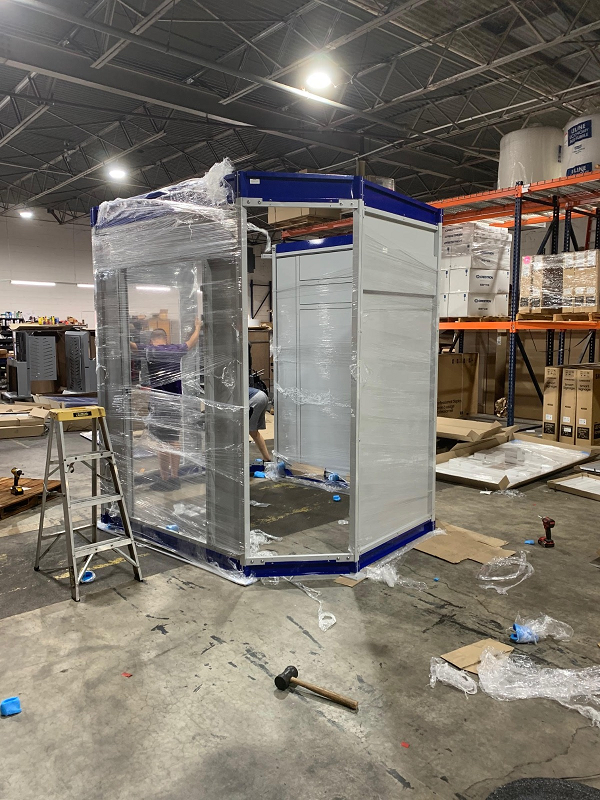
American companies and US rural communities in Texas, Indiana and Mississippi are adopting LaFiya TeleHealth Kiosk, a complete suite of medical devices and telehealth capabilities. With Lafiya Kiosk, you walk into a “clinic”, and you can speak with a doctor in any location with the Lafiya app. And if that doctor wants to take data, the kiosk-equipped ultrasound scanner, sensors, etc are there to help. It comes with solar support, and connected with a satellite which means it can be put anywhere.
Our playbook in Africa is to have the kiosks in many local governments, making it possible for citizens to have access to medical doctors, unbounded by geography. We will create thousands of jobs while doing great on healthcare. Rural America has responded and we are assembling for them.
Our technology is HIPAA compliant and designed with the best engineering practice in medical practice. Our bar is so high that we’ve started selling in America.
Senators: this is a very nice community project
Lafiya is a Tekedia Capital portfolio company; we fund winners learn more here.
Comment on LinkedIn Feed
Comment: What happened to primary healthcare clinics in towns and villages?
The only difference is that ….”if the doctor wants to take data, the kiosk-equipped ultrasound scanner, sensors, etc are there to help”…..there is none in the health centres.
….”It comes with solar support, and connected with a satellite which means it can be put anywhere”…… can’t the village and towns primary health centre have that?
Nice project, but I am sorry to say that we must be sustainable, pragmatic, thorough and intentional in dealing with Nigerian problems. As far as health structure is concerned, this kiosk will not solve the problem. The systems in them could as well go into the health centres, and we continue to build from a substantive structures
My Response: Let me try and provide guidance here.
“What happened to primary healthcare clinics in towns and villages?” – the doctors have left for UK, Canada and US. Clinics are not buildings. They are centers of medical professionals. Lafiya telehealth will allow rural people to have access to doctors anywhere.
Unlike the empty primary centers, you have tools which will help the medical professionals collect data from patients, even remotely.
“….”It comes with solar support, and connected with a satellite which means it can be put anywhere”…… can’t the village and towns primary health centre have that?” – we are not aware that villages can provide internet connectivity. Having connectivity is the core of our solution.
We are looking for health entrepreneurs who will own these systems, making them available to people. The one in your Eke market day can cost each user say N500 and that person can speak with a doctor in Lagos. After all testing, the doctor puts a prescription which can be picked up in a local pharmacy.
“The systems in them could as well go into the health centres, and we continue to build from a substantive structures.” – we prefer market systems instead of sending them to people always on strikes.