DD
MM
YYYY

PAGES

DD
MM
YYYY

spot_img

PAGES

Home Blog Page 5616

The Rise of Kebbi’s Engineers and the Scenes from Warri

0
Olu of Warri event

To fight terrorists which the Nigerian press continues to call bandits as though someone will be unlicensed for reporting facts, the Kebbi government has remodeled some Toyota Land Cruiser (Buffalo) vehicles into armoured personnel carriers (APCs) with gun turrets. I commend the government for this inventive mindset, understanding that waiting for APCs (as in war equipment, not a party) may not happen.

Yet, the paralysis in the northern part of the nation is not going to be won via guns and bullets. This is a war of the mind. As someone who has spent time with students in many universities in Nigeria, I have a very good understanding of Nigeria: people like lives, and good lives. So, that we are degrading to this current path seems there is a missing link somewhere. Yes, the battle ahead is a battle of the mind. Unless Nigeria wins that, even if we convert all the Toyota SUVs into APCs or ask Innoson Motors to make its own version, nothing good will happen.

Why did I write this? Mr. President’s state is in a state of absolute security mess. So, if the Commander-in-Chief cannot put Katsina in order, state governors in other states are wasting their time, expecting help. Kidnapping is happening regularly in Katsina and the state has not used the “connection” that its son is the president to fix the issue.

There was a nice event which happened in Warri yesterday. The good people of Warri crowned a new leader (Olu) in a colourful ceremony. As I watched some video snippets online, I saw young people who actually believed in a leader, rejoicing. Such men as leaders, across Nigeria, could help restore order. Yes, traditional and religious leaders can offer hope as they do have real following.

The politicians have failed because they have flushed the moral fiber of the nation into the toilet, and the youth do not care whatever they say. We need to get Olu, Obi, Emir, Oba, etc to begin to help even as pastors and imams are empowered to help restore hope.  

The battle ahead is now winning the minds because terrorism is now one of the largest business sectors in Nigeria, growing in triple digits quarter-on-quarter in some regions. That must stop.

Olu of Warri event

LinkedIn Comment on Feed

Comment #1: I really keep wondering why the bandits have not been proscribed as terrorist groups. How many more do they have to kill? ?

I must admit I don’t know all the criteria/parameters for a group to be proscribed a terrorist group. Is it based on the number of people they have killed or the number of states/regions they have seized?

I think our lawmakers/government need to be transparent with us—the citizens—about those parameters so we can keep count/monitor with them.

In my own opinion, though, I think these so-called bandits have long earned that designation. Even the Northern Elders Forum has long designated them a terrorist group.

Just saying. ?????

Comment #2: Terrorist Groups by their nature have to be “A Group” to be proscribed as such. You’ll need a singular organization to point a finger towards. these gangs of bandits by their very nature are decentralized with no uniformity. There’s just so many of them operating independently.

In a situation like this, who exactly do you proscribe as the terrorist organization? 100+ distinct groups of arm wielding bandits? Their entire ethnic group? The herding profession which some otherwise innocent individuals also partake in? …..?

Another analogy is for example saying let’s proscribe armed robbers as a terrorist group. There’s too many of them with no singular organization at the healm that would make the proscription meaningless.

Moreover, the bickering on nomenclature they’re termed won’t solve the underlaying issues fueling insecurity in the land. Whether they’re termed terrorists or not, we all agree their actions terrorize the populace, the nomenclature shouldn’t hold back action to tackle the menance.

My ResponseNice perspectives there: they are not registered or grouped at scale, and there is nothing to proscribe. Yet, calling them “terrorists” should not be hard. When people ask for that classification, they do it to enable the nation to model the threat well.

“Moreover, the bickering on nomenclature they’re termed won’t solve the underlaying issues fueling insecurity in the land.” largely, banditry is for the state (using police) to deal with, but terrorism is for the federal (using military) to solve. So, when you classify, the nomenclature defines the rule of engagement for that threat.

More so, even the rule books you will use to try them in court will change; bandits cannot be prosecuted like terrorists. So, a change of name is actually important!

Central Bank of Nigeria Puts Post-No-Debit (PND) Restrictions on 18 Bank Accounts

1
Central Bank Governor, Nigeria

Eighteen bank accounts have been placed on Post-No-Debit (PND) restrictions by the Central Bank of Nigeria, Premium Times reports. No explanation was given for this decision. Yet, if you are reading this, tell your associates and friends to be super-careful on forex activities in Nigeria.

 The affected companies include Bakori Mega Services, Ashambrakh General Enterprise, Namuduka Ventures Limited, Crosslinks Capital and Investment Limited, IGP Global Synergy Limited, Davedan Mille Investment Limited and Urban Laundry.

Others are Advanced Multi-Links Services Limited, Spray Resources, Al-Ishaq Global Resources Limited, Himark Intertrades, Charblecom Concept Limited, Wudatage Global Resources.

Also included are Treynor Soft Ventures, Fyrstrym Global Concepts Limited, Samarize Global Nigeria Limited, and Zahraddeen Haruna Shahru.

The apex bank is doing everything it can do to fight for the Naira. Yet, the rise of Naira does not depend on what happens in CBN headquarters but what happens in warehouses (the old and new types) across the nation. Unless Nigeria can deal with those, everything is just ephemeral.

The Revelation in Bichi

1

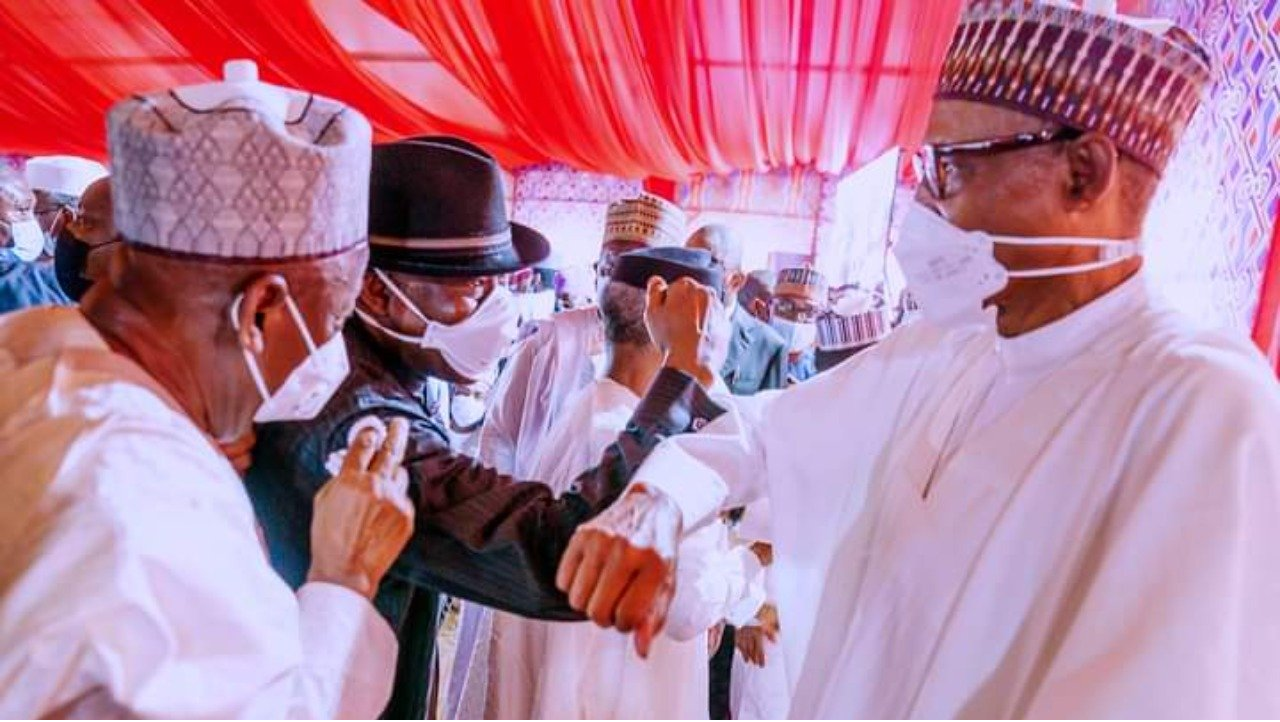
Let me congratulate the young family – Yusuf Buhari (president Buhari’s son) and his wife. Many great scenes – and one of the most amazing is the civility in the program. Ex-president Jonathan attended. Ex-Vice President Atiku attended. Someone also noted that Femi Fani-Kayode was there. Nigerians, that is a good sign. 

Hopefully, the young people who would be bought as thugs to maim and destroy their lives in 2023 will understand that these men are neighbours, even though they make things look differently.

Recall the Imo state one during the second republic where a father and son were competing for the same position, from different parties. The father would come and verbally assail his son. His son would return the same. But what most did not know was this: the guy was still living with his father and every morning before they departed for “work”, they would wish each other “nice day at work”. It was when the press saw both eating breakfast that the veil was taken out of many.

Young people, do not allow politicians to deceive you. Most have no permanent enemies or friends, it is a permanent interest.  If they come in two years, remember this wedding ceremony: they all eat from the same plate.

Congrats to the couple for helping many on this revelation.

The former Niger Republic President, Muhammadu Issoufu, on Friday joined Nigerian political and business leaders at the wedding ceremony of Yusuf Buhari, the son of President Muhammadu Buhari, in Bichi Local Government Area of Kano State.

At the event were Vice President Yemi Osinbajo, former vice president Atiku Abubakar, Senate President Ahmad Lawan, many state governors, ministers and federal lawmakers.

The wedding held at the palace of the Emir of Bichi who is the father of the bride, was presided over by the Minister of Communication and and Digital Economy, Isa Pantami.

Kano-based business mogul, Aminu Dantata, stood as the bride’s trustee while an uncle of the president, Mamman Daura, served as the groom’s trustee.

Amidst Increasing AI in Workforce, Elon Musk Throws Weight Behind Basic Universal Income

0

Universal basic income is becoming a more global topic in tandem with international tax. The discussion has been spurred recently by the significant growth in robotics, pitting humans against machines at work.

With the increase in artificial intelligence, spurred by the pandemic-induced work from home and social distancing rules, a lot of business heavyweights have begun to stand behind the idea of universal basic income.

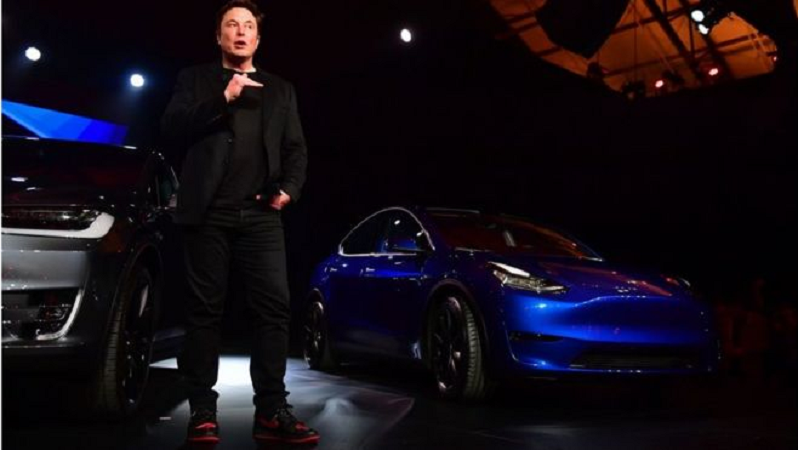
Tesla CEO Elon Musk is the newest big name to openly endorse the movement, following the announcement that he is working on a robot.

During a Thursday presentation on artificial intelligence (AI) hosted by Tesla, Musk said he is working on creating a ” Tesla Bot ,” or a robot that would do “dangerous, repetitive, and boring tasks” so humans don’t have to.

“Essentially, in the future, physical work will be a choice,” Musk said during the presentation. “This is why I think long term there will need to be a universal basic income,” he added.

The bottom line of the conversation is the loss of job that emerging robots and artificial intelligence will cause. Musk, knowing this, said universal basic income should be in place to close the income gap that will be created by the jobs lost to robots in the future.

The capabilities and efficiency of artificial intelligence supersede those of human workers in almost every field, and it’s getting better with each new robotic design. Musk said that the Tesla Bot will be “friendly,” standing at a height of 5’8” and reaching speeds up to five miles per hour. But if its creation goes to plan, it will take many people’s jobs.

Already there has been uptick in the number of businesses around the world using automation and artificial intelligence in the place of humans for work. Insider reported on a number of them, including restaurants struggling to hire workers for months that have turned to QR codes where diners can view menus, rather than having a waiter bring them one.

There is also Cracker Barrel, which rolled out a mobile app that lets customers pay for meals; McDonald’s started testing automated drive-thru ordering at 10 Chicago locations; and Dave & Buster’s plans to expand its contactless ordering, effectively getting rid of many restaurant jobs humans once did.

It is also notable in the growing number of self-driving vehicle startups and delivery drones getting approvals from regulators. With each success scored, a human’s job is threatened – and it’s only a matter of time before it is taken.

The trend has also been supported by the upsurge in resignations by blue-collar workforce who are demanding higher wages.

A survey of human resources executives from large companies conducted in April by The Conference Board, a research group, found that 49% of organizations with a mostly blue-collar workforce found it hard to retain workers, up from 30% before the pandemic.

“With workers demanding higher wages, there could be an incentive for companies to invest in technologies that will economize on labor – like QR code ordering at restaurants,” economics writer Noah Smith wrote in a June 13 blog post.

As noted by Insider, the growing trend is making universal basic income a larger part of the conversation about the future of work. Some cities have already started testing out pilot universal basic income programs for targeted groups of residents, and California recently launched the nation’s largest statewide universal basic income program prioritized for pregnant people and those aging out of the foster system.

Insider reported that after the pandemic spurred Congress to approve three stimulus checks for Americans, some Democrats called to continue those checks well beyond the end of the pandemic, and in late March, amid infrastructure negotiations, 21 Democratic senators urged President Joe Biden in a letter to include recurring direct payments in his infrastructure plan, saying that when checks ran out after the CARES Act, poverty rose.

However, the evolution of artificial intelligence is posing a threat to workers globally, and it’s not a situation universal basic income alone will mitigate, even though there may be a positive side of it. Experts believe that the evolution will push people to learn needed skills that will keep them employed notwithstanding the increase in robots.

“Lots of people who stopped being waiters in restaurants will end up doing things that’s hard for us to predict … I believe we’re only at the beginning of our quest to unlock average people’s true economic potential,” Noah Smith wrote.

California Court Rules Uber, Lyft’s Gig Economy Unconstitutional

1

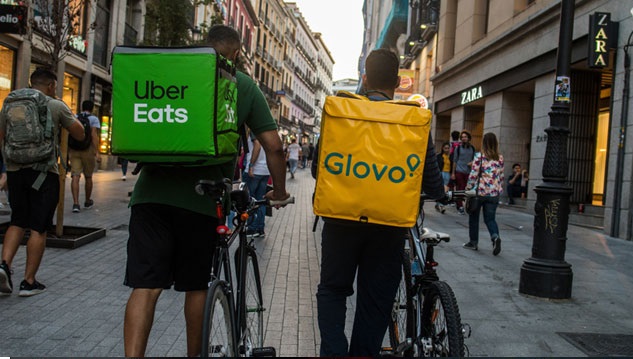
The dust is rising once again over the gig economy in California, unsettling the dispute that was seemingly put to rest through proposition 22 invoked by ride-hailing operators in the state last year.

On Friday, a California judge ruled that the ballot measure from last November defining Uber and Lyft’s drivers as independent contractors is unconstitutional, reopening the case about the status of drivers working for the app-based ridesharing companies once again.

Washington Post reports that in a ruling issued Friday, Alameda County Superior Court Judge Frank Roesch declared that Proposition 22 is “unenforceable,” arguing several sections of the measure are unconstitutional under California state law. They included a section that required a seven-eighths legislative supermajority to amend the measure, which defied the legislature’s amendment power under the state constitution, according to the judge.

Roesch said that avenue for amendments ran counter to the state constitution, instituting a threshold that was “difficult to the point of near impossibility.”

In California, ballot measures are required to be limited to a single subject, and the provisions in the measures must be related. The judge found that the measure pitched to Californians in November overstepped that requirement by limiting the legislature’s ability to allow workers’ to collectively bargain. Proposition 22 passed by a 59-to-41 percent vote in November.

“A prohibition on legislation authorizing collective bargaining by app-based drivers does not promote the right to work as an independent contractor, nor does it protect work flexibility, nor does it provide minimum workplace safety and pay standards for those workers,” Roesch wrote. “It appears only to protect the economic interest of the network companies in having a divided, ununionized workforce, which is not a stated goal of the legislation.”

Uber criticized the ruling Friday and said it intended to appeal.

“This ruling ignores the will of the overwhelming majority of California voters and defies both logic and the law,” Uber spokesman Noah Edwardsen said. “Meanwhile, Prop 22 remains in effect, including all of the protections and benefits it provides independent workers across the state.”

The hotly contested measure, driven by a $200 million campaign mounted by companies such as Uber, Lyft and DoorDash, followed a 2019 state law that defined Uber and Lyft drivers as employees. The companies and fellow apps mounted a vigorous defense, arguing the requirements of employment would impede the flexibility they offer drivers — and that the majority of drivers did not want to be employees.

California voters sided with Uber, denying drivers benefits by classifying them as contractors.

Advocates for employment argued drivers should be entitled to a minimum wage and benefits such as health insurance, sick leave and job protections.

Prop 22 created a limited set of benefits such as an earnings guarantee and a health care stipend, but not the typical protections of employment under state law.

Geoff Vetter, a spokesman for the Protect App-Based Drivers & Services Coalition, said his pro-Prop 22 group would file an immediate appeal.

“This outrageous decision is an affront to the overwhelming majority of California voters who passed Prop 22,” he said in a statement. “We will file an immediate appeal and are confident the Appellate Court will uphold Prop 22.”

Vetter noted the court ruling is not binding and said he expected it to be stayed as the group appeals.

Veena Dubal, a professor of law at the University of California Hastings who co-wrote an amicus brief on behalf of the petitioners, said the companies erred in “trying to completely take away the right of legislatures and municipalities to do anything on behalf of workers, as well as trying to take the workers out from the state’s workers’ compensation scheme.”

“They were trying to do too much in one proposition,” she said.

Stanford University law professor emeritus William Gould, who also co-wrote on behalf of the petitioners, said the judge’s methodical arguments would be hard to defend against. The gig companies faced a steep road ahead, he said, potentially stretching beyond the Court of Appeal.

“I think this is quite obviously important and precedential, and the final word is going to be with the Supreme Court of California,” he said.

The Friday ruling means uncertainties for both drivers and apps operating on gig economy. Uber and Lyft had argued that classifying their drivers as employees will impact the flexibility they’re enjoying, limit the number of drivers using their apps and spike the cost of trips. It was based on these arguments that Californians voted in the prop 22 ballot to maintain the status quo.

The Appeal and Supreme Courts will likely determine the fate of the parties. However, either of them will have a huge price to pay depending on the courts’ decision, but the gig economy will have more to lose. A ruling upholding drivers’ wishes will force Uber to downsize in California, its biggest market, further depleting its revenue that has been greatly hampered by the pandemic.