DD
MM
YYYY

PAGES

DD
MM
YYYY

spot_img

PAGES

Home Blog Page 5617

Nigeria’s Court Freezes Bank Accounts of Chaka, Bamboo, RiseVest, Trove, etc on CBN Request

5

A federal court in Abuja has frozen the accounts of 6 online investment firms. The companies are Bamboo Systems Technology Limited, Rise Vest Technologies Limited, Bamboo Systems Technology Limited OPNS, Chaka Technologies Limited, CTL/Business Expenses, and Trove Technologies Limited. The Central Bank of Nigeria (CBN) has requested for the freeze to enable it conduct forex related investigations on the companies: “The CBN now accuses the companies of engaging in “illicit forex transactions”. The freeze will remain till Feb 2022. These firms help Nigerians buy foreign stocks, bonds and other financial securities.

The Central Bank of Nigeria (CBN) has secured a court order to freeze the accounts of some fintech companies for 180 days. The Federal High Court in Abuja granted the prayer of the apex bank to put the financial activities of the investment firms on hold pending the conclusion of its investigation into their alleged forex misconduct.

The companies include Rise Vest Technologies Limited, Bamboo Systems Technology Limited, Bamboo Systems Technology Limited OPNS, Chaka Technologies Limited, CTL/Business Expenses, and Trove Technologies Limited.

The court document reveals that the financial regulator is investigating ‘illegal foreign exchange transactions’ by the affected companies, which is weakening the naira.

If you look at it, the apex bank thinks they could be weighing on the value of Naira against dollars since technically they are importing “foreign financial products” into Nigeria thereby re-adjusting Nigeria’s balance of payments.

This does not look good at all for the startups.

The Companies React

Bamboo: “We’re aware of the recent reports about us. Our legal and government relations teams are looking into it but we thought it was important to let you know that your money remains safe with Bamboo and will always be readily accessible.”

 Risevest: “About the latest news about us and our FX dealings, you can be sure that your investments and funds are safely managed, that funding and withdrawals will continue to be processed as normal, and that our U.S operations remain intact. We will work with regulators, as we always have to ensure that all issues raised are properly addressed. However, this does not affect our users or their investments, which are managed by regulated third-parties in all jurisdictions in which we operate.”

Comment on LinkedIn Feed

Comment 1: CBN has not gone beyond its boundaries. AML/CFT act, CBN act, etc give room for their intervention and regulation. It might be seen in some quarters as being unhealthy for foreign investments but there are many foreign investments coming into Nigeria daily that are not affected. The companies should show that they are legitimate and do not mean to throw spanners into Nigeria’s balance of payment.

My Response:CBN has not gone beyond its boundaries” – that is the problem with Nigeria. I do not actually agree with you on this. Nigeria is a country where people do crazy things to show they have the power. CBN can do all the investigations it wants to do without freezing these firms for 6 months. So, what if they conclude and nothing bad happened? Would they compensate for the reputational damage to the startups? We cannot give excuses when the government is using its incompetence to harm innocent companies and people. 

We like to BAN, SUSPEND, BAN. Tesla would have been suspended if it was trading in Nigeria with Elon Musk leading it. But even in Elon’s way, America continues to find how to work with him because America respects what he does. 

Watch out – these 6 firms will relocate to Estonia, Dubai and Ireland and continue to operate, denying Nigeria the tax receipts. It takes one thing: peer to peer reconciliations.

Comment #2: With respect, there are two things you’re missing, Sir.

One; No one is disputing that the CBN has that power, especially because it was a court, not even the CBN that froze the accounts. That point is moot. The question Prof Ndubuisi Ekekwe is posing is not whether they have the power – it is whether they ought to have used that power the way they did, which is why the post highlighted the potential damage that could be done to the startups over the 6-month period, and the lack of restitution if they are eventually found to be innocent.

Two, your assessment that the people in CBN are only oriented toward control and compliance, and not business development, is a massive problem. They must be BOTH. The purpose of the CBN is not merely to act as police – it must also act as facilitators to stimulate the economy and there are myriad different approaches they could have taken to resolve this in a way that doesn’t damage the statups involved and by extension, investor confidence in the ecosystem.

They can only regulate and enforce compliance as long as there is a viable economy to do that in.

CBN Freezes Some Fintech Firms’ Accounts, Raising Concerns About The Future of Nigerian Startups
CBN Freezes Some Fintech Firms’ Accounts, Raising Concerns About The Future of Nigerian Startups

0

The Central Bank of Nigeria (CBN) has secured a court order to freeze the accounts of some fintech companies for 180 days. The Federal High Court in Abuja granted the prayer of the apex bank to put the financial activities of the investment firms on hold pending the conclusion of its investigation into their alleged forex misconduct.

The companies include Rise Vest Technologies Limited, Bamboo Systems Technology Limited, Bamboo Systems Technology Limited OPNS, Chaka Technologies Limited, CTL/Business Expenses, and Trove Technologies Limited.

The court document reveals that the financial regulator is investigating ‘illegal foreign exchange transactions’ by the affected companies, which is weakening the naira.

In the motion ex parte marked FCH/ABJ/CS/822/2021 and filed at the High Court on August 4, CBN through its counsel Michael Kaase Aondoakaa, submitted that “the investigation being carried out concerns what has been discovered to be serious infractions by the defendants/respondents in connection with some foreign exchange transactions, and non-documentation by the defendants/respondents in violation of the extant laws and regulations, particularly the Foreign Exchange (Monitoring and Miscellaneous Provisions) Act and the Central Bank of Nigeria foreign exchange manual.

“That more specifically, there is a grave allegation that the defendants/respondents are engaged in illegal foreign exchange transactions, accessing/procuring of foreign exchange via their banks from the Nigerian foreign exchange market via several bureau de change, international money transfer operators and have transferred cash deposit of more than S10,000.00 (Ten thousand dollars) to various accounts overseas contrary to provisions of extant laws and regulations and also traded in foreign securities and cryptocurrencies in contravention to CBN Circular referenced TED/FEM/FPC/GEN/01/012 and BSD/DIR/PUB/LAB/014/001, dated February 5, 2021, and July 01, 2015.

“It is evident that Rise Vest Technologies Limited, Bamboo Systems Technology Limited, Chaka Technologies Limited and Trove Technologies Limited are complicit in operating without a license as asset management companies and utilizing FX sourced from the Nigerian FX market for purchasing foreign bonds/shares in contravention of CBN’s directive.”

In his ruling, Ahmed Mohammed said: “Having listened to senior counsel to the applicant, on the motion ex parte filed in August, it is granted as prayed.”

He added that anyone who feels aggrieved about the freezing order is entitled to approach the court within the period to seek redress while the matter was adjourned to February 20, 2022, for hearing.

In response to this development, one of the affected fintech firms, Risevest, said its operation will not in any way be affected by the court order.

“With regard to the latest news about us and our FX dealings, you can be sure that your investments and funds are safely managed, that funding and withdrawals will continue to be processed as normal, and that all our US operations remain intact.

“We will work with regulators, as we always have to ensure that all issues raised are properly addressed. However, this does not affect our users’ investments, which are managed by regulated third parties in all jurisdictions in which we operate,” Rise said in a statement.

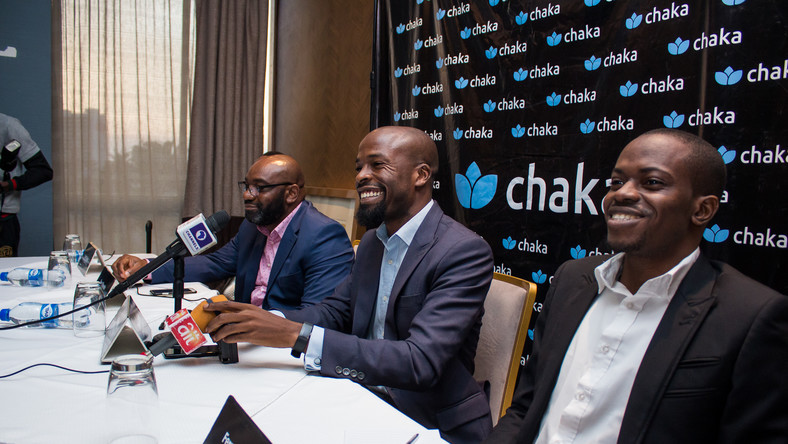
Chaka, an asset management firm, which recently secured license from Nigeria’s Securities and Exchange Commission (SEC), was among the affected companies, increasing the concern that the development has ignited.

There is increasing concern that regulatory decisions of watch dogs in the Nigerian tech ecosystem is killing innovation and spooking investors. A reference point is the proposed National Information Technology Development Agency (NITDA) bill that has been heavily criticized that it would spell doom for startups if it becomes law.

The Nigerian fintech industry has witnessed unprecedented growth, defying the strains of the pandemic, offering the country hope of economic growth in the near future. It is believed that the bountiful future prospects of the fintech industry is being threatened by regulations.

A six-month embargo on the companies’ account for alleged offenses has been criticized as harsh and unprogressive, as it follows the pattern the CBN displayed against End SARS protesters, whose bank accounts were frozen for months on unfounded allegations of terrorism.

While regulation is necessary to stabilize Nigeria’s young fintech sector, the regulators have been urged to adopt solution-based approaches in handling regulatory issues involving the companies, especially innovative startups.

China’s Stake in ByteDance May Brew Fresh Trouble for TikTok

0
The brand is growing

The Chinese government has taken a stake and a board seat in TikTok owner ByteDance’s key Chinese entity, Beijing ByteDance Technology, The Information reported on Monday, citing corporate records and people with knowledge of the matter.

Beijing ByteDance Technology sold a 1% stake in an April 30 deal to WangTouZhongWen (Beijing) Technology, which is owned by three state entities, the media outlet said, citing Tianyancha, an online database of China’s corporate records.

The deal also allowed the Chinese government to appoint a board director at Beijing ByteDance, it added, attributing it to two people with knowledge of the arrangement.

The deal does not give the Chinese government any stake in the firm’s hit short video app TikTok because of ByteDance’s complex corporate structure, The Information said.

ByteDance told Reuters the Chinese subsidiary referenced in the report only related to some of its China market video and information platforms, and held some of the licences they require to operate under local law.

What it mat mean for TikTok

TikTok’s US operation has been under scrutiny over concern of Beijing’s involvement with its business, and the possibility that the short video app could be forced by the Chinese to hand over users’ private data when needed.

Former US president Donald Trump had hung on the risks such development may pose to US national security and signed executive orders targeting TikTok’s business in America. The orders which included attempt to force TikTok to sell its US operations to American companies have been rescinded by current president, Joe Biden, but Washington is still wary of the danger unchecked relationship between ByteDance, TikTok’s parent company, with Beijing could pose to the United States.

The news that the Chinese government has taken a stake and a board seat in ByteDance may trigger a new wave of scrutiny for TikTok that has been basking on its newly found freedom. With millions of people around the world embracing the video app, it has beaten all growth expectation. Early this month, TikTok overtook Facebook, WhatsApp, Instagram and Facebook Messenger — all of which are Facebook owned as the most downloaded app, even in the U.S.

While Biden reversed Trump’s executive orders targeting TikTok, he introduced new executive orders requiring the Commerce Department to review apps with ties to “jurisdiction of foreign adversaries” that may pose national security risks.

In evaluating the risks of a connected software application, several factors should be considered.  Consistent with the criteria established in Executive Order 13873, and in addition to the criteria set forth in implementing regulations, potential indicators of risk relating to connected software applications include:  ownership, control, or management by persons that support a foreign adversary’s military, intelligence, or proliferation activities; use of the connected software application to conduct surveillance that enables espionage, including through a foreign adversary’s access to sensitive or confidential government or business information, or sensitive personal data; ownership, control, or management of connected software applications by persons subject to coercion or cooption by a foreign adversary; ownership, control, or management of connected software applications by persons involved in malicious cyber activities; a lack of thorough and reliable third-party auditing of connected software applications; the scope and sensitivity of the data collected; the number and sensitivity of the users of the connected software application; and the extent to which identified risks have been or can be addressed by independently verifiable measures.

Under this new rules, Beijing’s involvement with ByteDance may revitalize the scrutiny which have been relaxed over the last six months. Although ByteDance has repeatedly said that TikTok operates independently, and it’s not under the influence of Beijing’s operations, US lawmakers have found it hard to believe.

The lawmakers have warned those in government, including service men to stay away from TikTok to avoid the risk of exposing classified data to a hostile nation.

Zambian President Edgar Lungu’s Surprising Concession

0

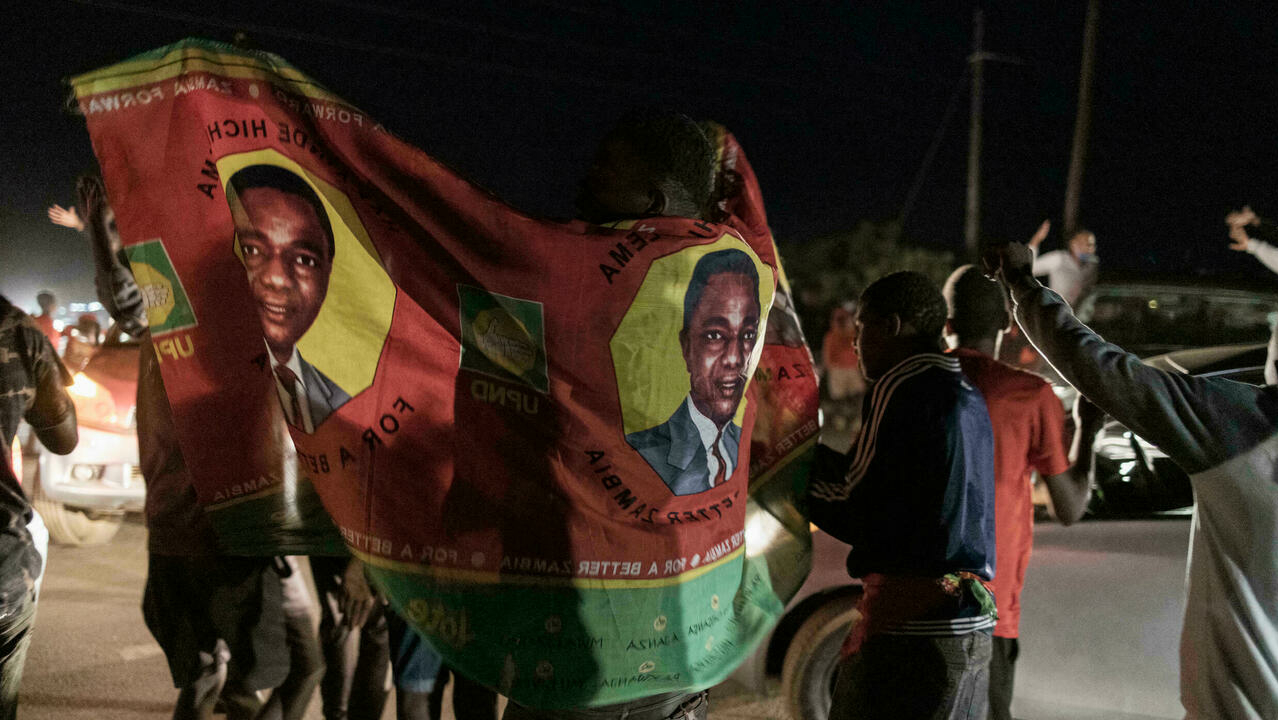
On Monday, Zambian President Edgar Lungu officially conceded to opposition leader Hakainde Hichilema, after losing the presidential election.

His decision to concede has been widely praised as exemplary precedent for other African countries.

Lungu had initially indicated he may challenge the result, but turned around to accept the outcome of the election.

“Based on the revelations issued at final results, I will comply with the constitutional provisions for a peaceful transition of power.

“I would therefore like to congratulate my brother, the president-elect, His Excellency Mr Hakainde Hichilema, for becoming the seventh Republican President.”

The electoral commission said Hichilema got 2,810,777 votes against Lungu’s 1,814,201, with all but one of the 156 constituencies counted.

Lungu thanked the people of Zambia for giving him the “opportunity to be your president”.

“I will forever cherish and appreciate that authority you’ve invested in me. Countrymen, women in and the youth, all I ever wanted to do was to serve my country to the best of my abilities.

“Of course, there were challenges on the way. But what I appreciated most, with your support during the tough times.

“Lastly, I’d like to thank all those who voted for my party, the Patriotic Front, and myself. To you, I say your vote was not in vain. Please continue supporting us.”

Zambia was notorious of controversial leadership for 19 years when it functioned as a one-party state, from 1972 to 1990 when multi-party democracy was reintroduced and election was held in the subsequent year. Lungu’s concession marks the third time that power has shifted peacefully from a ruling party to the opposition since the southern African country’s independence from Britain in 1964, though there have been several elections, eight of which were held between 1991 and now.

Lungu was largely accused of dictatorship, especially by young people who found many of his decisions oppressive. In July 2017, Lungu got the Zambian parliament to approve a 90-day state of emergency, riling up concern that the country was headed to full dictatorship.

Supported by 85 lawmakers from his Patriotic Front (PF) party, the emergency powers gave the police more powers to arrest and detain anyone, especially members of the opposition United Party for National Development (UPND) party, who the president had accused of masterminding arson attacks in the country.

The emergency powers would also give Lungu’s government the right to suspend civil rights, prompting a global condemnation of the move. Critics said it’s just a sign that Lungu was trying to establish a dictatorship to quell growing dissent to his rule among Zambians.

Other incidents such as the suspension of national newspaper The Post, which was notably critical of Lungu’s government, and arbitrary arrests of some members of the opposition, confirmed the fear of Lungu’s dictatorial tendencies and heightened concern over his willingness to concede defeat in the presidential election.

The election was graced by a huge turnout of mostly young people, some who came dressed in their academic robes to protest lack of employment post graduation.

Joseph Kalimbwe, a youth representative of Hichilema’s UPND party told CNN.

“Young people gave us the vote. Four million young people between the ages of 18 to 24 registered to vote. It was a huge turnout and it was very personal to them. They want to ensure the mistakes of their parents were corrected. They have voted for our leader on basis he has better policies and ideas and can strengthen our state institutions.”

Lungu had shut down the internet during the election as votes were being counted and deployed more soldiers on the allegation that the election was being rigged against him. The president’s concession was thus a surprising turnaround that even his critics have praised as sign of progressive democracy in Zambia.

Zambia election recorded more than 7 million voters which made up to 85% of the country’s electorates. The Africa’s second biggest copper miner will now face a future riddled with economic challenges under the leadership of Hichilema.

The Biggest Mistake In Nigeria’s Leaked New NITDA Bill

2

The leaked National Information Technology Development Agency (NITDA) draft bill should be updated before they pass it in the parliament. It is severely deficient. Largely, everyone agrees that NITDA needs a new operating protocol as the one passed in 2007 is no more adequate. Nonetheless, we do hope that the parliament does the right thing by making sure that we do not stifle innovation in the process.

This bill as drafted is totally inadequate as it missed the most consequential challenge facing the technology sector in Nigeria: re-domiciliation of Nigerian tech startups out of Nigeria to the United States and UK. I understand the inclusion of the big fines of N3 million for individuals, and N30 million for corporations, for breaking the protocol, but on things which matter, this bill lacks value.

“Any person or body corporate who operates an information technology or digital economy service, product, or platform contrary to the provisions of this Act, commits an offense,” the agency said in the statement.

Individuals found guilty by the agency will be fined not less than N3 million (~$6,000) or placed into custody for a year or more. The bill states NITDA can also decide to charge such a person both the fine and imprisonment.

On the other hand, a fine of not less than N30 million (~$60,000) will be charged against corporate bodies. The ‘principal officers’ of the companies may also serve a prison sentence for two years or more.

The wealth of the future through digital technology companies are not being domiciled in Nigeria even though the operating entities and the domains of operations are Nigerians and Nigeria respectively. A NITDA bill that does not address that paralysis is deficient.

When these startups are about to raise capital, most times, they re-domicile out of Nigeria, partly to protect their intellectual properties because they cannot have confidence that Nigeria will protect them. Nigeria needs to work on that urgently and give the startups what will make them comfortable to remain fully Nigerians.

Yes, despite the current effervescence of entrepreneurial capitalism in Lagos, the fact remains that most of the wealth being built is not Nigerian. If GTBank, Zenith and Access Bank were not Nigerian in the early 1990s, our current stock exchange would have lost the banking leaders of today. So, it is critical that Nigeria focuses on what matters: how to make sure the wealth which technology is opening up in Nigeria remains Nigerian! Not addressing that is a big mistake in the draft bill.

The leaked bill seems new but critically it is an expired document: unborn tomorrow, but died yesterday. They need to rewrite it.