DD
MM
YYYY

PAGES

DD
MM
YYYY

spot_img

PAGES

Home Blog Page 5627

A Promising Future As Data Science Nigeria Unveils AI Hub In Lagos

1

Good People, a really major event took place in Nigeria last month. Data Science Nigeria opened Nigeria’s first AI dedicated hub. As I wrote in Harvard Business Review a few months ago, Africa’s industrialization, banked on outsourcing from America and West Europe, cannot happen by merely disintermediating China with cheaper labour, because most of the things China does today would be done by robots and AI. In other words, Americans and Europeans will not even outsource those activities because they would be done in their lands by robots/AI.

So, for Africa to industrialize, it has to compete on building the infrastructures of the future. Part of that is developing capabilities in AI and robotics. The AI Hub by DSN under the leadership of a man I have called Africa’s First Apostle of AI – Bayo (Olubayo) Adekanmbi – presents an ecosystem for our young people to participate in the creative level of this redesign.

This Hub located at 33 Queens Street, Yaba, Lagos, is a first-of-its-kind effort to support innovation development, supported by advanced AI working tools, daily academic classes, expert mentors, access to funds, and industry partnership. I will be expecting to write cheques to young people coming out of this Hub. My hobby these days is to write cheques to young innovators. Tekedia Capital makes friends with innovators.

The centre will focus on cutting edge applications of Artificial Intelligence and Digital technologies in EdTech, FinTech, AgriTech and MedTech.  The center is supported with research robots, donated by the University College, London, United Kingdom. It has a 100-seat class for free daily AI classes, a well-stocked library of recent AI books and a dedicated workspace for 50 professionals/researchers.  

I want to wish Bayo, the DSN team and volunteers an amazing future on this mission. Africa appreciates the efforts by DSN to get this to the nation.

Robinhood Buys Say Technologies in A $140 Million Cash Deal

0

Robinhood, a US consumer investing and trading service, announced Tuesday, the acquisition of Say Technologies in a $140 million cash deal.

Say Technologies is a venture-backed startup that makes it easier for investors to exercise their ownership rights. Per Crunchbase data, the company had raised $8 million in 2018. PitchBook data indicates that the company was worth $28 million on a post-money basis following the investment, implying that the company’s backers managed a roughly 5x return on their investment.

“We founded Say to give investors a better way to engage with companies they own, and to give companies tools to better understand and access their investors. As part of the Robinhood family, we’ll be able to further our goal of creating a new ecosystem of ownership and engagement to benefit all investors and companies,” Alex Lebow, cofounder and CEO of Say said.

Say was backed by Point72 Ventures, among other investors.

Per TechCrunch, the deal is notable because it is Robinhood’s first major purchase since going public in late July, and because it illustrates where Robinhood may look to invest some of its newly liquid equity wealth; when a company goes public, it can more easily purchase other companies thanks to recharged cash balances and a floating stock.

In a blog post, Robinhood wrote that “Say was built on the belief that everyone should have the same access to the financial markets as Wall Street insiders.” It means in practice that Say has built a communications platform that allows even smaller shareholders to pose questions to the companies in which they invest. Sure, some companies are including retail questions in their earnings calls, but what Say has in mind is broader.

“We share a common goal of eliminating the barriers that keep people from participating in our financial system,” the company said.

Say and Robinhood share common goals that will make the acquisition profitable. Per TechCrunch, Robinhood has a huge user pool of retail investors who like to trade and invest. Say has the technology to connect retail investors to the companies that they own. With Robinhood’s database of which retail investor owns what, and Say’s communications tech, the trading platform may be able to offer a better shareholder experience than what rival platforms can offer.

By offering to its user base a service like what Say has built, Robinhood can offer a unique twist on retail investing. This feels somewhat analogous to Spotify spending heavily to procure exclusive rights to certain podcasts; such efforts differentiate Spotify from rivals despite having a commoditized core offering. Trading is now free in many places, so Robinhood layering specialized services on top of its investing service makes good sense, perhaps helping drive user loyalty and net new-user adds.

Shares of Robinhood are off around 1.2% today, despite generally higher markets.

Say said it will keep offering its proxy voting services and Q&A platform to existing customers as part of Robinhood family.

“And together, we’ll find new ways to expand what it means to be an investor through new products and experiences that democratize shareholder access,” the company said.

Nigerian Government Approves Reintroduction of Toll Gates on federal highways

0

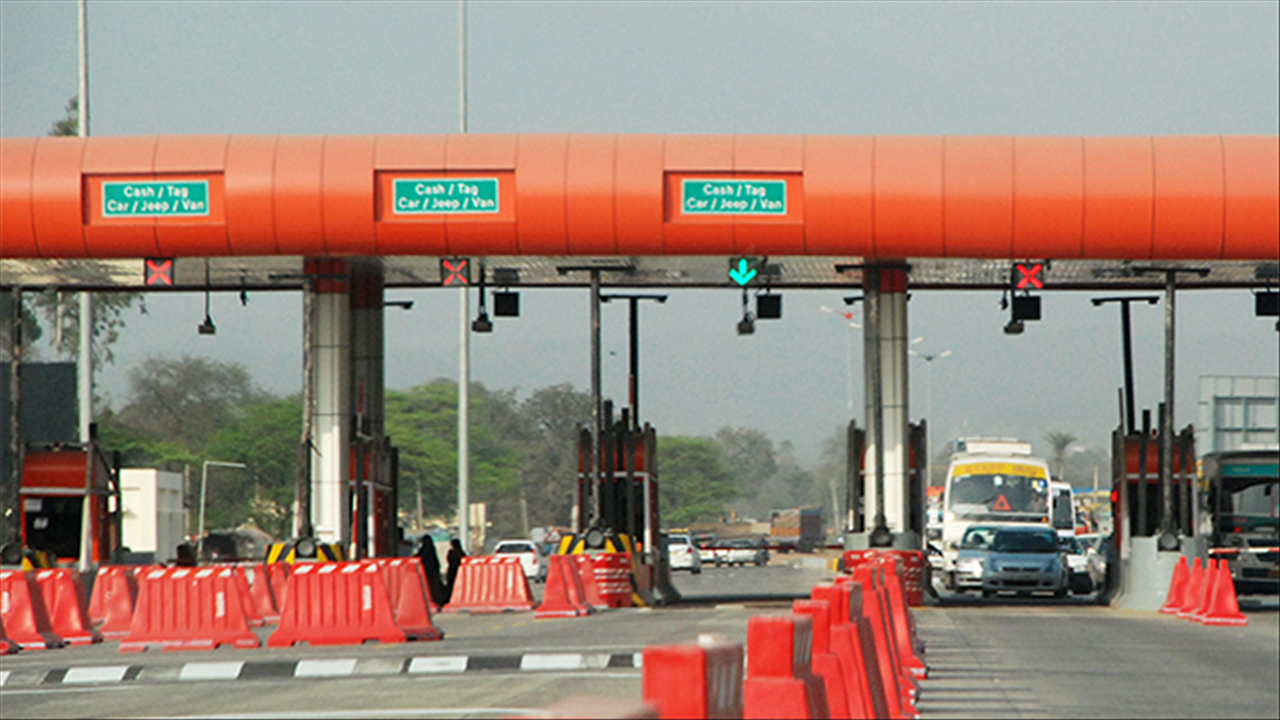
The federal government of Nigeria has approved reintroduction of toll gates on federal highways across the country. The approval was made during the Federal Executive Council (FEC) meeting held on Wednesday.

The plan to reintroduce tolling on federal highways in Nigeria was conceived in 2019, as the effects of dwindling oil revenue hit home.

“One of the highlights of today’s Federal Executive Council (FEC) Meeting (Wednesday, August 11, 2021) is the APPROVAL of a Federal Roads and Bridges Tolling Policy and Regulations.

“It has been undergoing development for a while now, and is now finally ready and has been approved by Cabinet,” President Buhari’s media aide Tolu Ogunlesi said in a statement.

The tolls were abolished about 18 years ago, under former president Olusegun Obasanjo, on the argument that their existence was no longer useful to the government as they only had become a source of embezzlement to many state actors.

The revitalization of the tolls at this time is seen as a sign of government’s desperation to generate revenue in the face of declining oil revenue and covid-induced economic strains that has pushed it to relentless borrowing.

Besides the external and domestic borrowing, the Nigerian government has been elaborating its tax scope, even though businesses and people alike are barely surviving the economic downturns believed to have been orchestrated by poor fiscal policies, over dependence on oil revenue and rising insecurity. Last year, following the enactment of the Finance Act, the federal government had reviewed upward Value Added Tax (VAT) from 5% to 7.5% and introduced Stamp Duty tax among others.

As Nigerians lament the burden of multiple taxation on their meager earnings, the reintroduction of the toll gates across the country will become an addition to the burden, as it will spike transport fares, thereby, increasing the cost of goods and services.

Mr. Ogunlesi said that bicycles, tricycles, motorcycles, diplomatic vehicles, military and paramilitary vehicles will be exempt from paying toll fees, while cars, SUVs, private buses, commercial buses, luxury buses and trucks will pay N200, N300, N150 and N500 respectively.

“Recommended Tolling Fees in the Approved Policy and Regulations are as follows: Cars: N200, SUVs: N300, Private Buses: N300, Commercial Buses: N150, Luxury Buses and Trucks: N500,” he said.

Read below the highlights of the new Tolling policy as stated by Mr Ogunlesi:

  1. It will be an Open Tolling system (just like the one that used to be in existence in the country), instead of a Closed Tolling system.

(A Closed Tolling system means that you pay per distance traveled (‘distance-dependent’), while Open Tolling means you pay a fixed/flat rate that is not dependent on distance traveled)

  1. Only dual carriageways owned by the Federal Government will be eligible for tolling by the Federal Government.

(Of the 35,000km of Federal Roads in existence in the country, only 5,050km are dual carriageway).

Federal carriageways that are single, i.e. undivided highways will not be tolled.

The only exceptions here will be some bridges, which are listed in the Policy.

  1. Toll Revenues will be used to maintain the roads and also to repay investors who have invested in building or completing a road under the Highway Development Management Initiative (HDMI).

  2. Electronic Toll Collection and Management systems will be prioritized over Cash systems.

  3. The following will be exempted from Tolling: Bicycles, Tricycles, Motorcycles, Diplomatic vehicles, Military and Paramilitary vehicles.

  4. The Tolling Policy is a broad National framework that will serve as a guide for States and Local Governments who seek to implement their own Tolling Policies.

(As noted earlier, only about 16% of the total road network in Nigeria belongs to the Federal Government.

States own/control roughly the same amount as the FG, while the rest – amounting to two-thirds are last-mile roads belonging to and under the responsibility of Local Governments).

  1. People who live around Toll Plaza Areas will benefit from what is called ‘Frequent User’ discounts, in line with global best practice.

  2. Recommended Tolling Fees in the Approved Policy and Regulations are as follows:

Cars: N200

SUVs: N300

Private Buses: N300

Commercial Buses: N150

Luxury Buses and Trucks: N500

  1. According to the Honorable Minister, the Federal Highways Act vests the power to toll (Federal Roads) in the Minister responsible for roads, but implementation of any tolling policy/regime involves many processes and multiple agencies, and therefore requires multi-stakeholder collaboration.

  2. According to the Minister, it is important to stress that even with this policy now approved, tolling is not going to start immediately.

He very clearly said that Tolling will not start “until the roads are motorable.”

This policy is a necessary condition for the implementation of Tolling, and it is now for people to start getting familiar with it and for relevant stakeholders to start using it as a basis for their financial modeling and investment analysis, ahead of the eventual rollout of Toll Plazas.

The America’s Unusual Problem And Nigeria’s Wish

0

More than 10 million jobs are available in America, looking for workers. Yes, the United States has a very unusual problem. A Nigerian here who runs a restaurant business is closing the business as he cannot find workers in Chicago. Another one in Michigan said he is winding down a nursing home due to shortage of workers. Now you may ask: how is that possible? Leadership.

Job openings in the U.S. set the second record in as many months — 10.1 million — while a rising quit rate suggests workers are more confident in their employment prospects. The most recent Labor Department report, from the final day in June, hasn’t captured the impact of the surging delta variant on businesses since then. But, say experts, the rise in openings from 9.5 million in May shows a trend that favors workers’ interests.

  • A factor in the number of available jobs outnumbering those looking for work is a mismatch between where people want to work and which industries are hiring, says The Wall Street Journal.

(LinkedIn)

The US has about 100 million more people than Nigeria. Technically, if we are operating at a decent rate, we should be creating at least 4 million jobs per year. If we do that, we can technically deal with graduate unemployment.

Then, we will need another 2 million to handle post-secondary but pre-university opportunities. Farm employment which employs about 65% of Nigeria’s working population has adequately managed our pre-secondary unemployment. All we need there is to boost productivity in farming.

There are critical anchors to execute this playbook as I have noted here. Sure, insecurity is a challenge but I see insecurity as an “effect” and not a “cause”, and with a great playbook, Nigeria can systematically deal with it. I am very confident that Nigeria can experience this unusual US challenge if we execute well as a people.

Inaugural Address by Ndubuisi Ekekwe, President, LinkedIn Nation

Young People: Pursue A Knowledge Passion

1

There are things one must pursue, and there are things you are meant to attract, having pursued the right things earlier.

Young people don’t live life upside down, in return, it may swing you from miseries to disappointments.

But I can assure you there is great benefit in building from ground up, the returns on such investment are for a lifetime.

Seek first the things that matter, and at the appointed time – all other good things will come to you.

You don’t need to pursue money or an expensive lifestyle, it’s a misguided notion on how to be successful and accomplished. Instead, I urge you to pursue knowledge, wisdom, decent living and all the necessary virtues that make up a great human.

Once you have excelled in those things, you then begin to attract the beautiful things life offers.

Reward comes after you have built capacity, you cannot be rewarded first, know this; laws of nature won’t change because of you.

You sow, you reap, anything to the contrary makes you a thief.