DD
MM
YYYY

PAGES

DD
MM
YYYY

spot_img

PAGES

Home Blog Page 5637

Nigeria’s Central Bank Issues New Guidelines for Mobile Money Operators

0
The apex regulator of banking activities in Nigeria has released new guidelines to further regulate the services provided by mobile money operators (MMOs) in Nigeria (“the new guidelines”). Since 2015, when the last regulatory changes were made using the old guidelines, mobile money operators have evolved to some extent with the surge in financial solutions driven by technology. The new guidelines released on 9 July 2021 have made some additions to the 2015 framework which are highlighted below:

Scope

The new guidelines provide a robust coverage of the MMO value chain from service providers to subscribers and agents. Two major types of operations governed by these guidelines include:

  1. The Bank Led Model: These are deposit money banks offering MMO services alone or with other banks, essentially commercial banks operating disruptively in the MMO space.
  2. The Non-Bank Led Models: These are non-banking organisations that have obtained a license from the CBN to carry on MMO services. Note that they also use deposit money banks and settlement banks.

Permissible and Non-Permissible Activities

The new Guidelines have made additions to the permissible activities that were listed out under the old guidelines. The additions include MMOs being operational, wallet creation, e-money issuance, agent recruitment and management, pool account management, non-bank acquiring services and card-acquiring services.

However, even with the additions made, MMOs are still prohibited from carrying on the following types of businesses; direct or indirect loans or guarantees, insurance underwriting, subsidiaries’ establishment, foreign currency deposit services and other forex activities that save the facilitation of cross-border remittances to personal accounts subject to the applicable regulatory framework.

Savings Wallets

The new guidelines allow MMOs to offer savings wallets to be operated with settlement banks and the funds held in these wallets are insured with the Nigerian Deposit Insurance Corporation (NDIC) using a pass-through insurance arrangement subject to specific requirements in relation to investment operations and interest distribution.

The savings wallets funds are subject to a maximum management rate of 10% but must also ensure that the principal sum is not affected by charges and fees. The wallets are also insulated from offsets by the settlement banks with whom the MMOs operate the accounts. Note that customers can use the funds in these wallets to invest ONLY in government treasury bills.

Consumer Protection and Sanctions

MMOs are now required to resolve customer complaints within 48 hours. In addition, they must ensure that customers understand the transactions being concluded, provide robust frameworks against loss of service, proper communication channels and offer adequate disclosures to customers.

Where for instance, there is a new capitalisation requirement by the CBN and a settlement bank is unable to meet up, such could have its license withdrawn. In such an event, the NDIC’s maximum deposit coverage level kicks in at N500,000.00 (Five Hundred Thousand Naira Only) for each subscriber.

Where an MMO has its license withdrawn or activities banned, the CBN ensures that the deposit liabilities of the subscribers are assumed by another MMO, or some other financial institution as defined under the Banking and Other Financial Institutions Act (“the BOFIA”). The CBN also reserves the right to take sanctions against an MMO, its board of directors, officers or agents, withhold corporate approvals as well as suspend or revoke licenses.

Limits for Transactions

The balance limits for wallet holders have been increased from N50,000.00 (Fifty Thousand Naira Only) to N5,000,000.00 (Five Million Naira Only) for daily activities. For cumulative balance, the N300,000.00 (Three Hundred Thousand Naira Only) cap has been removed and is now unlimited, depending on the Know-Your-Customer (KYC) tier.

Reporting and Compliance

The new guidelines also stipulate that all risk mitigation techniques adopted by the MMOs must be within the scope of the relevant code of corporate governance, for example, the Code of Corporate Governance for Finance Companies 2018 (the Code). While MMOs have not been listed as financial institutions as such in the Code, it appears that the CBN has expanded the definition in the Code to cover MMOs by virtue of the fact that MMOs are listed as “other financial institutions” in the BOFIA.

Furthermore, all MMOs are to file annual audited reports and mandatory continuity business plans to the CBN within the first three months of the following year or no later than 31 March of the following year.

Conclusion

MMOs have definitely simplified financial transactions and services in Nigeria by increasing the number of banked individuals. Banks no longer need to have physical presences to provide financial services to residents of rural areas. This further promotes the CBN’s “cash-lite” agenda and has also made commercial transactions easier.

While the guidelines are a commendable development, we hope that in the editions to come, the CBN can involve Telco-Led models as they appear to be more common and easily accessible to the average Nigerian.

The Centurion Law Group provides unsurpassed legal services to its local and international clients. With offices in Nigeria as well as a dedicated team on the ground, reach out to us today.

Author: Ibrahim Moshood, Associate, Centurion Law Group

The Biden Administration Begins Normalization of Bitcoin and Cryptocurrency Sector

2

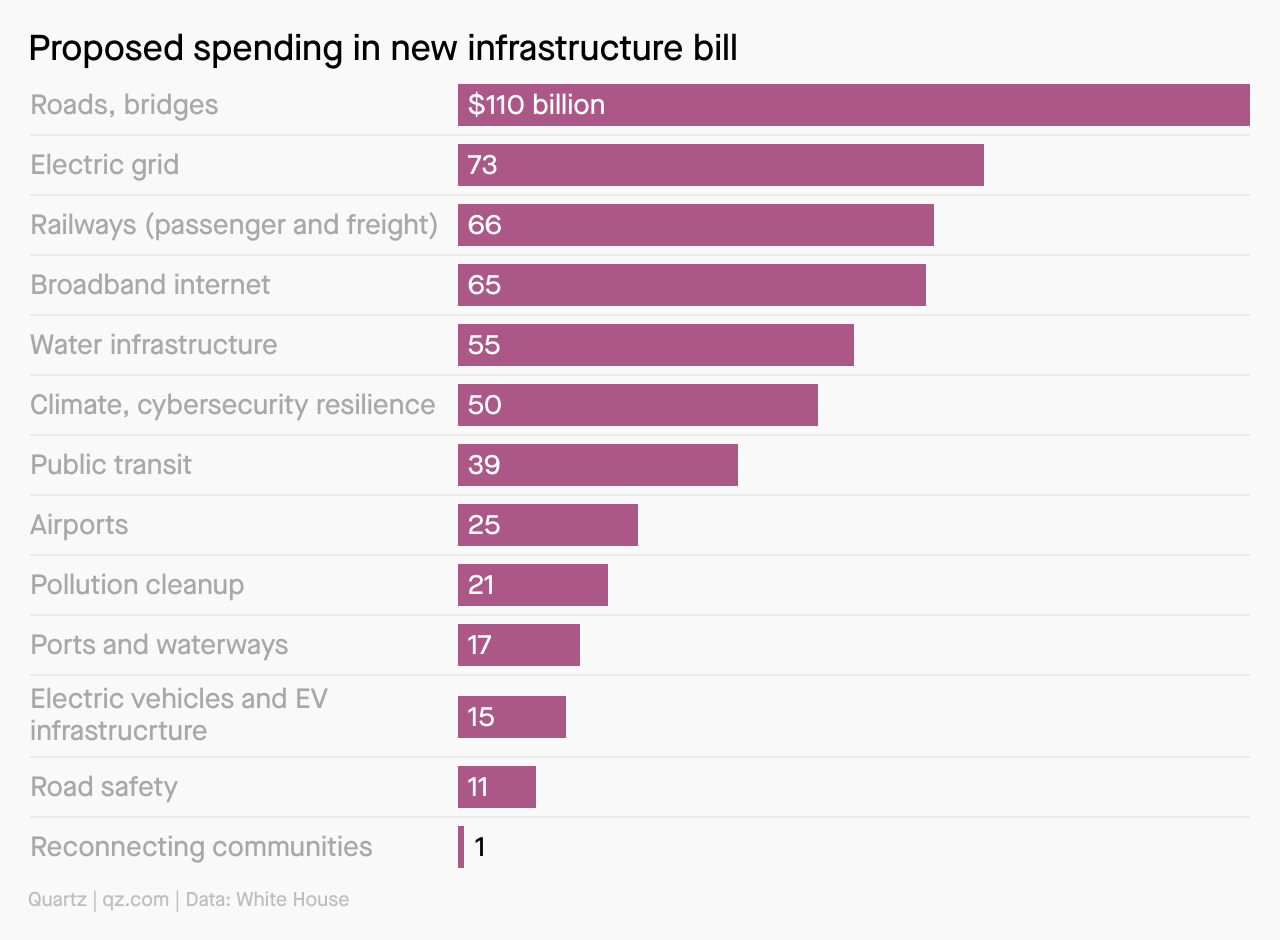
The content of the US Infrastructure Investment and Jobs Act shows that crypto cannot hide and the government wants technologies that will normalize crypto: ” Buried in the bill is a provision that would require the reporting of cryptocurrency transactions to the I.R.S”. IRS is the US tax agency.

“The industry is fighting this, calling it a job killer, but it looks like it just puts crypto in the same category as many other financial assets. Maybe it’s just me, but if tax avoidance is central to a relatively developed industry’s growth plan, it doesn’t sound like a winning political argument.” (Fortune)

As that was happening, the Securities and Exchange Commission’s head threw a bomb against the cryptocurrency sector, calling for more regulation and oversight of digital currencies and assets. “Right now, we just don’t have enough investor protection in crypto,” said SEC Chairman Gary Gensler, who went on to compare the assets to the “Wild West.”

The Securities and Exchange Commission will regulate cryptocurrency markets to the maximum extent possible using its existing authority, Chairman Gary Gensler said Tuesday, while also calling on Congress to grant the agency more scope and resources to oversee the sector.

Calling the asset class rife with “fraud, scams and abuse,” Mr. Gensler signaled the SEC is likely to become more active in policing crypto trading and lending platforms, as well as so-called stablecoins.

“We just don’t have enough investor protection in crypto. Frankly, at this time, it’s more like the Wild West,” Mr. Gensler said in prepared remarks to the Aspen Security Forum. “We have taken and will continue to take our authorities as far as they go.”

U.S. financial regulators have struggled to get their arms around the fast-growing world of cryptocurrency and related financial technologies. Unlike in the securities and derivatives markets, no single regulator oversees crypto exchanges or brokers. As the market value of the asset class has exploded to more than a trillion dollars, so have scams.

Mr. Gensler said large parts of the sector operate outside of regulatory frameworks that seek to protect investors and consumers, reduce crime, promote financial stability and protect national security.

Bitcoin went marginally down after his remarks. But that may not be a bad thing. Yes, by the time these processes are over, the stable state of Bitcoin will arrive, and by then it would become like a typical asset class which would be more widely investable.

And of course, the illusion of crypto “hiding’ from government will go because government will be in charge!

Free Tickets for Helicopter Rides in Lagos

2

Good People and amazing LinkedIn community, I am going to share tickets here for free flights on helicopters in Lagos! Something amazing is coming….stay tuned Africa. Fly over traffic. And arrive in style….this month, people.


Pegasus Spyware: Technology Dystopia Is Here

0

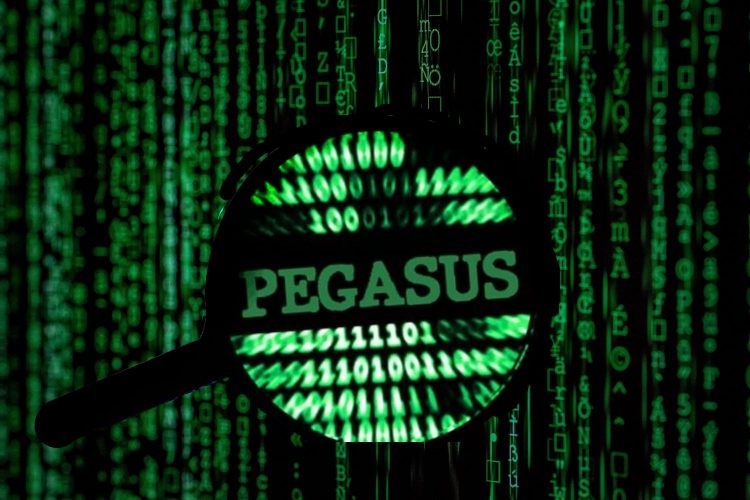
After the Pegasus scandal broke out, AWS disconnected cloud sites linked to NSO Group. Pegasus is one of NSO Group’s products. This is because NSO Group used AWS CloudFront platform – one of its content delivery infrastructures that allow it to transfer data, videos, apps, and APIs quickly and safely. It gives it the capacity to conduct the early stages of the attacks against mobile phones. Also, AWS CloudFront enables it to breach and conceal its surveillance activity. AWS alleged that Pegasus has significantly misused and it has undermined the freedom of the press, freedom of thought, and free and open democracies.

Pegasus scandal has brought us to an epochal time with frightening dimensions as sophisticated spyware of its kind comes into the open market. We should expect to see similar and even more sophisticated tools with vicious potentials to bring businesses and agencies of government to their knees. As a result, Edward Snowden has called for an international spyware ban. Today, no device is safe. If what we saw with Eternal Blue (Wannacry saga) is anything to go by, we may experience the same fate with Pegasus as its source code finds its way onto the dark web, to be weaponized by criminal hackers. The DYSTOPIA era may have just arrived.

Right to repair

In the USA, we have seen the advancement of legislation pushing for the ‘right to repair’. But experts worry that spyware firms like NSO Group might get a boost from such. Noting that NSO Group spyware which exploited mobile device operating systems should compel policymakers to ensure that software designs continue to enjoy maximum protection. More so, critically there’s a need for policy rethink, we should look into NSO Group’s “zero-click” exploits, which leverage flaws in the phone’s operating system to access our devices without any help. Firming up the security of smartphone OS is key.

The experts argue that if we allow the device to be made deliberately or indirectly vulnerable through making their source codes and patented design schematics easily accessible, we will be inevitably making our digital life hackable. While we can make repairs happen at scale, we mustn’t be compromising data security, privacy, safety, and other legitimate goals advanced by manufacturers. We must address the fears of potentially degrading, destroying, or compromising our devices.

NSO Group’s Pegasus impact has reverberated across the Global South. Nigeria has even gone to the spyware market too, to bring in a similar capacity in its fight against terrorists and also setting the stage for grievous abuse. Using Pegasus-style malware may be appealing in critical circumstances, yet it is time for us to take deep thinking into the consequences of having an entity with such brutal capacity.

Global regulation?

We need global regulations to address its abuse. Spywares and their corporate owners have to be held accountable for misuse by entrenching oversight in the way they are deployed. We have to move beyond debates, as enforcing controls on the creation and sale of these corporate spyware has become important. This is because Pegasus and future spyware tools represent a significant threat to both our privacy and human civilization.

The question on everyone’s lips is, “Could Pegasus have slipped into private hands?” That fear must be entertained as the world dives deeper into digitalization and smartphone sophistry. No one should be trusted with spyware of any sort.

With accusations that 50,000 people targeted by NSO found that Pegasus was tracking 65 executives, 85 activists, 189 journalists, and more than 600 government officials, we have to examine the import for continually allowing private companies to wield such brutal capacity in exercising judgment over the key to our digital locks.

Microsoft called NSO Group “private-sector offensive actors” and “mercenaries.” The fear of conferring sovereign immunity protections to NSO Group is that it may it unaccountable to anyone, such status is the exclusive reserve of the State. Our cyberspace is morphing at a rapid pace. That is the reason we have to raise our awareness about new surveillance levels and most importantly upgrade our digital skills to address complex legal issues and challenges that have cropped up at the dawn of this new era of cyberspace.

Finally, since we now have new technological advancements in surveillance techniques, we must see it as a necessity to insert appropriate checks and balances in our various legal structures, to prevent the misuse of such advancements. We must democratize the capabilities to detect spyware such as Pegasus. All nations who understand this threat to our civilization and democracy must do something about banning the trade in commercial spyware technologies, which is completely under-regulated across the world. We must appreciate the fact that spytech such as Pegasus is a weapon and taking away the profit motive will save us from its liabilities.

Tekedia Practice Begins Aug 9 – Register Today; We Guarantee Internship In Renewable Energy Track

6

Tekedia Practice begins on Aug 9, 2021. Tekedia Practice has both coursework and internship components, and it  is designed to provide practical experiences to learners. Simply, a member goes through a curated domain-specific training (2 months), and follows it up with an internship in a company (4 months). There are three tracks:

  • Practice of Agribusiness
  • Practice of Renewable Energy Business
  • Practice of Digital Business

In the renewable energy space, we guarantee you an internship courtesy of OneWattSolar which just raised a $4.9 million green bond. Registration has started; the program begins Aug 9, 2021 to run for 6 months. Registration is ongoing; the program begins Aug 9, 2021 to run for 6 months. We will help in other tracks for internship placements, but not guaranteeing an internship at the moment.

REGISTER today; N150,000 naira (or US$400) per person.